
The 2005 Lotus Elise: The Light, Raw Road Car That Reasserted Britain’s Sports Car Legacy
In the competitive landscape of modern performance vehicles, where advanced electronics often mask driver feedback and weight compromises are made for luxury, the Lotus Elise stands as a stark reminder of what a sports car can be. First making its way to the U.S. market for the 2005 model year, the Elise was not merely an addition to a lineup; it was a calculated assertion by Lotus that the heart of driving—raw purity, communicative handling, and featherlight agility—had not been sacrificed on the altar of progress.
For fans of performance vehicles, the allure of the Lotus brand is tied to its founder, Colin Chapman, and his philosophy of “adding lightness.” However, this pursuit of performance often led to a perception of fragility and a certain tolerance for imperfection among enthusiasts. The arrival of the 2005 Lotus Elise in the United States was, therefore, a critical inflection point. It represented an effort to bridge the gap between the legendary handling of a race car and the dependability expected of a contemporary production automobile.
A Clean Slate for a Legendary Name
The Lotus Esprit, once the brand’s flagship in the U.S., had been an admirable machine but was showing its age. By the early 2000s, it struggled to compete with more modern rivals, and the brand was largely absent from the minds of mainstream American buyers. The Lotus Elise arrived with the monumental task of reintroducing Lotus to an audience that had perhaps forgotten the brand’s pedigree or was skeptical of its ability to build a reliable, consumer-friendly product.
Given Lotus’s checkered history, there was a degree of trepidation among those awaiting its arrival. Would the 2005 Lotus Elise demand a level of patience and compromise from its owner that was no longer acceptable in the modern automotive climate? Would it require owners to accept fit-and-finish issues and maintenance challenges as part of the ownership experience?
The early indications suggested that Lotus was ready to move past its reputation for building temperamental machines. This compact, mid-engine roadster weighed in at a scant 1,975 pounds, powered by a 190-horsepower Toyota engine and a six-speed manual gearbox. The chassis was tuned by the very same engineers responsible for some of the world’s most advanced ride-and-handling dynamics. The Elise, already a delight in its European-spec form, was poised to become a hit, especially with the shift to a reliable Toyota powerplant, which was a welcome change from the sometimes coarse and uninspiring engines used in previous iterations.
The 2005 Lotus Elise did not need apologies. It was lightweight, communicative, and surprisingly modern for its time. It was the car that put Lotus back on the map in the U.S. market, and it proved that simplicity, combined with expert engineering, was a formula for success.
Under a Ton, Overdelivering
The most pressing concern surrounding the 2005 Lotus Elise was whether it would embody the same driving DNA that made previous Lotuses iconic, or if it would fall prey to the compromises necessary to make a road-legal car that could actually be sold and maintained in the modern era. While a definitive verdict would naturally require a longer-term evaluation on the road, the early signs were exceptionally promising.
The Elise is undoubtedly small. Its cockpit is intimate, and occupants must be mindful of their space, traveling light and often rubbing elbows. Yet, these concessions are not signs of cost-cutting but rather the necessary requirements for such a lightweight and maneuverable machine. The quality of the materials, the precision of the assembly, and the anticipated reliability were all up to par. The fit and finish met the expectations of a new-millennium production vehicle, with no sloppy noises, no perceived sloppiness, and a feeling of cohesion that belied its elemental design.
At the heart of the Elise is its aluminum-bonded chassis. This structure, weighing in at just 150 pounds, provides a level of rigidity that is difficult to achieve in an open-top sports car. This stiffness ensures that the finely tuned suspension can perform exactly as Lotus engineers intended. The chassis supports a sophisticated control-arm suspension, complete with gas-charged Bilstein dampers and a braking system with enthusiast-calibrated ABS. The car rides on light, modest-sized alloy wheels wrapped in custom-spec Yokohama tires, all designed to minimize unsprung weight and maximize responsiveness.
Toyota Power, Lotus Personality
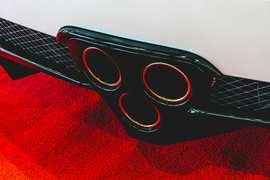
The powertrain of the 2005 Lotus Elise is a marvel of modern engineering. Nestled behind the cockpit is the 1.8-liter 2ZZ-GE engine from Toyota. This powerplant, known for its variable valve timing and lift (VVTL-i), had previously graced the Toyota Celica GT-S and Matrix XRS, but its character is transformed in the Lotus application.
In Toyotas, the 2ZZ-GE always felt like an engine that demanded to be pushed hard. It had a tendency to buzz and shriek under load, making drivers feel like they had to rev the car to the limiter and just tolerate its intensity. The VVTL-i system was known for its dramatic crossover to the high-speed cam profile at around 6400 rpm. While effective, it never felt particularly refined or silky smooth.
Lotus turned the 1.8-liter Toyota engine into a far smoother and more elastic powerplant. This transformation wasn’t just about putting a lighter engine in a lighter car. Lotus engineers completely reprogrammed the engine-control computer, fundamentally altering the engine’s character. The transition from low-speed to high-speed valve timing occurs a couple of hundred rpm earlier than in Toyota models and feels significantly more seamless. This change prevents the engine from falling off its power band on upshifts, ensuring that the driver has ready torque and willing response whenever needed.
And this gets to the very essence of the Lotus Elise. The Lotus development team set out to create a car that felt like a Formula Ford racer for the road. They wanted a car that responded instantly to driver input, communicated its limits clearly, forgave mistakes but didn’t hide them, and made learning to drive it thrilling rather than terrifying. The 2005 Lotus Elise achieved these goals with remarkable success.
Handling That Resets Your Expectations
The cockpit of the 2005 Lotus Elise is a study in functional minimalism. Getting in can be an event in itself, often involving stepping over the door, planting a foot on the seat, and then settling down under the wheel—an open-wheeler-style entrance that perfectly suits the car’s character. Once settled, you find yourself in a businesslike driving environment. The seating position is low to the ground, with very little car around you. However, you are well-protected by the large windshield and the rear roof hoop, which features fixed glass.
Visibility is excellent in all directions except for the rear quarters. The upright, one-piece bucket seats are ergonomically designed and magically accommodate a wide range of physiques, presenting you to the smallish steering wheel in a way that immediately signals a thrilling drive awaits.
When you start the engine, it emits an eager, but not overly raspy, blat. Snicking the shifter into first reveals two key points: The pedal spacing is reasonable, meaning skinny loafers are preferable to thick-soled sneakers, but not overly cramped for this category of car. More importantly, the shift linkage is precise and slop-free, with light return springs that make this six-speed gearbox far friendlier than any Lotus gearbox before it.
It doesn’t take long to appreciate how the 2005 Lotus Elise harnesses the power of its low weight. The delicate immediacy of the fast-ratio, pure-manual steering is a delight. With little mass bearing down on small tire contact patches, the steering is incredibly communicative. A car weighing under a ton doesn’t need complex electronic systems to change direction on a whim. The 190 horsepower and 138 pound-feet of torque might not sound like supercar figures on paper, but with only 1,975 pounds of car to move, they are more than enough to motivate the Elise with impressive speed.
Lotus estimates a 0-to-60 mph time of 4.9 seconds, but this only hints at the real beauty of the Elise’s power-to-weight ratio. The throttle isn’t just for accelerating or braking; it’s a tool for controlling the car’s attitude, giving the driver lively options to manage both the front and rear ends. It’s a supremely rewarding experience.
Out on the track, in a controlled environment like the autocross course set up at Barber Motorsports Park, the Lotus Elise proved itself to be a marvelously cooperative dance partner. On neutral throttle, the car tracks perfectly straight, with slip angles evenly balanced between the front and rear tires. Introducing some throttle generates gentle understeer, pointing you slightly wide as the front tires unweight. Lifting off the gas induces some lift-throttle oversteer, tucking the tail around and tightening your heading. And with a firm application of power, you can carry a lurid tail-out slide that makes you feel like a natural-born drifter. The 2005 Lotus Elise makes it easy to exploit the limits of adhesion.
On the road, where drivers must be mindful of more than just cornering attitude, the Elise remains an eager partner. It is flexible and hassle-free in traffic (despite feeling small) and is ready for a spirited drive whenever the mood and opportunity arise. Freeway onramps become mood-altering experiences, thanks to the car’s ability to flick into a cornering stance and accelerate with gusto. On winding secondary roads, the