
The 2006 Lotus Elise: A Light-Weight Masterpiece for the American Road
The arrival of the 2006 Lotus Elise was more than just a new model launch; it was a watershed moment for the legendary British marque. After years of niche existence in the U.S. market, Lotus was poised for a dramatic resurgence, reintroducing its automotive philosophy to a new generation of enthusiasts. This story traces the journey of the Elise from a promising concept to a game-changing roadster that redefined the benchmarks for handling, driver engagement, and lightweight engineering.
A Legacy Renewed: The Vision Behind the Lotus Elise
The Lotus company, founded by the visionary Colin Chapman in the early 1950s, has always been synonymous with innovation, precision, and a relentless pursuit of performance through weight reduction. However, Lotus’s journey in the United States has been characterized by a fragile balance between engineering brilliance and market viability. While the brand has long been revered among automotive cognoscenti for its unparalleled ability to transform raw power into sublime driving experiences, it has often struggled to deliver the consistency, refinement, and build quality that modern consumers expect from a premium vehicle.
With the 2006 Lotus Elise, the company was determined to break this cycle. Facing the challenge of re-establishing its reputation against increasingly sophisticated and reliable German, Japanese, and American sports cars, Lotus needed to prove that its core philosophy could coexist with the demands of the modern automotive landscape. The stakes were incredibly high. A failure to captivate the American market would have meant further regression for a marque that has produced some of the most legendary racing machines and road cars in history, from the Lotus Seven to the F1 championship-winning Type 72.

The Elise’s Genesis: A Formula Ford for the Road
From a technical standpoint, the 2006 Lotus Elise embodies the very essence of Colin Chapman’s foundational principle: “Simplify, then add lightness.” The core of the car is its innovative extruded and bonded aluminum chassis, a structure weighing a mere 150 pounds yet providing the structural rigidity essential for a high-performance roadster. This rigid platform forms the foundation for an advanced double-wishbone suspension system, equipped with gas-charged Bilstein dampers, enthusiast-tuned ABS, and lightweight alloy wheels wrapped in custom-spec Yokohama tires.
At the heart of the 2006 Lotus Elise is the Toyota 2ZZ-GE engine, a 1.8-liter inline-four shared with the Celica GT-S and Matrix XRS. This engine, already known for its dual-personality VVT-i system that delivers both flexible mid-range torque and a dramatic high-end power surge, was significantly re-engineered by Lotus to suit the Elise’s character. The Lotus-tuned engine control unit (ECU) recalibrated the valve timing and lift events, resulting in a far smoother, more progressive power delivery that avoids the abruptness sometimes felt in the Toyota models. The crossover to the high-speed cam profile occurs earlier and with greater refinement, ensuring seamless acceleration and responsive torque throughout the rev range.
The U.S.-specification engine produces 190 horsepower and 138 pound-feet of torque, numbers that might seem modest at first glance. However, when coupled with the Elise’s astonishing curb weight of just 1,975 pounds, the result is an explosive power-to-weight ratio of 10.4 pounds per horsepower. This performance metric is where the 2006 Lotus Elise truly shines, offering a driving experience that is both exhilarating and incredibly tactile.
Driving the 2006 Lotus Elise: A Masterclass in Handling
The driving experience of the 2006 Lotus Elise is characterized by a level of driver engagement and surgical precision that has been lost in the increasingly automated, insulated vehicles of the 21st century. The car’s interior, designed for pure functionality, places the driver low to the ground, offering an expansive, open-air cockpit that fosters an intimate connection with the driving environment. While the Elise is undeniably small and places significant demands on cargo space and passenger comfort, these limitations are viewed not as compromises but as essential elements of its purity.
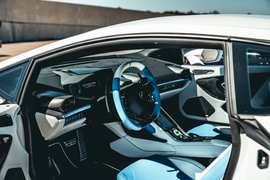
Stepping into the Elise is an event in itself. The ingress-egress process, involving stepping over the sculpted aluminum sill and sliding into the firm, supportive bucket seat, immediately signals that this is not a standard road car. Once settled, the driver is greeted by a functional cockpit featuring a sleek dashboard dominated by analog gauges and a manual shifter. The pedal spacing is surprisingly ergonomic, allowing for seamless heel-toe downshifts, and the gearbox itself features a refined shift linkage that feels mechanical yet effortless.
Out on the road, the Elise’s lightweight chassis becomes its greatest asset. The steering is direct, unfiltered, and wonderfully communicative, transmitting every nuance of the road surface to the driver’s hands. The car changes direction with an immediacy that is almost startling, feeling far lighter and more nimble than its already modest weight might suggest. The Toyota engine, tuned for smoothness and responsiveness, pulls the car along with enthusiastic gusto, making every acceleration feel visceral and purposeful.
The Elise’s handling is best described as a Formula Ford for the road. The engineers at Lotus have achieved a near-perfect balance between grip and responsiveness, allowing drivers to experiment with throttle and braking inputs to subtly alter the car’s attitude. On neutral throttle, the Elise turns with precision and stability; applying throttle induces a predictable, manageable understeer, while lifting off the accelerator causes the tail to rotate gently, tightening the cornering line. These dynamics provide a safe yet deeply rewarding playground for both novice and experienced drivers to hone their skills.
Exploring the Optional Packages: Tuning the Elise for Performance
While the base model of the 2006 Lotus Elise offers a sublime driving experience, Lotus provided several optional packages to cater to different owner preferences and driving scenarios. The Touring Pack, available for an additional fee, adds refinements such as leather seat faces, power windows, an upgraded stereo system, and additional carpeting and sound-deadening. For some enthusiasts, these amenities might detract from the car’s raw, focused character. However, they also enhance the vehicle’s usability for daily driving, offering a touch of comfort without compromising the fundamental driving dynamics.
For drivers seeking to maximize the Elise’s performance capabilities, the Sport Pack represents the ultimate enhancement. This option includes stiffer springs and dampers, larger tires with a softer, stickier compound, and lighter forged aluminum wheels. The Sport Pack significantly alters the car’s character, reducing body roll and sharpening turn-in, making the Elise an even more capable track weapon. However, these enhancements come at the cost of ride comfort, resulting in a noticeably firmer and more demanding ride on the road.
Another practical consideration for North American buyers is the optional hard roof panel, which provides crucial protection against inclement weather in climates that experience extreme conditions. Given the Elise’s heritage as a pure roadster, this option is essential for those who intend to use the car year-round.
A New Era for Lotus: Market Reception and Future Prospects
The launch of the 2006 Lotus Elise marked a pivotal moment in Lotus’s history. In the United States, where the marque had struggled for years due to declining sales of the Esprit and a perception of limited quality and durability, the Elise represented a fresh start. By offering a car that was not only thrilling to drive but also built with the fit and finish expected of a modern production vehicle, Lotus was confident in its ability to capture the attention of a new generation of enthusiasts.
The reception from the automotive press was overwhelmingly positive. Critics lauded the Elise for its purity, its handling precision, and its ability to deliver an unparalleled level of driver engagement. While the Elise was never intended to be a volume seller, its sales performance exceeded expectations. Lotus reported that nearly 2,000 deposits were placed before the cars reached dealerships, signaling strong demand for this unique roadster.
As the production ramped up in Hethel, Lotus aimed to produce 2,200 to 2,400 U.S.-spec Elises, and the early response indicated that the company had successfully found a niche in a competitive market. The Elise occupied a unique space in the automotive world, offering a level of performance and handling that was simply unmatched by its rivals. While the Toyota MR2, Mazda Miata, and other affordable sports cars offered varying degrees of performance, none could match the Elise’s combination of lightweight engineering, raw feedback, and refined chassis tuning.
The 2006 Lotus Elise proved that a car designed for pure driving engagement could thrive in the modern automotive landscape. It demonstrated that the core philosophy of Colin Chapman could be delivered with the consistency and quality that consumers demand, reaffirming Lotus’s position as a leader in lightweight sports car engineering.
2006 Lotus Elise: Technical Specifications
To further understand the technical prowess of the 2006 Lotus Elise, here is a detailed breakdown of its specifications:
Drivetrain: Mid-Engine, Rear-Wheel Drive
The Elise employs a mid-engine, rear-wheel-drive configuration, a design choice that optimizes weight distribution for exceptional handling and balance.
Engine: Toyota 1.8-liter VVT-i
Engine Type: DOHC, 4 valves per cylinder, variable valve timing and lift (VVT-i)
Bore x Stroke: 3.23 x 3.35 inches (82.0 x 85.0 mm)
Displacement: 109.6 cubic inches (1,796 cc)
Compression Ratio: 11.5:1

Max Horsepower: 19