
JDM Titans & German Precision: A Deep Dive into Luftgekühlt Tokyo 2026
The automotive landscape in Japan, long renowned for its electrifying JDM scene and rigorous engineering standards, has undergone a significant evolution in recent years. Beyond the familiar titans of Honda, Nissan, and Toyota, the Japanese car culture has increasingly embraced—and mastered—the art of German automotive engineering. This transformative shift is perhaps best epitomized by the rise of air-cooled Porsche appreciation in the Land of the Rising Sun.
In 2026, this burgeoning passion culminated in a landmark event that bridged two worlds. As the Tokyo metropolitan area undergoes yet another wave of urbanization, a unique spatial opportunity arose. The decommissioned Kyobashi-Shimbashi Line (KK Line), a stretch of defunct elevated highway that once served as a crucial arterial route for the capital, was slated for redevelopment into a mixed-use park and commercial district. But before the paving stones were laid, the space was ceded to a collective of enthusiasts for a singular, unforgettable experience: the inaugural Luftgekühlt Tokyo.
The Genesis of Luftgekühlt Tokyo: A Confluence of Culture and Commerce
For automotive enthusiasts, a pilgrimage to Japan typically involves navigating the sprawling halls of the Tokyo Auto Salon or the Osaka Auto Messe, paying homage at legendary tuning garages, and indulging in an almost embarrassing quantity of Japanese convenience store delicacies. This year, however, featured an altogether extraordinary spectacle nestled in the heart of Tokyo’s urban core. The ever-expanding phenomenon of Luftgekühlt, an event celebrating all things air-cooled Porsche, made its historic debut on Japanese soil.
The organizers secured a rare and exclusive permit to utilize the defunct KK Line, transforming this segment of infrastructure into a temporary automotive exhibition space. The transition was remarkable. What was once a conduit for traffic became a showcase for some of the most significant and visually arresting examples of air-cooled Porsche machinery, bringing together a curated collection of approximately 220 vehicles and drawing crowds totaling 11,600 attendees over a single day. This event offered a distinct paradigm for experiencing both the historical tapestry of Tokyo and the evolving narrative of Porsche culture within Japan.
The strategic significance of the venue cannot be overstated. The KK Line, by its very nature as an abandoned elevated roadway, provided a unique and dramatic backdrop. It offered a striking contrast to the typical automotive shows that usually take place in sterile exhibition halls. The elevated perspective allowed participants to view the collection of Porsches against the backdrop of the modern Tokyo skyline—a powerful visual juxtaposition of history and the future, of mechanical prowess and architectural innovation.
The Automotive Spectacle: From Race History to Modern Masterpieces
As expected of any Luftgekühlt event, the Tokyo edition was a breathtaking display of automotive artistry. The curated selection of vehicles spanned the entire spectrum of Porsche’s air-cooled lineage, ranging from rare, legendary race cars to meticulously refined street builds and avant-garde custom creations. The event served as a testament to the fact that Japanese enthusiasts do not just passively consume automotive trends; they actively shape them.
Among the standout exhibits was the historically significant No. 28 Porsche 910, driven by the renowned Tetsu Ikuzawa. This iconic machine, having achieved second place overall and first in its class at the 1968 Japanese Grand Prix, served as a powerful reminder of the indelible mark air-cooled Porsche has left on the history of Japanese motorsport. Its presence resonated deeply with local fans, many of whom had followed Ikuzawa’s career since their youth. The vehicle’s aerodynamic silhouette and its vintage racing livery stood as a stark contrast to the sleek, modern architecture of the surrounding cityscape.
However, the allure of Luftgekühlt Tokyo extended far beyond historical racing pedigrees. The event also provided a platform for showcasing the cutting-edge of modern Japanese tuner culture. A particularly striking example was the demo car from Auto Garage TBK. This vehicle, transformed with a blend of bold aesthetic modifications and performance enhancements, seemed perfectly at home on the elevated highway. Rather than performing high-speed runs, it was positioned as a static exhibit, allowing attendees to appreciate the meticulous craftsmanship and engineering that went into its creation. The juxtaposition of a classic race car and a modern custom build underscored the diverse yet interconnected nature of the air-cooled Porsche enthusiast community.
The selection process for the exhibited vehicles was rigorous, prioritizing cars that represented both historical significance and contemporary automotive innovation. The organizers sought a balance between rarity and accessibility, ensuring that the event catered to both die-hard Porsche aficionados and newcomers to the brand. This commitment to inclusivity was evident in the range of models on display, from the early 356s to the 964s and 993s, each telling a unique story of evolution, passion, and dedication.
Beyond the Showcase: The Transformation of Luftgekühlt Tokyo
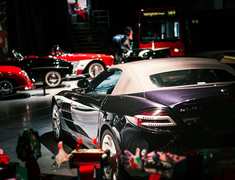
One of the most compelling aspects of Luftgekühlt Tokyo was the visionary approach taken by the organizers to extend the event into the evening hours. This decision transformed the scene completely, shifting the ambiance from a clean, gallery-like showcase to the kind of electrifying underground experience that only Tokyo could provide. The urban landscape itself seemed to transform as the sun set, casting long shadows over the elevated highway and bathing the cars in the dramatic glow of city lights.
The transition from day to night marked a qualitative shift in the event experience. As the initial wave of daylight visitors dispersed and the evening crowds began to arrive, the atmosphere became more intimate and intense. The casual curiosity of the afternoon gave way to the focused passion of the after-hours crowd. The cacophony of camera shutters and idle chatter was replaced by the low rumble of engines and the murmur of shared enthusiasm.
Mark Arcenal, the founder of Illest and Fatlace, was among the distinguished attendees and was visibly impressed by the event’s execution. In a recent interview, Arcenal shared his reflections on the unique nature of Luftgekühlt Tokyo, emphasizing its unparalleled exclusivity. “Luft Tokyo was a once-in-a-lifetime experience that I don’t think will ever be duplicated as that area of freeway will turn into retail and a park, I believe,” Arcenal remarked. “Glad to experience it and see some of the coolest cars around Tokyo.”
Arcenal’s perspective highlights a crucial point: the temporal nature of the venue. The KK Line, as a stretch of unused urban infrastructure, was a finite resource. Its repurposing as a public space meant that the opportunity to host an automotive event of this magnitude was a fleeting one. This ephemeral quality added a layer of poignancy to the experience, ensuring that those who attended would cherish the memory for years to come. The event was not just a car show; it was a cultural moment, a fleeting intersection of automotive passion and urban transformation.
The Evolution of a Lifestyle: Japanese Affection for Porsche
The burgeoning air-cooled Porsche enthusiasm in Japan can be understood as a reflection of broader shifts within the country’s automotive culture. For decades, Japanese manufacturers dominated the global automotive stage with their innovations in efficiency, reliability, and fuel economy. However, as the tastes of discerning Japanese buyers have matured, they have increasingly sought out experiences that go beyond mere utility. They now crave the raw driving pleasure, the historical significance, and the emotional connection that European luxury and performance marques offer.
Porsche, with its deep heritage, motorsport pedigree, and unwavering commitment to air-cooled engineering, has become a focal point for this refined passion. The 911 in particular has transcended its status as a mere sports car to become a symbol of automotive discernment and an investment in automotive history. The Japanese appreciation for the air-cooled Porsche is not simply about owning a luxury vehicle; it is about connecting with a lineage of engineering excellence and a lifestyle that prioritizes purity of experience over cutting-edge technology.
This affinity is further reinforced by the Japanese culture’s reverence for detail, craftsmanship, and dedication. The meticulous restoration of vintage Porsches, the intricate tuning of engines, and the artful modification of bodies reflect the Japanese aesthetic of “shokunin-ki,” the pursuit of mastery through dedication and discipline. The air-cooled Porsche enthusiast community in Japan is characterized by a deep respect for the heritage of the brand, a passion for mechanical artistry, and a shared dedication to preserving the legacy of these iconic vehicles.
Moreover, the Japanese automotive community has embraced air-cooled Porsche as a symbol of exclusivity and personal taste. In a country where Japanese domestic market vehicles have long been the norm, owning a Porsche represents a departure from the mainstream and a commitment to a specific set of values. The 911 is often seen as an aspirational vehicle, a symbol of personal achievement and automotive sophistication. This aspirational quality, combined with the exclusivity of the brand, has fueled the growth of the air-cooled Porsche community in Japan.
The Enduring Appeal of the 911: Engineering, Design, and Driving Experience
The sustained demand for air-cooled Porsche vehicles in the 21st century can be attributed to a confluence of engineering excellence, timeless design, and an unparalleled driving experience. The 911 is more than just a car; it is a cultural icon that has evolved over decades without compromising its core identity. The air-cooled Porsche is characterized by a unique engine sound, a distinctive driving feel, and a raw, visceral connection to the road that modern water-cooled engines cannot replicate.
The 911 is renowned for its distinctive silhouette, which has remained largely unchanged since the first model was introduced in 1963. The iconic rear-engine layout, the sloping roofline, and the characteristic round headlights have become synonymous with automotive excellence and performance. This timeless