
The Return of an Icon: Unpacking the 2026 Toyota Celica Sport and the Future of AWD Performance
The automotive landscape of 2026 is a fascinating paradox. On one hand, manufacturers are chasing electrification with a fervor that borders on religious zeal, promising silent commutes and zero-emission futures. On the other, a persistent, passionate rumble from the enthusiast community—and the automakers themselves—demands a return to visceral driving dynamics. It’s in this electrifying tension that Toyota is poised to make its boldest move yet: the revival of the legendary Celica, reimagined not as a nostalgic nod to the past, but as a technological tour de force for the modern era.
For decades, the Toyota Celica occupied a unique niche. It wasn’t the brute force of a Mustang or the refined precision of a Porsche 911. Instead, it was the intelligent, reliable, and surprisingly capable everyman’s sports car. From its humble rear-wheel-drive origins to the rally-bred All-Trac Turbo dominance of the 1980s, the Celica built a legacy on accessibility and performance potential. Now, with the fifth-generation Supra nearing the end of its production run, Gazoo Racing (GR)—Toyota’s dedicated performance division—is ready to fill the void. And according to the latest intelligence from the Tokyo Motor Show and subsequent industry murmurs, the successor won’t just carry the name; it will redefine it.
The whispers from Japan, now coalescing into near-certainty, suggest a vehicle that honors the Celica’s all-wheel-drive heritage while embracing the hybrid technology that will define the next decade of performance motoring. This isn’t just a redesign; it’s a declaration that hybrid power and driver engagement are not mutually exclusive concepts.
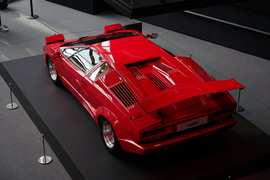
The Heart of the Beast: A Hybrid Turbocharged Revelation
The most electrifying aspect of the forthcoming Celica Sport isn’t its silhouette or its badge—it’s the powertrain. For years, the automotive world has debated the role of the internal combustion engine in an electrified future. Toyota, through GR, is answering that debate with a resounding, high-performance “both.”
At the core of this new machine lies a compact, yet potent, turbocharged 2.0-liter four-cylinder engine. This isn’t just a scaled-down version of existing Toyota blocks; it’s a purpose-built unit designed from the ground up for performance duty. Unveiled conceptually within the mid-engined GR Yaris M concept, this engine represents a significant technological leap. Toyota engineers have reportedly optimized its architecture—likely featuring a shorter piston stroke than current offerings—to maximize efficiency and minimize the parasitic weight penalty often associated with forced induction.
However, the true genius of this setup lies in its hybridization. Toyota has consistently demonstrated that hybrid systems, when integrated correctly, can enhance performance rather than merely serve as an emissions buffer. In the case of the Celica Sport, the electric motor and battery pack are not afterthoughts. They are integrated to deliver instant torque fill, bridging the gap in the turbocharger’s power band and providing a surge of acceleration that traditional naturally aspirated engines simply cannot match.
The numbers being whispered by those close to the project are staggering. While official figures remain locked away in Toyota’s R&D labs, industry analysts predict a combined output hovering around the 400-horsepower mark. This figure places the Celica Sport squarely in contention with established performance benchmarks, but the implications go deeper than a simple horsepower tally.
The Gravitational Pull of All-Wheel Drive
What truly sets this revival apart is the decision to implement an all-wheel-drive (AWD) system. The Celica nameplate has flirted with AWD before, most famously with the legendary All-Trac Turbo models of the 1980s and early 1990s. Those cars were rally-bred machines, utilizing sophisticated differentials and power distribution systems to claw their way to victory on gravel stages across the globe.
The 2026 iteration promises a modern interpretation of this philosophy. While the exact mechanical configuration remains under wraps, it is widely expected to leverage Toyota’s latest torque-vectoring technology, similar to that found in the GR Yaris and GR Corolla. This system doesn’t just send power to all four wheels; it actively manages the torque split between the front and rear axles, and even between the left and right wheels, to maximize grip and minimize understeer.
For the driver, this translates into a level of confidence and capability that is rarely experienced outside of dedicated track cars. Imagine accelerating out of a damp corner on a winding mountain road; the hybrid system delivers an immediate shove forward, while the AWD system ensures that every ounce of that power is translated into forward motion, not wasted in wheelspin. It’s a driving experience that invites exploration and rewards skill, staying true to the Celica’s roots as an accessible performance car—albeit one with significantly enhanced capabilities.
Gazoo Racing’s Fingerprint
Any discussion of a new Toyota performance car in the 2020s must center on Gazoo Racing. GR has, in a remarkably short time, transformed Toyota’s image from that of a reliable but staid manufacturer to a dominant force in international motorsport and a producer of some of the most engaging road cars on the market. The Celica Sport will undoubtedly bear the full imprimatur of GR’s performance philosophy.
This means more than just a badge and a sportier suspension. It suggests a chassis honed at the Nürburgring, a braking system capable of repeated hard use, and an interior that prioritizes the driver without sacrificing the daily usability that has always been the Celica’s hallmark. The design language, while yet to be officially revealed, is expected to blend the compact proportions of its ancestors with the aggressive aerodynamic elements that define the current GR lineup. We anticipate sharp creases, functional air intakes, and a low, wide stance that clearly communicates its performance intent.
Furthermore, the GR influence ensures that this car will be a homologation special in spirit, if not in name. With Toyota’s rally program evolving to meet new regulations, the platform underpinning the Celica Sport could well serve as the basis for the next generation of World Rally Championship challengers. This direct lineage to motorsport often translates into a more robust, driver-focused product, as lessons learned on the track are applied directly to the road car.
Addressing the Market: Why Now?
The timing of the Celica Sport’s arrival is as strategic as its engineering. The automotive market is currently in a state of flux. Enthusiasts are vocalizing their desire for analog driving experiences, even as regulatory pressures push for electrification. This creates a unique opportunity for a manufacturer like Toyota to bridge the gap.
By offering a high-performance hybrid, Toyota can capture buyers who are drawn to the excitement of a traditional sports car but are also conscious of future-proofing their purchase. The hybrid system provides a degree of environmental credibility and fuel efficiency that makes the car palatable for daily driving, while the GR tuning ensures that the driving experience remains exhilarating. It’s a compromise that feels less like a concession and more like a smart evolution.
Moreover, the Celica Sport enters a segment that is ripe for disruption. While the market has seen the re-emergence of the Supra and the continued success of the GR86, there remains a space for a compact, AWD performance coupe that doesn’t rely on brute force alone. The Celica can carve out a niche defined by technological sophistication and rally-bred agility, appealing to a demographic that values intelligence and capability over raw power.
The Production Puzzle
While the excitement surrounding the Celica Sport is palpable, the path to production is not without its challenges. One of the most frequently asked questions is how this new model will coexist with the existing GR lineup. The GR86 offers an affordable, RWD entry point, while the GR Supra provides a premium, RWD experience. The Celica Sport, with its AWD hybrid system, would occupy a distinct position in the hierarchy.
However, the integration of the new 2.0-liter hybrid powertrain presents the most significant hurdle. Toyota’s engineers are reportedly working diligently to package this system efficiently. The choice of a compact four-cylinder, rather than a larger V6 or V8, is a testament to their commitment to balance and handling. Adding the battery and electric motor without compromising the car’s center of gravity or overall weight has been a key engineering challenge.
The timeline for this integration also remains a point of speculation. Toyota has been deliberately coy about the production schedule for the new 2.0-liter engine, offering only vague assurances that development is proceeding apace. This measured approach suggests that Toyota is not rushing the Celica Sport to market. Instead, they are ensuring that when it does arrive, it will be a fully realized product that meets the high standards set by Gazoo Racing.
The Driving Experience: A Confluence of Power and Precision
For those who crave a connection with their machine, the prospect of the Celica Sport is intoxicating. Imagine slotting into the driver’s seat, the interior a blend of functional design and premium materials. The low seating position immediately signals that this is a driver’s car.
Upon pressing the starter button, there is no roar, but a subtle, electronic hum. The initial movement is silent, courtesy of the electric motor. As the car begins to roll, the turbocharged engine awakens, its voice a muted but purposeful growl. This duality is central to the experience. In urban environments, the Celica Sport can operate as a silent, efficient hybrid, gliding through traffic with ease.
However, the moment the road opens up and the throttle is applied, the car transforms. The electric motor and gasoline engine work in concert, delivering a seamless surge of power. The AWD system