
The Future of Toyota Performance: Inside the 2026 Celica Sport
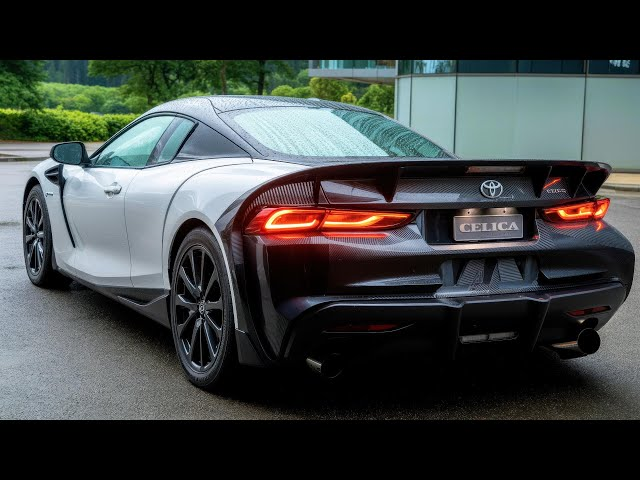
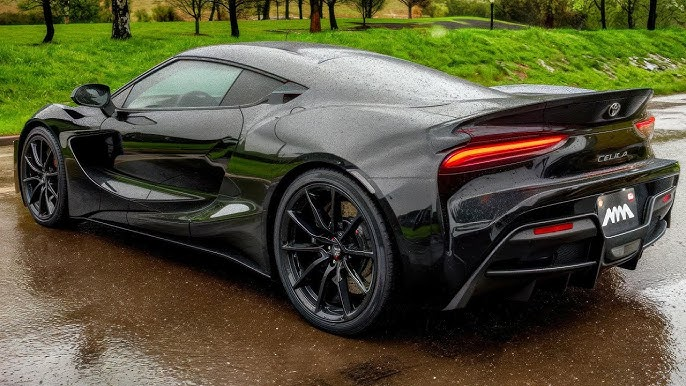
The automotive landscape is shifting beneath our feet. As regulations tighten and consumer preferences evolve, the traditional definition of a “sports car” is being rewritten in real-time. For enthusiasts clinging to the days of simple, analog machines, this transition can feel unsettling. Yet, for those willing to embrace innovation, the future promises something potentially more exhilarating than ever before. At the forefront of this revolution stands Toyota, a brand synonymous with reliability, but increasingly, a powerhouse of performance engineering. The whispers that began in 2024 have solidified into a roar: the legendary Celica is making its triumphant return. But this is not simply a nostalgic rehash of the past; the 2026 Toyota Celica Sport represents a bold declaration of intent, merging heritage with cutting-edge technology to create a machine that could redefine the segment.
The End of an Era and the Dawn of a New One
The farewell of the fifth-generation Toyota Supra marks the closing of a significant chapter for Toyota’s GR (Gazoo Racing) division. Known for its iconic design and driving dynamics, the Supra has been a benchmark in the sports car market. However, its departure is not a sign of retreat, but rather a strategic realignment. Toyota isn’t abandoning the enthusiast market; it’s doubling down, leveraging its considerable R&D resources to deliver something truly special. The timing of the Supra’s retirement is serendipitous, creating a void that only a legend of the Celica’s stature can fill.
Reports emerging from Japan and automotive publications worldwide paint a picture of a vehicle that honors the Celica’s storied past while embracing the technological demands of the future. The name itself—Celica Sport—evokes memories of rally stages and asphalt corners, a legacy built on the very principle that now seems destined to define its comeback: all-wheel drive.
The Return of AWD: A Nod to Rally Heritage
For decades, the Celica nameplate was synonymous with rally racing. From the early rear-wheel-drive models to the revolutionary all-wheel-drive All-Trac Turbo variants of the 1980s and 90s, the car carved its identity into the fabric of motorsport history. This legacy is not merely sentimental; it provides a clear blueprint for the vehicle’s engineering philosophy.
According to insights from Toyota’s Gazoo Racing marketing manager, Mikio Hayashi, the new Celica Sport will indeed feature an all-wheel-drive system. This decision is significant. In a world where many manufacturers are prioritizing lightweight, rear-wheel-drive layouts for their sports cars, Toyota’s choice to embrace AWD suggests a focus on utilizing the car’s full performance potential across diverse conditions. It hints at a vehicle that is not just fast on a dry track but capable of conquering challenging surfaces with confidence and precision.
The visual evidence supports this theory. Recent sightings of camouflaged Toyota prototypes testing in Portugal have sparked intense speculation. These test mules, compact in dimension and sporting coupe silhouettes, bear a striking resemblance to what one might expect from a modern-day Celica. More tellingly, these prototypes were observed in the very environment that birthed the Celica’s legendary status: the world of rally racing. The current Yaris-based rally car, a dominant force in the World Rally Championship, is nearing the end of its homologation cycle. The logical successor, a vehicle designed specifically for the next generation of WRC regulations set to take effect in 2027, appears to be taking shape—and it looks remarkably like the new Celica. This potential dual-purpose nature, serving as both a road-going sports car and a rally homologation special, would be a masterstroke, allowing Toyota to showcase its engineering prowess on the global stage while delivering a visceral experience to everyday drivers.
The Heart of the Machine: A Hybridized Turbo-Four
While the chassis and drivetrain configuration are generating excitement, the most significant revelation concerns the powertrain. Toyota is reportedly equipping the Celica Sport with a next-generation hybrid system centered around a turbocharged 2.0-liter four-cylinder engine. This is not merely a carry-over component; it represents a significant investment in future performance technology.
The origins of this engine can be traced back to the 2025 Tokyo Auto Salon, where Toyota unveiled the GR Yaris M concept. This mid-engined marvel showcased a new turbo-four codenamed G20E, a unit designed to deliver power and efficiency in a compact package. Now, it appears this innovative engine is poised to take center stage in the Celica.
The rationale behind this development is pragmatic. As engine regulations continue to tighten globally, smaller displacement engines are becoming increasingly necessary to meet emission standards. However, the quest for performance cannot be sacrificed. The hybrid system addresses this challenge head-on. By pairing the turbocharged 2.0-liter engine with an electric motor and battery, Toyota can achieve a synergistic effect. The electric motor provides instant torque, filling in the gaps in the turbocharger’s powerband and delivering a seamless, linear surge of acceleration that is often difficult to achieve with traditional internal combustion engines alone.
According to the insights shared by Hayashi, the development of this engine is progressing steadily. While he remained tight-lipped about specific timelines, his acknowledgment that “we are continuing to develop that” and “we have high expectations” speaks volumes about the seriousness of the project. The engineering challenges are not insignificant. Integrating a hybrid system adds weight and complexity, factors that must be carefully managed in a performance-oriented vehicle. Toyota’s engineers are reportedly addressing this by designing the 2.0-liter engine with a shorter piston stroke than current Toyota engines. This design choice reduces the engine’s physical dimensions and overall weight, helping to offset the added mass of the hybrid components.
The potential performance figures are staggering. While Toyota has not released official specifications, industry analysis suggests a combined output that could approach or even exceed 400 horsepower. Some German publications have theorized that with an enlarged turbocharger, the hybrid unit could potentially generate over 600 horsepower. If these figures hold true, the Celica Sport would position itself not just as a competitor, but as a formidable force in the high-performance segment.
Beyond the Celica: A Wider Ecosystem of Performance
The implications of this new powertrain extend far beyond a single model. The turbocharged 2.0-liter hybrid unit is clearly envisioned as a foundational element of Toyota’s future performance strategy. It is expected to trickle down to other GR-branded vehicles, creating a ripple effect that will enhance the entire performance lineup.
For Europe, the GR Yaris is a prime candidate for an upgrade. A hybridized version of the 2.0-liter engine could significantly boost its already impressive performance credentials, ensuring its continued relevance in a market that demands both power and compliance.
The United States market, however, presents a different set of opportunities and challenges. Here, the GR Corolla is the obvious beneficiary. A turbocharged 2.0-liter hybrid variant could transform the GR Corolla from a highly capable hot hatch into a true supercar killer. Imagine a machine that combines the practicality of a compact car with the performance capabilities of a Porsche 911—a vehicle that can handle daily commutes with ease yet transform into a track weapon at the push of a button. This is the promise of Toyota’s current trajectory.
The Strategic Vision: Balancing Tradition and Innovation
The development of the Celica Sport and its cutting-edge powertrain is a testament to Toyota’s evolving identity. For years, the brand was primarily known for its fuel-efficient, reliable, and practical vehicles. While these attributes remain cornerstones of the Toyota brand, the company has increasingly demonstrated a commitment to performance and driving excitement. The GR division, led by the visionary Akio Toyoda, has been instrumental in this transformation, injecting passion and performance into a lineup that was once perceived as somewhat staid.
The Celica’s return is particularly significant because it bridges the gap between Toyota’s past and future. The original Celica was a car that made performance accessible to the masses. It was a vehicle that inspired a generation of drivers and enthusiasts. By reviving the nameplate, Toyota is not just capitalizing on nostalgia; it is seeking to replicate that magic for a new generation.
The decision to make the Celica a hybrid is a calculated risk, but one that appears strategically sound. The automotive industry is at a crossroads, with many manufacturers exploring electrification as the primary path forward. By embracing hybridization, Toyota is positioning itself at the forefront of this transition. It allows the brand to deliver the performance that enthusiasts crave while also meeting increasingly stringent environmental regulations. This “best of both worlds” approach could prove to be a decisive competitive advantage.
Market Dynamics and Competitive Landscape
The automotive market in 2026 is more competitive than ever, with established players and emerging brands vying for the attention of performance-oriented buyers. The Celica Sport will enter a segment populated by formidable rivals, including the Subaru BRZ, the Mazda MX-5 Miata, and the Ford Mustang. However, the Celica’s unique combination of all-wheel drive and hybrid power could carve out a distinct niche for itself.
Subaru, long the king of all-wheel-drive performance in the affordable sports car segment, will undoubtedly view the Celica Sport as a direct competitor. The two brands have a storied history in rally racing, and the rivalry is likely to continue on the road. The Celica’s potential power advantage, thanks to its hybrid system, could prove to be a significant differentiator.
Mazda’s MX-5 Miata, the benchmark for lightweight, rear-wheel-drive fun, represents a different philosophy. While the Celica may not match the Miata’s pure, unfiltered driving experience, it will likely offer a