
The Future of Performance: Unpacking the 2026 Toyota Celica Sport’s Revolutionary Hybrid AWD System
The automotive landscape is undergoing a seismic shift, driven by the dual forces of electrification and the persistent demand for exhilarating driving dynamics. As the internal combustion engine approaches its twilight years, manufacturers are scrambling to redefine what a “sports car” truly means. Enter Toyota, a brand historically synonymous with reliability, but one that has recently reasserted its performance credentials through the Gazoo Racing (GR) division. The whispers around a spiritual successor to the legendary Celica have intensified, culminating in credible intelligence suggesting the revival of this iconic nameplate. But this will not be a nostalgic rehashing of a front-wheel-drive rally homologation special. The forthcoming Toyota Celica Sport, slated for a 2026 reveal, is poised to shatter conventional expectations by integrating a cutting-edge all-wheel-drive (AWD) hybrid powertrain—a technological marriage that promises to deliver the visceral thrill of a rally legend with the efficiency and intelligence demanded by the modern era.
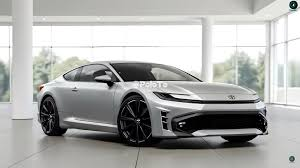
For decades, the Toyota Celica occupied a unique niche in the automotive pantheon. Born in the 1970s as a rear-wheel-drive coupe, it evolved through multiple generations, eventually embracing the front-wheel-drive layout that defined its most successful rally incarnations. The fourth-generation All-Trac Turbo, in particular, etched its name into the annals of motorsport history, showcasing the brand’s engineering prowess on the treacherous stages of the World Rally Championship (WRC). However, the model was eventually retired in 2006, leaving a void in Toyota’s lineup and a pang of longing for enthusiasts who cherished its blend of affordability, agility, and rally-bred DNA.
Now, with the fifth-generation Supra nearing the end of its production run, Toyota has signaled its unwavering commitment to the performance segment. The confirmation of a new Celica, initially hinted at by a Toyota executive in late 2024, has been corroborated by a comprehensive report from the esteemed British publication, Autocar. This report, grounded in interviews with Gazoo Racing marketing manager Mikio Hayashi, provides an unprecedented glimpse into the technical architecture of this reborn icon. The most electrifying revelation is the confirmation that the new Celica Sport will eschew traditional layouts in favor of a sophisticated all-wheel-drive system, a direct nod to its rally heritage.
Beyond the drivetrain configuration, the powertrain itself represents a significant departure from the norm. Hayashi alluded to the development of a new turbocharged 2.0-liter four-cylinder engine, codenamed G20E. This engine was first showcased in concept form within the mid-engined GR Yaris M concept at the 2025 Tokyo Auto Salon, signaling Toyota’s intent to deploy it across its performance lineup. The decision to move away from the GR Yaris’s 1.6-liter unit is a calculated response to increasingly stringent global emission regulations. “The displacement size of 1.6 liters, for example, cannot meet emission regulations,” Hayashi explained. “So we have to consider the possibility of a 2.0-liter.”
The inclusion of “Sport” in the model’s designation, as revealed by Hayashi, further underscores the performance-oriented nature of this revival. This is not merely a compliance exercise; it is the reintroduction of a nameplate revered for its sporting pedigree. The confluence of all-wheel drive and a high-performance hybrid system positions the Celica Sport as a formidable contender in the evolving landscape of performance automobiles, capable of challenging established rivals while charting a new course for the segment.
Delving deeper into the engineering specifics, the new 2.0-liter G20E engine is a testament to modern powertrain optimization. According to Autocar’s sources, the engine features a shorter piston stroke than Toyota’s current offerings. This design choice is critical for reducing engine dimensions and overall weight, a perennial challenge in the development of high-performance vehicles. The implications for the Celica Sport are profound. By minimizing the inherent weight penalty of a compact engine, Toyota can integrate hybrid components—the battery pack and electric motor—without compromising the car’s agility or handling balance. This synergistic approach ensures that the car remains nimble and responsive, maintaining the lightweight feel that defined the original Celica.
The question of power output remains a subject of intense speculation, with projections varying wildly depending on the source. Early reports suggested a combined output hovering around the 400-horsepower mark, a figure that would place the Celica Sport firmly in the high-performance bracket. However, more ambitious estimates from German publication Auto Motor und Sport posit that with the addition of a larger turbocharger, the hybrid system could potentially unleash upwards of 600 horsepower. While such figures may seem audacious, they are not entirely implausible when considering Toyota’s recent engineering achievements. The GR Yaris, for instance, pushes the boundaries of what is possible with a 1.6-liter engine, and the GR Corolla demonstrates Toyota’s capability in delivering potent AWD performance. The Celica Sport’s hybrid AWD setup could serve as a technological showcase, leveraging the strengths of both electric and combustion power to achieve unprecedented levels of performance.
The strategic deployment of this new powertrain extends beyond the confines of the Celica Sport. Toyota is expected to integrate the G20E engine into its broader GR portfolio, with the GR Corolla in the United States and the GR Yaris in Europe being prime candidates for an upgrade. This approach allows Toyota to amortize the research and development costs associated with the new engine across multiple models, maximizing its utility and accelerating its refinement. The implications for enthusiasts are manifold: a new generation of high-performance Toyota models, each imbued with the spirit of Gazoo Racing and equipped with a powertrain that bridges the gap between performance and efficiency.
The timing of the Celica Sport’s debut is intrinsically linked to the evolution of the World Rally Championship. The current Yaris-based rally car will be rendered ineligible for competition in the 2027 season due to regulatory changes. This looming deadline has spurred Toyota’s engineering teams to develop a new platform capable of meeting the stringent requirements of the WRC’s next generation. Recent sightings of a camouflaged prototype testing in Portugal have fueled speculation that the new Celica is destined to become Toyota’s next WRC challenger. The prototype’s compact coupe silhouette strongly suggests a connection to the Celica nameplate, marking a return to the model’s rally roots.
The return of the Celica to the WRC stage would be a coup for Toyota, reigniting the brand’s association with the pinnacle of rally racing. The legendary rivalry between the Celica and its competitors in the late 1980s and early 1990s remains etched in the memories of motorsport aficionados. Reintroducing the model in a production guise that mirrors its rally counterpart would create a compelling narrative, allowing customers to purchase a car that shares a direct lineage with the machines that conquered the world’s most demanding rally stages. This synergy between motorsport and production vehicles is a cornerstone of Toyota’s GR strategy, fostering a culture of innovation and performance that trickles down to the vehicles available to the public.
The question of whether the Celica Sport will be offered as a hybrid or plug-in hybrid (PHEV) remains unanswered, with Toyota’s executives maintaining a degree of ambiguity. “We are thinking about various sizes, but we are not at a stage where we can tell you exactly what size it is,” Hayashi stated. “Nothing has been decided yet whether it will be a standard hybrid or plug-in hybrid.” This reticence is understandable, as Toyota is likely weighing the pros and cons of each approach. A standard hybrid system would offer a compelling blend of efficiency and performance, while a PHEV setup would provide the added benefit of all-electric driving for shorter commutes, aligning with the broader trend toward electrification. The choice between the two will ultimately depend on a complex calculus involving performance targets, regulatory requirements, and market positioning.
The development timeline for the new 2.0-liter engine is also shrouded in a degree of uncertainty. Toyota is proceeding with caution, ensuring that the engine meets the brand’s exacting standards for performance, reliability, and emissions compliance. “We are continuing to develop that. We have high expectations,” Hayashi hinted. “We cannot point to a timeline but can say we are making steady progress.” This measured approach suggests that the engine’s refinement is a priority, with Toyota unwilling to rush the introduction of a powertrain that will define the next generation of its performance vehicles.
The implications of the Celica Sport’s hybrid AWD system extend far beyond the realm of performance. As the automotive industry grapples with the transition to electrification, manufacturers are exploring innovative ways to integrate electric propulsion without sacrificing driving engagement. The Celica Sport’s approach—leveraging a compact, high-efficiency engine combined with electric torque vectoring—could serve as a blueprint for future performance vehicles. By demonstrating that hybrid technology can enhance, rather than detract from, the driving experience, Toyota can help to assuage the concerns of enthusiasts who may be apprehensive about the shift away from traditional internal combustion engines.
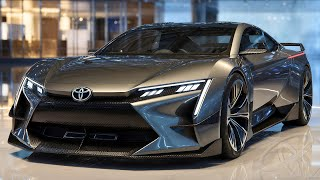
The question of pricing and market positioning also looms large. Given the advanced technology involved, the Celica Sport is unlikely to be an economy-focused model. It will occupy a premium space within Toyota’s lineup, likely priced above the GR Corolla and potentially rivaling the Supra in certain markets. However, the inclusion of a hybrid powertrain could offer a degree of flexibility in pricing, as incentives and tax credits for electrified vehicles may help to offset the cost of the advanced technology.
The competitive landscape for the Celica Sport will be fierce. It will inevitably draw comparisons to other performance coupes, both traditional and electrified. The Honda Civic Type R, a benchmark for front-wheel-drive performance