🔻 WATCH THE VIDEO BELOW 🔻

The Zenith of Automotive Sculpture: Charting the Fastest Pagani Hypercars in 2026
For the better part of three decades, the Pagani marque has stood as an unwavering beacon of unparalleled automotive artistry and audacious performance within the global enthusiast community. The vision of Horacio Pagani, an engineer whose Argentinian origins are interwoven with a profound Italian soul, has consistently redefined the boundaries of what is achievable in hypercar design and engineering. His remarkable journey, spanning from early inspirations in Formula 2 racing to a pivotal tenure at Lamborghini where he championed the nascent application of composite materials, laid the foundational groundwork for a marque dedicated not merely to speed, but to creating rolling sculptures that redefine desirability and the very limits of vehicular dynamics.
My own decade spent immersed in the rarefied atmosphere of exotic automobiles has offered a privileged and deeply reflective perspective on the relentless evolution of automotive engineering. Witnessing firsthand the dedication, obsession, and sheer ingenuity poured into machines bearing the Pagani crest has fostered a profound and abiding respect for this elite niche of the industry. It is a realm where bleeding-edge innovation collides with an almost spiritual commitment to detail, where every precisely sculpted curve, every meticulously selected material, and every finely tuned component converges to create an experience that transcends mere transportation. This exploration delves into the very heart of Pagani’s most potent creations, dissecting their astonishing top speeds and reflecting on the groundbreaking technologies and unwavering design philosophies that have cemented their legendary status in the automotive lexicon.
The trajectory of Horacio Pagani himself is a compelling narrative of relentless drive. Born in 1955, his formative years were illuminated by an early, insatiable fascination with sports cars, a passion that would ultimately define his life’s work. By his early twenties, he had already demonstrated exceptional engineering acumen by completing his inaugural Formula 2 race car. His early professional engagements, including a stint with Renault focused on enhancing racing car aerodynamics, provided an invaluable technical foundation. However, it was his relocation to Italy in 1983 and his subsequent employment at Lamborghini that truly set the stage for his remarkable future, positioning him at the absolute epicenter of Italian high-performance automotive manufacturing.
Lamborghini, a brand Horacio had long revered, presented an unparalleled opportunity to immerse himself in the high-stakes world of Italian automotive manufacturing. Beginning at the ground level within a company that, at the time, boasted a workforce of fewer than 200 individuals, Horacio’s innate talent and forward-thinking mindset quickly propelled him through the ranks. His discerning eye soon led him to investigate the revolutionary potential of composite materials. Despite encountering initial resistance from deeply entrenched conventional thinking, Horacio was an unwavering advocate for the exceptional strength-to-weight ratio offered by these advanced materials. His persistent research and development efforts bore significant fruit when he successfully integrated composite components into the chassis of the Lamborghini Countach anniversary edition, a seminal moment that foreshadowed the materials his own company would later master and revolutionize. This landmark achievement remains a critical touchpoint in the history of supercars.
By 1991, armed with a wealth of acquired experience and a crystal-clear vision, Horacio departed Lamborghini to establish Pagani Automobili. This pivotal move granted him the autonomy to pursue his unbridled ambition of creating the ultimate supercar, free from the constraints and compromises often imposed by larger, more established manufacturers. The Pagani models that have graced the automotive landscape since then are a direct manifestation of this newfound freedom, each a profound testament to Horacio’s obsessive attention to detail and his unyielding pursuit of perfection. Pagani is a brand that truly belongs on any list of the world’s top 100 luxury car brands, distinguished by its commitment to pushing the boundaries of what is possible in modern automotive engineering and design.
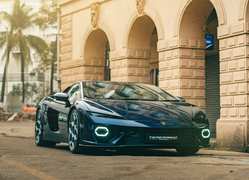
Our focus in this deep dive is the quantifiable apex of Pagani’s engineering prowess: their outright top speeds. While Pagani vehicles are universally lauded for their holistic performance capabilities—encompassing razor-sharp handling, prodigious braking, and an unparalleled driver connection—an examination of their maximum velocities offers a unique and fascinating insight into the raw capability and sophisticated aerodynamic design of these automotive masterpieces. We will embark on a journey to rank the fastest Pagani hypercars based on their documented or estimated top speeds, a metric that, while not the sole arbiter of a car’s greatness, undeniably remains a potent symbol of automotive supremacy and technological advancement. Exploring Pagani top speed records provides a fascinating snapshot of the brand’s continuous push for automotive excellence in the high-performance luxury sector.
Charting the Pinnacle: Ranking the Fastest Pagani Hypercars in 2026
The quest for automotive excellence is an unending journey, and within the exclusive echelons of Pagani, this journey is marked by increasingly ambitious feats of engineering and design. Let us delve into the impressive lineage of Pagani’s speed demons, understanding that top speed in a Pagani is rarely an end in itself, but rather a consequence of a symphony of engineering. This analysis is updated to reflect the latest models and market trends in the competitive high-performance luxury car market of 2026.
2009 Pagani Zonda Cinque Roadster: 217 MPH (Approx. 349 km/h)
A true icon of ultra-limited production exclusivity, the Zonda Cinque Roadster was a sight to behold, with only five meticulously crafted units ever produced. This road-legal masterpiece showcased Pagani’s profound mastery of advanced materials, featuring a chassis constructed from a cutting-edge blend of carbon fiber and titanium. Powering this exquisite machine was a potent, naturally aspirated Mercedes-Benz AMG V-12 engine, capable of unleashing a formidable 678 horsepower and 575 pound-feet of torque. The exhaust system, a signature Pagani design, was painstakingly crafted from Inconel and titanium, a testament to the brand’s unwavering commitment to both performance and exclusivity. The Pagani Zonda Cinque Roadster price reflects its extreme rarity and unique position in automotive history.
The Cinque Roadster was equipped with a lightning-fast 6-speed sequential transmission and an adjustable suspension system, offering a surprising degree of driver adjustability without compromising its inherent sporting intent. Its top speed of 217 MPH was an impressive achievement for its era. However, it is crucial to understand that for Pagani, outright top speed has always been a byproduct of a greater objective: delivering a perfectly balanced and exhilarating driving experience. Even at speeds exceeding 200 MPH, Pagani vehicles are engineered for dynamic composure and unwavering performance, not solely for the purpose of breaking absolute speed records. This ethos is central to the Pagani Zonda value proposition, emphasizing a driver-centric approach and contributing to the high values of these vehicles today.
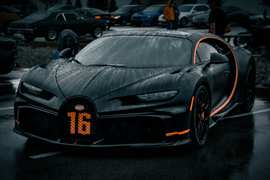
2020 Pagani Zonda Revolución: 217 MPH (Approx. 349 km/h)
The Zonda Revolución was conceived as a radical reinterpretation of Pagani’s core philosophy, a profound fusion of \”art applied to speed.\” Pagani has consistently maintained a deep and abiding appreciation for the Italian tradition of crafting aesthetically beautiful sports cars, and the Revolución exemplifies this commitment, representing a harmonious integration of visual allure and functional performance.
Developed meticulously by Horacio and his highly skilled engineering team, the Revolución was intended for both the rarefied air of private collections and the demanding environment of the racetrack. It was not a road-legal vehicle. Despite its formidable 6.0-liter V-12 engine, now producing a staggering 800 horsepower and tipping the scales at a remarkably light 2,359 pounds, its aerodynamically optimized bodywork was designed to generate substantial downforce. This intense focus on track-oriented aerodynamics, while absolutely crucial for maximizing cornering G-forces and stability at high speeds, inherently limits its top speed potential compared to a vehicle optimized purely for straight-line velocity. Nevertheless, the Zonda Revolución is also credited with reaching the 217 MPH mark. The Pagani Zonda Revolución price reflects its bespoke nature and extreme performance capabilities, solidifying its place among the most sought-after luxury vehicles.
2002 Pagani Zonda S: 220 MPH (Approx. 354 km/h)
Emanating from the lineage of the original Zonda C12, which made its debut at the Geneva Motor Show in 1999, the Pagani Zonda S was designed to make a profound statement, and it unequivocally succeeded. This iteration featured a potent 7.3-liter V-12 engine sourced directly from Mercedes-AMG, delivering a formidable 555 horsepower and 553 pound-feet of torque at a relatively low 4,050 rpm. Notably, even at a mere 2,000 rpm, this powerplant was already generating an impressive 457 pound-feet of torque. These figures, staggering in 2002, remain remarkably potent even by today’s demanding standards, placing the Zonda among the fastest cars of its era and contributing to the strong Pagani Zonda value today.
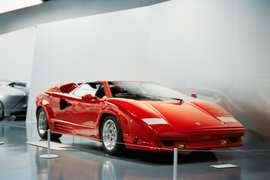
During the Zonda S’s era, the automotive landscape was dominated by titans such as the Bugatti Veyron, with its monstrous 1,000-horsepower Quad Turbo W-16. However, the Veyron was primarily conceived as a definitive top-speed champion. A more pertinent comparison for the Zonda S might be the Ferrari Enzo, launched in the same year. The Enzo, often hailed as one of the first true hypercars, was a lightweight, rear-wheel-drive machine powered by a screaming V-12 that produced 651 horsepower. While the Enzo’s peak horsepower was higher, it was achieved at significantly higher revs, and its torque output of 485 pound-feet was notably