
Top JDM & Import Builds at Wekfest New Jersey 2026: A Veteran’s Perspective
The global tuning scene is a constantly evolving tapestry of raw power, bespoke engineering, and cultural expression. Within this vibrant landscape, the Honda and Acura brands hold a unique and deeply cherished position. Established in 2008 by Kenneth Li, Wekfest has long served as a definitive showcase for the pinnacle of JDM and import performance, and the New Jersey stop remains a cornerstone event for enthusiasts across the United States and beyond. Two years after my initial exposure to the event, my return to the Wekfest calendar in 2026 offered a profound look into how the genre has evolved—and how the legacy of these iconic Japanese machines continues to captivate and define the industry.
Wekfest New Jersey 2026 presented a compelling shift in the car show landscape. A deep dive into the event catalog revealed a palpable dominance by the Honda marquee. For every Toyota, Nissan, or European sports car on display, there seemed to be multiple Hondas—each representing a unique chapter in the brand’s storied history and an iteration of the depth and variety within its tuning culture.

As a professional in the automotive tuning industry with a decade of hands-on experience, I approach Wekfest with a different lens than a casual observer. My focus is on the engineering behind the builds, the technical execution of the modifications, and the cultural significance they represent. Below is a comprehensive analysis of some of the standout examples that captured the attention of attendees and solidified the event’s reputation. Each vehicle represents the passion and precision that define this global gathering and highlight the current state of JDM tuner innovation.
The Lone NSX: A Time Attack Masterpiece
The 1992 Acura NSX, owned by Marby Enriquez since 2014, stands as a testament to the transformation of a road-going sports car into a purpose-built time attack machine. Enriquez’s journey with the NSX began with appreciation for its factory performance. However, the evolution of the vehicle under his ownership has been one of ambitious engineering, culminating in a vehicle that is as menacing as it is elegant.
This Acura NSX 1992 is presented in a striking blue wrap that accentuates the car’s aerodynamic profile. The build features a classic Comptech Whipple supercharger system, paired with a Walbro 255 fuel pump, and a snorkel intake that pays homage to the Japan-exclusive NSX-R GT. The introduction of a carbon-fiber hood with a functional scoop immediately draws the eye, channeling cool air directly to the heart of the engine bay.
This vehicle’s performance metrics are significant. It records 380 horsepower and 270 lb-ft of torque at the wheels. The chassis is supported by KW Clubsport coil-overs, titanium chassis bracing, and Volk Racing TE37 wheels. These are fitted with Toyo Proxes R888R tires, and the stopping power is provided by StopTech brakes with Hawk pads. The rear is graced by a large Voltex Type 4/5 GT wing, designed to enhance high-speed stability on the track.
While this Acura NSX 1992 has evolved further since its 2020 magazine feature—now featuring white wheels and a subtler front spoiler—it remains a striking example of the precision and craftsmanship that define Wekfest. The build perfectly illustrates the depth of engineering required to transform a reliable road car into a competitive track weapon, setting a high bar for any performance-focused vehicles at Wekfest New Jersey 2026. This vehicle is a benchmark for Acura NSX build quality and a showcase of JDM tuning at its finest. For enthusiasts seeking similar performance modifications, this build offers valuable technical insight.
The N-BOX: A Bold Statement of Diversity
The Honda N-BOX represents one of the many kei cars the brand has produced over the years. These small, efficient vehicles are designed to meet strict Japanese-mandated size and engine regulations. Even the largest kei cars remain smaller than a Mazda Miata, with displacement capped at approximately 660cc. However, the N-BOX at Wekfest New Jersey 2026 pushes the boundaries of what is expected in the kei car segment.
This particular Honda N-BOX embraces its minivan-inspired form with a distinctive blend of practicality and character. Finished in the sportier Custom trim, it features an assertive front fascia and a boxy silhouette reminiscent of Honda’s earlier Element. A standout detail is its license plate reading “K24 NA.” Whether or not the owner successfully managed to stuff a version of Honda’s 2.4-liter K24 inline-four engine—nearly four times larger than the stock N-BOX powertrain—under its hood remains unknown, but the car stood out as a uniquely Japanese creation showcased on American soil.
Vehicles of the Unexpected and the Elite
Vehicles like this N-BOX highlight the diversity and creativity that defines Wekfest. Alongside the kei car were other unexpected builds, including a lowered Element with a blue interior and an oversized rear speaker, as well as a pair of modified Acura MDXs. These MDXs, rare sights at Wekfest, underscored the broad range of modified Acura models on display.
The Auto Salon Contender: Precision Engineered
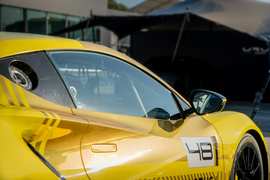
The S2000 exemplifies precision and purpose, showcasing a build executed with remarkable attention to detail. Under the hood, its F22 engine is enhanced with a curated selection of components from Mugen, ASM, and HKS, crowned by a distinctive Jun valve cover. This level of detail in engine modifications speaks volumes about the owner’s dedication to Honda tuning.
The meticulous approach continues beyond the engine bay. The car rides on Advan wheels and features Renegade brakes, a Voltex rear wing, and an ASM steering wheel—each element chosen to balance performance and aesthetics. Among the many S2000s on display, this example stood out as the most complete and cohesive build, a machine that would feel equally at home on a Tokyo Auto Salon display stand as it would be carving up a circuit. The S2000 performance parts utilized in this build reflect a dedication to JDM performance, setting a high standard for Honda performance modifications.
Other visual highlights included scale model cars displayed in front of their full-size counterparts and a liveried-up Motocompacto electric scooter parked beside a sixth-generation Civic. This sixth-generation Civic came complete with an original 1960s Honda emblem on its rear—the same wide-top “H” design that inspired the brand’s new 0 Series EV logo. This nod to Honda’s rich history demonstrates a continuity of design philosophy across generations. The Honda civic modifications showcased here highlight a respect for heritage combined with modern automotive expression.
The Civic Hatchback and the Prelude Heart: An Enduring Legacy
Among all the wild builds and glowing LEDs, one humble silver Civic stood out, not for its looks but for what was under the hood: the only H-series engine we saw at the show. The H-series, often overshadowed by the legendary B-series, was Honda’s torquey workhorse that powered cars like the Prelude Type S and Accord Euro R. Seeing one swapped into a modest EG generation Civic hatchback was rare and refreshing. Not only has the owner of this Civic had this EG for over two decades, but the H22 motor you see has also resided in it for almost the exact amount of time. This build wasn’t trying to be flashy, just pure function instead.
This Honda Civic hatchback exemplifies the dedication of long-term Honda owners. The H22 engine swap in this EG Civic is a testament to the longevity of the chassis and the commitment of its owner. It represents a pure form of Honda tuning, focusing on performance and reliability rather than spectacle.
The Unicorn: Mugen RR, A Legend in the Flesh
And finally, the crown jewel Honda of the show. Positioned near the far end of the Wekfest floor was a pristine FD2 Civic Type R in Championship White, but alongside it sat something even rarer: the Mugen RR.
Regarded as the ultimate Type R, all 300 Mugen RR units sold out within roughly 10 minutes, with 299 remaining in Japan and a single car exported to Malaysia. This example was later imported to the U.S. and features Mugen camshafts, ECU tuning, and an upgraded exhaust, bringing output to 237 hp. Carbon-fiber bumpers, an aluminum hood, and the signature 18-inch Mugen wheels reduce weight and sharpen performance across the board.
The Mugen RR is a true masterpiece, embodying Honda’s engineering passion. Positioned next to the FD2, it becomes clear: While the FD2 may captivate with aesthetics, the Mugen RR represents the essence of Mugen’s performance philosophy. This Honda Mugen RR is a significant find at Wekfest New Jersey 2026, representing the pinnacle of Honda Civic Type R engineering. For enthusiasts looking to enhance their Honda performance, the details of the Mugen RR serve as inspiration for the highest level of JDM tuning.
The Honda Phenomenon: More Than Just Cars
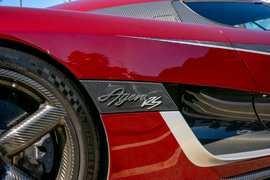
It would be impossible to capture every standout Honda from Wekfest in a single article, but you can check out a few more exceptional rides that defined this year’s New Jersey event in the gallery. Wekfest New Jersey 202