
Rediscovering Raw Performance: Why the 2005 Lotus Elise Remains a Masterclass in Automotive Purity
The automotive landscape in 2026 is defined by hybrid efficiency, AI-powered driving assistance, and electric torque delivery. Yet, looking back at the automotive history, we can see that the purest expressions of driving pleasure often emerge not from complexity, but from reduction. A particularly potent example of this is the 2005 Lotus Elise. This lightweight sports car arrived on the scene not just as a new vehicle, but as a manifesto—a bold statement that raw, communicative driving dynamics still had a place in a world increasingly embracing electronic isolation.
A Brand Reboot in the American Market
For Lotus, a brand deeply tied to its founder Colin Chapman’s philosophy of “simplify, then add lightness,” the 2005 Elise was more than just a product; it was the cornerstone of a major strategic pivot. Over the years, the marque had become largely invisible in the United States market, its remaining stock of the dated Esprit struggling to maintain relevance. The arrival of the lightweight sports car was intended to relaunch the brand, forcing consumers and enthusiasts to reconsider the meaning of performance in the modern era.
The success of the Elise was critical. It faced an uphill battle. Lotus had a historical reputation for building cars that were thrilling to drive but notoriously lacking in build quality and long-term durability. While the previous European-spec Elise used a competent if uninspiring Rover engine, the U.S.-spec version was fitted with a Toyota 1ZZ-FE engine and six-speed gearbox—an alliance that promised better refinement without compromising the core Lotus driving experience.
The Benchmark of Understeer and Oversteer: What Defines the Elise Experience?
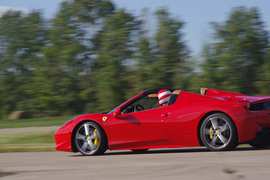
What separates the Lotus Elise from its contemporaries? The answer lies in its physics. The Elise weighs in at just 1,975 pounds, a number that sounds astonishing even today. This minimal mass fundamentally alters how the car behaves. When a vehicle is this light, the tires have less weight to push through corners, meaning even moderate power outputs deliver exhilarating acceleration.
Cornering Dynamics: The Sweet Spot Between Neutrality and Playfulness
One of the most defining characteristics of the Elise is its handling. The development team sought to create a road car that behaved like a Formula Ford racer—a vehicle that communicates clearly, forgives mistakes but doesn’t hide them, and teaches the driver how to improve their skills.
On a closed course, the Elise demonstrates this perfectly. Driven neutrally, it feels impeccably balanced, with the front and rear axles working in perfect harmony. Step on the throttle, and the car exhibits predictable understeer, naturally settling the nose into the corner. Lift off the gas, and the lightweight tail swings out slightly, tightening the line. A driver skilled enough to intentionally induce lift-throttle oversteer can hold dramatic drifts, making the driver feel like a hero even at low speeds.
This level of confidence in the lightweight sports car is often expensive. Many competitors rely on wide tires and heavy aerodynamic downforce to generate grip. The Elise, however, relies on purity. Its low weight allows for slender tires to maintain composure.
The Driving Experience: Raw, Focused, and Unapologetic
The interior of the Elise reflects its minimalist philosophy. Entering the car is an event, often requiring the driver to step over the door sill—an open-wheeler experience that sets the tone for the rest of the drive. Visibility is excellent out the front and sides, though rear visibility is somewhat limited by the fixed glass in the roof hoop. The seats are firm, supportive, and surprisingly ergonomic, accommodating a wide range of body types in a fixed-position shell.
The driving controls are direct and tactile. The throttle input is immediate, and the six-speed gearbox features a precise, light linkage. The sensation of speed is intensified by the low seating position and the close proximity of the driver to the road surface. In 2006, there was virtually nothing else on the road that offered such a visceral, unfiltered driving experience.
Engineering Excellence: Beneath the Surface
The Lotus Elise owes its performance to a series of engineering decisions that prioritize lightness and chassis rigidity.
The Structural Skeleton: The Extruded Aluminum Monocoque
At the heart of the Elise is a sophisticated bonded aluminum chassis. This structure weighs a mere 150 pounds but provides a level of torsional stiffness usually reserved for far heavier cars. The rigidity is crucial because it allows the suspension to perform as intended. Without a stiff chassis, the suspension would flex and bend instead of just controlling the wheels. This rigidity is what gives the lightweight sports car its sharp, precise turn-in.
Suspension and Braking Systems
The suspension utilizes control arms with gas-charged Bilstein dampers and custom-spec Yokohama tires. The brakes feature enthusiast-tuned ABS, designed to provide maximum stopping power without interfering with the car’s natural balance.

The braking system is more than adequate for a car weighing under 2,000 pounds. However, some critics noted that while the ABS was effective, it lacked the sensitivity of higher-end performance systems, leading to a less refined feel during emergency stops.
The Toyota Engine: A Surprisingly Happy Union
The powertrain combination of the 2ZZ-GE Toyota engine and Lotus-tuned chassis was a gamble that paid off. The 2ZZ-GE engine, famously found in the Toyota Celica GT-S and Matrix XRS, is characterized by its variable valve lift (VVTL-i) system. In Toyota applications, this engine often felt coarse and peaky, with a dramatic powerband that demanded to be revved hard.
Lotus engineers transformed the engine’s character. They reprogrammed the engine-control computer to make the engine feel smoother and more elastic. The valve-timing transition happens earlier and more seamlessly, reducing the sensation of falling off the cam during upshifts. This ensures that torque is available whenever the driver demands it, giving the Elise a responsive and linear power delivery that is essential for a lightweight sports car.
The “Touring” vs. “Sport” Debate: Cutting Weight or Adding Refinement?
Lotus offered several options to tailor the Elise to different drivers. The Touring Pack included leather seats, power windows, and upgraded carpeting, adding comfort but also weight. The Sport Pack offered stiffer suspension, lighter wheels, and high-performance Yokohama A048 tires, geared toward track use.
While the Sport Pack delivered better track performance, the ride became harder and the steering less communicative. For most drivers, the standard lightweight sports car configuration offered the best balance of performance and usability. The hand-crank windows, for instance, were perfectly in keeping with the car’s ethos of functional simplicity.
The base price for the 2005 Lotus Elise was set at $40,780, making it a luxury item that commanded serious attention. Due to high initial demand, Lotus struggled to meet production targets, with deposits exceeding 2,000 units before the first cars had even reached American customers.
2026 Perspective: Has the Elise Retained Its Charm?
Looking back from 2026, the Lotus Elise remains a benchmark for lightweight sports cars. While technology has advanced, the fundamental desire for raw, unfiltered driving experiences has not disappeared. In a world of increasingly connected and automated vehicles, the Elise represents a refreshing return to basics.
The Elise may not have the instant torque of a Tesla or the brute horsepower of a modern muscle car, but it offers something arguably more valuable: the ability to feel connected to the road. It demands involvement, reward, and commitment from the driver.
The Future of Lightweight Performance: A Legacy of Innovation
The legacy of the 2005 Lotus Elise is undeniable. It proved that the classic formula of lightweight design combined with precision engineering could still captivate modern drivers. The car inspired a generation of enthusiasts and helped re-establish Lotus as a leader in automotive engineering and performance.
Today, the Elise continues to serve as a reminder that the most satisfying driving experiences are often found in simplicity. The ability to truly feel the road beneath you, to anticipate the car’s movements, and to engage with the driving experience on a visceral level is something that no amount of horsepower can replace.

In the modern era, where electric vehicles dominate the conversation about performance and technology, the 2005 Lotus Elise stands as a testament to the timeless appeal of the driver-centric sports car. Its impact on the automotive landscape is lasting, and its place in the pantheon of lightweight sports car icons is secure. For those seeking an authentic driving experience, the Lotus Elise remains one of the most desirable and rewarding vehicles available, a true masterpiece of engineering purity.