
The 2005 Lotus Elise: A Benchmark in Lightweight Dynamics for the 21st Century
Executive Summary: Reassessing the Genesis of a Modern Icon
When the Lotus Elise first graced the U.S. market in 2005, it represented far more than just a new sports car; it was a strategic resuscitation of a legendary marque and a revolutionary statement on automotive engineering. Emerging from decades of brand volatility, the Elise successfully reintroduced Lotus to American consumers by delivering a purity of driving experience that had been largely absent from the market. Its lightweight aluminum architecture, derived from cutting-edge aerospace principles, provided a benchmark for chassis dynamics that even leading luxury performance marques struggled to match.
This analysis revisits the 2005 Lotus Elise through the lens of modern automotive evolution, re-examining how its foundational philosophy—simplicity, agility, and driver engagement—continues to influence the landscape of enthusiast automobiles. While the original review captured the visceral thrill of the drive, a deeper dive reveals how the Elise’s unique combination of Toyota’s mechanical reliability and Lotus’s ride-and-handling wizardry set a new standard for accessible performance. We assess its legacy, its influence on subsequent generations of sports cars, and its enduring relevance in a world increasingly prioritizing electrified, autonomous, and hyper-connected driving experiences.
The Strategic Imperative: Lotus in the 21st Century
To fully appreciate the 2005 Lotus Elise, one must first understand the context of its introduction. Lotus Cars had spent the latter half of the 20th century navigating a turbulent corporate landscape, marked by shifting ownership and a gradual erosion of market presence. The Esprit, Lotus’s flagship grand tourer, had become a relic by the late 1990s, struggling to compete with modern Italian exotics in terms of design, technological integration, and perceived quality. Lotus recognized that to reclaim its position as a global leader in dynamic engineering, it needed to return to its roots: lightweight, driver-focused sports cars built upon the engineering philosophy of founder Colin Chapman.
The strategy was bold: launch a fundamentally new platform, one that prioritized handling and purity over luxury and refinement. The Lotus Elise 2005 was the result—a mid-engine roadster that weighed under a ton, powered by an accessible and reliable engine, and engineered with a level of chassis sophistication typically reserved for multimillion-dollar race cars. In 2005, automotive journalism was fixated on digital infotainment, complex electronic driving aids, and the pursuit of higher horsepower figures. The Elise bucked this trend by offering a raw, unfiltered driving experience that fundamentally redefined expectations for Lotus driving dynamics.
Establishing the Benchmark for Lightweight Engineering
Colin Chapman’s dictum that “adding power makes you faster on the straights, subtracting weight makes you faster everywhere” remained the guiding principle behind the 2005 Lotus Elise. By fusing advanced composite and adhesive technologies with a rigid aluminum bonded chassis, Lotus created a structure that weighed only 150 pounds yet provided a level of torsional rigidity usually found in fixed-head coupes. This precision engineering allowed the suspension to operate within a predictable and linear envelope, delivering telepathic feedback that was often lost in heavier, more compliant chassis designs.
The lightest sports car of its era, the Elise was not merely a lightweight curiosity; it was a masterclass in engineering efficiency. Every component was scrutinized for its contribution to the overall mass, resulting in a car that reacted to driver inputs with a immediacy that bordered on telepathic. This obsession with mass reduction set a standard that contemporary rivals, particularly from the USA sports car market, struggled to replicate, forcing competitors to re-evaluate their own lightweighting strategies.
Powertrain Integration: Toyota’s Reliability Meets Lotus’s Personality
A critical factor in the Elise’s commercial viability was its adoption of a Toyota powertrain. Recognizing the market’s growing demand for reliable sports cars that wouldn’t dissolve into mechanical failure after a few spirited drives, Lotus partnered with Toyota to source the 1.8-liter 2ZZ-GE engine. This engine, familiar to enthusiasts from the Celica GT-S and Matrix XRS, offered a unique combination of variable valve timing and lift (VVTL-i) and robust construction.
While the Lotus Elise drivetrain shared its base components with mass-produced Toyota vehicles, Lotus engineers performed a remarkable feat of calibration. The engine-control computer was extensively remapped to eliminate the slightly coarse transition of the VVTL-i system, smoothing the power delivery to produce a far more elastic and forgiving powerband. In the lighter Lotus chassis, this engine felt revitalized, transforming from a peaky performance unit into a delightful, responsive partner for the driver.
The six-speed manual transmission, coupled with a precise, zero-slack linkage, offered a level of shifter feel rarely found in production vehicles. Unlike many manual gearboxes of the era, the Elise transmission did not feel overly stiff or mechanical; instead, it provided a seamless, fluid motion that enhanced the driver’s connection to the car. This attention to detail in the Lotus mechanicals demonstrated a commitment to refining even the most basic elements of the driving experience.
Driving Dynamics: A Formula Ford for the Road
The true magic of the 2005 Lotus Elise lies in its handling, a characteristic that transcended its price point and established the Elise as a benchmark for sports car dynamics. The development team explicitly aimed to create a road car that mirrored the purity and responsiveness of a Formula Ford racer. This involved a chassis architecture featuring double wishbone suspension with gas-charged Bilstein dampers, custom-calibrated ABS, and a highly precise steering system.
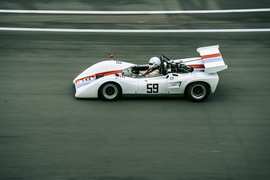
When drivers engaged with the Elise, they discovered a car that was both forgiving and communicative. The delicate balance of the lightweight chassis meant that the front and rear tires always remained in close dialogue with the road surface. Drivers could explore the limits of adhesion by subtle shifts in throttle application, experiencing a graceful understeer on power application and a benign, lift-throttle oversteer that always felt predictable and controllable. This tactile connection allowed drivers to learn and refine their technique without the obfuscation of heavy electronics.
In modern automotive parlance, the Elise represents pure driving engagement. It eschews the sensory isolation of modern hyper-connected vehicles in favor of a direct, visceral interaction between driver, machine, and road. For owners of 2005 Lotus Elise sports cars, the experience was about more than just going fast; it was about the confidence to explore the physics of vehicle motion in a way that few other cars of that era could provide.
Interior and Ergonomics: Minimalist Simplicity
The interior of the 2005 Lotus Elise is a testament to its philosophy of essentialism. The cabin is spartan by design, prioritizing function over luxury. Structural aluminum is exposed throughout, offering a raw, mechanical aesthetic that appeals to driving purists. The upright, fixed bucket seat, while magically accommodating a wide range of body types, provides a firm, supportive perch that keeps the driver centered during aggressive cornering.
Visibility is exceptional, with a large, wraparound windshield and a robust rear hoop providing ample protection. The cockpit feels open and airy, despite the compact dimensions, making the car feel larger and more capable than its footprint suggests. The deliberate absence of luxury appointments—such as power windows and extensive sound-deadening—was a conscious choice to reduce weight and maintain purity. These compromises, however, were often viewed positively by enthusiasts who valued a raw, functional driving environment over creature comforts.
For the 2005 Lotus Elise price, the interior was well-appointed, offering optional features such as leather seat facings, power windows, and enhanced soundproofing in the Touring Pack. However, many drivers found that these additions detracted from the elemental character of the car. The hand-crank windows and minimalist trim were seen as perfectly appropriate to the car’s overall theme, demonstrating that Lotus engineering prioritized performance over pampering.
Track Performance and Driving Experience
The 2005 Lotus Elise truly shone when pushed to its limits. The low curb weight—often around 1,975 pounds—combined with a 190-horsepower engine, resulted in a power-to-weight ratio that few road-legal cars could match. This allowed the Elise to accelerate briskly, achieving 0-60 mph in approximately 4.9 seconds, but the true beauty lay in its handling.
On an autocross course or a winding mountain road, the Elise transformed into an agile dance partner. The light steering, requiring minimal effort, delivered instant feedback, allowing drivers to guide the car through corners with surgical precision. The chassis’s ability to tolerate driver error while offering progressive limits of grip made it an ideal platform for learning advanced driving techniques. Enthusiasts of Lotus performance cars found that the Elise encouraged exploration, rewarding finesse with precision and confidence.
The Lotus roadster experience was unlike anything else on the market at the time. It provided a sensory overload—the sound of the engine, the feel of the road surface, and the response of the chassis—all delivered without the buffer of excessive electronics or luxury insulation. This made the Elise a car that demanded driver involvement, offering a level of connection that was increasingly difficult to find in the mainstream automotive landscape.
Comparisons with Competitors
When comparing the 2005 Lotus Elise to its contemporaries, its unique position in the market becomes clear. While other sports cars competed for performance supremacy, none offered the same combination of lightweight purity and handling sophistication.

Toyota MR2: The Toyota MR2, powered by the same engine, weighed considerably more and lacked the Elise’s specialized suspension tuning. While reliable and affordable, the MR2 could not