
The 2005 Lotus Elise was a wake-up call—a pure driver’s machine that redefined how lightweight performance cars felt.
It’s tiny, raw, and offers an unprecedented level of driver engagement.
This article revisits the launch of the U.S.-spec Elise, evaluating how the 1,975-pound roadster performed and whether it lived up to Lotus’s legendary reputation for handling.
The 2005 Lotus Elise: A Pure Performance Wake-Up Call
In the mid-2000s, the automotive landscape needed an intervention. Most cars were becoming bigger, heavier, and increasingly numb. Drivers were losing the visceral connection to the road, seduced by luxury amenities and electronic aids. Then, the 2005 Lotus Elise arrived.
Lotus, the legendary British marque founded by Colin Chapman, has always championed a philosophy of “adding lightness.” Yet, for decades, that philosophy often came at the expense of quality, durability, and reliability. Lotus cars were adored for their handling but rarely praised for their fit and finish.
The 2005 Lotus Elise was designed to change that perception. It had to be a true Lotus in spirit but a modern, reliable product that consumers could trust. With its lightweight chassis and Toyota-sourced powertrain, the Elise was poised to re-establish Lotus in the United States, a market where the marque had become nearly invisible after years of dwindling Esprit sales.
Under a Ton: Performance and Handling Redefined
When the 2005 Lotus Elise was first previewed, many critics wondered if it would maintain the brand’s track record for engaging performance while meeting modern quality standards. After extensive testing, the verdict was clear: Lotus had delivered.
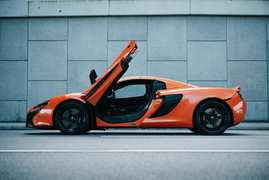
The Elise is a simple, mid-engine roadster that weighs just 1,975 pounds. It’s powered by a 190-horsepower Toyota engine paired with a six-speed gearbox. But it’s not just the power-to-weight ratio that impresses; it’s the chassis tuning, developed by the same engineers responsible for the company’s legendary motorsport and performance car consultancy.
The Elise is small, and occupants will find themselves rubbing elbows. Trunk space is limited, but these are necessary compromises to achieve its lightweight design and exceptional handling. The quality of materials and the accuracy of the assembly are remarkable. The car feels solid, tight, and precisely engineered—a far cry from the sometimes flimsy feel of older Lotus models.
The Chassis: A Rigid Foundation for Precision
The backbone of the 2005 Lotus Elise is its sophisticated platform chassis. Constructed from bonded aluminum sheets and extrusions, this structure weighs a mere 150 pounds yet provides exceptional rigidity—a vital factor in an open-top sports car. This stiffness allows the precisely tuned suspension to perform exactly as its engineers intended.
The suspension features control arms with gas-charged Bilstein dampers, disc brakes with enthusiast-calibrated ABS, and lightweight alloy wheels with custom-spec Yokohama tires. The result is a car that feels incredibly planted and responsive, offering a driving experience that few others can match.
Toyota Power Meets Lotus Personality
Nestled behind the cockpit is Toyota’s 1.8-liter 2ZZ-GE engine. This long-stroke engine utilizes variable valve timing and lift (VVTL-i) to deliver strong midrange torque and a thrilling top-end surge. While this engine has powered other performance cars, it feels fundamentally different in the Lotus application.
The 2ZZ-GE doesn’t need to be thrashed to be enjoyable. It feels smoother and more elastic than it does in any Toyota vehicle we’ve tested. A new engine-control computer, programmed by Lotus, significantly enhances the engine’s character. The transition from low-speed to high-speed valve events occurs earlier and feels much more seamless. Crucially, it doesn’t fall off the cam during upshifts, which maintains the engine’s eagerness and responsiveness.
Lotus’s development team explicitly stated their goal: to create a Formula Ford for the road. They aimed for a car that would react instantly to driver input, communicate clearly, forgive mistakes without hiding them, and help drivers learn and enjoy the process of pushing their limits. They succeeded.
Handling That Resets Your Expectations
Driving the 2005 Lotus Elise is a visceral experience. The cockpit is refreshingly sparse and functional. You sit low to the ground, surrounded by very little metal and plastic, yet protected by a large windshield and a fixed-glass rear roof hoop. Visibility is good in most directions, though the rear quarters are somewhat restricted. The upright, one-piece bucket seat is surprisingly accommodating for a wide range of physiques.
Intuitive Control and Instant Response
The engine starts with an eager but not overly raspy note. Snicking the shifter into first reveals a slack-free linkage and light gate return springs—a significant improvement over previous Lotus gearboxes.
The true magic becomes apparent at low speeds. The 2005 Lotus Elise harnesses the power of light weight to deliver immediate, precise steering. The low mass on small tire contact patches makes the car feel agile and incredibly nimble. And at just under a ton, the 190-horsepower engine can provide more than just straight-line acceleration; it can be used to influence cornering attitude, giving the driver lively options to manage both ends of the car.
Testing the Limits: The Autocross Course
At a Barber Motorsports Park test track, we put the Elise through its paces on an autocross course designed to highlight its cornering capabilities. On neutral throttle, the car tracks dead center with equal slip and grip at the front and rear tires.
Applying some throttle introduces gentle understeer, as the front tires unweight slightly. Lifting off the gas elicits some lift-throttle oversteer, tucking the tail around and tightening the turn. Powering out of the corner allows for controlled, tail-out slides that feel natural and engaging. The Elise makes it easy to play with the car’s balance and explore its limits safely.

On the Road: A Playful Dance Partner
On public roads, where the risk of trees is much higher than orange cones, the 2005 Lotus Elise remains an eager dance partner. It’s flexible and hassle-free in traffic, though drivers should be aware of their small size in relation to other luxury cars on the road.
Freeway onramps become mood-altering experiences, simply because of how the car flicks into a cornering stance and accelerates hard. On winding country roads, the Elise flows effortlessly or dives into apexes with razor-sharp precision. The driver calls the tune, and the Elise follows every command.
Simplicity as the Ultimate Luxury
This level of balanced, immediate, driver-centric behavior comes at only one cost: the 2005 Lotus Elise is elemental transportation in the extreme. It is not a family car, a long-distance cruiser, or a luxury barge. It’s small, measuring only 149 inches long and just under 44 inches high, so drivers must be prepared to make sacrifices in utility.
And for the target audience, that is perfectly acceptable. The serious simplicity of the Elise is the whole point. Some might be tempted by optional packages that add luxury features like leather seats, power windows, and better sound insulation, but these features detract from the car’s pure purpose.
The Sport Pack Dilemma
The Sport Pack option, designed for owners who will take their Elise to the track, offers firmer springs and dampers, drier grip-biased tires, and lighter forged aluminum wheels. While this configuration sounds appealing, the ride becomes harsher and the steering feels heavier and less communicative. The base model is already incredibly capable, and we found it to be the tidier, more engaging package overall.
The only optional accessory worth serious consideration is the hard roof panel, especially for drivers in climates with extreme weather.
The Business Case for Performance
Lotus planned to produce 2,200 to 2,400 U.S.-spec Elises annually. The marque’s 39 dealers in America already had deposits from approximately 2,000 buyers, indicating that initial demand was strong. Securing one would require patience, but for fans of light, responsive, small racing-inspired cars, the wait was worth it.
There simply isn’t anything else like it on the market. The 2005 Lotus Elise sits in a class of one, regardless of price.
Toyota MR2: Only 138 horsepower and weighing 2,215 pounds.
Mazda Miata: 142 horsepower and weighing 2,447 pounds (or 178 horsepower and 2,579 pounds for the Mazdaspeed Turbo).
Neither of those cars, as much as we love them, possesses the delicate balance and talkative reactions of the Lotus.
A New Benchmark for Handling
By most reasonable measures, the 2005 Lotus Elise is the best-handling car available today. It sets a new benchmark for driver engagement and provides an exhilarating, pure performance experience that has been missing from the modern automotive market.
We look forward to testing the Elise in our formal performance tests, including the slalom and Figure-Eight, to see how it compares to its rivals. One thing is certain: the Elise has arrived in the United States, and it’s here to change the game.
2005 Lotus