
The Legacy of the 2005 Lotus Elise: A Reintroduction to the American Automotive Landscape
The automotive industry is perpetually defined by reinvention, as legacy brands navigate the challenges of maintaining their heritage while meeting modern consumer demands. Among the most compelling examples of this struggle is the story of the 2005 Lotus Elise. This vehicle, a paradigm of minimalist British engineering, arrived on U.S. shores in 2004, marking a significant turning point for a marque historically celebrated for its engineering prowess but notorious for its quality shortcomings.
This review delves into the history, reception, and enduring impact of the 2005 Lotus Elise, examining how it recalibrated expectations for handling, performance, and driver engagement in the U.S. market.
The Genesis of the Elise: A British Engineering Awakening
Colin Chapman, the visionary founder of Lotus, established the company’s philosophy on a simple principle: simplify, then add lightness. While this approach resulted in some of the most agile and responsive sports cars ever built, it did not translate into everyday usability or durability. Over the decades, Lotus developed a reputation for producing cars that required a certain degree of owner involvement—a “kit car attitude,” as some critics described it.
The 1990s saw Lotus struggling with its identity. The Esprit, though capable, was aging, and the brand was largely invisible to the broader American automotive public. In 2005, Lotus decided to relaunch its brand in the United States. The weapon of choice was the 2005 Lotus Elise, a car that offered a pure, unadulterated driving experience unlike anything else available at the time.
The Lotus Elise 2005 was designed to be a modern interpretation of Chapman’s original ethos. It was a small, mid-engine roadster that weighed less than 2,000 pounds, powered by a reliable Toyota engine, and featuring a chassis tuned by Lotus Engineering. This combination promised to blend the visceral handling of a racing car with the reliability of a modern production automobile.

Early Expectations and Initial Skepticism
When the Lotus Elise was first announced for the U.S. market, there was a palpable sense of anticipation and trepidation among automotive enthusiasts and critics. The automotive landscape in 2004 was defined by a growing trend toward luxury, complexity, and electronic driver aids. Lotus was entering a market that demanded refinement, comfort, and reliability. The question remained: could a company known for fragility deliver a production-ready car that wouldn’t fall apart during a test drive, let alone on the open road?
Early impressions suggested that Lotus had learned its lessons. The 2005 Lotus Elise was not a stripped-down racing prototype converted for the street; it was a purpose-built automobile designed for enthusiast drivers.
The Engineering Excellence: Lightweight Simplicity
The fundamental strength of the 2005 Lotus Elise lies in its engineering. Lotus employed a sophisticated bonded-aluminum extrusion chassis that weighed only 150 pounds. This structure provided a level of rigidity that is difficult to achieve in open-top cars, giving the suspension a stable platform to perform as engineers intended.
The suspension system featured control arms with gas-charged Bilstein dampers, disc brakes with enthusiast-calibrated ABS, and light, modest-sized alloy wheels fitted with custom-spec Yokohama tires. This combination ensured that the car maintained the razor-sharp handling Lotus was famous for.
The Toyota Heart: Power and Reliability
A critical decision in the 2005 Lotus Elise’s development was the choice of powerplant. Instead of relying on its own aging engines, Lotus partnered with Toyota. The car was fitted with the 1.8-liter 2ZZ-GE engine and a six-speed gearbox, the same configuration used in the front-wheel-drive Celica GT-S and Matrix XRS.
While this engine was known for its variable valve timing (VVTL-i) and dramatic high-end surge in Toyota applications, Lotus’s engineering team reprogrammed the engine control unit to fundamentally change its character. The Lotus Elise 2005 provided a much smoother, more elastic power delivery. The VVTL-i crossover happened sooner and felt more seamless, ensuring that torque remained accessible whenever the driver requested it.
Lotus explicitly stated that the goal was to create a “Formula Ford car for the road.” The Elise was designed to be intuitive, forgiving, and communicative, helping drivers develop their skills without hiding the car’s limitations.
The Driving Experience: Rediscovering Engagement
The driving experience of the 2005 Lotus Elise is the heart of its appeal. The cockpit is minimalistic and functional, forcing drivers to focus on the task at hand. The ergonomics are surprisingly accommodating for a car this small, with an upright seat and a sense of being enveloped by the vehicle.
The precision of the steering is remarkable. Without the mass of a traditional engine at the front, the Elise changes direction with an immediacy that is startling. The power-to-weight ratio, even with the modest 190 horsepower, provides exhilarating performance. The car weighs just under a ton, meaning that every input from the driver feels amplified.
This car transformed the driving experience for many U.S. drivers who had become accustomed to heavier, more cushioned vehicles. The Lotus Elise 2005 reminded enthusiasts of the pure joy of driving—a joy that comes from a car that responds directly to throttle inputs and driver inputs, allowing the driver to affect cornering attitude through subtle shifts of weight.
Handling: The Benchmark for Agility
In autocross environments, the Lotus Elise demonstrated its extraordinary balance. On neutral throttle, the car remained stable, with the front and rear tires working in harmony. Applying throttle introduced mild understeer, while lifting off induced slight oversteer, allowing drivers to rotate the car with precision. Even novice drivers found themselves able to execute controlled slides, as the Elise was both forgiving and rewarding.
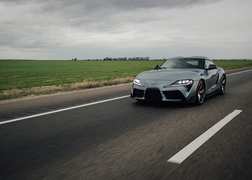
Out on the road, the Elise continued to impress. It was comfortable enough for commuting (though it demanded commitment) and exhilarating on winding roads. The car could be driven sedately in traffic or driven with aggressive precision, adapting to the driver’s mood.
Practicality: The Necessary Compromise
The Lotus Elise 2005 is unapologetically elemental. With a length of 149 inches and a height of under 44 inches, the car sacrifices practicality for performance. Drivers with families, bulky luggage, or a desire for luxury would not find the Elise suitable. This focus on simplicity was, however, intentional. Lotus built the Elise for a niche audience that valued performance above all else.
Lotus offered optional packages to cater to different driving needs. The Touring Pack added luxury features like leather seats, power windows, and sound-deadening material. The Sport Pack offered stiffer suspension, adjustable dampers, and stickier Yokohama tires for track use. However, many reviewers found the base model to be the most compelling package. The hand-crank windows and simple interior were perfectly appropriate for the car’s minimalist ethos.
Production and Market Reception
The 2005 Lotus Elise was met with overwhelmingly positive reception in the U.S. The car was not only a critical darling but also a commercial success. Lotus ramped up production to 2,200 to 2,400 U.S.-spec Elises per year, and its 39 dealers received deposits from nearly 2,000 buyers. This demonstrated that there was a strong appetite for lightweight, high-performance sports cars in the U.S.
Despite the high demand, the Lotus Elise 2005 was not easy to obtain. Owners had to be patient, but the wait was rewarded. The Elise offered a unique combination of handling, performance, and driver engagement that was unrivaled. In terms of power-to-weight ratio, the Elise stood in a class of its own, far surpassing cars like the Toyota MR2, Mazda Miata, and even the MazdaSpeed edition.
The Aftermath: Redefining Handling and Establishing a Legacy
The 2005 Lotus Elise established a new benchmark for handling and driver engagement in the modern era. It proved that a light, simple sports car could be reliable, durable, and competitive with the most sophisticated engineering available at the time.
Years later, the legacy of the 2005 Lotus Elise persists. It remains one of the most sought-after performance cars for those who value raw driving dynamics above all else. For automotive enthusiasts, the 2005 model represents a pivotal moment where a legendary British brand successfully reintroduced itself to the U.S. market, proving that less could indeed be more.
Current Market Context and Future Outlook
In the current automotive landscape of 2026, the 2005 Lotus Elise holds a special place in the market for enthusiasts. While modern sports cars have become faster and more technologically advanced, the Elise represents a pure, analogue experience that is increasingly rare.
The 2026 automotive world is characterized by electric vehicles, advanced driver-assistance systems, and autonomous driving technologies. In this context, cars like the 2005 Lotus Elise offer a refreshing antidote to the technological excess of modern vehicles. They remind drivers of the visceral thrill of controlling a car with mechanical precision.
For buyers interested in Lotus Elise for sale, the 2005 model remains a highly desirable option. It represents the transition point where Lotus successfully bridged the gap between its racing pedigree and the requirements of the U.S. consumer market.
Purchasing and Maintaining a 2005 Lotus Elise
For those interested in buying a Lotus Elise, the