Luftgekühlt Tokyo 2026: A New Chapter in Porsche Culture Transforms a Tokyo Freeway
Japanese car culture is traditionally defined by high-stakes races, pilgrimage-style visits to historic garages, and the indispensable convenience of konbini (convenience store) delights. This year, however, the nation experienced a paradigm shift as Luftgekühlt, the globally recognized pilgrimage for air-cooled Porsche enthusiasts, finally set foot in Japan, creating an unprecedented convergence of German engineering and Japanese aesthetics on the seldom-used KK Line in Tokyo.
The decommissioned KK Line, an elevated freeway that once linked the bustling Kyobashi and Shimbashi districts, was transformed from a relics of urban transit into a living canvas for automotive history. For one day, this iconic slice of Tokyo real estate—now scheduled for redevelopment into commercial space and public parks—hosted an unparalleled congregation of over 220 air-cooled Porsches. With an estimated 11,600 visitors witnessing the spectacle, the Luftgekühlt Tokyo 2026 event fundamentally redefined the experience of both Porsche culture and the urban landscape of Japan.
This landmark event represents more than just the introduction of a new car show; it marks a crucial inflection point in the global perception of German automotive heritage within Japanese culture. As the transportation landscape in Tokyo continues to evolve, driven by demands for greater sustainability and urban greening, iconic infrastructure like the KK Line is being retired. The unique opportunity to repurpose such a site for a major cultural gathering offers a tantalizing glimpse into the future of auto shows—one that prioritizes unique experiences over static displays.
The Evolution of Air-Cooled Culture in Japan
For decades, Luftgekühlt has served as the definitive global standard for celebrating air-cooled Porsches. It stands apart from traditional auto shows by fostering an intimate, almost familial atmosphere where enthusiasts connect directly with the mechanics of the car, rather than just admiring them from afar. When the organizers decided to bring this unique ethos to Japan, the challenge was immense: how to translate the casual, community-driven spirit of a Los Angeles gathering to a hyper-structured environment like Tokyo.
The result was a triumph of logistical precision and cultural sensitivity. By selecting the KK Line, the team secured a location that resonated deeply with the nostalgic sentiment of Japanese car enthusiasts. This elevated highway, once symbolizing the rapid modernization of post-war Japan, now served as the backdrop for a celebration of a different era of engineering excellence.
The event featured an extraordinary lineup of 220 air-cooled Porsches, showcasing a spectrum of the air-cooled era. The collection included legendary endurance racers, wild street builds, and rare factory prototypes that have rarely been seen in Japan. It was a curated landscape of metal, rubber, and automotive history, presented on a platform usually reserved for the roar of city traffic.
Among the highlights was the formidable No. 28 Porsche 910, a historical icon driven by the legendary Tetsu Ikuzawa. This car, renowned for its second-place overall finish and first-place class victory at the 1968 Japanese Grand Prix, commanded a crowd of enthusiasts and historians. Its presence on the KK Line was a poignant reminder of the early days of Porsche’s dominance in Japanese motorsports.
For those drawn to street-tuned Porsches, the Auto Garage TBK demo car was arguably the star of the show. This custom-built machine perfectly encapsulated the Japanese approach to Porsche tuning: a meticulous fusion of performance enhancement and understated style. It posed stoically on the highway, a symbol of automotive artistry that defined Porsche street builds—machines not just meant to be fast, but to be admired for their craftsmanship.
Cultural Synthesis and the Art of the Drive
The success of Luftgekühlt Tokyo 2026 lay in its ability to bridge the gap between traditional automotive culture and modern urban life. Unlike a standard car show that focuses on presentation, this event emphasized the experience of driving and community. The decision to use the KK Line—a site slated for urban renewal—added a layer of historical significance, transforming the location into a temporary shrine to automotive history before its final transformation.
The event was structured to highlight the diversity of the air-cooled scene. From the early 356 models that paved the way for the legendary 911, to the iconic 964 and 993 generations that define modern air-cooled Porsche street builds, attendees were treated to a comprehensive survey of the brand’s legacy.
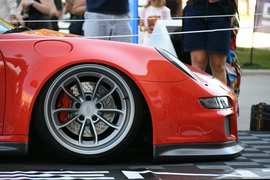
Japan’s affinity for Porsche street builds is well-documented. The dedication to detail, the meticulous selection of parts, and the pursuit of perfection are deeply embedded in the Japanese automotive subculture. Luftgekühlt Tokyo 2026 provided a platform to showcase this artistry to a global audience, celebrating the meticulous craftsmanship that transforms a factory Porsche into a unique statement of personal style and engineering expertise.
Furthermore, the presence of custom Porsche builds at the event was remarkable. From widebody conversions to lightweight racing modifications, these cars reflected the avant-garde spirit of the Japanese automotive scene. They were a testament to the creativity and innovation that flourish when Porsche enthusiasts take ownership of their vehicles, turning them into extensions of their own personalities.
Urban Transformation: A One-Time Opportunity
One of the most significant aspects of Luftgekühlt Tokyo 2026 was its timing and location. The KK Line, an iconic structure in the Tokyo skyline, is scheduled to be demolished in the coming years to make way for a new retail and park development. This means the event was a truly once-in-a-lifetime spectacle—a fleeting moment where a relic of urban transportation was repurposed for a celebration of automotive passion.
This unique setting allowed the Porsche community to connect with the history of the city in a way that traditional auto shows cannot. As attendees explored the elevated highway, they were walking through a piece of Tokyo’s past, surrounded by the future of automotive culture. The transformation of theKK Line into a Porsche exhibition highlighted the growing tension between urban development and preserved cultural spaces in major cities worldwide.
The urban context also influenced the aesthetic of the show. In Tokyo, the intersection of traditional architecture and modern infrastructure is a hallmark of the city’s unique charm. By hosting Luftgekühlt on the KK Line, the event embraced this duality, creating a visual dialogue between the historic German cars and the ever-evolving Japanese cityscape.
The Evening Experience: A New Dimension of Porsche Culture
While the daytime event offered a clean, almost gallery-like atmosphere, the true magic of Luftgekühlt Tokyo 2026 unfolded after dark. The organizers transformed the scene into an underground experience that embodied the energy of Tokyo’s iconic car scene. As the sun set, the elevated highway took on a new character, bathed in the warm glow of neon lights and the hum of conversation.
Illest and Fatlace founder Mark Arcenal, who attended the event, described the experience as “once-in-a-lifetime.” In a statement, Arcenal reflected on the uniqueness of the location and the event’s atmosphere. “Luft Tokyo was a once-in-a-lifetime experience that I don’t think will ever be duplicated as that area of freeway will turn into retail and a park, I believe,” he said. “Glad to experience it and see some of the coolest cars around Tokyo.”
This transformation from day to night was a crucial element of the event. It reflected the evolving nature of Porsche culture, which is not just about the cars themselves but also about the community they foster. The evening atmosphere encouraged interaction, conversation, and connection among enthusiasts, creating a deeper bond between the attendees and the iconic vehicles they admired.
The evening event also highlighted the global nature of the air-cooled Porsche community. With attendees from around the world gathering in Tokyo, Luftgekühlt proved that this passion transcends borders and cultural differences. The shared appreciation for these iconic cars created a sense of unity and belonging that extended far beyond the boundaries of the city.
The Legacy of Luftgekühlt Tokyo 2026
By combining a historically significant location, a carefully curated mix of cars, and an experience that evolved dramatically from day to night, Luftgekühlt Tokyo 2026 offered something truly distinct from Japan’s traditional car show calendar. It was a celebration that honored the heritage of the air-cooled Porsche while looking forward to the future of automotive culture.
As the Porsches finally scattered into the night and the KK Line returned to its eerily dormant state, the event left a lasting impression on the automotive landscape of Japan. It was a reminder that passion can transform any space, and that the air-cooled Porsche community is a vibrant, global network united by a shared love for these iconic machines.
The event also served as a benchmark for future auto shows. By demonstrating the success of events that prioritize community, experience, and cultural significance, Luftgekühlt Tokyo 2026 has set a new standard for what a car show can be. It has shown that a gathering of enthusiasts can be more than just a static display of cars; it can be a living, breathing celebration of a passion that connects us all.
As the world continues to embrace sustainable transportation and urban greening, sites like the KK Line will be transformed into parks and public spaces. Luftgekühlt Tokyo 2026 has captured the essence of a moment in time when a historical landmark was temporarily repurposed for a celebration of automotive passion. It stands as a testament to the enduring power of the air-cooled Porsche and the vibrant community that supports it.
The Future of Porsche Street Builds in Japan