
Inside Luftgekühlt Tokyo: Where 200+ Air-Cooled Porsches Reshaped a City’s Skyline
The asphalt of Tokyo’s KK Line, silenced by the closing of its automotive era, has often been cited as a relic—a stretch of infrastructure awaiting reinvention. Yet, on April 5, 2026, this decommissioned artery was transformed, not into a park or a commercial zone, but into a breathtaking stage where the legacy of German engineering met the precision of Japanese automotive culture. Luftgekühlt Tokyo arrived not merely as a car show, but as a profound cultural convergence, shutting down a historical landmark to honor the enduring allure of air-cooled Porsche.
For enthusiasts accustomed to the traditional rhythms of Japan’s automotive calendar, events like the Tokyo Auto Salon or Osaka Auto Messe represent the pinnacle of showroom grandeur and tuner precision. Luftgekühlt, however, offers a fundamentally different experience. Its identity is rooted in an authentic appreciation for heritage, a philosophy that celebrates the visceral connection between driver and machine. While the world may be hurtling toward electric mobility and digital saturation, Luftgekühlt Tokyo reminded us that there is still a potent hunger for the mechanical soul of air-cooled Porsches, especially within a market known for its forward-thinking vision.
The Strategic Choice of the KK Line
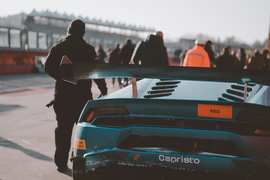
The selection of the KK Line as the venue for Luftgekühlt Tokyo was a masterstroke of strategic planning. An elevated expressway that once connected Kyobashi and Shimbashi, the KK Line represents a transition from the heavy industrial past of Tokyo to its modern commercial present. By utilizing this historically significant—yet now dormant—stretch of highway, the event authors secured not just a space, but a narrative. This was not merely an exhibition; it was a dialogue between past and future, where the 200-plus Porsches became living embodiments of that conversation.
This choice speaks volumes about the intent behind Luftgekühlt events. They are less about volume of attendees and more about the quality of the experience. Unlike large-scale public expositions that often blur the line between car show and festival, Luftgekühlt prioritizes curation and atmosphere. The organizers meticulously handpicked a selection of vehicles that embody the spirit of air-cooled Porsche—spanning the spectrum from historic competition machines to bespoke street builds, all united by that distinctive cooling system.
As the event unfolded across the highway, the atmosphere was a study in controlled contrast. The midday sun cast sharp shadows on the cars, highlighting the iconic silhouettes of 356s, early 911s, and 912s. The engineering artistry of these vehicles was laid bare, contrasting sharply with the gleaming glass towers of Shimbashi that loomed in the background. This juxtaposition was symbolic: an ode to the analog era standing proudly at the precipice of the digital age.
The success of the event was immediately evident. Reports indicate that approximately 11,600 people passed through the venue, a testament to the enduring draw of this niche community. However, more significant than the raw attendance figures was the composition of the crowd. It drew a diverse demographic, from long-time enthusiasts to the younger generation drawn to the timeless aesthetic of these classics. The event resonated not just with dedicated Porsche owners, but with anyone captivated by automotive design, history, and innovation.
A Curated Collection: The Heart of Luftgekühlt Tokyo
The cornerstone of any Luftgekühlt event is its selection of vehicles. Unlike many auto shows that showcase new models or high-tech concepts, Luftgekühlt celebrates the mechanical architecture of the air-cooled Porsches that defined a generation. The lineup in Tokyo was no exception, representing a journey through the lineage of the air-cooled 911 and its predecessors.
One of the most compelling highlights was the presence of the No. 28 Porsche 910, driven by the legendary Tetsu Ikuzawa. This storied racer, which secured second overall and first in class at the 1968 Japanese Grand Prix, served as a poignant reminder of the vehicle’s competitive heritage. As it sat on the asphalt, far from the constraints of the circuit, it transcended its status as a historical artifact and became a symbol of endurance and excellence. Ikuzawa’s personal touch, the way he interacted with the crowd and shared insights, lent the display an authenticity that commercial exhibitions struggle to replicate. This interaction between historical icon and modern enthusiast is the essence of air-cooled Porsche.
Beyond the iconic racers, the show floor featured an extraordinary array of street-oriented Porsches. These were not showroom-perfect replicas, but rather cars that reflected the deeply personal connection between owner and machine. Modifications ranged from tasteful restorations that honored the original design to audacious modifications that pushed the boundaries of what an air-cooled Porsche could be.
A prime example was the demo car from Auto Garage TBK. This vehicle was a statement piece, embodying the meticulous craftsmanship and obsessive attention to detail that define the high-end Japanese tuning scene. Parked on the highway, it was a visual contradiction—a car designed for extreme performance positioned in a space of aesthetic appreciation. It demanded attention not through speed, but through presence.
For enthusiasts in the United States, observing the Japanese approach to air-cooled Porsche customization offers valuable insights. Japan has long been at the forefront of modification and automotive innovation. The TBK build showcased a level of detail that few other markets can rival, merging the purity of the air-cooled design with modern engineering solutions that enhance performance while preserving the car’s identity. This balance between respect for heritage and the pursuit of perfection is a recurring theme in the air-cooled Porsche community.
The Atmosphere: Day vs. Night
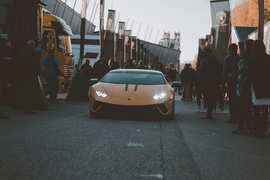
One of the most critical elements that set Luftgekühlt Tokyo apart was the evolution of the event from day to night. The organizers understood that the transition of the KK Line from a sunlit thoroughfare to an illuminated playground would fundamentally alter the sensory experience for attendees.
By day, the event functioned as a classic car show. The 220+ cars were displayed with gallery-like precision, allowing attendees to move freely, examine the details, and capture photographs without the constraints of a packed schedule. The atmosphere was relaxed, celebratory, and educational. The KK Line, normally a symbol of Tokyo’s relentless pace, felt like a retreat, a sanctuary where the history of the air-cooled Porsche was openly appreciated.
However, as the sun began to set, the character of the event shifted dramatically. The lighting of the highway transformed the scene into something more intimate, exclusive, and quintessentially Tokyo. The transition from a public demonstration to an underground gathering captured the essence of the city’s nightlife. The curated atmosphere deepened, encouraging deeper connections between owners, builders, and attendees.
Mark Arcenal, founder of Illest and Fatlace, attended the event and provided valuable perspective on this transformation. He described the experience as “once-in-a-lifetime” and expressed doubt that it could ever be replicated. Arcenal noted, “Glad to experience it and see some of the coolest cars around Tokyo.” His words encapsulate the sentiment shared by many in attendance: Luftgekühlt Tokyo was more than just an event; it was a fleeting moment in history. The closure of the KK Line is temporary, and its eventual transformation into a commercial and park space means this unique confluence of location, culture, and automotive artistry may never occur again.
This transformation from day to night mirrors the dual identity of the air-cooled Porsche. By day, these cars are admired for their design, history, and engineering. By night, they represent a certain lifestyle—a culture that transcends mere ownership and embraces a sense of community and shared passion. Luftgekühlt Tokyo masterfully capitalized on this duality, offering different experiences to different attendees while maintaining a consistent sense of authenticity and exclusivity.
The Cultural Resonance of Air-Cooled Porsche in Japan
The success of Luftgekühlt Tokyo reflects a broader trend within Japan’s automotive culture. While Japan has always been a hotbed for automotive innovation and customization, there has been a recent surge of interest in air-cooled Porsches. This phenomenon is driven by a confluence of factors, including the enduring aesthetic appeal of these vehicles, the collector culture in Japan, and the desire to connect with automotive history in an era of accelerating technological change.
The design of the air-cooled 911 has stood the test of time, remaining one of the most iconic and desirable automotive silhouettes in the world. In Japan, where appreciation for minimalist design and meticulous craftsmanship is deeply ingrained, the clean lines and functional beauty of these Porsches resonate profoundly. The Japanese market is known for its discerning consumers who value authenticity and attention to detail, making them ideal patrons for Luftgekühlt events.
Furthermore, the Japanese collector market has reached a new level of maturity. There is a growing appreciation for heritage automobiles and a desire to preserve automotive history. Air-cooled Porsches fit perfectly into this paradigm, representing a bridge between past and present. Owners are not just acquiring cars; they are preserving a legacy and participating in a global community that values heritage above all else.
The growth of the air-cooled Porsche market in Japan has also influenced the customization scene. Local builders and tuners have developed unique approaches to modifying these vehicles, creating styles that are distinct from those found in the United States or Europe. Luftgekühlt Tokyo served as a showcase for this creativity, highlighting how Japanese ingenuity can enhance the performance and aesthetic of air-cooled Porsches while remaining true to their heritage.
Comparing Luftgekühlt to Traditional Japanese Car Shows
To fully appreciate the impact of Luftgek