Luftgekühlt Tokyo: A Historic Highwayside Showcase of 200+ Air-Cooled Porsches
From Iconic Race Cars to Groundbreaking Street Builds: Tokyo’s Iconic KK Line Transforms into a Celebrated Air-Cooled Porsche Exhibition
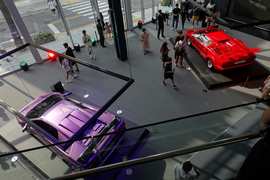
For enthusiasts of Japanese automotive culture, the typical annual itinerary often includes visiting the Tokyo Auto Salon or Osaka Auto Messe, paying homage to legendary automotive garages, and indulging in the delectable offerings of convenience stores. However, in 2026, an extraordinary event graced the heart of Tokyo, spotlighting an astonishing collection of Porsche 911s. This occasion marked the highly anticipated arrival of Luftgekühlt, the rapidly expanding global series celebrating the legacy of air-cooled Porsche vehicles, as it made its debut in Japan.
The event took place on the recently decommissioned KK Line, an elevated roadway that once served as a vital artery connecting the Kyobashi and Shimbashi districts in Tokyo. This landmark location was transformed into a unique one-day festival dedicated to celebrating the vibrant culture of German air-cooled Porsche engineering, presented through a distinctly Japanese lens. What was once a conduit for urban traffic transitioned into an immersive showcase featuring over 220 cars, welcoming an estimated 11,600 attendees. The event offered a fresh perspective on experiencing both Tokyo’s urban landscape and the storied history of Porsche engineering.
A Mind-Blowing Display of Historic Porsches and Cultural Fusion
As anticipated, Luft Tokyo delivered a breathtaking display of historic Porsche models, ranging from revered race cars to pioneering street modifications. A standout exhibit was the No. 28 Porsche 910, driven by the legendary Tetsu Ikuzawa, which secured a remarkable second-place finish overall and first place in its class at the 1968 Japanese Grand Prix. For aficionados of modified road cars, the Auto Garage TBK demo car was arguably the centerpiece of the exhibition. This striking machine fit perfectly against the backdrop of the KK Line, posing proudly instead of pushing its limits during high-speed testing.
The Auto Garage TBK demo car featured a unique mix of modern and vintage Porsche components, showcasing an evolution of the 911’s chassis. The vehicle’s aesthetic perfectly embodied the Luftgekühlt philosophy: blending high-performance German engineering with Japanese design precision. Unlike the high-octane energy of racing, the event emphasized artistic appreciation and cultural significance. The careful curation of vehicles ensured that both the history of Porsche’s air-cooled engine technology and the dedication of Japan’s modifying scene were honored. The placement of each car on the disused highway fostered a unique interaction between the audience and the machinery, treating the road as an open-air gallery rather than a performance arena.
The Dynamic Evolution from Day to Night
Perhaps the most impactful aspect of Luft Tokyo was the extension of the event into the evening, which completely transformed the atmosphere. What began as a pristine, almost gallery-like exhibition evolved seamlessly into the subterranean, after-dark experience that only Tokyo can truly provide. Attendees were immersed in a dramatic shift in lighting and mood as the sun set over the city skyline. The sleek, architectural beauty of the highway infrastructure contrasted sharply with the raw, emotional energy of the growing crowds, creating a dynamic visual narrative that paralleled the evolution of Porsche’s own design philosophy.
Mark Arcenal, the founder of both Illest and Fatlace, attended the event and expressed his profound admiration for the overall outcome. He commented, “Luft Tokyo was a once-in-a-lifetime experience that I don’t think will ever be duplicated as that area of freeway will turn into retail and a park, I believe. Glad to experience it and see some of the coolest cars around Tokyo.” His sentiments were echoed by many of the 11,600 attendees, who recognized the uniqueness of the location and the rarity of such an intimate gathering.
Arcenal’s perspective highlights the delicate balance between Porsche 911 appreciation and Japanese street culture that Luftgekühlt Tokyo managed to achieve. By bringing together Mark Arcenal’s iconic influence and the heritage of the KK Line, the event transcended a typical car show. It became a cultural phenomenon that combined the artistic vision of Fatlace with the engineering prowess of Porsche. This fusion resulted in a visually stunning spectacle that was documented by Jeremy Anicete, whose photography captured the essence of the event with remarkable detail and sensitivity.
Urban Revitalization and Architectural Transformation
The KK Line represents a significant piece of Tokyo’s urban development history. Originally constructed in 1963, it was a critical piece of infrastructure designed to relieve traffic congestion in one of the world’s most densely populated metropolises. The elevated roadway spanned approximately 4.2 kilometers, connecting the Shimbashi and Kyobashi districts, and played a crucial role in the city’s commercial growth during the latter half of the 20th century. However, as the Japanese government prioritized urban renewal and environmental sustainability, the KK Line was gradually decommissioned.
The removal of the KK Line in 2009 marked a paradigm shift in Tokyo’s urban planning philosophy. Instead of replacing the elevated highway with another road, the city transformed the space into the Ginza Corridor—a public park featuring green spaces, pedestrian walkways, and cycle paths. This ambitious project, spearheaded by Mayor Shintaro Ishihara at the time, aimed to create a greener, more livable city center. The transition from a concrete highway to a vibrant public space exemplifies the Japanese commitment to innovation and sustainability in urban design.
For Luft Tokyo, the KK Line offered more than just a venue; it provided a historical context that enriched the entire experience. The site’s transformation from a traffic conduit to a public park mirrors the evolution of air-cooled Porsche technology. Just as Porsche has adapted its iconic 911 design to meet modern environmental standards, Tokyo has reimagined its infrastructure to prioritize green spaces and pedestrian access. This parallel between automotive innovation and urban redevelopment resonated deeply with Luft Tokyo attendees, adding a layer of cultural significance to the event.
Exploring the Evolution of the 911 at Luft Tokyo
The selection of Luftgekühlt as the featured event underscores the enduring appeal of the Porsche 911. Originating in 1963, the 911 is one of the most iconic sports cars in automotive history, celebrated for its distinctive shape, rear-engine layout, and air-cooled engine technology. Over the decades, the 911 has undergone continuous evolution, yet it has retained its core design identity—a testament to the genius of its original design.
At Luft Tokyo, attendees witnessed a diverse range of 911 models spanning several generations. The event showcased the early 901 and 911T models, distinguished by their simpler, lightweight construction, alongside the 911S and 911RS variants, which were designed for performance and racing. These classic models stand in contrast to modern air-cooled 911 iterations like the 964, 993, and 997, which incorporate advanced technology while maintaining the charm of the classic design.
Tetsu Ikuzawa’s No. 28 Porsche 910 served as a historical focal point, symbolizing the Japanese racing heritage. Ikuzawa’s achievement at the 1968 Japanese Grand Prix was a landmark moment for Porsche in the country, showcasing the capabilities of the lightweight 910 racer. The vehicle featured a two-liter air-cooled flat-six engine and was designed for agility and speed, proving its worth against larger-displacement prototypes. The presence of this iconic car at Luft Tokyo resonated deeply with Japanese car enthusiasts, celebrating a pivotal moment in the history of the 911.
The Auto Garage TBK demo car, however, represented the modern interpretation of the 911. This build blended the timeless aesthetics of the 911 with contemporary performance enhancements, reflecting the current trends in Japanese car culture. TBK’s 911 modification reflects a sophisticated understanding of air-cooled engine technology, integrating performance upgrades with visual enhancements that pay homage to the 911 legacy while pushing the boundaries of automotive engineering. This dual representation of historical significance and modern innovation was central to the Luft Tokyo experience.
The Impact of Mark Arcenal and Fatlace on the Car Scene
Mark Arcenal’s involvement with Luftgekühlt Tokyo brought a significant dimension of global perspective to the event. As the founder of Illest and Fatlace, Arcenal is a prominent figure in the global automotive scene, known for his ability to merge style with performance. His presence at the event highlighted the cultural significance of the Porsche 911 beyond the confines of professional racing or pure engineering.
Arcenal’s Fatlace brand has long been synonymous with Japanese automotive culture, as the company has built a strong reputation for organizing grassroots car shows and fostering a community of enthusiasts. By bringing Luftgekühlt to Tokyo, Arcenal leveraged his established network to create an event that was both exclusive and accessible