Navigating the Whiplash Minefield: How 2025 Small SUVs Measure Up in Advanced Rear-Impact Safety
As a seasoned automotive safety expert with a decade immersed in vehicle dynamics and occupant protection, I’ve witnessed firsthand the relentless pursuit of enhanced safety standards. The Insurance Institute for Highway Safety (IIHS) consistently leads this charge, and their recent re-evaluation of whiplash protection in small SUVs marks a significant step forward. For consumers in the United States seeking the safest possible vehicle, understanding these evolving metrics is paramount, especially when considering that whiplash remains a pervasive and often debilitating injury, despite advancements in vehicle design.
The IIHS’s commitment to occupant well-being is well-documented. Their “Top Safety Pick” and “Top Safety Pick+” designations are not mere accolades; they represent a rigorous benchmark that manufacturers strive to achieve, and that consumers increasingly rely upon. This latest initiative zeroes in on rear-end collisions, a common scenario on American roadways, and addresses a surprising vulnerability: even vehicles that previously aced the IIHS’s whiplash tests were not entirely immune to causing these injuries. In 2022, the IIHS paused its dedicated whiplash seat evaluation because a vast majority of vehicles were achieving top marks. Yet, insurance claim data consistently revealed disparities in injury rates among different models, suggesting that the previous test, while seemingly effective, lacked the granularity to differentiate truly superior designs from merely adequate ones. As the IIHS aptly stated, “Variations in insurance claim rates for different models showed that some designs provided better protection than others — even if the original test could not identify them.” This underscored the need for a more nuanced and robust assessment of how vehicle seats and head restraints perform in the critical moments of a rear-end impact.
This recalibration is not about reinventing the wheel, but rather about refining the science of simulation. The IIHS has meticulously analyzed extensive data from testing over 36 different vehicle seats across three distinct impact speeds. This deep dive has allowed them to correlate specific seat and head restraint measurements with real-world injury data, enabling the development of a more discerning evaluation. The objective is clear: to accurately identify vehicles that offer superior protection against the complex forces unleashed in a rear-end collision, safeguarding occupants from the insidious effects of whiplash.
Decoding the New Whiplash Protection Standard: What the IIHS is Looking For
The IIHS’s updated whiplash protection evaluation is a testament to their commitment to pushing the boundaries of automotive safety. Recognizing that the previous test, while instrumental in driving improvements, had reached a plateau, they have introduced a more sophisticated methodology. This new standard moves beyond simply assessing basic head restraint contact and delves into the intricate interplay between the occupant’s body, the seat, and the head restraint during a simulated rear-end impact.
In this revamped assessment, the IIHS subjected 18 small SUVs, predominantly 2025 models (with a single 2024 model, the Honda CR-V, included), to a rigorous series of tests. The agency’s rating scale remains hierarchical, with “Good” signifying the highest level of protection, followed by “Acceptable,” “Marginal,” and finally, “Poor” for the least effective performers. The distinction between these tiers is crucial for consumers making informed decisions. Vehicles earning a “Good” rating demonstrated “excellent protection across nearly all the metrics at both impact speeds.” Those rated “Acceptable” showed minor shortcomings in multiple areas, while “Marginal” performers exhibited more significant flaws. At the bottom of the spectrum, “Poor” rated vehicles failed across all three key measures and performed exceptionally poorly in at least one critical aspect, notably their inability to adequately limit head movement relative to the spine.
The core of the IIHS’s refined methodology lies in its enhanced measurement capabilities. The original test involved a simulated rear-end impact at 20 mph, using a sled carrying a dummy with an articulated spine. This dummy was positioned in the vehicle seat, and measurements were taken to assess head and neck movement. The updated test retains this foundational approach but incorporates new metrics derived from extensive testing of 36 different vehicle seats at speeds simulating 20 mph and 30 mph impacts.
This granular approach allows the IIHS to identify subtle yet critical factors that contribute to whiplash injury. Key measurements now include:
Head Contact Time with Head Restraint: This assesses how quickly the dummy’s head makes contact with the head restraint. A more immediate contact can help mitigate the forces transmitted to the neck.
T1 Vertebra Acceleration: The T1 vertebra, located at the base of the neck, is particularly vulnerable. Measuring its acceleration provides insight into the forces experienced by the upper spine.
Pelvic Displacement Relative to the Head: In a rear-end collision, an occupant’s body should ideally sink into the seatback, maintaining a consistent spatial relationship between the pelvis and the head. Significant divergence indicates suboptimal seat design that can exacerbate neck strain.
Head Tilting or Bending Force Relative to the Neck: This is perhaps the most crucial new metric. The seat and head restraint system must work in concert to keep the head and neck aligned, preventing excessive bending or tilting that can lead to ligament damage.
Head Restraint Positioning: The ideal contact point for the head restraint is near the occupant’s center of gravity. Contacting above this point can force the chin down towards the chest, while contact below can hyperextend the neck. The IIHS now precisely evaluates this interaction.
By integrating these advanced measurements, the IIHS gains a far more comprehensive understanding of how a vehicle’s seat and head restraint system manages crash energy and supports the occupant’s head and spine. A “Good” rating in this new evaluation signifies a seat design that effectively maintains the head and spine in alignment, preserves the neck’s natural curvature, and ensures the head restraint is optimally positioned to absorb impact forces without inducing further stress. This underscores the often-overlooked importance of adjustable head restraints, a simple yet critical feature that can significantly enhance occupant safety.
The Verdict: Which Small SUVs Excel in Whiplash Protection?
For consumers actively researching safest small SUVs for 2025 or seeking IIHS Top Safety Pick vehicles, the results of this latest whiplash protection test are invaluable. The rigorous methodology employed by the IIHS provides a clear ranking, allowing buyers to prioritize models that offer superior protection against common rear-end collision injuries.
In this initial rollout of the refined whiplash protection evaluation, 18 small SUVs were assessed. Here’s how they stacked up:
Good: Excellent Protection
These vehicles demonstrated exceptional performance across the board, offering the highest level of whiplash protection. When considering new SUV safety ratings or best SUVs for neck protection, these models should be at the forefront of your research.
2025 Audi Q3: The German luxury marque continues its commitment to safety with the Q3 achieving top marks. For those in the market for a premium compact SUV with advanced safety, the Q3 presents a compelling option.
2025-26 Hyundai Ioniq 5: This all-electric crossover not only excels in powertrain innovation but also demonstrates strong performance in occupant protection. The Ioniq 5 is a standout choice for buyers prioritizing electric SUV safety and IIHS approved electric vehicles.
2025-26 Subaru Forester: A perennial favorite for its all-wheel-drive capability and safety reputation, the Forester solidifies its standing. Families looking for a safe family SUV or a reliable all-wheel-drive SUV for safety will find the Forester a top contender.
2025 Toyota RAV4: The ubiquitous RAV4 proves it’s more than just a popular choice; it’s a safe one. Its strong performance in this whiplash test makes it a prime candidate for those seeking a dependable and safe compact SUV.
Acceptable: Good Protection with Minor Room for Improvement
These SUVs offer a solid level of whiplash protection but fell slightly short of the top tier in certain metrics. They still represent a good choice for safety-conscious buyers, particularly when factoring in overall value and features.
2025-26 Buick Encore GX: A stylish and comfortable option, the Encore GX provides good safety in this critical area.
2025-26 Chevrolet Equinox: Another strong contender in the mainstream compact SUV segment, the Equinox offers commendable protection.
2024-25 Honda CR-V: Despite being the sole 2024 model in this group, the CR-V continues to be a benchmark for safety, earning an “Acceptable” rating. Buyers might also find discounted 2024 SUVs with top safety ratings as the model year transitions.
2025-26 Jeep Compass: The Compass offers a good balance of capability and safety.
2025-26 Kia Sportage: Known for its value and feature set, the Sportage also delivers good whiplash protection.
2025 Mercedes-Benz GLB: For those seeking a compact luxury SUV with a third row, the GLB provides acceptable safety performance.
2025-26 Mitsubishi Outlander: The Outlander continues to offer a robust safety package.
2025-26 Volkswagen Taos: This subcompact SUV demonstrates good safety for its class.
2025-26 Volvo XC40: Volvo’s reputation for safety is reinforced with the XC40’s “Acceptable” rating, demonstrating its ongoing commitment to occupant well-being.
Marginal: Moderate Protection, Potential Concerns

Vehicles in this category exhibit more noticeable weaknesses in whiplash protection. While not a complete failure, buyers should be aware of these limitations and weigh them against other factors.
2025 BMW X1: While the X1 offers a premium driving experience, its whiplash protection falls into the marginal category.
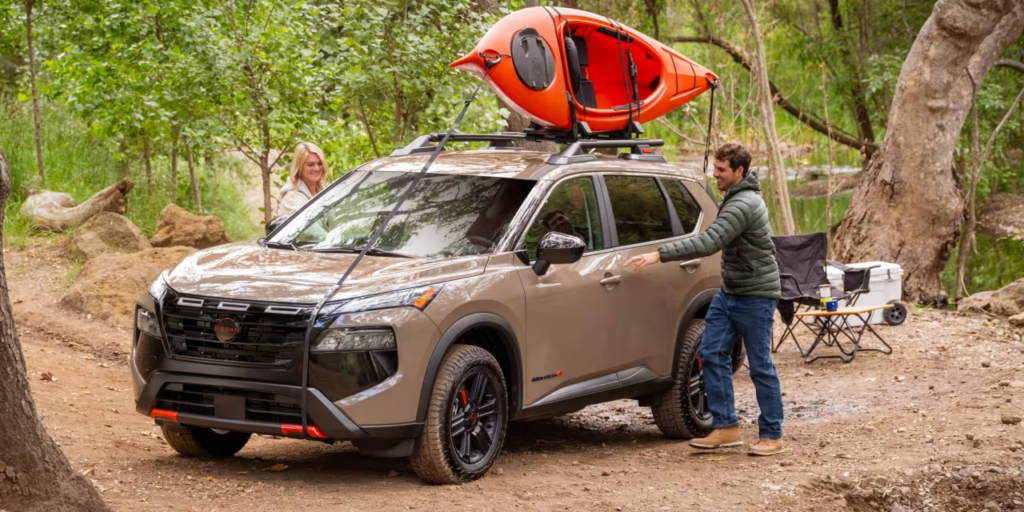
2025-26 Nissan Rogue: A popular choice, the Rogue’s performance here highlights an area for potential improvement.
Poor: Significant Deficiencies in Whiplash Protection
These models failed to meet the IIHS’s minimum standards for whiplash protection in rear-end collisions. Their performance was characterized by inadequate control over head movement relative to the spine, making them a less desirable choice for safety-focused consumers.
2025-26 Ford Bronco Sport: While appealing for its rugged styling, the Bronco Sport’s whiplash protection is a significant concern.
2025-26 Hyundai Tucson: Despite the Ioniq 5’s top rating, the conventionally powered Tucson struggled in this specific test. This disparity underscores the importance of looking beyond brand and focusing on individual model performance. For those in areas like Phoenix SUV safety tests or Los Angeles car safety reviews, this distinction is crucial.
2025-26 Mazda CX-50: Known for its driving dynamics, the CX-50’s performance in whiplash protection is a notable weakness.
Beyond the Numbers: Why This Matters for Your Drive
The IIHS’s updated whiplash protection test is more than just a new scoring rubric; it’s a critical advancement in how we assess real-world safety. For nearly a decade, I’ve seen how manufacturers respond to safety benchmarks, and this latest initiative is sure to drive further innovation in seat design and head restraint technology.
For consumers, these findings translate directly into tangible benefits. When you see a 2025 Subaru Forester safety rating or 2025 Hyundai Ioniq 5 safety review, understand that it reflects a deeper, more nuanced understanding of how these vehicles will protect you and your passengers in a specific, yet common, type of accident. The inclusion of secondary keywords such as rear-impact crash test results, head restraint effectiveness, and neck injury prevention in cars within this discussion highlights the multifaceted nature of this safety evaluation.
Considering the financial implications, understanding which SUVs have the best safety features can also impact your car insurance premiums. Insurers often factor in IIHS ratings when determining rates, so a vehicle with top marks in whiplash protection could potentially lead to lower insurance costs, especially when looking for affordable SUVs with high safety ratings.
Furthermore, for those navigating the complexities of purchasing a vehicle in specific urban environments, local search intent keywords become relevant. For instance, someone searching for “best compact SUV safety Chicago” or “IIHS rated SUVs Dallas” will find this information directly applicable to their local market. The availability of advanced driver-assistance systems (ADAS) is also increasingly becoming a factor in overall safety, and while this specific test focuses on passive safety, it complements the active safety technologies offered by these manufacturers.
The rise of electric vehicles (EVs) also brings a unique perspective. As seen with the 2025-26 Hyundai Ioniq 5’s excellent performance, EVs are not only at the forefront of environmental consciousness but are also proving to be leaders in safety innovation. This trend is likely to continue, with manufacturers investing heavily in both their electric powertrains and their occupant protection systems.
Making an Informed Decision for Your Safety
As we continue to navigate the evolving landscape of automotive safety, the IIHS’s commitment to rigorous testing and transparent reporting provides an invaluable resource for consumers. The latest whiplash protection evaluation for small SUVs offers a clear, data-driven insight into which models are best equipped to safeguard occupants from common, yet serious, injuries sustained in rear-end collisions.
The emphasis on refined metrics, such as pelvic displacement and head tilting forces, signifies a more holistic approach to understanding occupant kinematics during impact. This deeper understanding is crucial for manufacturers to engineer truly superior safety systems, and for consumers to make the most informed purchasing decisions. Whether you’re prioritizing a new SUV with advanced safety features for your daily commute or seeking the most reliable family car for protection, consulting these IIHS ratings is an essential step.
We encourage you to delve deeper into the specific safety features and ratings of the vehicles that interest you. Visit the IIHS website for comprehensive reports, and when you’re ready to experience these safety advancements firsthand, we invite you to explore the latest models at your local dealerships. Your safety, and the safety of your loved ones, is paramount, and making an informed choice based on expert evaluations is the most proactive step you can take.