
Navigating the Nuances of Whiplash Protection: A Deep Dive into the Latest IIHS Small SUV Safety Ratings
For a decade now, I’ve been immersed in the intricate world of automotive safety, witnessing firsthand the relentless evolution of vehicle design aimed at safeguarding occupants. The Insurance Institute for Highway Safety (IIHS) has consistently been at the forefront of this charge, their meticulously crafted crash tests and subsequent awards—the coveted Top Safety Pick and Top Safety Pick+—acting as both a benchmark for manufacturers and a crucial guide for consumers. Recently, IIHS has reignited a vital safety evaluation it had temporarily set aside: whiplash protection in rear-end collisions. This isn’t merely a reiteration of past standards; it’s a sophisticated recalibration, reflecting a deeper understanding of how vehicles perform under duress and, critically, how effectively they shield us from one of the most common and debilitating crash injuries.
The decision to reintroduce this test, which had been put on hold since 2022 due to near-universal top scores, speaks volumes about the ongoing quest for enhanced safety. While many vehicles were acing the previous iteration, insurance claim data from the Highway Loss Data Institute (HLDI) continued to reveal a disparity in whiplash injury rates across different models. This subtle yet significant difference suggested that the previous test, while seemingly comprehensive, wasn’t capturing the full picture of real-world whiplash prevention. As the IIHS aptly stated, “Variations in insurance claim rates for different models showed that some designs provided better protection than others—even if the original test could not identify them.” This realization has spurred a comprehensive overhaul, leading to a more nuanced and demanding assessment.
This newly refined evaluation marks a significant step forward in understanding SUV safety ratings, particularly for those navigating the diverse landscape of the small SUV market. In its inaugural run under the updated protocol, IIHS subjected eighteen small SUVs to rigorous scrutiny. The vast majority of these vehicles were 2025 models, with a single 2024 Honda CR-V included for comparative purposes. Crucially, as many of these models feature minimal changes for the 2025 model year, the findings are highly relevant for current 2026 model year vehicles as well.
The IIHS employs a tiered rating system designed to provide a clear hierarchy of performance: “Good” signifies the highest level of protection, followed by “Acceptable,” “Marginal,” and the lowest tier, “Poor.” According to the institute, vehicles earning a “Good” rating demonstrated “excellent protection across nearly all the metrics at both impact speeds.” Those classified as “Acceptable” showed minor shortcomings in multiple areas, while “Marginal” performers exhibited more pronounced vulnerabilities. The three vehicles that received a “Poor” rating failed to meet the criteria in all three core assessment areas and displayed exceptionally poor performance in at least one critical aspect. Their primary deficiency was a notable inability to sufficiently restrict head movement relative to the spinal column, a critical factor in whiplash injuries.
The initial findings from this groundbreaking test reveal a spectrum of performance within the competitive small SUV segment. Four vehicles managed to achieve the coveted “Good” rating, indicating they provide exceptional whiplash protection:
2025 Audi Q3: This luxury compact SUV stands out for its robust approach to occupant safety.
2025-26 Hyundai Ioniq 5: A pioneer in the electric vehicle space, the Ioniq 5 demonstrates that advanced powertrains can coexist with top-tier safety features.
2025-26 Subaru Forester: A long-standing favorite for its practicality and safety, the Forester continues its impressive track record.
2025 Toyota RAV4: Consistently a top seller, the RAV4’s strong performance in this crucial test underscores its appeal to safety-conscious buyers.
Moving down the performance ladder, several models earned an “Acceptable” rating, signifying competent but not perfect whiplash protection:
2025-26 Buick Encore GX: Offering a blend of style and comfort, the Encore GX provides a solid safety foundation.
2025-26 Chevrolet Equinox: A mainstream choice known for its value, the Equinox performs adequately in this demanding test.
2024-25 Honda CR-V: A perennial bestseller, the CR-V’s “Acceptable” rating highlights its overall safety competence.
2025-26 Jeep Compass: This compact SUV offers a capable package with reasonable whiplash protection.
2025-26 Kia Sportage: Known for its bold design and comprehensive features, the Sportage delivers acceptable safety performance.
2025 Mercedes-Benz GLB: The GLB provides a premium compact SUV experience with acceptable whiplash safety.
2025-26 Mitsubishi Outlander: This family-oriented SUV offers a satisfactory level of protection in rear-end impacts.
2025-26 Volkswagen Taos: The Taos provides a nimble and practical option with acceptable safety credentials.
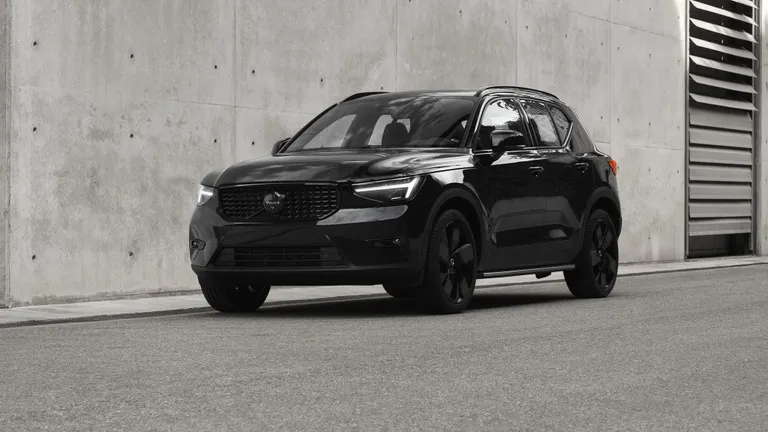
2025-26 Volvo XC40: While Volvo is renowned for safety, the XC40’s “Acceptable” rating suggests room for refinement in this specific area.
Several vehicles fell into the “Marginal” category, indicating areas where improvement is needed to achieve optimal whiplash protection:
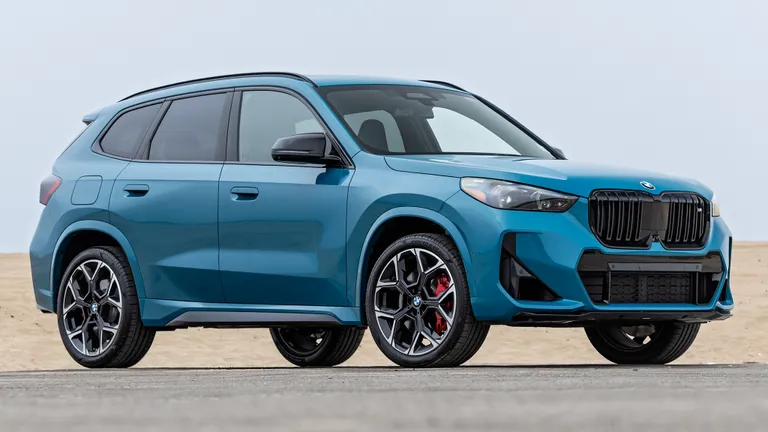
2025 BMW X1: The entry-level BMW SUV shows potential but requires enhancements to its whiplash mitigation systems.
2025-26 Nissan Rogue: A popular choice for its comfort and fuel efficiency, the Rogue’s “Marginal” rating is a point of consideration for potential buyers focused on this specific safety aspect.
Tragically, three models received a “Poor” rating, signifying significant deficiencies in whiplash protection:
2025-26 Ford Bronco Sport: Despite its rugged appeal, the Bronco Sport needs substantial upgrades to its seat and restraint systems to adequately protect occupants from whiplash.
2025-26 Hyundai Tucson: A well-regarded compact SUV, the Tucson’s “Poor” rating in this critical test is a surprising and concerning outcome, particularly given the brand’s overall focus on safety.
2025-26 Mazda CX-50: While the CX-50 offers a compelling driving experience, its performance in this whiplash test indicates a need for significant improvement in its occupant protection systems.
The evolution of the IIHS whiplash test is as significant as the results themselves. The previous methodology, while effective for its time, involved securing a vehicle’s seat onto a sled that would then accelerate to simulate a rear-end collision at 20 mph. Measurements were taken from a specially designed dummy, equipped with an articulated spine, positioned in the seat. The new test retains this fundamental sled-test format but introduces a suite of advanced measurements and metrics. This enhancement stems from extensive data analysis and testing involving seats from 36 different vehicles across three distinct impact speeds.
Through meticulous correlation of these new measurements with injury data from the HLDI, IIHS scientists identified several key indicators of effective whiplash protection. Consequently, the updated evaluation now incorporates simulations at both 20 mph and 30 mph impact speeds, providing a more comprehensive understanding of how seats perform under varying degrees of rear-end force. This increased testing speed is crucial for accurately assessing the safety of modern vehicles, as real-world collisions can easily exceed the lower impact speeds of the previous test.
The original test primarily focused on two critical metrics: the time it took for the dummy’s head to make contact with the head restraint and the acceleration experienced by the T1 vertebra (the uppermost vertebra in the thoracic spine, where it connects to the neck). The updated test builds upon this foundation by incorporating the measurement of pelvic displacement relative to the head. In an ideal rear-end collision scenario, an occupant should naturally sink into the seatback, maintaining a consistent and stable relationship between their pelvis and head. Deviations from this ideal posture can exacerbate whiplash injuries.
Furthermore, the new evaluation scrutinizes the tilting or bending force exerted on the head relative to the neck. For optimal protection, the head restraint’s primary function is to make contact with the middle of the occupant’s head, aligning with their center of gravity. If the head restraint contacts the head above the center of gravity, it can force the chin downwards towards the chest. Conversely, contact below the center of gravity can cause the head to tilt backward and upward. Both scenarios can contribute to neck strain and whiplash. The refined test meticulously assesses these interactions, offering a more granular insight into the dynamics of head and neck movement during a rear-end impact.
The inclusion of these advanced metrics provides IIHS with an unprecedentedly comprehensive view of how vehicle seats contribute to occupant safety. It assesses not only the head and spine support provided by the seat and head restraint but also the critical interplay between the occupant’s head and the head restraint itself. Critically, it evaluates how effectively the seat absorbs and manages the energy transferred to the occupant’s body during the collision. Optimal performance in this newly defined test necessitates that the seat maintains the head and spine in proper alignment, allowing the neck to retain its natural curvature. It also underscores the paramount importance of the head restraint’s positioning. This highlights a crucial takeaway for vehicle owners: even small adjustments to your car’s adjustable head restraints can have a significant impact on your safety in a rear-end collision. This is a prime example of how auto safety technology is constantly being refined and how understanding these advancements can lead to better informed purchasing decisions when looking for safe SUVs.
The implications of these findings for the automotive industry are profound. Manufacturers are now under increased pressure to elevate their whiplash protection systems, especially within the highly competitive small SUV market. Consumers, armed with this detailed and updated information on vehicle safety ratings, can make more informed choices, prioritizing models that demonstrate superior performance in these critical safety evaluations. This renewed focus on whiplash protection is not just about meeting regulatory standards; it’s about proactively addressing a prevalent injury that can have long-lasting consequences for individuals. For those researching new SUVs for sale with a strong emphasis on safety, this IIHS report serves as an indispensable resource.
The drive for enhanced car safety features is an ongoing narrative, and the IIHS’s commitment to refining its testing protocols ensures that the industry continues to push the boundaries of occupant protection. The distinction between “Good,” “Acceptable,” “Marginal,” and “Poor” ratings provides a clear roadmap for both manufacturers and consumers. As we look towards the future of automotive design, it’s clear that advancements in crash test safety will remain a pivotal factor in defining the safest vehicles on our roads. Understanding these nuanced evaluations, like this latest whiplash protection test, empowers individuals to select vehicles that offer the best possible defense against the myriad of risks present on our highways. When considering options like SUV financing or exploring certified pre-owned SUVs, always look for models that have a demonstrated commitment to safety.
As you embark on your next vehicle purchase or simply seek to ensure your current ride offers the best possible protection, consider the insights gleaned from this comprehensive IIHS assessment. Don’t hesitate to delve deeper into the specific safety technologies and ratings of the vehicles that pique your interest. Your due diligence in understanding these critical safety metrics can make a significant difference in safeguarding yourself and your loved ones on every journey.