
New Toyota Celica Sport 2026: The Hybrid AWD Rally Legend Returns
After years of speculation and anticipation, the legendary Toyota Celica is roaring back to life, this time as a hybrid all-wheel-drive powerhouse. Set to arrive in 2026, the new Toyota Celica Sport marks a thrilling new chapter for one of the most iconic names in JDM history. This isn’t just a revival; it’s a reinvention, blending rally-bred heritage with cutting-edge hybrid technology to create a true driver’s car for the modern era.
For automotive enthusiasts, the name “Celica” evokes a golden age of rally racing, where drivers like Carlos Sainz conquered the world’s toughest stages in lightweight, nimble machines. From the rear-wheel-drive roots of the 1970s to the all-wheel-drive dominance of the 1980s and 90s, the Celica carved its legend one rally stage at a time. Now, as the automotive landscape shifts towards electrification, Toyota is ensuring that the Celica’s spirit of performance and innovation continues to burn bright.
Gazoo Racing at the Helm

Leading this exciting revival is Toyota’s performance division, Gazoo Racing (GR). With a proven track record of engineering championship-winning race cars and street-legal legends like the GR Yaris and GR Corolla, GR is the perfect guardian for the Celica’s legacy. Under their guidance, the new Celica Sport is shaping up to be a true driver’s car, prioritizing engagement, balance, and performance above all else.
From the outset, GR’s philosophy has been clear: build cars for drivers, by drivers. This customer-first approach is evident in every decision, from the choice of powertrain to the chassis tuning. The result is a car that feels special from the moment you slide into the driver’s seat, with intuitive controls, communicative steering, and a chassis that begs to be pushed to its limits.
Powertrain: A Hybrid Turbocharged Symphony
At the heart of the new Celica Sport lies a revolutionary hybrid turbocharged powertrain, a perfect marriage of Toyota’s legendary reliability and GR’s performance expertise. Powering this new machine is a brand-new turbocharged 2.0-liter four-cylinder engine, codenamed G20E. This compact yet potent powerplant is the result of extensive development, designed to deliver thrilling performance while meeting the latest emission regulations.
First teased in the mid-engined GR Yaris M concept at the 2025 Tokyo Auto Salon, this new 2.0-liter engine represents a significant step forward for Toyota’s performance lineup. With a shorter piston stroke than current engines, it’s lighter and more compact, allowing for better weight distribution and packaging. This is crucial for a performance car, where every kilogram saved makes a difference in handling and agility.
The addition of hybrid technology further elevates the Celica Sport’s performance credentials. While Toyota hasn’t revealed the exact specifications, it’s clear that this isn’t your typical fuel-efficient hybrid. The goal here is performance, with the electric motor providing instant torque fill and the battery adding a power boost when needed. Early reports suggest a combined output of around 400 horsepower, with some German publications even speculating that a more powerful variant with a larger turbocharger could push output well over 600 horsepower.
This hybrid setup isn’t just about raw power; it’s also about refinement and responsiveness. The electric motor’s instant torque eliminates turbo lag, ensuring that power is always on tap. This is particularly beneficial in a rally-bred car, where quick bursts of acceleration are needed to navigate tricky corners and technical sections. The result is a powertrain that feels seamless, linear, and incredibly engaging, providing a driving experience that’s both thrilling and accessible.
All-Wheel Drive: Rally-Bred Traction
The return of all-wheel drive to the Celica nameplate is a nod to its glorious past in the World Rally Championship. The fourth-generation Celica All-Trac Turbo, with its advanced AWD system, dominated rally stages around the world, cementing the car’s legendary status. Now, the new Celica Sport brings that same capability to the modern era, combining it with cutting-edge technology to create a car that’s as capable on the track as it is on the road.
The AWD system in the new Celica Sport is expected to be a sophisticated, driver-focused setup, likely derived from the GR Yaris’s acclaimed system. This means it won’t just be a “set it and forget it” all-wheel-drive system; drivers will have control over the power distribution, allowing them to tailor the car’s handling characteristics to their preference. Whether they want a neutral balance for track driving or a rear-biased setup for drifting, the Celica Sport will deliver.
This focus on driver control is a hallmark of Gazoo Racing’s approach. They understand that true performance comes from a car that communicates with the driver, providing feedback through the steering, throttle, and chassis. The AWD system in the Celica Sport is designed to do just that, providing the confidence and capability for drivers to explore the car’s limits in a safe and controlled manner.
Design: A Modern Interpretation of a Legend
Visually, the new Celica Sport is expected to strike a perfect balance between heritage and modernity. While the final design remains under wraps, early spy shots and design sketches suggest a car that pays homage to the Celica’s iconic styling cues while embracing a contemporary aesthetic. Expect a low, wide stance, muscular wheel arches, and a fastback roofline that hints at the car’s sporting intentions.

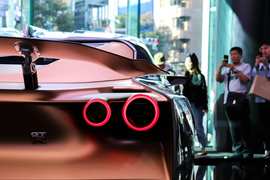
The influence of Gazoo Racing will be evident in the aggressive aerodynamics, with functional vents, spoilers, and diffusers designed to improve airflow and enhance stability at high speeds. The front end will likely feature the bold, aggressive grille that has become a signature of GR models, while the rear will sport a diffuser and dual exhaust tips that announce the car’s performance credentials.
Inside, the Celica Sport will be a driver-focused cockpit, prioritizing ergonomics and control. The dashboard will be clean and uncluttered, with the driver at the center of the experience. High-quality materials, such as Alcantara and carbon fiber, will be used throughout, creating a premium yet sporty atmosphere. The seats will be deeply bolstered, providing excellent support during spirited driving, while the steering wheel will be thick-rimmed and perfectly sized for an engaging grip.
Of course, the Celica Sport will also feature Toyota’s latest infotainment and safety technology. A large touchscreen display will provide access to navigation, media, and vehicle settings, while a digital instrument cluster will provide essential driving information. Advanced driver-assistance systems will be integrated seamlessly, providing an extra layer of safety without intruding on the driving experience.
The Rally Connection: A Legacy Honored
The return of the Celica as a rally contender is perhaps the most exciting aspect of this revival. With the current Yaris-based rally car set to be ineligible for the World Rally Championship in 2027, Toyota needs a new challenger. The compact, lightweight dimensions of the Celica Sport make it the perfect candidate to carry the torch for Toyota’s rally program.
The sight of a camouflaged Celica prototype being tested on rally stages in Portugal earlier this year sent ripples of excitement through the automotive world. This wasn’t just a test mule; it was a statement of intent. Toyota is serious about its rally heritage, and the new Celica Sport will be at the forefront of its WRC efforts.
This rally pedigree will have a direct benefit for road car buyers. The engineering and development that goes into a WRC car are invaluable, providing insights into chassis tuning, suspension design, and powertrain optimization that can be directly translated to the production vehicle. The lessons learned on the unforgiving stages of the WRC will make the road-going Celica Sport a sharper, more capable, and more engaging car.
Positioning in the Market: A Niche Player with Broad Appeal
When the Toyota GR Yaris was launched, it carved out a unique niche in the market. It was a homologation special, a rally car for the road, and it found an immediate audience of enthusiastic drivers. The Celica Sport is expected to occupy a similar space, but with a broader appeal.
While the GR Yaris is a compact, three-door hatchback, the Celica Sport is expected to be a larger, more practical coupe. This will allow it to compete in a wider market segment, attracting buyers who want a sporty car but need more space and versatility than the GR Yaris offers. The price point is expected to be competitive, sitting above the GR Yaris but below more expensive sports coupes from European manufacturers.
The Celica Sport will compete in a market segment that’s increasingly populated by hybrid and electric performance cars. However, Toyota’s advantage lies in its hybrid powertrain technology. By combining a turbocharged engine with electric motors, Toyota can deliver the performance and excitement that drivers crave while also achieving impressive fuel efficiency and lower emissions. This positions the Celica Sport as a compelling alternative to both traditional gasoline-powered sports cars and fully electric competitors.
The Future of GR Performance
The introduction of the Celica Sport marks a significant milestone in Toyota’s GR strategy. It demonstrates the brand’s commitment to pushing the boundaries of performance and exploring new powertrain technologies. The success of the Celica Sport will pave the way for further innovation, potentially leading to more hybrid performance cars and even all-electric GR models in the future.
The 2.0-liter turbocharged engine itself is a versatile platform, with the potential to be used in a range of GR models. Beyond the Celica and the expected GR Yaris update, the engine could find its