
Title: 2026 Toyota Celica Sport: Unveiling the Hybrid AWD Future of the Iconic Nameplate
The automotive world is buzzing with the electrifying news that Toyota, under its high-performance Gazoo Racing (GR) division, is resurrecting one of its most cherished nameplates: the Celica. After decades of dormancy, the legendary Japanese sports coupe is set to make a triumphant return, not as a nostalgic throwback, but as a thoroughly modern, tech-forward performance machine. This next-generation Toyota Celica Sport promises to blend the brand’s storied rally heritage with cutting-edge hybrid technology, delivering an AWD performance package that aims to redefine the segment. With the fifth-generation Supra nearing the end of its production run, the timing couldn’t be more perfect for Toyota to inject fresh excitement into its sports car lineup.
This in-depth analysis delves into what we know about the forthcoming 2026 Toyota Celica Sport, exploring its anticipated powertrain, design philosophy, rally-bred engineering, and the strategic implications for Toyota’s global market presence. Drawing on insider insights, industry trends, and the brand’s recent performance vehicle showcases, we paint a comprehensive picture of what drivers can expect from this eagerly awaited revival.
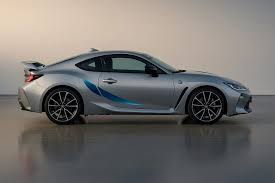
The Return of a Legend: From Rally Icon to Modern Performance Coupe
The Toyota Celica has a storied history that spans six generations, evolving from a stylish rear-wheel-drive coupe in the 1970s to a dominant force in the World Rally Championship (WRC) with its all-wheel-drive, turbocharged variants in the 1980s and 90s. This legacy of performance and accessibility makes the Celica name one of Toyota’s most potent marketing assets. The decision to revive the nameplate, rather than create an entirely new model, signals a strategic intent to leverage this rich heritage while repositioning the vehicle for the modern era.
According to sources close to Toyota’s Gazoo Racing division, the new model will officially be badged as the Toyota Celica Sport. This designation immediately communicates the car’s performance-oriented positioning, distinguishing it from more comfort-focused Toyota offerings. The ‘Sport’ suffix aligns with Toyota’s current naming conventions for its performance models, such as the GR Corolla and GR Yaris, reinforcing its credentials as a serious driver’s car.
The announcement of the Celica’s return was initially hinted at by Toyota executives, and recent developments have provided compelling evidence of its imminent arrival. A prototype believed to be the next-generation Celica was spotted undergoing testing in Portugal in early 2026, sporting camouflage that suggested a compact coupe body style. This sighting, combined with reports of Gazoo Racing’s shift in WRC strategy, strongly indicates that the Celica is being groomed to succeed the current Yaris-based rally challenger.
Unpacking the Powertrain: Hybrid Turbocharged Ingenuity
Perhaps the most exciting revelation surrounding the 2026 Toyota Celica Sport is its projected powertrain. Industry insiders and technical analyses suggest that the car will feature a sophisticated hybrid system centered around a new turbocharged 2.0-liter four-cylinder engine. This powertrain configuration represents a significant departure from Toyota’s recent performance models, which have primarily utilized 1.6-liter turbocharged engines (as seen in the GR Yaris and GR Corolla) or naturally aspirated V6 engines in the Supra.
The development of this new 2.0-liter engine was first hinted at by Toyota at the 2025 Tokyo Auto Salon, where it was showcased in the mid-engined GR Yaris M concept. This concept vehicle served as a proving ground for the new powerplant, demonstrating its potential in a high-performance application. The engine is designed to meet increasingly stringent global emission regulations, which are becoming more challenging for smaller displacement engines, especially when paired with performance-oriented tuning.
Toyota Gazoo Racing’s marketing manager, Mikio Hayashi, has publicly acknowledged the need for a larger displacement engine to achieve the desired performance targets while adhering to environmental standards. “The displacement size of 1.6 liters [used in the GR Yaris], for example, cannot meet emission regulations,” Hayashi stated in a recent interview. “So we have to consider the possibility of a 2.0-liter.” This confirmation validates the technical direction that engineers are pursuing for the Celica Sport.
The hybrid system is expected to complement the turbocharged engine by providing instant torque, regenerative braking capabilities, and overall efficiency improvements. Toyota has been at the forefront of hybrid technology for decades, and applying this expertise to a performance vehicle offers exciting possibilities for balancing power with fuel economy. The exact configuration of the hybrid system—whether it will be a mild hybrid, full hybrid, or plug-in hybrid—remains subject to development, but the potential to deliver substantial combined horsepower is evident.
Estimates place the combined output of the 2026 Toyota Celica Sport’s powertrain in the range of 400 horsepower, with some reports suggesting that a more potent variant could produce upwards of 600 horsepower, depending on the turbocharger configuration and battery system integration. This level of power would position the Celica Sport as a formidable competitor in the compact sports coupe segment, capable of challenging established performance benchmarks.
All-Wheel Drive Dominance: A Nod to Rally Heritage
Adding to the excitement, Toyota has confirmed that the 2026 Toyota Celica Sport will feature an all-wheel-drive (AWD) system. This decision is deeply rooted in the Celica’s illustrious history in the World Rally Championship, where all-wheel-drive variants like the Celica GT-Four achieved legendary status. The AWD system will be engineered by Gazoo Racing, ensuring that it is optimized for performance driving dynamics rather than mere all-weather traction.
The AWD system is expected to be a sophisticated torque-vectoring setup, allowing for precise distribution of power between the front and rear axles, as well as between individual wheels. This technology enables enhanced cornering grip, improved acceleration, and greater stability under hard driving conditions. By incorporating advanced AWD capabilities, Toyota is signaling its intent to position the Celica Sport as a serious contender in track and rallycross environments, appealing to driving enthusiasts who demand precise handling and control.
The strategic implications of an AWD-equipped Celica Sport extend beyond performance metrics. In markets like North America, where all-wheel drive is a highly desirable feature in performance vehicles, this configuration will broaden the car’s appeal. It also aligns with Toyota’s broader strategy of electrifying its performance lineup, as AWD systems are often integral to electric and hybrid performance architectures.
Design Philosophy: Balancing Heritage with Modern Aesthetics
While specific design details of the 2026 Toyota Celica Sport are yet to be officially revealed, we can anticipate a design language that pays homage to the Celica’s heritage while embracing contemporary styling trends. The car is expected to feature a sleek, coupe body style with a low-slung profile, muscular proportions, and aerodynamic enhancements. The Gazoo Racing division is known for its aggressive yet refined design aesthetic, characterized by wide fenders, prominent spoilers, and functional air intakes.
The compact dimensions of the Celica Sport will likely place it in a segment below the GR Supra, offering a more accessible and nimble alternative. This positioning allows Toyota to compete with other compact performance coupes while maintaining a distinct identity within its own lineup. The design will need to balance retro cues—such as the long hood and short rear deck of classic Celica models—with modern elements like full LED lighting, flush door handles, and advanced aerodynamic surfacing.
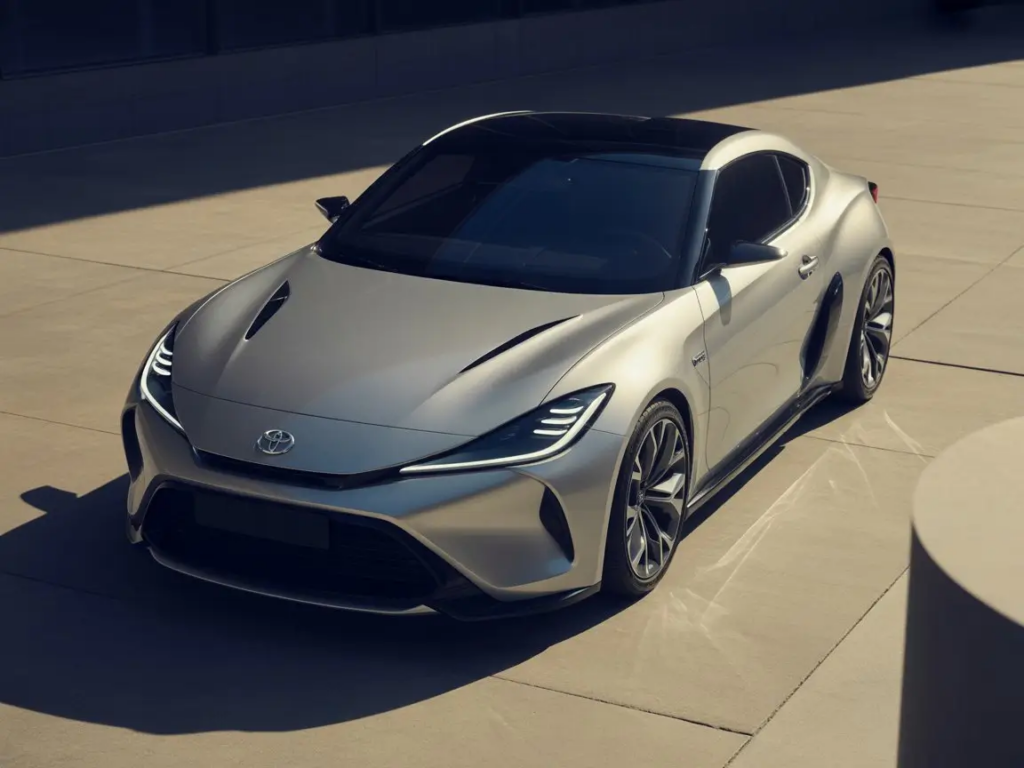
The interior is expected to reflect the car’s performance focus, with sport seats, a driver-centric cockpit, and premium materials. Given the advances in in-car technology since the last Celica was produced, the cabin will likely feature a large infotainment display, digital instrument cluster, and advanced driver-assistance systems. However, Toyota has indicated that even in its performance models, ease of use and driver engagement remain paramount, so the interface is expected to be intuitive and uncluttered.
Market Positioning and Competitive Landscape
The introduction of the 2026 Toyota Celica Sport is a strategic move by Toyota to capitalize on the resurgence of the compact sports coupe segment. As manufacturers increasingly shift towards SUVs and electrification, there is a growing void in the market for affordable, engaging sports cars. By reviving the Celica nameplate, Toyota is positioning itself to capture this underserved market segment.
The Celica Sport will likely be priced competitively, slotting below the GR Supra and competing with vehicles like the Subaru BRZ, Mazda MX-5 Miata, and potentially the Honda Civic Type R. However, with its hybrid powertrain and AWD system, the Celica Sport will offer a unique value proposition, combining performance with efficiency and all-weather capability in a way that few competitors can match.
The North American market is expected to be a key battleground for the Celica Sport. Toyota has a strong brand presence in the US, and the Celica has a loyal following among enthusiasts who remember its earlier generations. The car’s availability in left-hand drive and its focus on performance-oriented features will make it a compelling option for American buyers seeking an affordable, engaging sports coupe.
The Rally Connection: Paving the Way for WRC Success
The timing of the 2026 Toyota Celica Sport’s development aligns perfectly with Toyota Gazoo Racing’s evolving strategy in the World Rally Championship. The current Yaris-based rally car will be ineligible to compete in the WRC beginning in 2027, necessitating the development of a new platform. The compact coupe silhouette of the Celica prototype spotted in testing strongly suggests that it is being groomed to serve as Toyota’s next WRC challenger.
This dual-purpose development strategy—creating a