
Elite Small SUVs: Mastering Whiplash Protection in 2025 and Beyond
The quest for enhanced automotive safety remains a paramount concern for both manufacturers and consumers alike. For years, the Insurance Institute for Highway Safety (IIHS) has been a leading authority, meticulously scrutinizing vehicle designs to push the boundaries of occupant protection. Their coveted Top Safety Pick and Top Safety Pick+ awards have become benchmarks of excellence, frequently highlighted in marketing campaigns and influencing purchase decisions. Now, in a significant development for 2025, the IIHS is reintroducing a critical evaluation that had been temporarily set aside: whiplash protection in rear-end collisions.
This renewed focus on whiplash protection for SUVs is not merely a procedural update. It stems from a deeper understanding of real-world crash dynamics and the persistent occurrence of whiplash injuries, even in vehicles that previously achieved high marks in the IIHS’s discontinued assessment. Back in 2022, the agency noted that nearly all tested vehicles were receiving top scores in their whiplash evaluation, leading to its suspension. However, a closer examination of insurance claim data revealed persistent disparities in injury rates across different models, indicating that some seat designs offered superior protection that the previous test methodology couldn’t fully capture. As the IIHS stated, “Variations in insurance claim rates for different models showed that some designs provided better protection than others — even if the original test could not identify them.” This highlights the dynamic nature of safety research and the necessity for continuous refinement of testing protocols to truly reflect real-world occupant well-being, especially concerning prevalent injuries like whiplash.
Decoding the Latest IIHS Whiplash Test: A New Standard for Small SUVs
In its inaugural run with the updated evaluation, the IIHS subjected a diverse array of eighteen small SUVs to rigorous testing. The vast majority of these vehicles were from the 2025 model year, with a notable exception being the 2024 Honda CR-V. Given that many vehicles carry over largely unchanged for the new model year, the ratings generally extend to their 2026 counterparts. The IIHS employs a four-tier rating system: “Good” signifies the highest level of protection, followed by “Acceptable,” “Marginal,” and finally “Poor” for those with the least effective safety measures.
According to the IIHS, vehicles earning a “Good” rating demonstrated exceptional protection across virtually all measured parameters at both simulated impact speeds. Those rated “Acceptable” exhibited minor shortcomings in several areas, while “Marginal” performers presented more significant deficiencies. The three vehicles that received “Poor” ratings failed in all three key assessment categories and performed extremely poorly in at least one critical aspect, primarily their inability to adequately limit the unnatural movement of the head relative to the spine. This underscores the critical importance of proper head and neck restraint in mitigating whiplash injuries.
The initial results of this revamped small SUV whiplash test reveal a nuanced landscape of safety performance:
Good:
2025 Audi Q3
2025-26 Hyundai Ioniq 5 (a popular EV option)
2025-26 Subaru Forester (a consistent performer in safety)
2025 Toyota RAV4 (a perennial best-seller with a strong safety record)
Acceptable:
2025-26 Buick Encore GX
2025-26 Chevrolet Equinox
2024-25 Honda CR-V (a widely recognized nameplate)
2025-26 Jeep Compass
2025-26 Kia Sportage
2025 Mercedes-Benz GLB
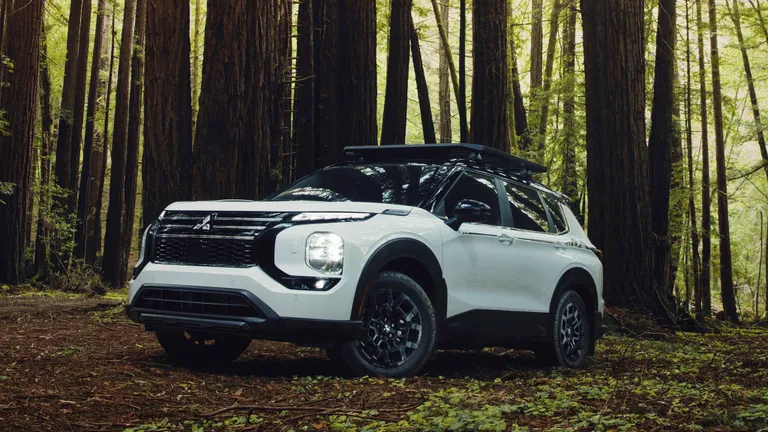
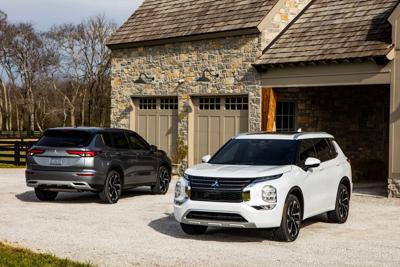
2025-26 Mitsubishi Outlander
2025-26 Volkswagen Taos
2025-26 Volvo XC40 (known for its safety focus)
Marginal:
2025 BMW X1
2025-26 Nissan Rogue
Poor:
2025-26 Ford Bronco Sport (a rugged contender)
2025-26 Hyundai Tucson (a sibling to the Ioniq 5)
2025-26 Mazda CX-50 (offering a distinct driving experience)
This breakdown is invaluable for consumers researching 2025 SUV safety ratings and specifically looking for vehicles that excel in rear-impact protection. Understanding these results is key to making informed decisions about vehicle safety, particularly for families prioritizing occupant well-being in common driving scenarios.
The Evolution of Whiplash Testing: Precision and Predictive Power
The IIHS’s commitment to advancing automotive safety is evident in its rigorous testing methodologies. The updated whiplash evaluation goes beyond simple physical impact simulations, incorporating sophisticated data analysis and refined metrics to better predict real-world injury outcomes.
The previous iteration of the whiplash test involved mounting a vehicle’s seat onto a sled, which was then accelerated to simulate a rear-end collision. This simulated impact was equivalent to being struck by a vehicle of the same weight at 20 mph. Measurements were collected from a specialized dummy equipped with an articulated spine, positioned securely in the seat. While this format remains the foundation of the new test, it has been significantly enhanced with additional measurements and metrics derived from extensive testing of seats from thirty-six different vehicles across three distinct impact speeds. This comprehensive data collection allows IIHS scientists to establish stronger correlations between specific seat and restraint system design elements and actual whiplash injury rates, leveraging insights from the related Highway Data Loss Institute. The updated evaluation now meticulously incorporates measurements from tests simulating impacts at both 20 mph and 30 mph, offering a more robust assessment of the best SUVs for whiplash protection.
The original test primarily focused on two key metrics: the time it took for the dummy’s head to make contact with the head restraint and the acceleration experienced by the T1 vertebra, located at the junction of the upper spine and the neck. The new test builds upon this by introducing crucial new measurements, including the relative displacement of the pelvis to the head. In a rear-end collision, a properly functioning seat design allows the occupant’s body to sink into the seatback, maintaining a consistent relative position between the pelvis and the head. This crucial aspect ensures that the forces of impact are distributed more evenly and effectively.
Furthermore, the updated evaluation meticulously assesses the bending or tilting forces exerted on the head in relation to the neck. For optimal protection, the head restraint should make contact with the occupant’s head near its center of gravity. If the head restraint contacts the head above this point, it can force the chin downward, leading to a “chin-to-chest” impact and potentially increasing neck strain. Conversely, contact below the center of gravity can tilt the head backward and upward, also contributing to adverse neck biomechanics. This precise understanding of head restraint geometry and contact is critical for preventing whiplash.
By integrating these refined measurements, the IIHS now possesses a more comprehensive understanding of how effectively a seat and its head restraint system provide support to the head and spine. It also offers deeper insight into the interaction between the occupant’s head and the head restraint, and crucially, how well the seat absorbs and manages the crash energy transferred to the occupant’s body. A “Good” performance in this advanced test signifies that the seat successfully maintains the alignment of the head and spine, allowing the neck to retain its natural curvature. It also emphasizes the critical importance of proper head restraint positioning, underscoring that even seemingly minor adjustments to adjustable head restraints can have a significant impact on safety. This detailed analysis provides consumers with more granular information about vehicle safety features and their effectiveness.
Beyond the Crash Test: Understanding Whiplash and Its Prevention
Whiplash, a common injury resulting from sudden, forceful back-and-forth movement of the neck, can occur in various scenarios but is most frequently associated with rear-end automobile collisions. The mechanism involves the rapid acceleration of the vehicle, causing the torso to be propelled forward while the head, due to inertia, lags behind. This differential movement can overextend the neck, leading to damage to the cervical vertebrae, muscles, ligaments, and nerves. The severity of whiplash can range from mild discomfort to chronic pain and long-term debilitation.
The IIHS’s updated testing protocol directly addresses the biomechanical forces involved in whiplash. The emphasis on pelvic displacement, head movement relative to the spine, and head restraint contact points reflects a sophisticated understanding of how to mitigate these forces. A well-designed seat not only cushions the impact but also guides the occupant’s body in a manner that minimizes harmful neck extension and flexion. The head restraint, often an overlooked component, plays a pivotal role in preventing excessive backward head motion, thereby reducing the likelihood of hyperextension.
The inclusion of data from the Highway Loss Data Institute (HLDI) adds another layer of real-world validation to the IIHS’s findings. HLDI analyzes insurance claims data, providing valuable insights into the frequency and severity of injuries across different vehicle makes and models. By correlating crash test performance with actual insurance claim data, the IIHS can refine its tests to better reflect the types of impacts and injuries that occur most frequently on public roads. This approach ensures that the new IIHS whiplash ratings are not just academic exercises but are directly applicable to improving driver and passenger safety.
For consumers in major metropolitan areas like Los Angeles SUV safety ratings or seeking new car safety features in Dallas, this information is crucial. Understanding which vehicles consistently perform well in these advanced safety tests can help narrow down choices and prioritize models that offer superior protection against common injuries. The availability of this detailed data empowers buyers to make more informed decisions, moving beyond basic safety scores to truly understand how a vehicle will protect its occupants.
High-CPC Keywords and Future Safety Innovations
In the competitive automotive market, safety is a key differentiator. Several high-CPC (Cost Per Click) keywords associated with vehicle safety and specific models reflect this. Terms like “2025 SUV safety rankings,” “best small SUV for safety 2025,” and “IIHS Top Safety Pick SUVs” are actively searched by consumers willing to invest more in vehicles that offer top-tier protection. Manufacturers are keenly aware of this, investing heavily in research and development to incorporate the latest safety technologies.
Beyond the structural integrity of the vehicle and the design of seats and restraints, advancements in active safety systems are also revolutionizing occupant protection. Features such as automatic emergency braking (AEB), adaptive cruise control, lane keeping assist, and blind-spot monitoring are increasingly standard, working proactively to prevent accidents altogether. While the current IIHS whiplash test focuses on passive safety – how a vehicle protects occupants during a crash – the agency also evaluates these active safety systems extensively, often as part of their overall Top Safety Pick+ award criteria.
The integration of artificial intelligence (AI) and advanced sensor technology is poised to further enhance automotive safety. AI-powered systems can analyze complex traffic situations in real-time, predict potential hazards, and react faster than human drivers. This evolution towards autonomous vehicle safety features and semi-autonomous driving capabilities promises a future where the types of accidents that cause whiplash may become far less common.
For those considering a new vehicle purchase in the near future, looking for models that not only achieve high ratings in crashworthiness tests but also incorporate a comprehensive suite of advanced driver-assistance systems (ADAS) is a wise strategy. The synergy between passive safety features, like those rigorously tested by the IIHS for whiplash protection, and active safety technologies creates a layered defense against road hazards. Consumers researching specific models, such as the “2025 Toyota RAV4 safety features” or “2025 Subaru Forester safety reviews,” will benefit from examining both aspects.
Making an Informed Decision for Your Next Vehicle
As we navigate the evolving landscape of automotive safety, the IIHS’s updated whiplash protection test for small SUVs provides invaluable, actionable data for consumers. The distinction between “Good,” “Acceptable,” “Marginal,” and “Poor” ratings offers a clear hierarchy of protection, enabling informed decision-making. For individuals and families prioritizing well-being on the road, especially in urban environments where rear-end collisions are frequent, focusing on vehicles that achieve the highest marks in this critical evaluation is paramount.
When considering your next vehicle, whether it’s a family hauler, a daily commuter, or a weekend adventure companion, delve beyond the surface-level specifications. Explore the detailed safety reports from organizations like the IIHS. Understand the nuances of their testing methodologies and how they directly translate to real-world protection. Prioritize vehicles that demonstrate excellence not only in frontal and side impacts but also in mitigating the risks associated with rear-end collisions.
Your journey to a safer drive begins with knowledge. We encourage you to explore the full IIHS report, cross-reference these findings with your personal needs and preferences, and consult with trusted automotive professionals. Taking the time to research and understand these critical safety metrics will undoubtedly lead you to a vehicle that offers both peace of mind and superior protection for you and your loved ones on every journey.