
Toyota Celica Sport 2026: All-Wheel Drive Hybrid Power Returns to the Arena
The automotive landscape of 2026 is witnessing a seismic shift, with manufacturers pivoting towards electrified powertrains and sustainable mobility solutions. Yet, amidst this transformation, a beacon of hope for driving enthusiasts emerges from the annals of automotive history. Toyota, a titan of innovation and a purveyor of iconic sports cars, is reportedly resurrecting the legendary Celica nameplate, christening it the Toyota Celica Sport. This revival is not merely a nostalgic nod to the past; it represents a bold stride into the future of performance motoring, promising an all-wheel-drive hybrid powertrain that could redefine the segment.
The whispers of the Celica’s return began to coalesce into a tangible reality in late 2024, when a Toyota executive confirmed the brand’s commitment to the sports car segment at an event in Japan. Now, a new report from the esteemed British publication Autocar has pulled back the curtain further, revealing tantalizing details about the car’s nomenclature and its advanced powertrain. According to insights gleaned from discussions with Mikio Hayashi, the Marketing Manager for Gazoo Racing (GR), Toyota’s performance division, the new model will indeed bear the moniker Celica Sport. This nameplate choice pays homage to the car’s illustrious heritage while signaling a renewed focus on performance excellence.
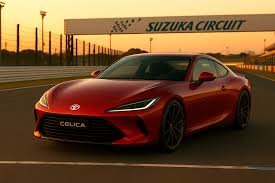
Perhaps the most electrifying revelation from the Autocar report is the confirmation that the Celica Sport will feature an all-wheel-drive (AWD) system. This news will undoubtedly resonate deeply with long-time aficionados of the Celica lineage, evoking memories of the iconic fourth-generation Celica All-Trac Turbo. That legendary model, a dominant force in rally racing during the late 1980s and early 1990s, cemented the Celica’s reputation as a formidable performance machine. While earlier iterations of the Celica graced the roads with front-wheel-drive and rear-wheel-drive configurations, the return of AWD signals Toyota’s intent to reclaim the Celica’s rally-bred DNA and translate it into a modern, road-legal performance car.
The rally connection appears to be more than just a historical callback. A Toyota rally car, camouflaged and undergoing rigorous testing in Portugal in February 2026, has fueled speculation that the Celica Sport will serve as Toyota’s next contender in the World Rally Championship (WRC). The current Yaris-based rally racer, while a formidable machine, will become ineligible for WRC competition in 2027. The discovery of a compact coupe prototype undergoing testing strongly suggests that the Celica is being groomed to fill this void, promising to reignite the legendary rivalry between Toyota and its competitors on the world’s most demanding rally stages. For enthusiasts seeking authentic rally-inspired performance, the prospect of the Celica Sport dominating WRC stages is a tantalizing one.
Beyond its drivetrain configuration, the Autocar report sheds light on the heart of the Celica Sport: a hybrid turbocharged 2.0-liter four-cylinder engine. This powertrain concept was first hinted at in January 2025 at the Tokyo Auto Salon, where Toyota unveiled the mid-engined GR Yaris M concept. This concept served as a showcase for Toyota’s next-generation performance technology, and it appears the 2.0-liter turbo-four is poised to be a cornerstone of Toyota’s future performance lineup, including the anticipated Celica and MR2 revivals.
The rationale behind this engine choice was articulated by Mikio Hayashi himself. In a candid interview, he explained that while the current 1.6-liter engine found in the GR Yaris is a marvel of engineering, it may struggle to meet increasingly stringent emissions regulations in the future. “The displacement size of 1.6 liters [used in the GR Yaris], for example, cannot meet emission regulations,” Hayashi noted. “So we have to consider the possibility of a 2.0-liter.” He further elaborated that Toyota is exploring various engine sizes, though no definitive decision has been made. The specifics of the hybrid system, whether it will be a conventional hybrid or a plug-in hybrid, remain under wraps, adding an element of intrigue to the development process.
The development timeline for this new 2.0-liter engine remains somewhat elusive, with Hayashi indicating that Toyota is making steady progress but cannot yet commit to a specific launch date. “We are continuing to develop that. We have high expectations,” he hinted. “We cannot point to a timeline but can say we are making steady progress.” This measured approach is characteristic of Toyota’s development philosophy, ensuring that when the Celica Sport finally arrives, it will be a product of meticulous engineering and rigorous testing.
Adding further weight to the credibility of the 2.0-liter hybrid powertrain is the engine’s reported design architecture. According to German publication Auto Motor und Sport, the engine features a shorter piston stroke than Toyota’s current offerings. This design choice serves to reduce the engine’s overall size and weight, a critical factor in performance car development. The implications of this compact, lightweight design are significant. By incorporating hybrid components—the battery pack and electric motor—the added weight penalty would be substantially less compared to grafting hybrid technology onto larger, heavier engines. This design efficiency could allow Toyota to deliver a high-performance hybrid powertrain without compromising the car’s agility and handling characteristics, a key attribute that made the original Celica a fan favorite.
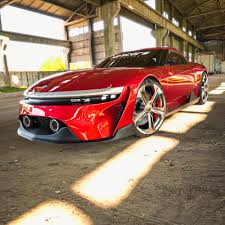
While the precise power output of the Celica Sport’s powertrain remains a subject of speculation, industry insiders have thrown around some eye-opening figures. Previous reports have pegged the combined output at around 400 horsepower. However, Auto Motor und Sport suggests that with the addition of a larger turbocharger, the hybrid system could potentially deliver a staggering figure exceeding 600 horsepower. Such a power output would place the Celica Sport in rarefied territory, competing with some of the most potent sports cars on the market today. It also raises intriguing questions about the car’s positioning within Toyota’s GR lineup. Could this powertrain find its way into other GR models? The GR Yaris, particularly in European markets where emissions regulations are stringent, could be a prime candidate for some version of this new engine. In the United States, the GR Corolla, a popular hot hatch, seems a likely recipient of this advanced hybrid technology, offering American enthusiasts a taste of Toyota’s next-generation performance.
The implications of this powertrain strategy extend beyond the Celica Sport. Toyota’s commitment to developing a high-performance 2.0-liter hybrid engine underscores a broader shift in the company’s approach to performance engineering. As the automotive industry grapples with the transition to electrification, Toyota is demonstrating that performance and sustainability need not be mutually exclusive. By integrating hybrid technology into its performance vehicles, Toyota is positioning itself to navigate the evolving regulatory landscape while continuing to deliver the exhilarating driving experiences that enthusiasts crave.
For the North American market, the return of the Celica Sport would be particularly significant. In the United States, the Celica nameplate holds a special place in the hearts of a generation of car enthusiasts. From its humble beginnings as an affordable, stylish coupe to its rally-bred All-Trac Turbo iterations, the Celica has consistently offered a compelling blend of performance, reliability, and accessibility. The prospect of its return, particularly with an all-wheel-drive hybrid powertrain, could reignite the passion of those who grew up idolizing the Celica and introduce a new generation of drivers to its legendary legacy. The United States market, with its burgeoning demand for performance vehicles and its growing acceptance of hybrid technology, appears to be fertile ground for the Celica Sport.
The successful integration of a high-performance hybrid powertrain into a compact sports car package would also represent a significant technical achievement for Toyota. The company has already demonstrated its prowess in hybrid technology with the Prius and its more performance-oriented siblings. However, adapting this technology for a high-performance application, where weight management and power delivery are paramount, presents a different set of challenges. The development of a lightweight, compact hybrid system that can deliver exhilarating performance without compromising efficiency would be a testament to Toyota’s engineering expertise and its commitment to pushing the boundaries of automotive innovation.
The design language of the Celica Sport will undoubtedly be a critical factor in its success. While the Autocar report focuses on the powertrain, the aesthetic appeal of the car will be equally important in capturing the imagination of potential buyers. Drawing inspiration from the Celica’s rich design heritage while incorporating modern styling cues will be a delicate balancing act. The sleek, aerodynamic lines of the original Celica, particularly the fifth-generation model that competed in WRC, have stood the test of time. A modern interpretation of these design elements, combined with Toyota’s current design language as seen in the GR Corolla and GR Yaris, could result in a visually stunning vehicle that commands attention on the road and on the racetrack.
The availability of the Celica Sport in the United States is another key consideration. While Toyota’s Gazoo Racing division has a strong presence in North America, the decision to bring the Celica Sport to the US market will depend on a confluence of factors, including market demand, regulatory requirements, and production capacity. Given the enthusiasm for performance cars in the United States and the growing interest in hybrid technology, it is plausible that the Celica Sport will find its way to American shores. However, this is not guaranteed, and enthusiasts in the US will be eagerly awaiting further announcements from Toyota regarding its international market strategy.
In conclusion, the prospect of the Toyota Celica Sport emerging in 2026 with an all-wheel-drive hybrid powertrain is a development that has sent ripples of excitement throughout the automotive world. This revival of a legendary nameplate, combined with cutting-edge hybrid technology and a clear nod