
Navigating the Subscription Maze: What Automakers Offer in Connected Car Services and How Much They Cost
The automotive landscape is rapidly transforming, moving beyond the traditional purchase of a vehicle to a more integrated, service-based ownership model. In 2025 and beyond, the connected car is no longer a futuristic concept but a tangible reality, with automakers increasingly integrating digital services and app-based subscriptions into their offerings. As a seasoned industry professional with a decade of experience navigating these evolving trends, I’ve witnessed firsthand the shift towards monetizing the in-car digital experience. This isn’t just about remote start anymore; we’re talking about advanced driver-assistance features, personalized concierge services, and sophisticated vehicle health diagnostics, all accessible through your smartphone.
The core question for consumers remains: What automotive app subscriptions are available, and what is the true cost of this digital integration? The answer, as it turns out, is as varied as the brands themselves. From complimentary basic services to elaborate feature packages commanding significant annual fees, understanding this subscription maze is crucial for any discerning car buyer or owner. This article delves deep into the current offerings, dissecting the pricing structures and feature sets across a wide spectrum of manufacturers, providing an expert’s perspective on the value proposition of these evolving connected car services and automotive subscription features.
The Shifting Sands of Automotive Connectivity: Beyond Basic Controls
Gone are the days when a car’s digital capabilities were limited to a rudimentary infotainment system and perhaps a navigation unit. Today, the vehicle is becoming an extension of our digital lives, a connected hub that offers convenience, safety, and entertainment. Automakers are keenly aware of this and are investing heavily in developing sophisticated digital ecosystems. These car app subscriptions are designed to enhance the ownership experience, offering features that were once the exclusive domain of luxury vehicles or aftermarket add-ons.
The initial allure of these services is often a free trial period. These range from a few months to, in some remarkably generous cases, a decade. However, once this introductory phase concludes, owners are typically faced with annual or monthly charges. It’s important to note that these aren’t always small sums. What might begin as a seemingly innocuous monthly fee can quickly add up, especially when considering the burgeoning array of optional upgrades and specialized packages.
Furthermore, the definition of “connected services” has expanded dramatically. While basic functionalities like remote locking/unlocking, vehicle location, and status monitoring remain standard, we’re now seeing subscriptions for:
Advanced Driver-Assistance Systems (ADAS): Think semi-autonomous driving capabilities, intelligent cruise control, and automated parking features.
Enhanced Navigation: Real-time traffic updates, 3D mapping, and personalized route suggestions.
In-Car Entertainment & Productivity: Integrated streaming services, advanced voice assistants, and even Wi-Fi hotspots.
Vehicle Health & Maintenance: Predictive diagnostics, over-the-air (OTA) software updates, and proactive service scheduling.
Concierge Services: Personalized assistance for bookings, information, and more.
This diversification means that the “cost” of a subscription isn’t just a number; it’s a reflection of the value and functionality you expect to receive. For those seeking the latest in automotive technology, particularly in EV charging subscriptions or connected car features for luxury vehicles, understanding the nuances of these offerings is paramount.
A Brand-by-Brand Breakdown: Decoding the Subscription Landscape
To provide a comprehensive overview, let’s dissect what various automakers are offering in the realm of automotive app subscriptions and their associated costs. It’s crucial to remember that pricing and feature availability can vary significantly based on vehicle model, trim level, and even the manufacturing year, reflecting the dynamic nature of car digital services.
Aston Martin: In a surprising move for a marque synonymous with exclusivity, Aston Martin offers its connected services completely free of charge through its Connected Car System app. The focus here is primarily on security features, such as vehicle location and door status monitoring, alongside essential vehicle health data. While some might find the feature set modest given the vehicle’s price point, it aligns with the brand’s ethos of providing a premium, hassle-free ownership experience.
Audi: Audi employs a dual-app strategy with myAudi and Audi Connect. The myAudi app handles fundamental functions like remote door access and maintenance checks, with specific capabilities for EV owners like Plug & Charge. Audi Connect, however, offers tiered subscription plans – Nav, Prime, Plus, and Care – that unlock a more comprehensive suite of features. These can include remote lock/unlock, stolen vehicle locator, and roadside assistance. A particularly noteworthy aspect is Audi’s “Functions on Demand” approach, where certain hardware features are included in the vehicle but require an additional subscription to activate. For instance, the Light Function Package, enabling adaptive headlights, can cost upwards of $260 for activation on an E-Tron. This model highlights a growing trend of unlocking hardware potential through software subscriptions, a significant consideration for high-CPC keywords related to automotive technology upgrades.
Bentley: Mirroring Aston Martin’s approach, Bentley offers its “My Bentley” app with complimentary connected services. Owners can access in-vehicle data, security features, navigation, news, weather, and satellite radio through this platform. While an in-vehicle Wi-Fi hotspot is available, it incurs an additional cost, a common practice across many brands.
BMW: BMW’s connected services, accessed via the My BMW App/BMW ConnectedDrive, present a complex pricing structure that varies by model, operating system, and generation. Most 2025-2026 models are equipped with features like remote start, drive recorders, automated parking, and advanced driver assistance systems. Many of these come with introductory free trials, typically one month, though some, like Driving Assistant Plus and remote parking, extend to three months. Post-trial, pricing can range from $5-$20 per month, $25-$150 annually, or even bundled into three-year ($99-$400) or lifetime ($149-$650) subscriptions, illustrating the significant investment some owners make in these connected car features.
Ford: Ford’s digital presence is unified under the Ford app, which previously operated as FordPass. This app provides essential functions such as GPS location, vehicle health, and remote start/lock/unlock. For those seeking more advanced capabilities, Ford Connected Services offers premium features. This includes performance upgrades for EVs, such as a $1,000 power and torque boost for the Mustang Mach-E. Blue Cruise, Ford’s hands-free semi-autonomous driving system, is another prominent subscription offering. After a 90-day trial, owners can opt for a $50 monthly plan, a $495 annual fee, or a one-time purchase of $2,495. Ford also incorporates a rewards program, incentivizing owners to engage with its digital ecosystem by earning points redeemable for features, parts, or accessories. This gamified approach to automotive subscription models is a strategic move to foster customer loyalty.
Genesis: Hyundai’s luxury division, Genesis, offers its “Genesis Connected Services/My Genesis” via the MyGenesis app. While the cars themselves are impressive, the connected services have historically been less of a focal point. Starting with the 2023 model year, Genesis provides these services free for three years, after which a $9.99 monthly or $99 annual subscription fee applies. Features include vehicle status notifications, service valet, and remote vehicle functions.
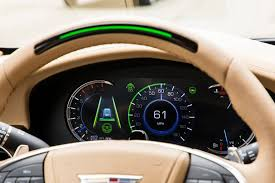
GM (Buick, Cadillac, Chevrolet, GMC): GM’s established OnStar service remains a significant player in the connected car market, accessible through individual brand apps (myChevrolet, myCadillac, etc.). OnStar connectivity ranges from $9.99 to $39.99 monthly. The more affordable tiers offer core services like roadside assistance, in-vehicle Wi-Fi, and software updates. Higher-priced plans unlock advanced features such as GM’s Super Cruise semi-autonomous driving system, an internet browser, gaming, and even Apple Music integration, a notable move following GM’s stance on Apple CarPlay. The multi-brand approach and tiered pricing of GM connected services demonstrate a broad strategy to capture diverse customer needs.
Honda and Acura: Through Honda Link and Acura Link respectively, these brands offer five distinct subscription plans. The Basic and Link plans are complimentary, providing essential services like recall notifications and vehicle health reports. Paid plans, ranging from $10 to $26 monthly (or $110 to $260 annually), unlock features such as remote lock/unlock, stolen vehicle locator, and enhanced roadside assistance. The premium Concierge plan offers a personal assistant for making reservations. This layered approach caters to a wide spectrum of user requirements for Honda car app subscriptions.
Hyundai: Hyundai’s Bluelink+ app provides a comprehensive suite of connected services. After a generous three-year free trial, owners can opt for packages like Connected Care (24/7 call center access), Remote (remote vehicle control), and Guidance (navigation). These are available at $9.90 per month or $99 annually. It’s important to note that certain features within the Bluelink Mobile App necessitate subscriptions to specific packages, underscoring the interconnectedness of their digital offerings.
Infiniti: Infiniti’s InTouch service offers tiered packages (Standard, Premium, Select) with varying trial periods. Premium is free for three years, while Select extends to five years. The specific features available within these packages are highly dependent on the vehicle’s model, year, and trim. Pricing for services after the trial periods has not yet been fully disclosed, as many compatible vehicles are still within their initial free trial phases. This highlights the evolving nature of Infiniti connected car features.
Jaguar Land Rover: These sister brands utilize the InControl platform with four distinct packages. The “Remote” package, offering remote start, vehicle finder, and maintenance health checks, has a trial period equivalent to the vehicle’s warranty, followed by annual renewals costing $120 or $180 for two years. “Connected Navigation Pro” adds real-time traffic and satellite views for $120-$220 post-warranty. The “Online Pack” provides in-vehicle streaming and an Alexa assistant for $160-$250 annually, while the “Online Pack Plus Wi-Fi Hotspot” bundles all these with a hotspot for $500-$800 for two years. The tiered pricing and distinct feature sets make these luxury car app subscriptions a significant consideration.
Lexus and Toyota: Both brands offer their core connected services free of charge through their respective apps. These include remote vehicle control, health reports, and enhanced navigation. However, they also offer three paid subscription packages: “Go Anywhere” ($15/month) for cloud navigation and remote control; “Music Lover” ($15/month) for integrated streaming services; and “Premium” ($25/month) which combines all features. The availability of specific features depends on the vehicle model, demonstrating a tailored approach to connected car services pricing.
Lincoln: As a luxury marque, Lincoln’s “Lincoln App” offers its connected services free of charge. This includes features like a personal concierge, vehicle pickup and delivery for service, and standard remote control functionalities. The 2026 Aviator, Nautilus, and Navigator come with a four-year Connectivity Package and Wi-Fi hotspot service as standard, providing a generous initial offering for Lincoln connected services.
Mazda: Mazda Connected Services, accessible via the MyMazda app, offers a one-year free trial for 2025 and newer models. Post-trial, a $10 monthly fee provides access to features such as remote vehicle control, finder, and health statistics. The exact features available can vary by model.
Mercedes-Benz: Mercedes-Benz has fully embraced subscription-based features with its “Mercedes Me” app. Beyond standard remote functions and health alerts, some vehicles include a one-year free trial of connected services. The “MB.Connect Package” is the primary subscription offering after the trial, encompassing up to 32 features, including remote start, door locking, vehicle finder, and live traffic. Pricing and content are subject to vehicle model year and equipment, reflecting the complexity of Mercedes-Benz connected car features.
Mini: The Mini Connected App is free to use, but an optional “Connected Plus” add-on package is available for $9.99 per month or $99 annually, with a three-month trial for new vehicles equipped with the Mini Operating System 9. Additional “Mini Connected Upgrades” offer enhanced navigation, entertainment apps, and an AI digital assistant, purchasable through the app or in-car system.
Mitsubishi: The “My Mitsubishi Connect” app provides a free trial for connected services, followed by an annual fee of $299. Core features include remote start, climate control, and service scheduling. Premium subscription packages include “Safeguard” (advanced roadside assistance and collision notification), “Remote Package” (enhanced remote control), and “myQ Connected Garage” (integrated garage door opener). The premium packages represent a significant value proposition for Mitsubishi connected car services.
Nissan: Nissan’s Connect services mirror Infiniti’s tiered approach with Standard, Premium, Select, and Premium Plus packages. Premium offers a three-year free trial, while Select provides five years. Feature availability varies by model, with EVs like the Ariya offering more extensive capabilities than sedans like the Altima. After the trial, Premium costs $16.99 monthly, and Premium Plus is $26.99 monthly.
Polestar: Polestar currently offers its “Polestar Connect” app free of charge to U.S. buyers. This includes advanced features like cloud-based hazard alerts for other Polestar vehicles, demonstrating a commitment to user accessibility in its electric vehicle connected services.
Porsche: Porsche Connect provides a generous 10-year free trial period for its subscription services. After this decade, an annual fee of $319 applies. Basic features include entertainment apps, games, enhanced navigation, and a digital assistant. Additional optional packages include a car security package ($280/year) and a data pass for in-vehicle internet ($20/month). This extended trial period sets a high bar for luxury EV connected services.
Rivian: Rivian Connect+ offers comprehensive connected services for $14.99 monthly or $149.99 annually. Standard features include turn-by-turn navigation with live traffic and voice commands. Enhanced features comprise a live security feed, Wi-Fi hotspot, and streaming services like YouTube and Spotify. The Rivian app subscription targets users seeking a fully integrated digital experience.
Stellantis (Chrysler, Dodge, Fiat, Jeep, Maserati, Ram): Stellantis, under its Uconnect platform, provides an exceptional 10-year free subscription to its connected features, including OTA updates, digital keys, emergency alerts, and vehicle health reports. Following this extensive trial, an annual fee of $119 applies. This generous offering for Stellantis connected services significantly reduces the initial cost barrier.
Subaru: Subaru’s rebranded Starlink services, now under “MySubaru,” offer free trial periods for its connected features, varying from six months to five years depending on the package. After the trial, annual subscriptions for enhanced navigation, security, concierge, and remote functions are available for $199.
Tesla: Tesla has been a pioneer in subscription-based features. Its Full Self-Driving capability can be subscribed to for $99 per month, or purchased outright for $8,000 (with a limited-time offer before becoming subscription-only). Additionally, “Premium Connectivity” for data services costs $9.99 per month or $99 annually, with standard connectivity being free for eight years. Tesla’s approach to EV subscription features is a cornerstone of its business model.
Volkswagen: The myVW App offers various subscription plans starting at $9.99 monthly or $110 annually, in addition to vehicle health alerts and a driving habit scoring system called DriveView. Plans include “In-Vehicle Premium” (enhanced infotainment, AI assistant), “Safe & Secure” (emergency roadside assistance, stolen vehicle alerts), “Remote Access” (remote vehicle control), and “Vehicle Insights.” This detailed breakdown of Volkswagen connected car services empowers consumers to choose the most suitable plan.
Volvo: Volvo’s Connected Services, accessed via the Volvo Cars App, are either free or cost $200 per year, depending on the model year. All new Volvo models and those with Google Built-In systems receive these services complimentary, while cars with the Sensus operating system incur the annual fee. Features include vehicle health tracking, parked car locator, and EV charging management.
The Value Proposition: Are Automotive App Subscriptions Worth It?
The proliferation of automotive app subscriptions presents a complex value proposition for consumers. On one hand, these services offer unprecedented convenience, enhanced safety, and access to cutting-edge technology. Features like advanced driver-assistance systems can genuinely improve the driving experience and potentially prevent accidents. For EV owners, EV charging subscriptions and integrated charging management can simplify the transition to electric mobility.
However, the cumulative cost of these subscriptions can be substantial. When you factor in multiple services and potential annual fees, the total outlay can rival that of a monthly car payment. The industry is still grappling with the ideal balance between perceived value and consumer willingness to pay. For luxury car subscription services, the expectation of premium features and seamless integration is higher, justifying the associated costs for many.
Furthermore, the question of data privacy remains a significant concern for many consumers. Car data sharing and privacy are critical considerations, and automakers need to be transparent about what data is collected and how it’s used. As I’ve seen over the past decade, building trust in this area is paramount for long-term success in the connected car space.
For those considering these subscriptions, it’s crucial to:
Assess Your Needs: Do you truly need all the advertised features, or are there basic functionalities that suffice?
Calculate the Long-Term Cost: Consider the annual or multi-year fees beyond the free trial periods.
Compare Across Brands: Different automakers offer varying levels of functionality and pricing for similar features.
Read the Fine Print: Understand what’s included and what requires additional payment, especially regarding “Functions on Demand” or hardware unlocks.
Evaluate the Value of Free Trials: Use these periods to thoroughly test the services and determine their genuine benefit to your daily driving.
The journey into the connected car era is an ongoing evolution. As technology advances and consumer expectations shift, we can anticipate further innovation in automotive digital services and subscription models. Staying informed about these developments, understanding the costs, and critically evaluating the value proposition will empower you to make the best choices for your driving future.
Ready to navigate the future of driving? Explore the latest connected car technologies and understand how they can enhance your ownership experience. Contact your local dealership or visit the manufacturer’s website today to learn more about available subscription services and find the perfect fit for your needs.