
The Evolving Landscape of Automotive App Subscriptions: Navigating Features and Costs
The automotive industry is undergoing a profound digital transformation, with manufacturers increasingly integrating sophisticated connected services and app subscriptions into their vehicle offerings. As a seasoned observer of this space for the past ten years, I’ve witnessed firsthand the shift from basic infotainment to complex digital ecosystems that promise enhanced convenience, safety, and even performance. This evolution raises critical questions for consumers: What exactly are automakers offering through these app subscriptions, how much do they cost, and are they truly worth the investment? This comprehensive analysis delves into the current state of automotive app subscriptions, dissecting the value propositions, pricing structures, and the future implications for drivers across the United States.
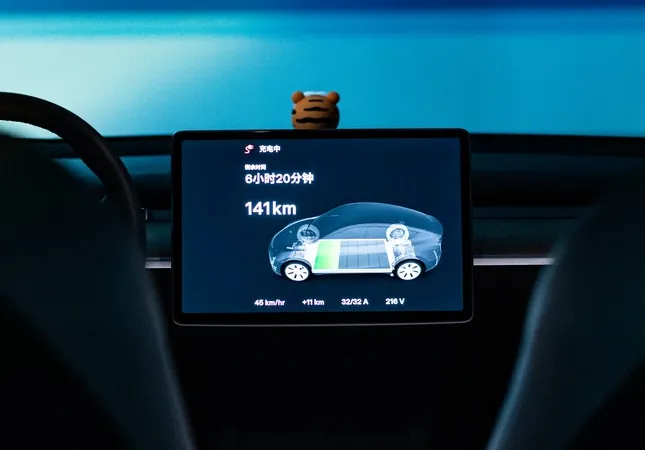
The core of this digital shift lies in the vehicle becoming more than just a mode of transportation; it’s evolving into a connected hub. Automakers are leveraging smartphone applications and in-car infotainment systems to offer a suite of digital services that extend far beyond traditional remote access. We’re talking about advanced driver-assistance systems (ADAS) features unlocked via subscription, personalized concierge services, real-time vehicle health diagnostics, and even performance enhancements. The overarching trend is clear: the subscription model is no longer an outlier but a fundamental component of the modern automotive experience.
Navigating the Subscription Spectrum: From Luxury to Mainstream
The approach to automotive app subscriptions varies significantly across brands, reflecting their target demographics and brand positioning.
For ultra-luxury marques like Aston Martin, the philosophy is often one of inclusion. Their Aston Martin Connected Car System app is remarkably free of charge, focusing primarily on security features such as vehicle location and intrusion alerts. This aligns with the premium expectation of their clientele, where the inherent value of the vehicle is paramount, and digital services are often seen as an integrated, rather than an add-on, component.
At the other end of the spectrum, mainstream brands are actively exploring a more tiered and sometimes more aggressively monetized subscription strategy. Take Audi, for instance. They employ a dual-app approach: the fundamental myAudi app offers essential functions like remote lock/unlock and maintenance tracking, while the more feature-rich Audi Connect platform presents several subscription tiers. These include Nav, Prime, Plus, and Care, each unlocking capabilities ranging from remote vehicle management and stolen vehicle locator services to sophisticated roadside assistance. Audi also exemplifies the growing trend of “Functions on Demand,” where features physically present in the vehicle require a separate subscription to activate – a model that can be met with consumer skepticism but is gaining traction. For example, unlocking advanced headlight functionality on an e-tron model might incur a one-time fee of around $260, a clear indicator of how automakers are finding new revenue streams within the vehicle’s existing hardware.
BMW demonstrates a complex pricing structure for its connected services, accessible through the My BMW App/BMW ConnectedDrive. While many 2025-2026 models come equipped with advanced features like remote start, drive recorders, and sophisticated parking assist systems, these often come with free trial periods of varying lengths. Post-trial, owners face a labyrinth of pricing options: monthly ($5-$20), annual ($25-$150), three-year ($99-$400), or even lifetime subscriptions ($149-$650), depending on the specific feature. This approach necessitates a deep dive by consumers to understand what aligns with their needs and budget.
Ford has streamlined its digital offerings under the Ford app, which formerly incorporated FordPass. This app provides foundational features like GPS tracking, vehicle health reports, and remote access. However, for more advanced functionalities, consumers must engage with Ford Connected Services. This is where the subscription model becomes more pronounced, particularly for electric vehicles. The Mustang Mach-E, for example, can receive a performance upgrade for a substantial one-time payment of $1,000. More significantly, Ford’s Blue Cruise hands-free driving system, after an initial 90-day trial, can be subscribed to for $50 per month, $495 annually, or a steep $2,495 for a perpetual license. Ford’s strategy includes a reward points system, incentivizing users to spend within their ecosystem by earning points on purchases, which can then be redeemed for features, parts, or accessories – a clever loyalty play.
General Motors, through its iconic OnStar service, accessible via brand-specific apps like myChevrolet, myCadillac, myBuick, and myGMC, maintains a significant presence in the connected services market. OnStar offers a range of plans from $9.99 to $39.99 monthly. The foundational plans include essential services like roadside assistance, in-vehicle Wi-Fi, and over-the-air software updates. Higher-tier plans unlock advanced features such as GM’s Super Cruise hands-free driving technology, an integrated web browser, gaming, and even Apple Music connectivity, a strategic addition likely aimed at addressing consumer feedback regarding the phasing out of Apple CarPlay support in some GM vehicles.
Hyundai, through its luxury arm Genesis, offers its Connected Services via the MyGenesis app. While initially provided free for three years on models from 2023 onwards, the service transitions to a subscription model post-trial, costing $9.99 per month or $99 annually. The core features include vehicle status notifications, remote start, and service valet, providing a solid baseline of connected convenience.
Honda and Acura utilize Honda Link and Acura Link respectively, offering five distinct subscription plans. The Basic and Link plans are complimentary, providing recall notifications, roadside assistance, and vehicle health reports. The paid tiers, ranging from $10-$26 monthly (or $110-$260 annually), progressively unlock features like remote control, stolen vehicle locator, collision notifications, and even a personal concierge service for reservations and travel arrangements.
In the premium segment, Jaguar and Land Rover offer a tiered approach through their InControl apps. Their packages – Remote, Connected Navigation Pro, Online Pack, and Online Pack Plus Wi-Fi Hotspot – provide a spectrum of services from basic vehicle monitoring and remote start to in-car streaming and Wi-Fi hotspots. Crucially, these services often come with free trials that align with the vehicle’s warranty period. Post-trial, annual renewal costs can range from $120 for basic remote functions to $500-$800 for the comprehensive Wi-Fi package, illustrating a significant post-purchase cost for enhanced connectivity.
Lexus and Toyota adopt a more accessible model, offering core connected services through their respective apps for free. These include remote vehicle control, health reports, and in-vehicle Wi-Fi. However, they also present subscription packages like “Go Anywhere” ($15/month) for advanced navigation and remote access, “Music Lover” ($15/month) for integrated streaming, and a “Premium” package ($25/month) that bundles all features. This layered approach allows for basic functionality without a fee while offering enhanced capabilities for those willing to pay.

Lincoln continues its tradition of luxury by offering its connected services, including a personal concierge and vehicle pickup/delivery for service, free of charge through the Lincoln App. New models like the 2026 Aviator, Nautilus, and Navigator are bundled with a four-year Connectivity Package and Wi-Fi hotspot service, underscoring a commitment to integrated digital convenience at the luxury level.
Mazda has transitioned to a subscription model for its connected services via the MyMazda app. Following a one-year free trial for 2025 and newer models, a $10 monthly fee unlocks features like remote vehicle control, vehicle finder, and health statistics.
Mercedes-Benz is fully embracing the subscription paradigm with its Mercedes Me app. While basic features are free, the MB.Connect Package offers a plethora of paid extras, including remote start, door locking, vehicle finder, and live traffic information. The content and pricing of this package are highly variable, depending on the vehicle’s model year and equipment, creating a bespoke subscription experience.
Mini offers its Mini Connected App for free, but also provides a “Connected Plus” add-on for $9.99 monthly or $99 annually, featuring enhanced navigation and entertainment. Further “Mini Connected Upgrades” can be purchased for additional digital functionalities, including an AI-powered assistant, demonstrating a modular approach to digital feature monetization.
Mitsubishi positions its My Mitsubishi Connect app with a free trial followed by a $299 annual fee. Beyond basic remote start and climate control, users can opt for premium packages like Safeguard (advanced roadside assistance) and Remote Package (enhanced remote controls), along with a unique myQ Connected Garage feature.
Nissan offers a structured approach with its Nissan Connect services, featuring tiered packages like Premium and Premium Plus, with extensive free trial periods (three and five years, respectively). Post-trial, these services transition to monthly fees of $16.99 for Premium and $26.99 for Premium Plus, with features varying by model, especially between EVs like the Ariya and sedans like the Altima.
Polestar, a brand focused on innovation, offers its Polestar Connect app free of charge to U.S. buyers. This includes advanced safety features utilizing cloud technology to alert drivers to road hazards.
Porsche, as expected in the luxury segment, offers a generous 10-year free trial for its Porsche Connect services. After this decade, an annual fee of $319 applies for features like enhanced navigation and entertainment apps. Additional packages for car security ($280/year) and in-vehicle internet ($20/month) are also available.
Rivian has developed a comprehensive offering with Rivian Connect+, priced at $14.99 monthly or $149.99 annually. This subscription provides turn-by-turn navigation, voice commands, and remote control functionalities, with enhanced features including a live security feed, Wi-Fi hotspot, and streaming services for platforms like YouTube and Spotify.
Stellantis, encompassing brands like Chrysler, Dodge, Fiat, Jeep, Maserati, and Ram, leads with exceptional generosity in its Uconnect service. New vehicle buyers receive a decade of complimentary service, covering over-the-air updates, digital keys, emergency alerts, and vehicle health reports. Following this extensive trial, an annual fee of $119 is charged. This also excludes additional costs for in-vehicle app store purchases, Wi-Fi, and entertainment systems like Amazon Fire TV.
Subaru has rebranded its connected services under the MySubaru umbrella. After a tiered free trial period that can extend up to five years depending on the package, users can expect an annual subscription fee of $199 for services such as enhanced navigation, security packages, concierge, and remote vehicle control.
Tesla has been a pioneer in the subscription model. Its Full Self-Driving (FSD) capability, a controversial but sought-after feature, can be subscribed to for $99 per month. For those who prefer an outright purchase, an $8,000 option was available at the time of order, though this is transitioning towards a subscription-only model. Additionally, Tesla offers Premium Connectivity for data services at $9.99 per month or $99 annually, with standard connectivity being free for eight years.
Volkswagen meticulously details its connected services through the myVW App. Beyond basic vehicle health alerts, owners can subscribe to various plans starting at $9.99 monthly or $110 annually. These include “In-Vehicle Premium” for enhanced infotainment and AI assistance, “Safe & Secure” for emergency services, “Remote Access” for remote control, and “Vehicle Insights” for driving habit analysis.
Finally, Volvo differentiates its pricing based on the vehicle’s operating system. Models with Google Built-In or newer architectures receive complimentary access to connected services like vehicle health tracking, parking location, and EV charging management via the Volvo Cars App. For vehicles with the older Sensus system, an annual fee of $200 applies.
The Value Proposition: Beyond Basic Convenience
While basic features like remote lock/unlock and vehicle status checks are becoming standard, the true value proposition of automotive app subscriptions lies in more advanced offerings. These include:
Enhanced Safety and Security: Features like stolen vehicle tracking, automatic collision notification, and advanced driver-assistance systems (ADAS) that are activated via subscription (e.g., hands-free highway driving) provide tangible peace of mind.
Advanced Navigation: Real-time traffic updates, satellite view maps, and integrated charging station information for EVs are critical for efficient travel.
Personalized Convenience: Concierge services, in-car Wi-Fi hotspots, and integrated streaming services transform the vehicle into a mobile entertainment and productivity hub.
Performance and Efficiency: For electric vehicles, subscription-based performance upgrades or optimized charging schedules can directly impact the driving experience and running costs.
Over-the-Air (OTA) Updates: Many subscription models now include OTA updates for the vehicle’s software, ensuring it remains current with the latest features and security patches.
High-CPC Keywords to Consider: “Automotive subscription costs,” “car connectivity features,” “connected car services pricing,” “vehicle app subscriptions explained,” “future of car tech subscriptions,” “EV charging subscriptions,” “autonomous driving subscriptions,” “in-car Wi-Fi costs,” “automotive data services.”
The Road Ahead: Consumer Choice and Manufacturer Strategy
The landscape of automotive app subscriptions is dynamic and will continue to evolve. Key trends to watch include:
Increased Personalization: Expect subscriptions to become even more granular, allowing drivers to pick and choose specific features rather than broad packages.
Integration with Smart Home and Digital Wallets: Seamless integration with existing digital ecosystems will become paramount.
Data Monetization and Privacy: As vehicles collect more data, transparency and robust privacy controls will be crucial for consumer trust. Automakers are exploring various avenues for leveraging this data, from improving vehicle development to offering highly personalized services.
The Role of AI: Artificial intelligence will be central to many future subscription services, powering advanced voice assistants, predictive maintenance, and personalized driving experiences.
For consumers, the key is to approach these subscriptions with informed consideration. Understand what features are truly valuable to your driving habits and lifestyle. Take advantage of free trial periods to assess the utility of services before committing to recurring fees. As the automotive industry continues its digital metamorphosis, navigating the world of app subscriptions will become an essential skill for the modern car owner.
The proliferation of automotive app subscriptions signifies a fundamental shift in how we interact with our vehicles. While the initial investment in a new car is substantial, the ongoing digital services offer a new dimension of ownership. As an industry expert, I advise consumers to engage actively with these evolving offerings, weighing the benefits against the costs. Explore the options available for your specific vehicle and consider how these connected services can genuinely enhance your driving experience. The future of mobility is increasingly digital, and understanding these subscription models is your gateway to unlocking its full potential.