
Navigating the Arctic Frontier: Expert Strategies for Electric Vehicle Performance in Subzero Temperatures
As an industry professional with a decade of experience navigating the evolving landscape of electric vehicles, I’ve witnessed firsthand the transformative power of EVs. However, one persistent challenge has loomed large, especially as temperatures plummet: the impact of extreme cold on battery performance. The notion that electric cars are ill-suited for winter is a narrative we can now definitively challenge. While it’s true that EV batteries, like many sensitive technologies, operate optimally within a specific thermal window, a comprehensive understanding of their behavior and proactive preparation can transform subzero driving from a source of anxiety into a manageable, even efficient, experience. This isn’t about mere speculation; it’s about applying seasoned expertise to ensure your electric vehicle remains a reliable companion, not an inert liability, when winter’s grip tightens.
The core issue is fundamental chemistry. Battery efficiency is intrinsically linked to temperature. In frigid conditions, the electrochemical reactions within an EV’s battery pack slow down significantly. This reduction in kinetic energy not only diminishes the battery’s ability to deliver power but also affects its charging speed. Furthermore, a substantial portion of the battery’s energy is diverted to managing the cabin’s climate control and maintaining the battery pack itself at a functional operating temperature. This dual demand on energy reserves is the primary driver behind the observable range reduction in electric vehicles during cold weather. We’re not just talking about a slight dip; in some cases, it can be a substantial percentage of the vehicle’s advertised range.
Key Considerations for Cold-Weather EV Operation
Over the years, through extensive testing and real-world ownership, including long-term engagements with vehicles like the 2021 Tesla Model Y and the 2024 Kia EV9, our team has distilled critical strategies for mitigating the effects of extreme cold. These are not theoretical fixes but practical, actionable insights designed to maximize your EV’s utility and minimize the dreaded “range anxiety” that often accompanies winter driving.
The Imperative of Preconditioning: Maximizing Your Energy Reserves
Perhaps the single most impactful strategy for subzero EV operation is preconditioning. This process involves warming both the vehicle’s cabin and, crucially, the battery pack before you begin your journey.
Home Charging Preconditioning: If you have access to a Level 2 home charger, leverage it fully for preconditioning. By setting your vehicle to precondition while it’s still plugged in, you utilize the external power source to heat the cabin and the battery. This means that when you unplug, you aren’t expending precious battery energy solely to achieve a comfortable temperature. The goal is to have the cabin at your desired warmth and any frost or ice on the windows cleared before you disconnect. This conserved energy directly translates into more miles of usable range.
DC Fast Charging Battery Preparation: For drivers relying on DC fast chargers, preconditioning takes on a slightly different role. As you approach a DC fast charging station, engage your EV’s preconditioning feature. This directs the vehicle’s internal systems to warm the battery to its optimal charging temperature. A battery at the correct temperature will accept a charge much more efficiently and rapidly, reducing your overall charging time and ensuring you can get back on the road sooner. This is particularly vital when attempting to maximize range during long-distance travel in cold climates.
The “Plugged-In” Advantage: Even if your battery indicates a full charge, keeping your EV plugged in when conditions are frigid can be beneficial. This allows the vehicle to intelligently use grid power to maintain the battery’s thermal equilibrium, preventing it from dropping to excessively low temperatures and thereby preserving its charging capacity and overall health. This strategy is a subtle but effective way to ensure your battery is always in the best possible state for immediate use.
Rethinking Your Charging Routine: Strategic Energy Management
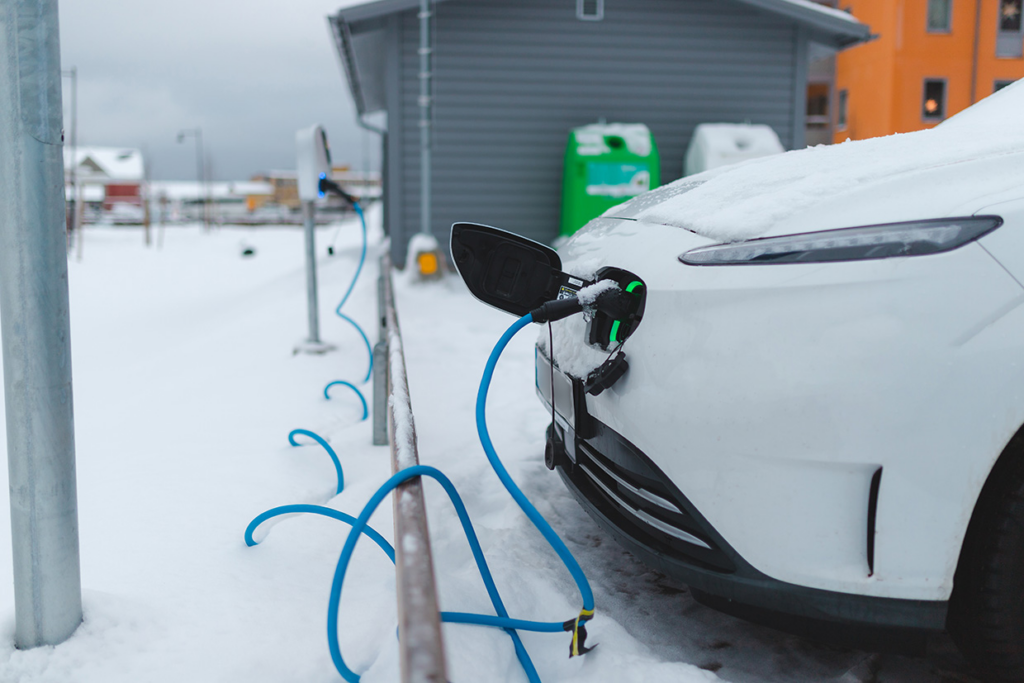
Cold weather necessitates a re-evaluation of your typical charging habits. The principles of maximizing available energy and ensuring consistent access to charging become paramount.
Charge to 100% for Extended Range: If your daily routine typically involves charging to 80% to preserve battery longevity, consider a full 100% charge when extreme cold is predicted. As discussed, the energy drain for cabin heating and battery management is significant. Maximizing your initial battery state-of-charge provides a crucial buffer against this increased energy consumption. This ensures you have the greatest possible range at your disposal for the day’s travels.
Proactive Charging Planning and Contingencies: Before venturing out into subzero conditions, or when severe weather is forecast, it is imperative to develop a detailed charging plan. Identify public charging stations along your intended routes using reliable EV charging apps or your vehicle’s navigation system. Crucially, have backup charging plans in place. The surge in EV usage during cold snaps, coupled with potential charging station issues in freezing temperatures, means that your primary charging location might be occupied or unavailable. Having one or two alternative options can prevent significant delays and range anxiety.
The Garage Advantage for Charging: Whenever possible, park and charge your EV in a garage. Even an unheated garage provides a significant buffer against the harshest outdoor temperatures. The ambient warmth within a garage can help maintain a more moderate battery temperature, leading to faster charging speeds and helping to preserve the battery’s charge for longer periods when not in use. This is a simple yet highly effective measure for optimizing EV performance in winter.
Embracing Extended Charge Times: A direct consequence of colder battery temperatures is an increase in charging times. The internal resistance of the battery is higher, meaning it takes longer for energy to flow into the pack. Be prepared for this reality and factor it into your travel plans. Patience is a virtue, and understanding that your EV will take longer to “refuel” in the cold is essential for a stress-free experience.
Adapting Driving Habits for Winter’s Embrace: Safety and Efficiency
Beyond charging and preconditioning, adopting specific driving techniques can significantly enhance your EV’s performance and your safety on slick winter roads.
Modulating Regenerative Braking: While regenerative braking is a cornerstone of EV efficiency, its aggressive application can be problematic in low-traction conditions. Dialing back or disabling one-pedal driving and strong regenerative braking is often advisable. The sudden deceleration force generated by these systems, when lifting off the accelerator, can unsettle the vehicle on ice or snow. By reducing this effect, you allow for a smoother transition to using the friction brakes, providing more controlled stopping and mitigating the risk of skidding. This is a critical safety consideration for any driver in winter.
Leveraging Snow and Winter Driving Modes: Many modern EVs are equipped with dedicated Snow, Winter, or other specialized driving modes. Activating these modes is highly recommended in cold weather. These modes are designed to modulate throttle response, reducing the immediate torque delivery that can easily overwhelm tire grip on slippery surfaces. By softening acceleration and enhancing traction control, these modes significantly decrease the likelihood of wheel spin and loss of control. Furthermore, some EVs offer Eco or Chill modes that naturally conserve energy, which can be beneficial for extending range in colder temperatures.
Realistic Range Expectations: While advancements in battery technology are continually improving cold-weather performance, it’s crucial to maintain realistic expectations. Even the most advanced EVs will experience some degree of range reduction in extreme temperatures. Do not solely rely on your vehicle’s in-car navigation or third-party trip estimators for accurate range predictions in subzero conditions. It is always prudent to add a buffer to these estimates and plan your routes accordingly. Overestimating your range is always safer than underestimating it.
Prioritizing Energy-Efficient Climate Control: The full climate control system in an EV can be a significant energy draw. While it’s essential for safety and comfort, consider using more energy-efficient alternatives when possible. Heated seats and a heated steering wheel, for instance, provide localized warmth and consume considerably less energy than heating the entire cabin volume. If you’re in a situation where maximizing range is critical, these targeted heating elements can be a valuable tool for conserving battery power.
The Prudence of Staying Home: During periods of extreme winter weather, the safest and most energy-efficient strategy is often to stay home if your travel is not absolutely essential. If you must venture out, remember that others are likely facing similar challenges. Approaching other drivers and charging station users with patience and understanding can make a significant difference in ensuring a smoother and less stressful experience for everyone. A little grace goes a long way during demanding conditions.
The Future of Cold-Weather EV Mobility
The evolution of electric vehicle technology, coupled with a deeper understanding of battery science, is rapidly transforming our ability to navigate extreme weather conditions. As we look towards 2025 and beyond, expect further innovations in battery thermal management systems, more sophisticated software that optimizes energy usage in cold climates, and a growing network of robust charging infrastructure designed to withstand winter’s challenges. The concerns surrounding EV range in cold weather, while valid, are increasingly being addressed through intelligent engineering and informed driver behavior.
For those considering the transition to an electric vehicle or seeking to optimize their current EV ownership experience in regions prone to harsh winters, understanding these strategies is paramount. The initial investment in knowledge and preparation pays significant dividends in reliable, efficient, and safe electric mobility.
Don’t let winter’s chill deter you from embracing the benefits of electric driving. Explore your EV’s specific capabilities, implement these expert-backed strategies, and discover how your electric vehicle can thrive, even in the most demanding of climates. Ready to learn more or discuss specific cold-weather EV solutions for your region? Contact our expert team today to schedule a personalized consultation and ensure your winter drives are as efficient and enjoyable as they are eco-friendly.