🔻 WATCH THE VIDEO BELOW 🔻

The Zenith of Automotive Sculpture: Charting the Fastest Pagani Hypercars
For nearly three decades, the Pagani name has resonated within the enthusiast community as a beacon of unparalleled automotive artistry and audacious performance. The vision of Horacio Pagani, an engineer whose Argentinian roots are intertwined with an Italian soul, has consistently pushed the boundaries of what’s possible in Pagani hypercar design and engineering. His journey, from early inspirations in Formula 2 racing to a pivotal tenure at Lamborghini where he championed the nascent application of composite materials, laid the groundwork for a marque dedicated not just to speed, but to creating rolling sculptures that redefine desirability and the very limits of vehicular dynamics.
My decade spent immersed in the rarefied atmosphere of exotic automobiles has offered a privileged perspective on the relentless evolution of automotive engineering. Witnessing firsthand the dedication, obsession, and sheer ingenuity poured into machines like those bearing the Pagani crest has fostered a profound respect for this niche of the industry. It’s a realm where bleeding-edge innovation collides with an almost spiritual commitment to detail, where every precisely sculpted curve, every meticulously selected material, and every finely tuned component converges to create an experience that transcends mere transportation. This exploration delves into the very heart of Pagani’s most potent creations, dissecting their astonishing top speeds and reflecting on the groundbreaking technologies and unwavering design philosophies that have cemented their legendary status as some of the world’s fastest cars.
The Trajectory of Ingenuity: Horacio Pagani’s Journey to the Pinnacle of Automotive Excellence
The trajectory of Horacio Pagani himself is a compelling narrative of relentless drive. Born in 1955, his formative years were illuminated by an early, insatiable fascination with sports cars, a passion that would ultimately define his life’s work. By his early twenties, he had already demonstrated exceptional engineering acumen by completing his inaugural Formula 2 race car. His early professional engagements, including a stint with Renault focused on enhancing racing car aerodynamics, provided an invaluable technical foundation. However, it was his relocation to Italy in 1983 and his subsequent employment at Lamborghini that truly set the stage for his remarkable future.
Lamborghini, a brand Horacio had long revered, presented an unparalleled opportunity to immerse himself in the high-stakes world of Italian automotive manufacturing. Beginning at the ground level within a company that, at the time, boasted a workforce of fewer than 200 individuals, Horacio’s innate talent quickly propelled him through the ranks. His discerning eye and forward-thinking mindset soon led him to investigate the revolutionary potential of composite materials. Despite encountering initial resistance from deeply entrenched conventional thinking, Horacio was an unwavering advocate for the exceptional strength-to-weight ratio offered by these advanced materials. His persistent research and development efforts bore significant fruit when he successfully integrated composite components into the chassis of the Lamborghini Countach anniversary edition, a seminal moment that foreshadowed the materials his own company would later master.
By 1991, armed with a wealth of acquired experience and a crystal-clear vision, Horacio departed Lamborghini to establish Pagani Automobili. This pivotal move granted him the autonomy to pursue his unbridled ambition of creating the ultimate supercar, free from the constraints and compromises often imposed by larger, more established manufacturers. The Pagani models that have graced the automotive landscape since then are a direct manifestation of this newfound freedom, each a profound testament to Horacio’s obsessive attention to detail and his unyielding pursuit of perfection. The foundation of his entire philosophy is rooted in the principle of Pagani Zonda value, which prioritizes driver experience, artistry, and extreme performance over mass-market appeal.
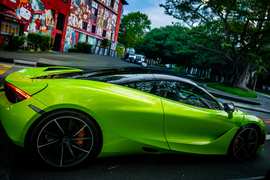
Our focus in this deep dive is the quantifiable apex of Pagani’s engineering prowess: their outright top speeds. While Pagani hypercars are universally lauded for their holistic performance capabilities—encompassing razor-sharp handling, prodigious braking, and an unparalleled driver connection—an examination of their maximum velocities offers a unique and fascinating insight into the raw capability and sophisticated aerodynamic design of these automotive masterpieces. We will embark on a journey to rank the fastest Pagani hypercars based on their documented or estimated top speeds, a metric that, while not the sole arbiter of a car’s greatness, undeniably remains a potent symbol of automotive supremacy.
Charting the Pinnacle: Ranking the Fastest Pagani Hypercars by Top Speed
The quest for automotive excellence is an unending journey, and within the exclusive echelons of Pagani, this journey is marked by increasingly ambitious feats of engineering and design. Let us delve into the impressive lineage of Pagani’s speed demons, understanding that top speed in a Pagani is rarely an end in itself, but rather a consequence of a symphony of engineering. The fastest Pagani hypercars are a testament to the fact that engineering perfection is a continuous progression, each model setting new benchmarks for performance, design, and materials science.
2017 Pagani Zonda Barchetta
Horacio Pagani S.P.A. possesses a distinguished history of producing ultra-limited production vehicles, and the Zonda Barchetta stands as a prime example of this philosophy. With a production run of a mere three units, ownership of one of these cars places an individual into an extraordinarily exclusive global club. Tragically, one of these near-priceless automobiles was involved in an accident, underscoring the inherent risks and profound emotional connections tied to such exceptional machines.
The Barchetta is widely regarded as a bespoke creation, meticulously crafted by Pagani and his team primarily for Horacio Pagani himself. It represents a contemporary reimagining of the original 1999 Zonda’s minimalist aesthetic, featuring a truncated windshield and a rakish, aerodynamic profile that makes it one of the most visually striking vehicles in the brand’s lineup. Powering this masterpiece is a formidable 7.3-liter, naturally aspirated V-12 engine sourced from Mercedes-AMG, renowned for its high-revving characteristics and exhilarating soundtrack. This powerplant delivers a staggering 760 horsepower, significantly more powerful than the earlier Zonda models, and is paired with a manual transmission that harkens back to the golden age of sports car driving.
The Zonda Barchetta’s design is a masterclass in carbon-fiber craftsmanship, featuring integrated aerodynamic elements that enhance downforce while maintaining a clean, sculpted appearance. Its top speed is estimated to be around 221 MPH (approximately 356 km/h). However, in the context of Pagani Zonda specifications, the barchetta’s true value lies not in its top-end velocity, but in its rarity, bespoke construction, and the emotional connection it fosters with the driver. Its price point reflects its extreme exclusivity and the labor-intensive process involved in its creation, positioning it among the fastest cars in the world that are also considered automotive art.
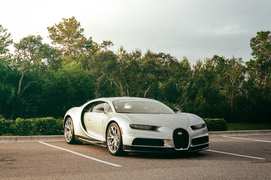
2010 Pagani Huayra BC
The Pagani Huayra BC stands as one of the most extreme iterations of the already phenomenal Huayra platform. It was introduced as a track-focused homage to the legacy of Benny Caiola, a legendary Italian collector and early supporter of Horacio Pagani. The “BC” designation is a direct nod to this enduring relationship, symbolizing a commitment to raw performance and ultimate precision.
The Huayra BC represents a significant technological leap forward. It features an advanced chassis crafted from a combination of carbon fiber and the highly resilient titanium-carbo-nitride (Hi-TRIC), a material that offers incredible tensile strength and torsional rigidity while remaining exceptionally lightweight. Powering the Huayra BC is a potent twin-turbocharged 6.0-liter V-12 engine developed by Mercedes-AMG, which produces a staggering 789 horsepower and 708 pound-feet of torque. This immense power is delivered through a lightning-fast 7-speed automated manual transmission, which provides seamless, neck-snapping shifts that are critical for track performance.
Aerodynamically, the BC is a beast. It features a massive rear wing, aggressive front splitters, and active aerodynamic elements that adapt to driving conditions to maximize downforce and stability. The chassis includes a sophisticated push-rod suspension system with electronically controlled damping, offering exceptional handling and road feel. The Pagani Huayra BC price is reflective of its exclusivity, advanced engineering, and the fact that it is built to compete with the world’s most elite hypercars. While its top speed is estimated at 230 MPH (approximately 370 km/h), its performance is truly defined by its exceptional cornering capability and precision handling, making it one of the most capable luxury hypercars ever produced.
2012 Pagani Huayra Coupe
The standard Pagani Huayra Coupe, first unveiled at the Geneva Motor Show in 2011, was a radical departure from the Zonda line while retaining the brand’s DNA of bespoke quality and extreme performance. It was designed to be a more sophisticated, GT-oriented hypercar that could be used for both daily driving and track excursions, bridging the gap between ultimate luxury and raw speed.
The Huayra is powered by a bespoke twin-turbocharged 6.0-liter V-12 engine developed by Mercedes-AMG, specifically the M158 engine. This powerplant delivers an impressive 700 horsepower and 738 pound-feet of torque, which, combined with the car’s lightweight construction, provides breathtaking acceleration. The engine is paired with a 7-speed automated manual transmission, which, although more refined than a racing-spec sequential gearbox, still delivers rapid shifts that contribute to its thrilling performance profile.

Aerodynamically, the Huayra is a marvel of engineering. It features active aerodynamics with flaps on the front and rear