
The Ultimate Hyundai Tucson Buying Guide: Decoding Value, Reliability, and the Smartest Investments
As an industry veteran with over a decade immersed in the automotive landscape, I’ve witnessed firsthand the evolution of vehicles that aim to strike a balance between practicality, affordability, and modern appeal. Among the compact SUVs that have consistently aimed for this sweet spot, the Hyundai Tucson stands out. Since its debut in 2004, initially a more agile sibling to the larger Santa Fe, the Tucson has undergone a significant metamorphosis, growing in stature and sophistication while steadfastly holding its ground as a value-driven option in a fiercely competitive segment. My aim here is to provide a comprehensive, expert-driven breakdown of the Hyundai Tucson, focusing on what truly matters when making a purchase: cost-effectiveness, long-term reliability, and identifying the model years that represent the shrewdest investments for today’s discerning buyer.
Hyundai has carved out a formidable reputation for delivering a wealth of features and technologies at a price point that often leaves competitors scrambling. Coupled with Hyundai’s renowned, class-leading warranty coverage, this has made the Tucson an attractive proposition for a broad spectrum of consumers. While early iterations might have lagged behind some rivals in interior polish, the narrative has decisively shifted. Modern Tucsons don’t just meet expectations; they frequently surpass them, offering a compelling blend of innovation, comfort, and robust engineering. This guide delves into each of the Tucson’s four generations, dissecting their strengths, weaknesses, and ultimately, guiding you toward the most prudent choices.
Frequently Asked Questions: Navigating Your Tucson Decision
The question on many minds is straightforward: which Hyundai Tucson years are the best to buy? Without hesitation, the current, fourth-generation Hyundai Tucson (2022-Present) represents the pinnacle of the model’s development. It’s a testament to Hyundai’s remarkable upward trajectory, delivering cutting-edge technology, advanced safety suites, and impressive efficiency within a strikingly attractive and well-executed package. If you’re seeking the most refined and feature-rich Tucson experience, this generation should be your primary focus.
Conversely, if you’re contemplating older models, which Hyundai Tucson years are the worst to consider? My professional assessment points towards the original Tucson (2005-2009) as the one to approach with extreme caution, if not avoid altogether. As Hyundai’s maiden voyage into the compact crossover SUV arena, this first-generation model, while pioneering, left considerable room for improvement. Its base engine often felt underpowered, struggling to maintain highway speeds, and the interior was characterized by an abundance of budget-friendly, hard plastics. Crucially, the dearth of modern safety features is a significant concern for families or anyone prioritizing occupant protection.
Now, the perennial question: is the Hyundai Tucson a good deal? My resounding answer is yes, particularly for the contemporary models. Throughout its history, the Tucson has consistently positioned itself as a value leader among its compact SUV peers. The proposition of receiving more features and advanced technology for your money is a hallmark of the Tucson experience. In recent years, these inherent advantages have been further amplified by a noticeable reduction in the model’s typical drawbacks. When stacked against its direct competitors in the compact SUV segment, the current Hyundai Tucson earns a top rating from my perspective.
Hyundai Tucson: A Calculated Look at Pros and Cons
Pros:
Exceptional Value Proposition: Consistently delivers a high level of features and technology for its price point. This is a core strength that has defined the Tucson’s market appeal.
Industry-Leading Warranty: Hyundai’s long-standing, generous warranty coverage provides unparalleled peace of mind for new and certified pre-owned buyers. This significantly mitigates long-term ownership concerns and boosts resale value.
All-Wheel Drive Capability: The availability of all-wheel drive on most trims enhances traction and stability, making it a more capable option for varying weather conditions and light off-road excursions.
Modern Safety Suites: Newer generations are equipped with comprehensive suites of advanced driver-assistance systems (ADAS), providing a significant safety net for occupants.
Stylish and Evolving Design: From its early utilitarian roots, the Tucson has matured into a visually appealing vehicle, with each generation bringing contemporary design language and attractive styling cues.
Cons:
Underpowered Base Engines (Historically): While improved in later generations, some earlier base engines were criticized for lacking sufficient power for confident acceleration, especially at highway speeds.
Early Generation Refinement Gaps: The first and second generations, while functional, often trailed segment leaders in interior material quality and overall cabin refinement.
Basic Interiors in Older Models: The earliest Tucsons featured functional but undeniably spartan interiors, lacking the modern amenities and premium feel found in newer competitors.
Dual-Clutch Transmission Quirks (Select Models): Some earlier turbocharged models equipped with a dual-clutch automatic transmission could exhibit occasional hesitation or jerkiness at low speeds, impacting urban driving smoothness.
Hyundai Tucson Generations: A Deep Dive for Savvy Buyers
The Fourth Generation (2022-Present): The Modern Apex
The current iteration of the Hyundai Tucson debuted for the 2022 model year, marking a dramatic departure from its predecessor. Its exterior is immediately recognizable, featuring a bold, parametric-jewel grille that seamlessly integrates full-LED accent lights into its edges. The actual headlights are cleverly tucked away in the lower bumper, creating a distinctive and futuristic visage. Sharp, creased bodywork, a hallmark of Hyundai’s evolving design language, accentuates its athletic stance, while the rear boasts unique, downward-pointing taillights connected by a full-width light bar.
This generation represents a significant growth spurt, extending nearly six inches longer than the outgoing model, with a wheelbase increase that translates directly into more generous interior space. Rear-seat passengers benefit from an additional three inches of legroom, and cargo capacity has seen a substantial 25% surge. As is common with Hyundai-produced vehicles, it shares its platform and many components with the contemporary Kia Sportage, a synergy that often results in shared benefits and value.
Under the hood, the standard 2022 Hyundai Tucson is powered by a 2.5-liter four-cylinder engine churning out a respectable 187 horsepower and 178 pound-feet of torque. This is managed by an eight-speed automatic transmission, sending power to the front wheels, with all-wheel drive available as a compelling option. For those seeking greater efficiency or enhanced performance, Hyundai also offers a Hyundai Tucson Hybrid model delivering 227 horsepower, and a potent 261-hp plug-in hybrid (PHEV) variant, though these are often categorized as distinct models.
While the standard powertrain is adequate for daily commuting, it’s not the quickest in its class, typically requiring around 10 seconds to reach 60 mph. The suspension is tuned for comfort, prioritizing a smooth and compliant ride over exhilarating dynamics, which generally aligns with the expectations of the segment.
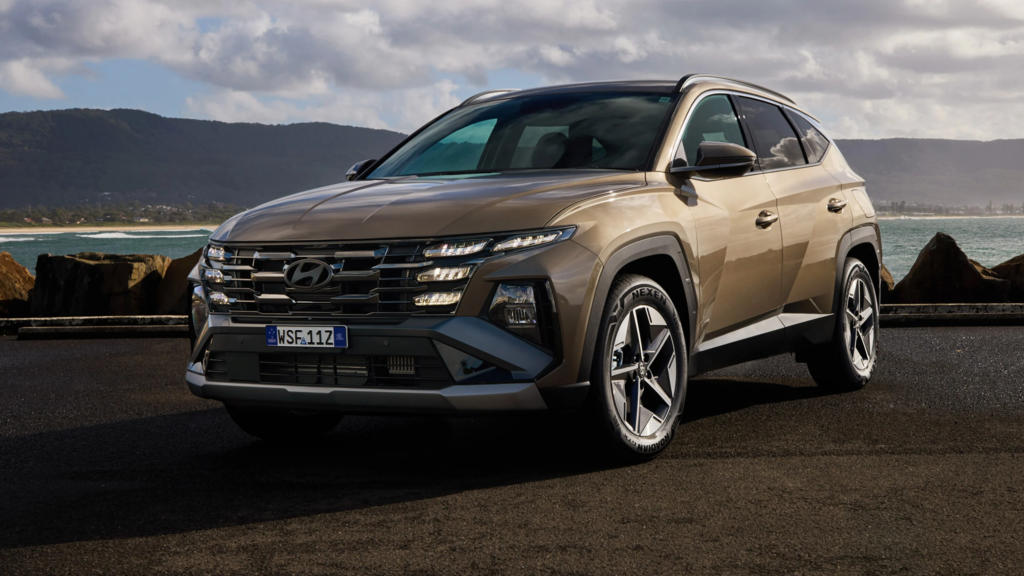
The trim levels for the fourth-generation Tucson are thoughtfully curated to cater to diverse needs and budgets:
SE: The entry point, still generously equipped with LED headlights, 17-inch alloy wheels, an 8-inch touchscreen with wireless Apple CarPlay and Android Auto, and a suite of standard safety features including forward collision avoidance, lane-keeping assist, and driver attention warning.
SEL Convenience: Steps up with roof rails, proximity key entry and ignition, a power-adjustable driver’s seat, heated front seats, adaptive cruise control, and blind-spot monitoring with rear cross-traffic alert. The optional Convenience package further enhances this with 19-inch wheels, a hands-free power liftgate, a panoramic sunroof, a digital instrument cluster, dual-zone climate control, wireless charging, ambient lighting, and a leather-wrapped steering wheel. The Premium package adds leather upholstery, ventilated front seats, and a Bose audio system.
N Line: Infuses a sportier aesthetic with unique styling cues, sport seats, and the Bose audio upgrade, building upon the Convenience package.
XRT: Embraces an outdoorsy, rugged appearance with distinct bumpers, dark exterior accents, side steps, and a tow hitch receiver, though without any added off-road capability.
Limited: The flagship trim, boasting a panoramic sunroof, upgraded lighting, paddle shifters, a power-adjustable front passenger seat, heated steering wheel and rear seats, a larger 10.2-inch touchscreen with navigation, a blind-spot camera, lane-centering assist, and a 360-degree surround-view camera system. It also features Hyundai’s Highway Driving Assist for semi-autonomous highway driving.
Minor adjustments occurred for the 2023 and 2024 model years, with features being shuffled between trims, and the N Line eventually adopting the hybrid powertrain. The most significant updates arrived for the 2025 Hyundai Tucson, which received a subtle exterior refresh with revised grille and bumper designs. The interior saw a more substantial transformation, introducing a sleek, panoramic display that merges a 12.3-inch digital instrument cluster with a side-by-side touchscreen (available from the SEL trim with the Convenience package upwards). All models also gained a new climate control interface. The 2026 model year lineup simplifies to SE, SEL (formerly Blue), XRT, SEL Premium (formerly SEL Convenience), and Limited.
Fuel economy figures for the front-wheel-drive models are rated at an estimated 29 mpg combined (26 city/33 highway), with all-wheel-drive models achieving 26 mpg combined (24 city/29 highway).
Safety ratings are consistently strong. The 2022 model initially received a four-star overall rating from NHTSA, but later improved to a five-star overall rating for FWD models, with AWD following suit by the 2024 model year. The Insurance Institute for Highway Safety (IIHS) awarded the 2022 Tucson its highest “Good” marks in all crashworthiness tests, earning it a Top Safety Pick+ designation.
As of early 2026, the Manufacturer’s Suggested Retail Price (MSRP) for a new Hyundai Tucson SUV starts around $29,200 and can climb to approximately $41,825 for the top-tier hybrid model, before destination fees and taxes. The warranty coverage remains a significant selling point: a 5-year/60,000-mile bumper-to-bumper warranty and an exceptional 10-year/100,000-mile powertrain warranty.
Recalls have been relatively light for this generation. Early concerns included hitch wiring harnesses and roof moldings. More recently, issues with oil pumps and persistent hitch wiring problems have been addressed. For 2025, unrelated recalls involved airbags, engine bolts, and a transmission park-release issue. Despite these isolated incidents, the mechanical integrity and retention of value for the fourth-generation Tucson appear promising, with initial depreciation rates suggesting it holds its ground well against competitors.
The Third Generation (2016-2021): A Significant Leap Forward
The third-generation Hyundai Tucson arrived for the 2016 model year, representing a substantial upgrade in refinement and design over its predecessor. It grew in all dimensions – length, width, and wheelbase – leading to a more accommodating cargo area, while passenger dimensions remained largely consistent.
Initial powertrain offerings featured a standard 2.0-liter four-cylinder engine producing 164 horsepower and 151 pound-feet of torque, paired with a conventional six-speed automatic transmission. For enhanced performance, most other trims received a 1.6-liter turbocharged four-cylinder engine, delivering 175 horsepower and 195 pound-feet of torque, coupled with a seven-speed dual-clutch automatic transmission (DCT). Front-wheel drive was standard, with all-wheel drive available.
The turbocharged engine provided respectable acceleration, hitting 60 mph in around eight seconds, competitive for the segment at the time. The DCT, while generally efficient, could occasionally exhibit some hesitation at lower speeds, a minor quibble in an otherwise capable package. The base engine offered adequate performance but was noticeably slower to merge or overtake on the highway.
Trim levels offered a tiered approach to features:
SE: Featured the non-turbo engine, 17-inch alloys, heated mirrors, cloth seats, a 5-inch touchscreen, satellite radio, and basic connectivity.
Eco: Provided the turbocharged engine at a more accessible price, adding fog lights, roof rails, and a power driver’s seat.
Sport: Elevated the experience with 19-inch wheels, a hands-free power liftgate, a leather-wrapped steering wheel, and blind-spot monitoring.
Limited: The top tier, boasting upgraded interior materials, leather seats, a power front passenger seat, dual-zone climate control, rear air vents, an 8-inch touchscreen, navigation, and an enhanced audio system. An optional Ultimate package further bolstered this with adaptive xenon headlights, a panoramic sunroof, ventilated front seats, heated rear seats, and advanced safety features like forward collision avoidance with automatic emergency braking.
The 2017 model year saw the introduction of Apple CarPlay and Android Auto for the Limited trim, with other trims gradually receiving interior material and feature upgrades in subsequent years. A significant reshuffling occurred in 2018, introducing new SEL and SEL Plus trims, while the base Eco trim was replaced by a Value trim offering the turbocharged engine at a lower price point. The Sport trim also received a more potent 2.4-liter engine.
A mid-cycle refresh for the 2019 model year brought updated styling, including Hyundai’s signature cascading grille, and a revised interior with a more modern infotainment display. Crucially, this update also standardized several key safety features across all trims, including frontal collision mitigation, lane-keep assist, and driver attention monitoring. The turbocharged engine was discontinued after this refresh.
Fuel economy for the third generation was commendable, with FWD models averaging around 25-28 mpg combined, depending on the engine and transmission. For example, the 2016 Eco trim with FWD achieved an EPA-estimated 28 mpg combined.
Safety ratings were consistently strong. NHTSA awarded five stars for overall, frontal, and side impacts, with four stars for rollover. IIHS typically recognized the Tucson with its Top Safety Pick or Top Safety Pick+ awards for most of its production run, indicating excellent performance in crash tests.
Recalls for this generation were not insignificant, with a persistent concern involving the antilock brake controller potentially causing fires. Other issues included stalling engines and trailer wiring problems. However, Hyundai’s proactive approach to addressing these issues, coupled with the vehicle’s generally robust engineering and the extended warranty, helped maintain its appeal. Third-generation Tucsons, especially well-maintained higher trims, tend to hold their value quite well, making them a solid used car purchase.
The Second Generation (2010-2015): A Design Revolution
The second-generation Hyundai Tucson marked a pivotal moment in Hyundai’s design evolution. Moving away from its somewhat bland predecessors, this generation embraced a more distinctive and attractive aesthetic, both inside and out. The signature trapezoidal grille and sculpted headlights gave the Tucson a purposeful, modern stance, a far cry from the utilitarian designs of the past.
The interior also saw a dramatic improvement in perceived quality and design. Instead of shared parts, the cabin featured bespoke elements, with carefully shaped air vents and purposeful button layouts. Soft-touch materials became more prevalent, significantly enhancing the overall feel and reducing the prevalence of hard plastics. Size-wise, it grew slightly in length and width but lost some height, yet interior packaging ensured improved headroom and a notable increase in rear legroom.
Initially, the powertrain was limited to a 2.4-liter four-cylinder engine producing 176 horsepower and 168 pound-feet of torque. A six-speed manual transmission was standard on the base model, with a six-speed automatic available on other trims. Front-wheel drive was standard, with all-wheel drive an option. While engine power was average for the time, the Tucson distinguished itself with surprisingly sharp and engaging handling dynamics, a pleasant surprise for the segment.
Trim levels for the 2010 model were GLS and Limited:
GLS: Featured 17-inch steel wheels with covers, remote keyless entry, cloth upholstery, air conditioning, power accessories, a six-speaker audio system, satellite radio, and USB/auxiliary inputs. An optional Popular Equipment package added features like roof rails, cruise control, heated mirrors, a leather-wrapped steering wheel, and Bluetooth.
Limited: Included the Popular Equipment package and upgraded to 18-inch alloy wheels, chrome accents, fog lights, leather seats, heated front seats, a power driver’s seat, and dual-zone climate control. A Premium package offered a panoramic sunroof and a navigation system.
The 2011 model year saw the introduction of a new base GL trim with a smaller, 165-hp 2.0-liter four-cylinder engine and the option of a five-speed manual. Subsequent years brought suspension tweaks for enhanced comfort, fuel economy improvements, and feature shuffling across trims. By 2014, the GL trim and manual transmission were discontinued, with a new SE trim debuting that utilized the more powerful 2.4-liter engine, now producing 182 horsepower thanks to direct injection.
Fuel economy for the second-generation Tucson was decent for its era, with FWD models typically achieving around 23-26 mpg combined. The 2.4-liter engine with FWD generally returned about 24 mpg combined.
Safety ratings were a mixed bag initially. While NHTSA awarded four or five stars in its later assessments, the IIHS gave the early models a “Poor” rating in the then-new small overlap frontal test, though it still qualified for the Top Safety Pick designation for several years.
Recalls were issued for issues such as antilock brake controller faults, brake light malfunctions, airbag sensor problems, and later, transmission cooler hose issues. Despite some persistent mechanical concerns, the second-generation Tucson often surprised owners with its long-term reliability and demonstrated a commendable ability to retain its value, sometimes even appreciating from its lowest resale point in recent years.
The First Generation (2005-2009): The Pioneering Effort
The inaugural Hyundai Tucson, launched for the 2005 model year, represented Hyundai’s initial foray into the compact SUV segment. It was offered with two engine choices: a 2.0-liter four-cylinder producing 140 horsepower, or a more potent 2.7-liter V6 generating 173 horsepower. Front-wheel drive was standard, with all-wheel drive available, particularly with the manual transmission option for the four-cylinder.
Trim levels included GL, GLS, and LX:
GL: The base model featured 16-inch alloy wheels, roof rails, heated mirrors, power accessories, cruise control, air conditioning, cloth upholstery, and a six-speaker audio system.
GLS: The mid-tier option was the most affordable way to get the V6 engine and added a leather-wrapped steering wheel and a subwoofer.
LX: The premium trim included fog lights, a six-CD changer, leather seats, heated front seats, and remote keyless entry.
The LX trim was renamed Limited for 2006, gaining body-colored trim and an auto-dimming mirror. The GL trim was dropped for 2007, with a new SE trim slotting in, and the GLS model was downsized to the four-cylinder engine. Satellite radio and an auxiliary input became standard across the board by 2008. Minor driveline updates were made in the final 2009 model year, alongside the introduction of optional navigation.
Fuel economy was modest for the era, with the four-cylinder and manual transmission FWD models achieving around 22 mpg combined. The V6 models were rated lower, typically in the 18-20 mpg combined range.
Safety testing for this generation was limited. While NHTSA data isn’t readily available for the earliest models, the IIHS provided an “Acceptable” rating for frontal and side impacts, but a “Poor” rating for rollover tests.
Recalls were issued for issues concerning brake lights, airbags, parking brakes, and stability control systems. Given the age of these vehicles and the early technology, potential buyers should exercise extreme caution, thoroughly inspect any first-generation Tucson, and prioritize models with a documented maintenance history. While they can be found for very low prices, often under $3,000, their value retention is minimal, and ownership costs can be unpredictable.
Conclusion: Your Smartest Hyundai Tucson Investment Awaits
Navigating the landscape of used and new vehicles can be daunting, but understanding the evolution and inherent strengths of a model like the Hyundai Tucson empowers you to make an informed decision. From its budget-friendly origins to its current status as a technologically advanced and stylish compact SUV, the Tucson has consistently offered compelling value.
For those seeking the ultimate blend of modern amenities, safety, and refined driving dynamics, the fourth-generation Hyundai Tucson (2022-Present) is unequivocally the smartest buy. Its robust warranty, impressive feature set, and evolving design make it an excellent long-term investment, whether you’re considering new or lightly used options. If your budget leans towards the more affordable end of the spectrum, the third-generation Hyundai Tucson (2016-2021) still presents a highly attractive proposition, offering a significant upgrade in refinement and technology over earlier models, particularly in its later model years.
The second generation (2010-2015) represents a period of significant design and engineering advancement, offering a stylish and engaging driving experience at a more accessible price point, though potential buyers should be aware of historical recall items. The first generation (2005-2009) is best left for collectors or those with a very keen eye for a budget project, as its age and early limitations present considerable risks.
Ultimately, the best Hyundai Tucson to buy depends on your specific priorities and budget. However, by focusing on the later generations, particularly the fourth and third, you’re aligning yourself with a model that consistently delivers on its promise of value, reliability, and modern motoring.
Ready to explore the Hyundai Tucson that best fits your lifestyle? Visit your local Hyundai dealership or browse certified pre-owned listings today to experience the impressive evolution of this standout compact SUV firsthand. Your journey towards a smart, reliable, and feature-packed vehicle starts now.