
Decoding the Hyundai Tucson: Your Definitive Guide to Smart SUV Ownership
For over two decades, the Hyundai Tucson has carved out a significant niche in the competitive compact SUV segment. Since its debut in 2004, it has consistently aimed to offer a compelling blend of affordability, practicality, and increasingly, sophisticated features. This guide, crafted from the perspective of an industry veteran with a decade of experience navigating the automotive landscape, dives deep into the evolution of the Hyundai Tucson, its reliability, cost considerations, and crucially, identifies the model years that represent the smartest buys for today’s discerning driver.
The initial Hyundai Tucson, launched as a compact alternative to the larger Santa Fe, shared its underpinnings with the Elantra sedan. While its dimensions have expanded over the years, the core promise of an accessible and functional small SUV has remained a steadfast principle for Hyundai. Early iterations were praised for delivering substantial value for money, often packed with more amenities than rivals at a similar price point. This, coupled with Hyundai’s industry-leading warranty, provided considerable peace of mind for buyers. While initial generations might have lagged slightly in interior refinement compared to some established players, the Tucson has demonstrated remarkable progress, with later models not only meeting but frequently exceeding segment expectations.
As we look to purchase a Hyundai Tucson, understanding its lineage is paramount. This isn’t just about aesthetics; it’s about grasping the technological advancements, powertrain options, safety innovations, and overall ownership experience that have characterized each iteration. From the budget-conscious beginnings to the tech-laden, refined vehicles of today, the Hyundai Tucson story is one of continuous improvement and a keen understanding of market demands.
Frequently Asked Questions About Buying a Hyundai Tucson
Which Hyundai Tucson model years stand out as the best investments?
Without question, the current, fourth-generation Hyundai Tucson (2022-Present) represents the pinnacle of the model’s development. This generation embodies Hyundai’s remarkable evolution, integrating cutting-edge technology, comprehensive safety suites, and a stylish, efficient package that rivals the best in the compact SUV class. If you prioritize modern amenities and a refined driving experience, this is where your search should begin.
Are there any Hyundai Tucson model years to approach with caution?
The first generation of the Hyundai Tucson (2005-2009) is where prospective buyers should exercise the most caution. As Hyundai’s inaugural foray into the compact crossover SUV market, it was a learning experience. The base engine, while adequate, lacked punch, and the interior often felt a bit too utilitarian, characterized by less refined plastics. Crucially, its limited array of modern safety features means it’s less appealing for families prioritizing advanced protective systems.
Does the Hyundai Tucson offer exceptional value for money?
Absolutely. Even in its current iteration, the Hyundai Tucson continues to be a standout value proposition within the compact SUV segment. Throughout its production history, it has consistently offered more features and a higher quality of experience for the price than many competitors. In recent years, the gap in drawbacks compared to rivals has narrowed considerably, making the Hyundai Tucson an excellent choice for budget-conscious buyers who don’t want to compromise on functionality or features.
The Hyundai Tucson Advantage: Key Strengths and Potential Considerations
Pros:
Feature-Rich Value: Consistently offers a generous list of features, technology, and amenities, often exceeding what competitors provide at the same price point. This is a cornerstone of the Hyundai Tucson appeal.
Industry-Leading Warranty: Hyundai’s extensive new vehicle warranty (often 5-year/60,000-mile bumper-to-bumper and 10-year/100,000-mile powertrain) provides exceptional long-term peace of mind, significantly mitigating potential ownership costs for early years.
Available All-Wheel Drive: For those needing enhanced traction and capability, AWD is a widely available and well-integrated option across many Hyundai Tucson trims and generations.
Comfort-Oriented Ride: Especially in later generations, the suspension is tuned for a comfortable and compliant ride, making it an excellent choice for daily commutes and longer journeys.
Cons:
Early Generations’ Powertrain Limitations: The base engines in earlier Hyundai Tucson models could feel underpowered, particularly for highway merging or carrying heavier loads.
Refinement Gaps in Early Models: While improving significantly over time, the earliest Tucsons sometimes lacked the interior material quality and overall noise isolation found in more established rivals.
Basic Interiors in Older Versions: The very first Hyundai Tucson models were quite basic in their interior design and material choices, reflecting their budget-friendly positioning.
A Deep Dive into Hyundai Tucson Generations: Finding Your Perfect Match
Fourth Generation (2022-Present): The Modern Standard for Hyundai Tucson Value
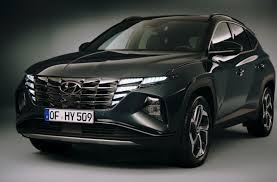
The current, fourth-generation Hyundai Tucson, introduced for the 2022 model year, represents a significant leap forward in design and technology. Its bold, high-tech exterior features a distinctive grille that seamlessly integrates LED accent lighting, with headlights strategically placed for a modern aesthetic. Sharp, creased body lines and unique, downward-spiked taillights connected by a full-width illuminated bar lend a sophisticated and contemporary look.
This generation sees a notable increase in size, growing nearly six inches longer than its predecessor, with a substantial portion of that increase contributing to enhanced rear-passenger legroom and a remarkable 25% boost in cargo capacity. Like its Kia counterpart, the Sportage, the Hyundai Tucson shares a platform that optimizes space and functionality.
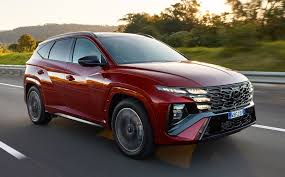
Under the hood, the standard Hyundai Tucson is powered by a 2.5-liter four-cylinder engine producing a respectable 187 horsepower and 178 pound-feet of torque. This is paired with an eight-speed automatic transmission, sending power to the front wheels, with all-wheel drive available as an option. For those seeking greater efficiency or performance, hybrid (227 hp) and plug-in hybrid (261 hp) variants are also offered as distinct models. While the standard engine is not geared for outright speed, taking around 10 seconds to reach 60 mph, it provides a smooth, comfortable ride, prioritizing ease of driving over spirited performance.
The trim hierarchy for the Hyundai Tucson begins with the SE, which includes essential features like LED headlights, 17-inch alloy wheels, an 8-inch touchscreen infotainment system, wireless Apple CarPlay and Android Auto, and a suite of advanced safety features including forward collision avoidance, lane-keeping assist, and driver attention warning.
Stepping up to the SEL trim adds roof rails, keyless entry and ignition, a power-adjustable driver’s seat, heated front seats, and adaptive cruise control with blind-spot monitoring and rear cross-traffic alert. The SEL Convenience package further enhances the experience with 19-inch wheels, a hands-free power liftgate, a panoramic sunroof, a digital instrument cluster, dual-zone climate control, wireless charging, ambient lighting, and a leather-wrapped steering wheel. For those desiring premium appointments, the SEL Premium package adds leather seating, ventilated front seats, and a Bose audio system.
The sporty N Line variant builds on the Convenience package with unique styling cues and sport seats, while the XRT offers an appearance package focused on rugged aesthetics without any functional off-road upgrades. Topping the range, the Limited trim offers a lavish array of features, including a panoramic sunroof, upgraded LED lighting, paddle shifters, a power front passenger seat, heated steering wheel and rear seats, a larger 10.2-inch touchscreen with navigation, a blind-spot camera, lane-centering assist, and a surround-view camera system, plus Hyundai’s Highway Driving Assist.
For 2023, package structures were adjusted, and for 2024, the N Line model transitioned to the hybrid powertrain, leaving the standard lineup. The 2025 model year brought a significant refresh, highlighted by a redesigned dashboard featuring a continuous, dual-display panel incorporating a 12.3-inch digital instrument cluster and a side-by-side touchscreen (requiring at least SEL with Convenience package). A revised climate control layout was also implemented across all models. The 2026 model year sees minor trim adjustments: SE, SEL (formerly Blue), XRT, SEL Premium (formerly SEL Convenience), and Limited.
Fuel economy for the front-wheel-drive Hyundai Tucson is impressive, often achieving EPA estimates around 29 mpg combined (26 city/33 highway), with AWD versions slightly lower. Safety ratings have been stellar, with the National Highway Traffic Safety Administration (NHTSA) awarding it top marks, and the Insurance Institute for Highway Safety (IIHS) consistently recognizing it as a Top Safety Pick+.
Current MSRPs for new models typically range from the high $20,000s to over $41,000 for the top-tier hybrid variants. The warranty remains a strong selling point, providing substantial peace of mind. Recalls have been minimal and generally address specific components, with Hyundai demonstrating responsiveness in issuing fixes. Early value retention for this generation is promising, suggesting a sound investment.
Third Generation (2016-2021): The Refinement Revolution for the Hyundai Tucson
The third-generation Hyundai Tucson, launched for the 2016 model year, marked a significant step in refinement and modern design. It grew in size, offering a more spacious interior and increased cargo volume compared to its predecessor.
Initial powertrain options included a standard 2.0-liter four-cylinder engine (164 hp) paired with a six-speed automatic, and a more potent 1.6-liter turbocharged four-cylinder (175 hp) utilizing a seven-speed dual-clutch transmission. While the turbocharged engine provided brisk acceleration, reaching 60 mph in around eight seconds, the dual-clutch transmission could occasionally exhibit low-speed hesitation.
Trim levels evolved, starting with the SE, offering a solid entry point with essential features. The Eco trim provided a more affordable entry into the turbocharged engine. Sport and Limited trims added progressively more upscale features, culminating in the Limited model’s availability of an Ultimate package, which included advanced safety features like forward collision warning with automatic emergency braking and adaptive xenon headlights.
Throughout this generation, Hyundai continuously enhanced the Hyundai Tucson’s offerings. By 2017, Apple CarPlay and Android Auto became available. The 2018 model year saw a reshuffling of trims, including the introduction of the SEL and SEL Plus, while the Sport received a larger 2.4-liter engine. A significant refresh in 2019 brought updated styling, a revised infotainment system placement, and importantly, standard advanced safety features like frontal collision mitigation and lane-keeping assist across all models. The turbocharged engine was discontinued after 2019.
Fuel economy for this generation was generally competitive, with front-wheel-drive models often achieving around 25-28 mpg combined. Safety ratings from NHTSA and IIHS were consistently strong, with the Hyundai Tucson earning Top Safety Pick+ designations in several years.
Recalls were present but generally manageable, with some persistent issues related to the antilock brake controller. Despite these, the third-generation Hyundai Tucson has demonstrated solid reliability and holds its value well, especially for higher trims. This era represents a sweet spot for buyers seeking a well-equipped, comfortable, and safe compact SUV at a more accessible price point than the latest models.
Second Generation (2010-2015): The Turning Point for Hyundai Tucson Design and Quality
The second-generation Hyundai Tucson arrived in 2010, coinciding with Hyundai’s significant brand transformation. This generation shed the bland styling of its predecessor for a more distinctive and attractive design language, both inside and out. The interior saw substantial improvements in material quality and ergonomics, moving away from a parts-bin feel to a more bespoke and cohesive cabin.
This iteration also saw growth in its dimensions, providing more interior space for passengers and cargo. Powertrain options initially centered around a capable 2.4-liter four-cylinder engine (176 hp), paired with a six-speed automatic transmission. Front-wheel drive was standard, with all-wheel drive available. The handling was notably sharper than previous models, setting it apart from many rivals.
Trim levels like the GLS and Limited offered increasing levels of comfort and convenience. The GLS provided a well-equipped base, while the Limited added premium touches such as leather seating, heated front seats, and a panoramic sunroof. Optional packages enhanced functionality with features like navigation and rearview cameras.
Hyundai continued to refine the Hyundai Tucson throughout this generation. The 2011 model year introduced a more fuel-efficient 2.0-liter base engine. Subsequent years saw improvements in ride comfort and fuel economy. The 2014 model year brought a new SE trim and an upgraded 2.4-liter engine with direct fuel injection, boosting output to 182 hp.
Fuel economy for this generation was respectable for its time, typically in the mid-20s for combined mileage. Safety ratings were generally good, though early models sometimes scored lower in newer, more rigorous crash tests like the small overlap frontal collision. Recalls did occur, with some persistent issues related to the antilock brake controller and airbags.
Despite some recall concerns, the second-generation Hyundai Tucson has proven to be a durable and surprisingly resilient vehicle. Many examples have held their value exceptionally well, with some even appreciating in recent years, a testament to their enduring appeal and solid engineering. For those seeking a stylish, comfortable, and well-built compact SUV from a more affordable price point, this generation is a compelling option.
First Generation (2005-2009): The Humble Beginnings of the Hyundai Tucson
The original Hyundai Tucson, launched for the 2005 model year, was Hyundai’s first foray into the compact crossover segment. It was offered with a choice of a 2.0-liter four-cylinder engine (140 hp) or a more powerful 2.7-liter V6 (173 hp). Front-wheel drive was standard, with all-wheel drive available, though often tied to specific transmissions.
Trim levels like the GL, GLS, and LX provided a range of features, with the LX offering the most amenities, including leather seats and heated front seats. While basic by today’s standards, this generation introduced the concept of an affordable, practical SUV to a wider audience.
Updates throughout its production run were minor, focusing on feature shuffling and some driveline refinements for improved fuel economy. The later years saw the introduction of optional navigation systems.
Fuel economy was not a strong suit for this generation, particularly with the V6 engine, often hovering around 20 mpg combined. Crash test results from the IIHS showed acceptable performance in frontal and side impacts but a weaker score in rollover tests. Recalls were issued for various components, including brakes, airbags, and stability control systems.
Given its age and the available technology and safety features of its time, the first-generation Hyundai Tucson is best considered for buyers on a very tight budget who prioritize basic transportation. Thorough inspection and testing are crucial for any potential purchase from this era, as its value retention is modest, and more affordable examples can be found for well under $3,000.
Navigating Your Hyundai Tucson Purchase
The Hyundai Tucson has evolved dramatically from its humble beginnings into a sophisticated and highly competitive compact SUV. Whether you’re drawn to the cutting-edge technology and refined driving dynamics of the latest generation or seeking the remarkable value proposition of a well-maintained third-generation model, there’s a Hyundai Tucson to suit a wide range of needs and budgets. By understanding the nuances of each generation, from powertrain options and interior appointments to reliability and resale value, you can make an informed decision that ensures years of comfortable and economical driving.
As you consider your next vehicle, remember that the Hyundai Tucson consistently delivers on its promise of value, bolstered by Hyundai’s commitment to innovation and owner satisfaction.
Ready to experience the Hyundai Tucson firsthand? Visit your local Hyundai dealer today to explore the current lineup and schedule a test drive. Discover the perfect Hyundai Tucson for your lifestyle and embark on your next automotive adventure with confidence.