
The Resurgence of Efficiency: Your Expert Guide to the 2025 and Beyond Honda Civic Hybrid
For decades, the Honda Civic has been a benchmark in the compact car segment, a symbol of reliability, practicality, and accessible engineering. While the standard Civic has enjoyed widespread acclaim and sales success, its hybrid variants have historically occupied a more niche, albeit technologically significant, space. However, with the groundbreaking reintroduction of the Honda Civic Hybrid for the 2025 model year, this often-overlooked chapter in automotive history is poised for a dramatic resurgence. As an industry professional with a decade immersed in the automotive landscape, I’ve witnessed firsthand the evolution of hybrid technology and the discerning buyer’s quest for vehicles that offer both exceptional fuel economy and genuine driving enjoyment. This comprehensive guide delves deep into the modern Honda Civic Hybrid, dissecting its sophisticated powertrain, innovative features, market positioning, and the critical factors to consider when investing in this highly anticipated model and its predecessors.
The term “hybrid car” conjures images of compromises for many – sluggish acceleration, utilitarian interiors, and a price tag that often felt difficult to justify. The original Honda Civic Hybrid challenged these perceptions, proving that a gasoline-electric powertrain could integrate seamlessly into a mainstream vehicle, offering tangible benefits to everyday drivers. The latest iteration builds upon this foundational promise, leveraging advanced technology to deliver a driving experience that transcends mere efficiency, entering the realm of genuine performance and refinement.
Navigating the Modern Hybrid Landscape: The 2025+ Honda Civic Hybrid
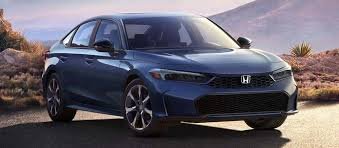
The return of the Honda Civic Hybrid for 2025 marks a pivotal moment. Gone is the older Integrated Motor Assist (IMA) system of previous generations. Instead, the new model adopts a sophisticated dual-motor hybrid system, a technology shared with its larger siblings, the Accord Hybrid and CR-V Hybrid. This isn’t just an incremental upgrade; it’s a fundamental reimagining of the hybrid powertrain’s capabilities.
At its heart is a 2.0-liter four-cylinder gasoline engine, seamlessly integrated with two electric motors. This potent combination unleashes an impressive 200 horsepower and a robust 232 pound-feet of torque. Crucially, this powertrain eschews a traditional CVT or even a conventional multi-gear transmission. Instead, it employs a direct-drive system where the electric motors and the gasoline engine are directly clutched to the front axle. The result is a remarkably smooth, quiet, and responsive acceleration that truly mimics the feel of an electric vehicle. This direct coupling eliminates the typical droning or “rubber band” effect often associated with older hybrid transmissions, providing a more engaging and linear power delivery.
The fuel economy figures are, as expected, staggering. Honda estimates an EPA rating of 50 mpg in the city, 47 mpg on the highway, and a combined 49 mpg. For the hatchback variant, these figures are a still-impressive 48 mpg combined. This level of efficiency, coupled with the refined performance, positions the Honda Civic Hybrid as a leader in its class, offering significant savings at the pump without demanding sacrifices in driving dynamics.
Beyond the powertrain, the 2025 Honda Civic Hybrid is laden with technology and comfort features that elevate it beyond its segment. Available in both sedan and hatchback body styles, the hatchback offers a distinct advantage in cargo capacity, boasting 24.5 cubic feet compared to the sedan’s 15 cubic feet. Both body styles come in either Sport or Sport Touring trims, each equipped with Honda Sensing as standard. This comprehensive suite of advanced driver-assistance systems includes forward emergency braking, adaptive cruise control, lane keeping assist, and road departure mitigation. Further enhancing safety are standard blind-spot monitoring, automatic high beams, and a Traffic Jam Assist feature that provides semi-autonomous driving assistance in congested traffic. The inclusion of rear side airbags and front knee airbags underscores Honda’s commitment to occupant safety.
Visually, hybrid trims are distinguished by body-colored headlight surrounds and lower spoilers, complemented by striking two-tone 18-inch wheels. The interior is equally impressive. Standard features across all trims include a 7-inch touchscreen infotainment system, an eight-speaker audio system, a partially digital instrument panel with a 7-inch display, USB-C ports for convenient charging, dual-zone automatic climate control, LED lighting throughout, an acoustic laminated windshield for reduced cabin noise, and a sunroof. The upscale Sport Touring trim takes things a step further, adding a larger 9-inch touchscreen powered by Google’s integrated apps (Google Maps, Assistant, and Play), a fully digital instrument panel, wireless Apple CarPlay and Android Auto integration, luxurious leather upholstery, a premium 12-speaker Bose sound system, and a wireless phone charging pad.
Pricing and Market Positioning:
The new Honda Civic Hybrid is positioned as a premium offering within the Civic lineup, reflecting its advanced technology and enhanced features. As of this writing, the 2026 Civic Sedan Hybrid starts at an MSRP of $29,395 for the Sport trim and $32,395 for the Sport Touring. The Civic Hatchback Hybrid is priced slightly higher, at $30,595 for the Sport and $33,595 for the Sport Touring. These figures place the Honda Civic Hybrid in a competitive space, directly challenging other well-regarded hybrid sedans and hatchbacks, while offering a compelling blend of performance, technology, and fuel efficiency that justifies its premium. For those seeking a used option, the 2025 models are already appearing on the market, with average list prices on platforms like CarGurus ranging from $28,000 to $30,000, offering a way to access this cutting-edge technology at a slightly reduced cost.
A Look Back: The Legacy of the Honda Civic Hybrid
To fully appreciate the 2025 iteration, it’s essential to understand its lineage. The Honda Civic Hybrid wasn’t a sudden invention; it was a carefully considered evolution of Honda’s pioneering approach to hybrid technology.
First Generation (2003-2005): The Trailblazer
Honda introduced the first Civic Hybrid to the U.S. market in 2002, making it one of the earliest gas-electric hybrids available, following closely behind the Toyota Prius and Honda’s own Insight. What set the Civic Hybrid apart was its integration into the standard Civic platform. Unlike the quirky, two-seater Insight, the Civic Hybrid looked and felt like a conventional compact car, retaining its back seat, trunk space, and familiar interior controls.
This generation employed a modified version of the Insight’s Integrated Motor Assist (IMA) system. The 13-horsepower electric motor acted as a booster, seamlessly integrated between the 1.3-liter four-cylinder engine and the five-speed manual or optional CVT transmission. This system foreshadowed what we now recognize as “mild” hybrids. The engine itself was a marvel of efficiency, utilizing two spark plugs per cylinder for precise air-fuel mixture control and the ability to shut down three cylinders during deceleration to maximize battery recharging. This contributed to its Ultra-Low Emission Vehicle (ULEV) rating. A compact under-900 Wh battery was strategically placed between the trunk and rear seats. Combined output was 93 horsepower and 116 pound-feet of torque.
Honda meticulously optimized the aerodynamics with a revised front bumper, grille, underbody panels, lighter wheels, a rear spoiler, and low-rolling-resistance tires. UV-reducing glass and automatic climate control further reduced energy consumption. Electric power steering, a rarity at the time, eliminated the parasitic drag of an engine-driven hydraulic pump. To compensate for the altered weight distribution, Honda implemented a thicker front stabilizer bar, stiffer springs, increased damping, larger rear drum brakes, and standard anti-lock brakes (ABS) with electronic brake distribution.
The fuel economy gains were substantial, with city mileage up by a third and combined mileage by over 20% compared to the most efficient gasoline Civics of the era, reaching an EPA-estimated 48 mpg city, 47 mpg highway, and 48 mpg combined with the CVT. However, this efficiency came at a price. The hybrid model commanded a $3,500 premium over comparable gasoline Civic LX models, a significant sum that made a $20,000 Civic a tough sell for many consumers when a mid-level Accord was similarly priced. To offset this, Honda equipped the hybrid with a generous array of standard features, including front side airbags, keyless entry, a CD player, cruise control, automatic climate control, and power windows. The interior received styling enhancements with softer upholstery, a black and tan dashboard, silver accents, and a partially digital gauge cluster.
For 2004, the Civic Hybrid received styling updates mirroring the broader Civic lineup, including a new hood, headlights, grille, and bumpers. Interior refinements included adjustable rear headrests, a center console with an armrest, improved speakers, and standard floor mats. The first generation Honda Civic Hybrid is a rare find today, and while they can be purchased for $3,000 to $6,000, buyers should approach with caution due to potential reliability concerns, particularly with the battery.
Second Generation (2006-2015): Refinement and Evolution
The second-generation Civic Hybrid, based on the distinctive eighth-generation Civic, brought further refinements. The IMA powertrain was enhanced, now capable of limited electric-only acceleration at low speeds with gentle throttle input. Combined output rose to 110 horsepower and 123 pound-feet of torque, thanks to a more potent electric motor, an improved battery, and the integration of VTEC technology for better valve control.
Significant improvements were made to the continuously variable transmission (CVT), air conditioning system, and braking. An electronic throttle contributed to greater fuel efficiency. EPA estimates were impressive, initially rated at 49 mpg city and 51 mpg highway (though later revised by the EPA to reflect current testing methodologies). The steering, suspension, and chassis underwent substantial revisions for a more composed ride.
Standard equipment expanded to include side curtain airbags, active front headrests, 15-inch alloy wheels, and a six-speaker stereo system with iPod connectivity. The interior featured a futuristic, fully digital instrument panel and a unique two-tier dashboard design. Navigation was the sole factory option, increasing the price. For 2009, Honda added stability control (Vehicle Stability Assist) and a USB port. Leather seating, Bluetooth, and heated seats and mirrors became available on navigation-equipped models. Styling updates included new headlights and taillights and a revised front bumper.
A significant refresh in 2012 aimed to address criticisms of the previous year’s downmarket interior. While initial reception was mixed, this generation saw important upgrades: more rear legroom (1.6 inches), a new 1.5-liter engine, and the transition from a nickel-metal hydride battery to a more advanced lithium-ion unit. Fuel efficiency improved across the board, and torque increased to 127 lb-ft. A new five-inch digital display offered enhanced information, including album artwork and navigation prompts, with the instrument panel capable of changing colors based on driving style. For 2013, further refinements were made, including updated exterior styling, revised suspension and steering, enhanced noise insulation, softer interior materials, and improved build quality. Standard features now included a backup camera, Bluetooth, Pandora streaming, and text message readouts. The 2014 model year brought a 7-inch touchscreen with Honda’s LaneWatch blind-spot display, and push-button start with keyless entry became standard. Enhancements to the fuel pump, ignition coil, engine sensors, and regenerative braking system led to higher EPA ratings of 44 mpg city, 47 mpg highway, and 45 mpg combined.
Prices for the second-generation Honda Civic Hybrid vary significantly. Examples with over 100,000 miles can be found for under $3,000, while well-maintained, lower-mileage examples (under 100,000 miles) typically range from $6,000 to $14,000.
Key Considerations for Buying a Used Honda Civic Hybrid:
When venturing into the used market for a Honda Civic Hybrid, especially the first and second generations, meticulous inspection is paramount. The primary concern for any hybrid vehicle is the health of its battery pack.
Battery Health: This is the most critical component. Hybrid batteries degrade over time and with mileage. Replacing a battery can cost anywhere from $2,000 to over $3,000, a significant expense that can easily outweigh the value of an older vehicle. If purchasing a first-generation model or a high-mileage second-generation model, inquire about any past battery replacements or signs of degradation. A battery failure means the car cannot be driven without major repairs.
Recalls: Be aware of any outstanding recalls. The 2006-2007 Civic Hybrids, for instance, were subject to a recall for a faulty DC-DC converter that could cause the vehicle to stall while driving. Ensure all recall work has been completed.
Maintenance Records: Well-maintained vehicles are generally more reliable. Seek out examples with comprehensive service histories, particularly those that adhere to Honda’s recommended maintenance schedules.
Driving Impression: During a test drive, pay close attention to how the car accelerates, brakes, and transitions between electric and gasoline power. Any unusual noises, hesitations, or warning lights should be thoroughly investigated.
Availability: Finding a used Honda Civic Hybrid can be challenging due to their lower production volumes compared to standard Civics. You may need to broaden your search geographically, potentially looking for a Honda Civic Hybrid near me or even considering a nationwide search if a specific model year and condition is desired.
The Verdict: A Smart Investment for the Savvy Buyer
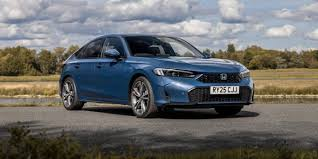
The Honda Civic Hybrid has always represented a forward-thinking approach to personal transportation. While past generations presented certain trade-offs, the 2025 and subsequent models have redefined what a compact hybrid can be. With its potent and refined dual-motor powertrain, extensive suite of advanced technology, impressive fuel efficiency, and the proven reliability of the Honda brand, the new Honda Civic Hybrid stands as a compelling choice for discerning buyers.
Whether you’re drawn to the cutting-edge innovation of the latest model or considering a well-maintained pre-owned example, the Honda Civic Hybrid offers a unique blend of practicality, sustainability, and driving pleasure. It’s a testament to Honda’s engineering prowess and a smart investment for those who prioritize fuel economy without compromising on performance or comfort.
If you’re ready to experience the future of efficient driving and explore how the Honda Civic Hybrid can seamlessly integrate into your lifestyle, we encourage you to connect with your local Honda dealership to schedule a test drive of the all-new 2025 model or to discuss the potential of finding a quality pre-owned Civic Hybrid that meets your needs and budget.