
The Resurgence of the Eco-Conscious Compact: A Deep Dive into the 2025 Honda Civic Hybrid
For decades, the Honda Civic has stood as a benchmark in the compact car segment – a reliable, fuel-efficient, and well-rounded option for a vast spectrum of drivers. However, within this storied lineage, the Honda Civic Hybrid has carved out a more niche, yet incredibly significant, presence. While not as ubiquitous as its gasoline-powered brethren, the Civic Hybrid represents Honda’s persistent commitment to advancing powertrain technology and delivering exceptional efficiency without sacrificing the practicality and driving enjoyment that Civics are known for. After a hiatus from the market, the return of the Honda Civic Hybrid in 2025 marks a pivotal moment, ushering in a new era of hybrid performance and technology for this beloved nameplate.
As an industry professional with a decade immersed in automotive trends and vehicle evaluation, I’ve witnessed firsthand the evolution of hybrid technology and the growing demand for sustainable transportation solutions. The reintegration of the Honda Civic Hybrid isn’t just a revival; it’s a strategic re-entry designed to meet the contemporary driver’s needs – a need for superior fuel economy, advanced safety features, and a refined driving experience that belies its compact stature and eco-friendly powertrain.
Navigating the used Honda Civic Hybrid market, or considering a new one, requires a nuanced understanding of its history, its technological advancements across generations, and its long-term value proposition. This guide aims to equip potential buyers with the insights needed to make an informed decision, focusing on the crucial aspects of cost, reliability, and identifying the most judicious years to acquire this increasingly sought-after vehicle.
The Evolving Landscape of the Honda Civic Hybrid
Honda’s journey with hybrid technology has been one of continuous refinement and strategic adaptation. The Honda Civic Hybrid has served as a crucial proving ground for these innovations, each generation building upon the successes and lessons learned from its predecessors.
The Dawn of an Era: First Generation (2003-2005)
When the first Honda Civic Hybrid arrived on U.S. shores in 2002, it was a bold statement. Positioned alongside the already established Toyota Prius and Honda’s own compact Insight, the Civic Hybrid distinguished itself by seamlessly integrating hybrid technology into a conventional, accessible sedan. Unlike the hyper-specialized Insight, the Civic Hybrid offered the familiar practicality of a four-door car, including a usable back seat and trunk space.
This generation employed Honda’s Integrated Motor Assist (IMA) system, a precursor to many modern mild-hybrid setups. The 13-horsepower electric motor acted as a supplementary power source, assisting the 1.3-liter four-cylinder engine. This was a departure from Toyota’s full-hybrid approach, which allowed for electric-only propulsion at lower speeds. The Civic Hybrid’s electric motor was strategically placed between the engine and the transmission – either a five-speed manual or an optional Continuously Variable Transmission (CVT) – providing a seamless torque assist.
The engineering behind this powertrain was remarkably sophisticated for its time. The engine itself was a marvel of efficiency, featuring dual spark plugs per cylinder for optimized combustion and the ability to shut down three cylinders under deceleration to maximize battery regeneration. This advanced design contributed to an Ultra-Low Emission Vehicle (ULEV) rating. A compact battery pack, located between the trunk and the rear seats, powered the electric motor.
Aerodynamic enhancements, such as a revised front bumper, underbody panels, and low rolling resistance tires, further contributed to its impressive fuel economy. Features like UV-reducing glass and automatic climate control reduced the load on the HVAC system, indirectly improving efficiency. Electric power steering, a novel feature at the time, eliminated the parasitic drag of a hydraulic pump, leading to additional fuel savings. Honda even made subtle chassis adjustments, including a thicker front stabilizer bar and revised suspension tuning, to account for the weight and distribution changes inherent in a hybrid vehicle.
The result was a significant leap in fuel efficiency – up to an EPA-estimated 48 mpg city, 47 mpg highway, and 48 mpg combined with the CVT. However, this groundbreaking efficiency came at a premium. The $3,500 price increase over a comparable Civic LX meant a $20,000 Civic, a price point that many consumers found challenging to justify when a mid-level Accord was similarly priced. Honda mitigated this by including a wealth of standard features, such as front side airbags, keyless entry, cruise control, and automatic climate control. The interior received a modest upgrade with softer upholstery and revised dashboard accents.
Despite its technological prowess and early efficiency gains, the first-generation Honda Civic Hybrid is a rare find on the used market today. Its overall reliability record, compared to other Civic models, is also a point of caution for prospective buyers. While prices can be as low as $3,000-$6,000, extreme due diligence is paramount, particularly concerning the hybrid battery’s health.
Refinement and Expansion: Second Generation (2006-2015)
The second generation of the Honda Civic Hybrid, built upon the distinctive eighth-generation Civic platform, brought significant advancements. This iteration featured a more pronounced, aerodynamic design, including a steeply raked windshield and opposing windshield wipers. The IMA powertrain was enhanced, enabling limited electric-only acceleration at low speeds and with minimal throttle input. Combined output rose to 110 horsepower and 123 pound-feet of torque, thanks to a more potent electric motor and battery, coupled with the integration of i-VTEC technology for greater valve control.
Improvements to the CVT, braking system, and the adoption of an electronic throttle further boosted fuel efficiency. Initial EPA estimates were impressive (49 mpg city, 51 mpg highway), though these have been recalibrated over time to align with current testing methodologies. The chassis, steering, and suspension also underwent substantial revisions for a more refined driving experience. As with all Civic Hybrids of this era, it remained exclusively front-wheel drive.
Standard equipment expanded to include side curtain airbags, active front headrests, 15-inch alloy wheels, and a six-speaker audio system with iPod connectivity. The interior was marked by a futuristic, two-tier dashboard with a fully digital instrument panel. Navigation was the primary, and rather expensive, option.
Subsequent model years saw iterative improvements. For 2009, Honda introduced stability control (Vehicle Stability Assist) and a USB port. Leather upholstery, Bluetooth, and heated seats became available on navigation-equipped models. Cosmetic updates included new headlights and taillights.
The 2012 model year refresh brought a significant shift. While the exterior design remained largely the same, the interior design and materials were a point of contention among critics. However, mechanically, this was a substantial upgrade for the hybrid. A new 1.5-liter engine replaced the older unit, and crucially, the nickel-metal hydride battery was swapped for a lighter, more efficient lithium-ion unit. This resulted in improved fuel economy and increased torque. The instrument cluster featured a new five-inch digital display capable of showing album art and navigation directions, with a color-changing theme tied to vehicle speed and efficiency.
Honda responded swiftly to negative feedback with another refresh for 2013. This update addressed interior quality concerns with improved materials, revised styling, and enhanced noise insulation. Key features like a backup camera and Bluetooth became standard. The 2014 model year saw further refinements, including a larger 7-inch touchscreen with the innovative LaneWatch blind-spot monitoring system and keyless entry with push-button start. Powertrain enhancements, including updates to the fuel pump and ignition coil, along with improved regenerative braking, pushed the EPA ratings to 44 mpg city, 47 mpg highway, and 45 mpg combined.
When considering a used Honda Civic Hybrid from the second generation, the years between 2012 and 2015 generally represent the most desirable due to the lithium-ion battery and subsequent refinements. Prices for this generation start below $3,000 for high-mileage examples, with well-maintained vehicles under 100,000 miles typically ranging from $6,000 to $14,000 for lower-mileage options. However, the primary concern for any vehicle in this age bracket is the battery’s remaining lifespan.
The Return and Revolution: Third Generation (2025-Present)
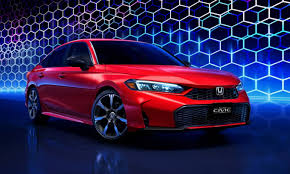
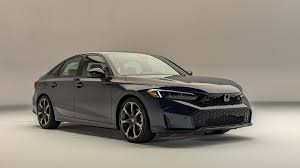
After a strategic pause, during which Honda focused on models like the Clarity Plug-in Hybrid and Accord Hybrid, the Honda Civic Hybrid makes a triumphant return for the 2025 model year, firmly embedded within the 11th-generation Civic lineup. This revival isn’t merely a reintroduction; it’s a comprehensive reimagining of the hybrid concept, leveraging Honda’s latest powertrain advancements for an experience that is both exhilarating and exceptionally efficient.
Gone is the older IMA system. The 2025 Civic Hybrid utilizes a sophisticated dual-motor hybrid system, a technology shared with the latest CR-V Hybrid and Accord Hybrid. This system delivers an EV-like driving feel and performance that rivals even sporty compacts. With a combined output of 200 horsepower and 232 pound-feet of torque from a 2.0-liter four-cylinder engine and its two electric motors, the new Honda Civic Hybrid offers brisk acceleration. A key innovation is its direct-drive system, which bypasses a traditional CVT or transmission by directly coupling the electric motors and the gasoline engine to the front axle. This engineering choice results in incredibly smooth, quiet, and responsive power delivery.
The fuel economy figures are nothing short of outstanding. EPA estimates boast an impressive 50 mpg city, 47 mpg highway, and 49 mpg combined for the sedan. For those seeking even greater cargo versatility, the hatchback variant offers competitive ratings of 45 mpg highway and 48 mpg combined. My personal experience with the 2026 Civic Hybrid Hatchback confirmed the exceptional performance and the intuitive nature of the four levels of brake regeneration, easily adjustable via steering wheel paddles. Beyond its aerodynamic styling, the hatchback variant offers a substantial cargo advantage, boasting 24.5 cubic feet compared to the sedan’s 15 cubic feet.
The Honda Civic Hybrid is offered in two well-appointed trim levels: Sport and Sport Touring, available in both sedan and hatchback body styles. Standard across all trims is the comprehensive Honda Sensing suite of advanced driver-assistance systems. This includes forward emergency braking, adaptive cruise control, lane keeping assist, and road departure mitigation. Further enhancing safety are standard features like blind spot monitoring, automatic high beams, and Traffic Jam Assist, a semi-automated feature designed to reduce driver fatigue in congested conditions. Rear side airbags and front knee airbags are also standard, underscoring Honda’s commitment to occupant safety.
Visually, the hybrid models are distinguished by body-colored headlight surrounds and lower spoilers, complemented by two-tone 18-inch wheels. Inside, the base Sport trim comes equipped with a 7-inch touchscreen, an eight-speaker audio system, a half-digital instrument panel with a 7-inch display, USB-C ports, dual-zone climate control, LED lighting, an acoustic laminated windshield, and a power sunroof. The premium Sport Touring trim elevates the experience further with a larger 9-inch touchscreen featuring integrated Google Maps, Assistant, and Play apps. It also boasts a fully digital instrument panel, wireless Apple CarPlay and Android Auto integration, luxurious leather upholstery, a premium 12-speaker Bose stereo system, and a wireless phone charger.
As of this writing, the Manufacturer’s Suggested Retail Price (MSRP) for a new 2026 Civic Sedan Hybrid Sport begins at $29,395, with the Sport Touring model priced at $32,395, excluding destination and handling fees. The Civic Hatchback Hybrid Sport starts at $30,595, and the Sport Touring variant at $33,595. On the used market, early 2025 models are fetching between $28,000 and $30,000, reflecting their desirability and recent entry into the market.
Key Considerations for Buying a Honda Civic Hybrid
When embarking on the quest to find the right Honda Civic Hybrid, several crucial factors demand your attention. The overarching goal is to secure a vehicle that offers exceptional value, long-term reliability, and a seamless ownership experience.
Hybrid Battery Health: The Achilles’ Heel of Older Hybrids
For first and second-generation Honda Civic Hybrids, the hybrid battery is the single most critical component to assess. These batteries have a finite lifespan, and their degradation directly impacts performance and fuel efficiency. A failing battery can lead to the vehicle entering a “limp mode” or becoming undrivable without significant repair costs.
First Generation (2003-2005): These models are the most susceptible to battery failure. If purchasing one, assume the battery will need replacement at some point.
Second Generation (2006-2015): While the later models (especially those with lithium-ion batteries from 2012 onwards) tend to be more robust, high-mileage vehicles from this era are also at risk.
Third Generation (2025-Present): With its advanced lithium-ion battery technology and Honda’s latest powertrain management, the 2025+ Civic Hybrid is expected to offer superior battery longevity. However, as it’s a newer model, long-term real-world data is still being gathered.
If buying a used hybrid, inquire about battery replacement history and seek out vehicles that have had their batteries replaced by a reputable dealer or specialist. A typical hybrid battery replacement can range from $2,000 to over $3,000, a cost that can significantly outweigh the vehicle’s market value, especially for older models.
Recalls and Maintenance Records: A Testament to Care
Thoroughly review the vehicle’s maintenance history. For the second generation, specifically look for records pertaining to a recall that affected 2006-2007 models for a faulty DC-DC converter, which could cause stalling. A well-documented service history is a strong indicator of diligent ownership and can provide peace of mind regarding potential issues.
Fuel Economy and Performance: Setting Expectations
While all Honda Civic Hybrids offer impressive fuel economy, manage your expectations based on the generation and model year. The first and second generations, particularly under hard acceleration, could exhibit slower performance and more engine noise than their gasoline counterparts. The 2025+ models, however, have revolutionized this aspect, offering robust acceleration and a refined, quiet driving experience that rivals premium vehicles.
Availability and Location: The Nationwide Search
The Honda Civic Hybrid has always been produced in lower volumes compared to the standard Civic. This means finding a used example, especially specific model years or trims, can be challenging. Be prepared to search beyond your local dealerships and consider expanding your search nationwide. Utilizing online platforms and trusted used car retailers can significantly broaden your options. For new 2025 models, specific dealer inventory will dictate immediate availability, but Honda’s production capacity is expected to meet demand.
Cost of Ownership: Beyond the Purchase Price
While the upfront cost of a Honda Civic Hybrid can be attractive, especially for older models, consider the total cost of ownership. Fuel savings are a significant benefit, but potential hybrid battery replacement costs on older models must be factored in. For newer models, the advanced technology and premium features contribute to a higher initial price but promise lower long-term running costs due to superior efficiency and advanced safety systems.
Identifying the “Best Years” to Buy:
Newest (2025-Present): Unquestionably, the latest generation offers the pinnacle of performance, efficiency, technology, and safety. It delivers a driving experience that surpasses its predecessors by a significant margin and represents the future of the Civic Hybrid.
Second Generation (2012-2015): These years are particularly attractive due to the switch to lithium-ion batteries and subsequent interior and feature refinements. They offer a good balance of modern amenities and improved hybrid technology at a more accessible price point than the newest models.
First Generation (2003-2005): These are for the true enthusiast or budget-conscious buyer willing to accept the risks associated with older hybrid battery technology. They represent a historical milestone but require the most diligent inspection and maintenance awareness.
Used Honda Civic Hybrid Value Proposition:
A used Honda Civic Hybrid can indeed be an excellent value, provided you perform your due diligence. The key is to accurately assess the remaining lifespan of the hybrid battery. Opting for the newest, lowest-mileage vehicle you can comfortably afford is generally the most prudent strategy to minimize immediate concerns and maximize your enjoyment of its fuel-saving benefits.
The Future of Efficient Driving is Here
The automotive landscape is rapidly shifting towards electrification and enhanced fuel efficiency. The Honda Civic Hybrid, in its latest iteration, stands as a powerful testament to this evolution. It seamlessly blends the practicality, reliability, and engaging driving dynamics that have defined the Civic for generations with cutting-edge hybrid technology.
Whether you are a seasoned hybrid owner or a newcomer to the world of fuel-efficient vehicles, the 2025 and beyond Honda Civic Hybrid offers a compelling package. Its advanced powertrain, comprehensive safety features, and refined interior create an experience that is both responsible and rewarding. For those considering a pre-owned model, understanding the nuances of each generation, particularly the critical aspect of hybrid battery health, will pave the way for a smart and satisfying acquisition.
As you weigh your options and explore the various Honda Civic Hybrid models available, remember that investing in a well-maintained hybrid is an investment in lower fuel costs, reduced environmental impact, and a smarter way to drive.
Ready to experience the future of efficient, engaging driving? Explore the latest 2025 Honda Civic Hybrid models at your local dealership or delve into the carefully selected used inventory to find the perfect fit for your lifestyle and budget. Your journey towards exceptional fuel economy and advanced technology begins today.