
The Rebirth of Efficiency: A Deep Dive into the Honda Civic Hybrid (2025 and Beyond)
For over half a century, the Honda Civic has been a benchmark in the automotive world, a symbol of reliability, practicality, and attainable engineering. While the standard Civic has cemented its legacy with millions of units sold globally, its hybrid sibling, the Honda Civic Hybrid, has often been a more niche, albeit technologically significant, offering. After a hiatus since the 2015 model year, the Honda Civic Hybrid has made a triumphant return for 2025, ushering in a new era of electrified compact car performance. As an industry expert with a decade of experience analyzing automotive trends and market dynamics, I’m excited to dissect what this resurgence means for consumers seeking exceptional fuel economy, advanced technology, and enduring value.
The landscape of automotive propulsion is rapidly evolving, with hybrid technology no longer a futuristic concept but a cornerstone of efficient transportation. The Honda Civic Hybrid’s journey, from its early Integrated Motor Assist (IMA) systems to the sophisticated dual-motor setup of the latest generation, reflects Honda’s commitment to innovation. This guide will explore the compelling reasons to consider a Honda Civic Hybrid, focusing on its cost-effectiveness, long-term reliability, and the specific model years that represent the pinnacle of its development. Whether you’re a seasoned hybrid enthusiast or a newcomer to the electric-assist world, understanding the nuances of the Honda Civic Hybrid is crucial for making an informed purchasing decision in today’s competitive market.
The 2025 Honda Civic Hybrid: A New Standard for Compact Electrification
Honda’s decision to reintroduce the Honda Civic Hybrid for the 2025 model year is a testament to the growing consumer demand for fuel-efficient yet engaging vehicles. This latest iteration leverages the acclaimed eleventh-generation Civic platform, integrating a sophisticated hybrid powertrain that dramatically elevates both performance and efficiency. Gone is the earlier IMA system; in its place is a potent dual-motor setup, a technology shared with the popular CR-V Hybrid and Accord Hybrid. This advanced system promises an “EV-like” driving experience, delivering performance that rivals even the sportier Civic Si variants.
Under the hood, the 2025 Honda Civic Hybrid is powered by a 2.0-liter four-cylinder engine seamlessly integrated with two electric motors. This potent combination generates an impressive 200 horsepower and 232 pound-feet of torque. What truly sets this powertrain apart is its direct-drive system. By directly coupling the electric motors to the front axle and the gasoline engine, Honda has eliminated the need for a traditional continuously variable transmission (CVT) or a conventional gearbox. The result is an exceptionally smooth, quiet, and responsive driving experience that punches well above its weight class.
Fuel economy figures are nothing short of remarkable. The EPA estimates an outstanding 50 miles per gallon in city driving, 47 miles per gallon on the highway, and a combined rating of 49 miles per gallon. These numbers make the Honda Civic Hybrid a formidable competitor in the compact sedan segment, offering significant savings at the pump over its lifespan. Furthermore, Honda’s engineering prowess ensures that efficiency doesn’t come at the expense of driving dynamics. While not a pure sports car, the 2025 Civic Hybrid strikes an admirable balance between comfort and agility, providing a refined ride that belies its economy-focused nature.
For those who prefer a more versatile cargo solution, the Honda Civic Hybrid is now available in a hatchback body style. This option retains the core hybrid technology while offering increased utility. While slightly less aerodynamic, the hatchback still achieves impressive fuel economy, with EPA estimates of 48 mpg combined. In our testing of the 2026 Civic Hybrid Hatchback (which remains unchanged from the 2025 model), we were particularly impressed with its performance and the innovative four levels of brake regeneration. These levels, adjustable via steering wheel paddles, allow drivers to tailor the regenerative braking to their driving style, further maximizing efficiency and enhancing the driving engagement. The hatchback also boasts significantly more cargo space than the sedan, with 24.5 cubic feet compared to the sedan’s 15 cubic feet, making it a practical choice for families and active individuals.
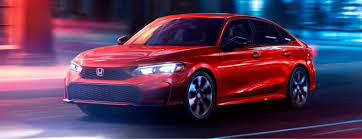
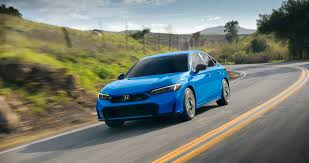
The Honda Civic Hybrid for 2025 is offered in two well-appointed trim levels: Sport and Sport Touring. Even the base Sport trim is generously equipped with Honda Sensing, the brand’s comprehensive suite of advanced driver-assistance systems. This includes features like forward emergency braking, adaptive cruise control, lane keeping assist, and road departure mitigation. Additional standard safety features include a blind-spot monitor, automatic high beams, and Traffic Jam Assist, a semi-automated system designed to ease highway driving. Passenger safety is further enhanced with the inclusion of rear side airbags and front knee airbags as standard. Visually, the hybrid models are distinguished by body-colored headlight surrounds, lower spoilers, and attractive two-tone 18-inch alloy wheels.
Inside, the Sport trim features a 7-inch touchscreen infotainment system, an eight-speaker audio system, a partially digital instrument panel with a 7-inch display, USB-C ports, dual-zone automatic climate control, LED headlights and taillights, an acoustic laminated windshield, and a power sunroof. The premium Sport Touring trim elevates the experience with a larger 9-inch touchscreen that integrates Google Maps, Google Assistant, and Google Play apps. It also boasts a fully digital instrument panel, wireless Apple CarPlay and Android Auto integration, luxurious leather upholstery, a premium 12-speaker Bose stereo system, and a wireless phone charger.
When it comes to pricing, the new Honda Civic Hybrid represents a significant investment in cutting-edge technology and long-term fuel savings. As of this writing, the Manufacturer’s Suggested Retail Price (MSRP) for a new 2026 Civic Sedan Hybrid starts at $29,395 for the Sport trim and $32,395 for the Sport Touring, before destination and handling fees. The Civic Hatchback Hybrid models are priced slightly higher, beginning at $30,595 for the Sport and $33,595 for the Sport Touring Hybrid. On the used market, the 2025 model year Honda Civic Hybrid typically lists between $28,000 and $30,000, reflecting its recent introduction and advanced features. While the initial purchase price may seem substantial, the long-term fuel savings and reduced maintenance compared to conventional gasoline vehicles make the Honda Civic Hybrid a compelling value proposition for savvy car buyers. Investing in used Honda Civic Hybrid models from this generation can also offer a more affordable entry point into this advanced technology.
Navigating the Used Market: Generations of the Honda Civic Hybrid
While the 2025 Honda Civic Hybrid represents the latest and greatest, understanding its predecessors is crucial for those exploring the pre-owned market. The Honda Civic Hybrid has a history spanning three distinct generations, each with its own characteristics, strengths, and potential considerations.
First Generation (2003-2005): Pioneering Efficiency
Honda first introduced the Honda Civic Hybrid to the U.S. market in 2002, positioning it as a mainstream alternative to the Toyota Prius, which had debuted earlier. Unlike the Prius, which was a dedicated hybrid design, the first-generation Civic Hybrid seamlessly integrated its hybrid technology into the familiar Civic sedan body style. This approach made hybrid technology accessible to a broader audience, offering the practicality and comfort of a conventional compact car with significantly enhanced fuel efficiency.
The powertrain utilized a modified version of the Integrated Motor Assist (IMA) system from the Honda Insight. In this setup, a 13-horsepower electric motor acted as a supplementary boost, installed between the engine and either a five-speed manual transmission or an optional CVT. The 1.3-liter four-cylinder engine was remarkably efficient, employing a lean-burn strategy with dual spark plugs per cylinder and the ability to shut down three cylinders during deceleration to optimize battery charging. This advanced design earned it an Ultra-Low Emission Vehicle (ULEV) rating. A compact battery pack, located between the trunk and rear seats, powered the electric motor. In total, this generation produced 93 horsepower and 116 pound-feet of torque.
Honda implemented several aerodynamic enhancements, including a revised front bumper, grille, underbody panels, lightweight aluminum wheels, a rear spoiler, and low rolling resistance tires. UV-reducing glass and automatic climate control further reduced energy consumption. Electric power steering, a rarity at the time, eliminated the engine-driven hydraulic pump, contributing to fuel savings. To compensate for the altered weight distribution, Honda equipped these models with a thicker front stabilizer bar, stiffer springs, increased damping rates, and larger rear drum brakes, with ABS and electronic brake distribution as standard.
The EPA estimated fuel economy for the first-generation Honda Civic Hybrid was around 48 mpg city, 47 mpg highway, and 48 mpg combined when equipped with the CVT. This represented a substantial improvement over comparable gasoline Civics. However, this efficiency came at a premium. The initial price difference compared to a standard Civic LX was approximately $3,500, a considerable sum in the early 2000s.
Despite the higher cost, Honda sweetened the deal by including a generous array of standard features. These included front side airbags, keyless entry, a CD player, cruise control, variable intermittent wipers, automatic climate control, and power windows. The interior received a subtle upscale treatment with softer fabric upholstery, a two-tone dashboard, silver accents, chrome trim, and a partially digital gauge cluster.
For the 2004 model year, the Civic lineup, including the hybrid, received a refresh with updated exterior styling and interior refinements. The 2005 model year saw the addition of the attractive Eternal Blue Pearl paint option.
When considering a used first-generation Honda Civic Hybrid, be aware that these models are quite rare. Furthermore, this generation has a slightly less stellar reliability record compared to other Civic variants. Prices typically range from $3,000 to $6,000, depending on condition and mileage. Caution is advised, especially regarding the hybrid battery. Any signs of battery degradation warrant careful consideration, as replacement can be a significant expense.
Second Generation (2006-2015): Refinement and Evolution
The second-generation Honda Civic Hybrid, based on the distinctive eighth-generation Civic, introduced a more futuristic exterior design and a more potent hybrid system. The Integrated Motor Assist (IMA) powertrain saw significant upgrades, now enabling limited electric-only acceleration at low speeds and with gentle throttle input. Combined output rose to 110 horsepower and 123 pound-feet of torque, thanks to a more powerful electric motor and battery, coupled with the introduction of i-VTEC technology for improved valve control.
Improvements to the CVT, braking system, and the adoption of an electronic throttle contributed to enhanced fuel efficiency. Early EPA estimates were around 49 mpg city and 51 mpg highway, though these figures have been recalibrated by the EPA to align with current testing methodologies. Honda also made substantial revisions to the steering, suspension, and chassis for a more composed and comfortable ride. Like its predecessor, this generation was exclusively front-wheel drive.
Standard features were expanded to include side curtain airbags, active front headrests, 15-inch alloy wheels, and a six-speaker stereo with iPod connectivity. The interior featured a striking, albeit somewhat unconventional, fully digital instrument panel positioned on a two-tier dashboard. Navigation was the sole optional feature, adding to the vehicle’s price. For 2007, XM Radio was bundled with the navigation system.
A notable update for the 2009 model year included the addition of stability control (Vehicle Stability Assist) and a USB port. Higher trims with navigation offered leather seats, Bluetooth, and heated front seats and side mirrors. Exterior styling updates included new clear-lens headlights and taillights and revised front bumper.
The 2012 model year brought a significant refresh that was met with mixed reviews for its interior quality and design. However, there were notable improvements, including an increase in rear legroom. The hybrid model received a new 1.5-liter engine and a transition from a nickel-metal hydride battery to a lithium-ion unit. This resulted in improved efficiency and increased torque to 127 lb-ft. A new five-inch digital display provided enhanced information, and the instrument panel’s color could be customized. Navigation systems were upgraded to use a 16GB flash drive instead of DVDs.
Recognizing the feedback, Honda implemented another refresh for the 2013 model year. This iteration addressed concerns about interior refinement with updated exterior styling, revised suspension and steering, enhanced noise insulation, and softer-touch materials. Standard features now included a backup camera, Bluetooth, Pandora integration, and text message readouts. For 2014, further interior enhancements were made, including a new 7-inch touchscreen with Honda’s LaneWatch blind-spot monitoring system and standard push-button start with keyless entry. Mechanical updates to the fuel pump, ignition coil, engine sensors, and increased regenerative braking capacity led to a higher EPA rating of 44 mpg city, 47 mpg highway, and 45 mpg combined.
When searching for a used Honda Civic Hybrid from this generation, prices vary significantly. Examples with over 100,000 miles can be found for less than $3,000. For models with under 100,000 miles, expect to pay at least $6,000, with low-mileage, well-maintained examples potentially fetching up to $14,000. Given the age of these vehicles, careful inspection of the hybrid battery and its remaining lifespan is paramount. A used Honda Civic Hybrid can indeed be a fantastic deal, but only if the battery health is confidently assessed.
Reliability and Maintenance Considerations
The Honda Civic Hybrid, like its conventional counterpart, is generally known for its reliability. However, the hybrid system introduces specific components that require attention. The most critical of these is the hybrid battery. In older models (first and second generations), particularly those with high mileage, the hybrid battery is likely nearing the end of its operational life. Battery failure can render the car undrivable without significant repairs, with replacement costs typically ranging from $2,000 to over $3,000. This expense can easily outweigh the vehicle’s market value, making a thorough pre-purchase inspection of the battery crucial.
A notable recall affected 2006-2007 Honda Civic Hybrid models due to a faulty DC-DC converter that could cause the engine to stall while driving. Ensure any vehicle you consider has had this recall addressed.
For the newer 2025 and beyond Honda Civic Hybrid models, battery longevity is expected to be significantly improved due to advancements in technology and Honda’s experience. However, as with any hybrid vehicle, regular maintenance is key to ensuring optimal performance and longevity. This includes following the recommended service intervals for both the gasoline engine and the hybrid system, including coolant flushes for the hybrid system and checking brake fluid levels.
When considering a Honda Civic Hybrid for sale, whether in Anniston, AL, Orlando, FL, or Puyallup, WA, prioritize vehicles with complete service records. This documentation provides valuable insight into how the car has been maintained and can offer peace of mind regarding its overall health.
The Smart Choice for the Savvy Buyer
The Honda Civic Hybrid has consistently offered a compelling blend of fuel efficiency, advanced technology, and practical utility. The reintroduction of the model for 2025 marks a significant advancement, offering an electrified driving experience that is both engaging and exceptionally economical. Whether you are drawn to the cutting-edge technology of the latest generation or the enduring value of a well-maintained used model, the Honda Civic Hybrid represents a smart investment for the environmentally conscious and budget-minded driver.
As you navigate the market for your next vehicle, remember that the Honda Civic Hybrid is more than just a fuel-efficient car; it’s a commitment to a more sustainable and cost-effective way of driving. With diligent research and careful inspection, you can find a Honda Civic Hybrid that perfectly suits your needs and delivers years of reliable, efficient service.
Ready to experience the future of efficient driving? Explore the latest Honda Civic Hybrid models and discover the perfect blend of innovation and practicality. Visit your local Honda dealer today for a test drive and learn how you can save on fuel without compromising on performance.