
Navigating the Resurgence of the Honda Civic Hybrid: An Expert’s Guide to Value, Longevity, and Smart Purchasing in 2025
For over five decades, the Honda Civic has stood as a paragon of automotive reliability and widespread appeal. Its enduring presence in the market, marked by over 27 million units sold globally across eleven distinct generations, is a testament to its consistent evolution. However, within this vast success story, the Honda Civic Hybrid occupies a more niche, albeit pioneering, segment. Its journey, characterized by premium pricing and initially lower production volumes, has historically made it a less common sight. Yet, the technological leaps embodied by the Civic Hybrid have undeniably proven the viability and desirability of the gas-electric powertrain for discerning car buyers. As we navigate 2025, the reintroduction of this esteemed model, after a hiatus since the 2015 model year, presents a compelling opportunity for those seeking exceptional fuel efficiency, sophisticated engineering, and long-term value. This guide, crafted from a decade of industry insight, delves into the intricacies of acquiring a pre-owned or new Honda Civic Hybrid, focusing on cost-effectiveness, long-term reliability, and identifying the optimal model years for your investment.
The landscape of hybrid vehicle acquisition is shifting, and the Honda Civic Hybrid is at the forefront of this transformation. With a fresh iteration for 2025, the market for used Honda Civic Hybrid models is both nascent and presents a unique challenge due to its limited historical availability. Prospective buyers should anticipate an expanded search radius, potentially extending nationwide, as the pool of available listings is relatively constrained. However, with a discerning eye and an understanding of what to prioritize, securing an exceptionally affordable and remarkably fuel-efficient compact sedan is well within reach.
Unpacking the Value Proposition: Cost, Reliability, and the Intelligent Purchase of a Honda Civic Hybrid
The allure of the Honda Civic Hybrid lies in its ability to deliver outstanding fuel economy without compromising the practicalities and driving dynamics that have made the standard Civic a household name. When considering a purchase, a comprehensive understanding of its unique lifecycle, including potential maintenance considerations, is paramount.
Frequently Asked Questions for the Savvy Buyer:
Which Honda Civic Hybrid model years represent the pinnacle of value and performance?
The current, re-envisioned 2025 Honda Civic Hybrid stands out as the unequivocal best. It harmoniously blends brisk performance with remarkable efficiency, all wrapped in a build quality and driving sophistication that belies its compact car classification and often rivals vehicles in much higher price brackets. For those considering the used market, focusing on later models within the second generation (2012-2015) that benefited from battery technology upgrades and revisions offers a strong balance of affordability and modern features.
What are the potential pitfalls or less desirable Honda Civic Hybrid years to avoid?
The primary concern with any hybrid, particularly older models, centers on the longevity of the hybrid battery. For the first-generation Civic Hybrid (2003-2005) and higher-mileage second-generation examples, the original battery may be approaching the end of its service life. A failing hybrid battery can render the vehicle inoperable without significant and costly repair. Replacement costs can range from $2,000 to over $3,000, potentially negating the economic advantage of purchasing a used hybrid if the repair expense is disproportionate to the vehicle’s market value. Additionally, a specific recall affected 2006-2007 Civic Hybrids due to a faulty DC-DC converter that posed a risk of stalling the vehicle while in motion; thorough inspection and verification of this recall being addressed are crucial for these model years.
Is a pre-owned Honda Civic Hybrid a sound investment?
Absolutely, a used Honda Civic Hybrid can be an excellent acquisition, provided you can accurately assess the remaining lifespan of its hybrid battery. The key to a wise purchase lies in prioritizing the newest model year and the lowest mileage attainable within your budget. This approach significantly mitigates the risk of imminent battery replacement and ensures a longer period of enjoying the vehicle’s inherent benefits. Exploring listings for used Honda Civic Hybrid sedans near you, or across the nation, will reveal diverse options.
The Yin and Yang of Civic Hybrid Ownership:
Pros:
Exceptional Fuel Economy: The cornerstone of the hybrid’s appeal, delivering significant savings at the pump and a reduced environmental footprint.
Enhanced Standard Equipment: Typically, hybrid trims of the Civic come equipped with a more generous array of standard features compared to their gasoline counterparts, offering greater value from the outset.
Refined Cruising Experience: Under moderate acceleration and steady cruising, the hybrid powertrain operates with remarkable smoothness and quietness, providing a comfortable and serene cabin environment.
Cons:
Performance Under Duress (Older Generations): First and second-generation models, while efficient, could exhibit noticeable sluggishness and a more pronounced engine note during hard acceleration.
Battery Degradation and Replacement Costs: As mentioned, older hybrid batteries are susceptible to wear and eventual failure, leading to substantial repair bills.
Limited Availability: Due to its historical niche status, finding a Honda Civic Hybrid for sale can require patience and a broad search.
A Generational Deep Dive: Tracing the Evolution of the Honda Civic Hybrid
Understanding the distinct characteristics of each Honda Civic Hybrid generation is vital for making an informed purchase. Each iteration brings advancements, and sometimes, specific considerations that impact desirability and long-term ownership.
The Reborn Innovator: Third Generation Honda Civic Hybrid (2025-Present)
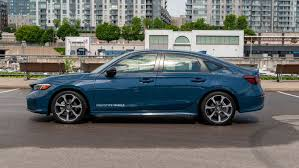
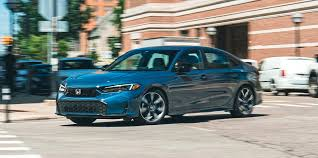
Following a strategic pause to refine its hybrid and electric offerings with models like the Clarity Plug-in Hybrid, Clarity EV, and Accord Hybrid, Honda has masterfully reintroduced the Honda Civic Hybrid as an integral part of the 11th-generation Civic lineup. This latest iteration eschews the older Integrated Motor Assist system for a sophisticated dual-motor setup, shared with the contemporary CR-V Hybrid and Accord Hybrid. This advanced powertrain delivers an experience akin to an electric vehicle, with performance figures that even rival the sporty Civic Si.
Boasting a combined output of 200 horsepower and 232 pound-feet of torque from a 2.0-liter four-cylinder engine and its dual electric motors, the 2025 Civic Hybrid employs a direct-drive system. This innovative setup eliminates the need for a traditional CVT or transmission, directly coupling the motors to the front axle and the gasoline engine. The result is an exceptionally smooth, quiet, and responsive driving dynamic, particularly noteworthy for an economy-focused hybrid. This translates into an impressive EPA-estimated fuel economy of 50 mpg city, 47 mpg highway, and 49 mpg combined. Beyond its efficiency, the driving experience is well-balanced, offering a commendable blend of comfort and agility that often surpasses other vehicles in the compact segment.
For the first time, the hybrid variant is also available in the versatile hatchback body style, offering a slightly adjusted EPA rating of 45 mpg highway and 48 mpg combined. Our testing of the 2026 Civic Hybrid Hatchback, which remains unchanged from the 2025 model year, underscored the excellence of its performance and the intuitive nature of its four distinct regenerative braking levels, adjustable via steering wheel-mounted paddles. The hatchback also presents a significant advantage in cargo capacity, offering 24.5 cubic feet compared to the sedan’s 15 cubic feet.
The Honda Civic Hybrid is offered in two refined trim levels: Sport and Sport Touring, applicable to both sedan and hatchback body styles. Standard across all hybrid trims is the comprehensive Honda Sensing suite, a suite of advanced driver-assistance features designed to enhance safety and convenience. This includes forward emergency braking, adaptive cruise control, lane keeping assist, and road departure mitigation. Further enhancing safety are standard blind-spot monitoring, automatic high beams, and Traffic Jam Assist, a semi-automated feature for navigating congested roadways. The new generation also prioritizes passenger safety with standard rear side airbags and front knee airbags. Visually, hybrid models are distinguished by body-colored headlight surrounds, lower spoilers, and striking two-tone 18-inch wheels. Interior amenities include a 7-inch touchscreen, an eight-speaker audio system, a partially digital instrument panel with a 7-inch display, USB-C ports, dual-zone automatic climate control, LED lighting, an acoustic laminated windshield, and a power sunroof. The premium Sport Touring trim elevates the experience further with a larger 9-inch touchscreen featuring integrated Google Maps, Assistant, and Play apps, a fully digital instrument panel, wireless Apple CarPlay and Android Auto integration, luxurious leather upholstery, a 12-speaker Bose premium audio system, and a wireless phone charger.
As of this publication, the manufacturer’s suggested retail price for a new 2026 Civic Sedan Hybrid starts at $29,395 for the Sport trim and $32,395 for the Sport Touring, excluding destination and handling charges. The Civic Hatchback Hybrid is priced from $30,595 for the Sport and $33,595 for the Sport Touring. On the pre-owned market, platforms like CarGurus indicate average list prices for the 2025 Honda Civic Hybrid typically range from $28,000 to $30,000 for the 2026 model year, reflecting strong residual value for this cutting-edge technology.
The Bridging Generation: Second Generation Honda Civic Hybrid (2006-2015)
The second-generation Civic Hybrid was built upon the distinctive, forward-looking design of the eighth-generation Civic, characterized by its expansive windshield, opposing wiper design, and wider stance. This era marked a significant advancement for the Integrated Motor Assist (IMA) powertrain, enabling limited electric-only acceleration, though primarily at low speeds and with cautious throttle input. The combined output saw an increase to 110 horsepower and 123 pound-feet of torque, attributed to a more potent electric motor, an improved battery system, and the integration of i-VTEC technology, which offered enhanced valve control across a broader range of engine speeds.
Key improvements to the Continuously Variable Transmission (CVT), air conditioning system, braking performance, and the transition to an electronic throttle contributed to the Civic Hybrid’s enhanced fuel efficiency. EPA estimates initially reported figures as high as 49 mpg city and 51 mpg highway (note: these ratings have since been revised by the EPA to align with current testing methodologies). The vehicle also benefited from substantial revisions to its steering, suspension, and chassis, providing a more refined and engaging driving experience. As with all previous Civic Hybrids, front-wheel drive remained the sole configuration.
Standard features were notably enhanced, including side curtain airbags, active front headrests, 15-inch alloy wheels (a one-inch increase over the previous generation), and a six-speaker audio system with iPod connectivity. The interior boasted a futuristic, fully digital instrument panel, reminiscent of a high-tech alarm clock, integrated into a distinctive two-tier dashboard design. Navigation was an optional upgrade, increasing the base price of $21,850 to $23,350. For the 2007 model year, XM radio was bundled with the navigation system. The 2008 model year saw no significant changes. Honda introduced Vehicle Stability Assist (VSA) and a USB port for 2009, enhancing safety and connectivity. Models equipped with navigation offered leather seating, a leather-wrapped steering wheel, Bluetooth capability, and heated front seats and side mirrors. Cosmetic updates included new headlights and taillights with clear lenses and amber bulbs, along with a revised front bumper incorporating a new air intake. The 2010 and 2011 model years remained largely unchanged.
A significant refresh for the entire Civic lineup in 2012, while met with criticism from some automotive publications for perceived interior downgrades, brought substantial improvements to the hybrid. These included an increase in rear legroom by 1.6 inches, a new 1.5-liter engine, and a shift from nickel-metal hydride batteries to a more advanced lithium-ion battery pack. Fuel efficiency saw notable gains across all EPA metrics, and torque increased to 127 lb-ft. A new five-inch digital display atop the center stack offered enhanced functionality, including album artwork display and navigation guidance, while the instrument panel could change color based on driving speed and efficiency. Navigation systems now utilized a 16GB flash drive instead of a DVD-based setup.
Responding to market feedback, Honda implemented another refresh for 2013. This included updated exterior styling, revised suspension and steering, improved noise insulation, softer interior materials, and enhanced build quality. Standard features were further bolstered to include a backup camera, Bluetooth, Pandora integration, and text message readouts. For 2014, further interior enhancements were made, highlighted by a new 7-inch touchscreen with the innovative LaneWatch system, which displayed a live feed of the passenger-side blind spot when the turn signal was engaged. Push-button start with keyless smart entry also became standard. Mechanical refinements, including updates to the fuel pump, ignition coil, engine sensors, and enhanced regenerative braking capabilities, led to an improved EPA rating of 44 mpg city, 47 mpg highway, and 45 mpg combined. No changes were made for the 2015 model year.
On the pre-owned market, the second-generation Honda Civic Hybrid can be found starting at less than $3,000 for models with well over 100,000 miles. For those seeking a vehicle with under 100,000 miles, a budget of at least $6,000 is advisable. Exceptionally low-mileage examples can command prices up to $14,000, representing a significant value proposition for a fuel-efficient compact sedan.
The Pioneer of Efficiency: First Generation Honda Civic Hybrid (2003-2005)
Honda introduced the first Honda Civic Hybrid to the U.S. market in 2002, entering the burgeoning hybrid segment as only the third player, following the Toyota Prius and Honda’s own two-door Insight. While it utilized a modified version of the Insight’s Integrated Motor Assist powertrain, the Civic Hybrid’s true innovation lay in its seamless integration into the standard Civic platform. Unlike the Insight’s experimental, two-seat configuration, the Civic Hybrid retained the practicality of a conventional compact sedan, complete with a usable rear seat and trunk space, carrying over the interior design from the seventh-generation Civic introduced in 2001.
Honda’s approach to early hybrid technology differed significantly from Toyota’s. The Civic Hybrid’s electric motor, rated at 13 horsepower, primarily functioned as an assist system rather than enabling full electric propulsion. This foreshadowed the development of “mild” hybrids, with the motor positioned between the engine and the transmission (available with a five-speed manual or an optional CVT). At its core was an incredibly efficient 1.3-liter four-cylinder engine, smaller than that of a standard Civic but larger than the Insight’s. Its lean-burn technology, employing two spark plugs per cylinder for precise air-fuel mixture control, and its ability to shut off three cylinders during deceleration to optimize battery recharging, were groundbreaking for its time. This advanced combustion system earned it an Ultra-Low Emission Vehicle (ULEV) rating. A compact battery pack, under 900 Wh, was strategically located between the trunk and rear seats, precluding the possibility of folding rear seats. The total output for this generation was 93 horsepower and 116 lb-ft of torque.
Aerodynamic enhancements over the standard Civic included a revised front bumper, grille, underbody panels, lighter aluminum alloy wheels, a rear spoiler, and low rolling resistance tires. UV-reducing glass and automatic climate control, a feature absent on other Civic trims, minimized energy consumption by the air conditioning system. Electric power steering, a rarity at the time, eliminated the parasitic drag of an engine-driven hydraulic pump, further contributing to fuel savings. To compensate for altered weight distribution, Honda engineered a thicker front stabilizer bar, stiffer springs, increased damping rates, larger rear drum brakes, and standard anti-lock brakes (ABS) with electronic brake distribution. Even the radio antenna was repositioned from the glass to the roof to mitigate interference with the vehicle’s integrated electronics.
Fuel economy saw a substantial improvement, with city mileage increasing by a third and combined mileage by over 20% compared to the most efficient non-hybrid Civic of the year, achieving an EPA-estimated 48 mpg city, 47 mpg highway, and 48 mpg combined with the CVT (again, these figures are subject to the EPA’s revised testing standards). However, these impressive figures came at a premium. The initial price difference was approximately $3,500 more than a comparable Civic LX, meaning a $20,000 Civic Hybrid was a significant proposition when a mid-level Honda Accord offered comparable pricing.
Honda sought to offset this cost by including a wealth of standard equipment. Front side airbags, keyless entry, a CD player, cruise control, variable intermittent wipers, automatic climate control, and power windows with an auto-down function for the driver’s window became standard. The interior was enhanced with softer fabric upholstery, a two-tone black and tan dashboard, silver interior accents, chrome trim around the gear selector, and a partially digital gauge cluster to elevate the cabin ambiance.
The 2004 model year saw the first-generation Civic Hybrid receive updates aligned with the broader Civic lineup, including a revised hood, headlights, grille, and front and rear bumpers. New exterior paint options, such as Magnesium Metallic, and a gray interior color were introduced. Rear headrests became adjustable, a center console with an armrest and storage was added, speaker quality was improved, seat patterns were updated, and floor mats became standard. The 2005 model year saw the addition of the Eternal Blue Pearl exterior paint.
Finding a first-generation Honda Civic Hybrid on dealer lots today is an exceedingly rare occurrence. Furthermore, this generation is known to have a less consistent reliability record compared to other Civic models. Used examples typically range from $3,000 to $6,000, heavily dependent on condition and mileage. Prospective buyers should approach these vehicles with considerable caution. Any hint of concern regarding the hybrid battery during a test drive should be a strong signal to walk away and continue your search.
Charting Your Course to a Honda Civic Hybrid: Expert Advice for Today’s Buyer
The journey to acquiring a Honda Civic Hybrid is an intelligent one, offering a compelling blend of fuel efficiency, Honda’s renowned reliability, and a commitment to sustainable motoring. Whether you’re drawn to the cutting-edge technology of the 2025 model or seeking exceptional value in a meticulously maintained second-generation example, understanding these nuances will empower your decision. The current market, especially with the 2025 model’s robust features and performance, presents a significant opportunity for those looking for a sophisticated, economical, and environmentally conscious vehicle.
Ready to explore your options and find the perfect Honda Civic Hybrid for your needs? We invite you to browse our curated listings of new and used Honda Civic Hybrid vehicles, connect with local dealerships for test drives, or consult with our team of experts to ensure you make the most informed purchase possible.