🔻 Watch the video below.
🔻
The Safest Trucks for 2026: Modern Protection Meets Trail Capability
In the fiercely competitive American automotive landscape, the pickup truck segment remains the undisputed sales leader, driven by consumer demand for versatile, rugged, and powerful vehicles. While heavy-duty haulers and traditional body-on-frame behemoths dominate headlines, the definition of what constitutes a “safe truck” has undergone a significant evolution. As crash-avoidance technologies become more sophisticated and regulatory standards tighten, consumers increasingly demand vehicles that not only conquer the job site but also offer paramount protection for their occupants.
However, as we enter the 2026 model year, the landscape of “safest” has become more nuanced. Many of the most popular and historically best-selling models—including the Ford F-150, the Ram 1500, and the Chevrolet Silverado 1500—while undoubtedly capable and large, do not currently meet the latest safety benchmarks set by leading independent organizations. This shifting standard presents both a challenge and an opportunity for truck buyers navigating the complex market.
The Evolution of Safety: Navigating IIHS and NHTSA Standards
For automotive enthusiasts and safety-conscious consumers in the United States, understanding the difference between Insurance Institute for Highway Safety (IIHS) and National Highway Traffic Safety Administration (NHTSA) ratings is crucial. These two agencies play pivotal roles in evaluating vehicle safety, yet their methodologies differ significantly, often leading to varied results across the same vehicle.
NHTSA utilizes a five-star rating system, assessing crashworthiness through front, side, and rollover tests. While this provides a broad overview of crash performance, it doesn’t always reflect the complex real-world scenarios of forward-collision avoidance or pedestrian detection.
The IIHS, on the other hand, represents the pinnacle of safety testing rigor. By employing stringent crashworthiness and crash-avoidance evaluations, the IIHS identifies the safest vehicles on the market. For 2026, the organization has significantly updated its testing criteria, making it increasingly difficult for vehicles to earn its highest distinction, the Top Safety Pick+.
This updated standard reflects the evolution of active safety technologies. IIHS now places a premium on frontal crash avoidance performance, specifically in low-light and nighttime conditions, where pedestrian and cyclist accidents are tragically common. The introduction of side-impact tests using a more challenging oblique barrier further separates the field.
As the 2026 model year unfolds, only a select few trucks have successfully navigated these heightened standards, earning the coveted Top Safety Pick or Top Safety Pick+ designations. The challenge for manufacturers is to balance the demands of traditional truck attributes—towing capacity, payload, and rugged durability—with the requirements of modern safety technology, particularly in new electric truck models and compact pickup trucks where innovation is often prioritized.
The Top Contenders for Safety in 2026
2026 Toyota Tundra: Bridging Utility and Assurance
The 2026 Toyota Tundra represents a compelling option for buyers prioritizing safety without sacrificing utility. While the Tundra may trail its competitors in pure driving refinement or extreme off-road capability, its safety credentials stand out in the full-size truck segment.
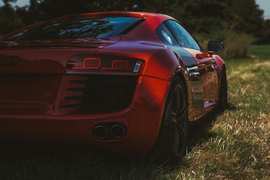
Tundra: Performance and Design Meets Safety Standards
In its Crew Cab configuration, the Toyota Tundra has earned the IIHS Top Safety Pick designation. This achievement reflects the vehicle’s robustness in various crash scenarios and its successful implementation of active safety technologies. Furthermore, the Tundra boasts a five-star overall safety rating from NHTSA, providing a comprehensive layer of protection.
For drivers seeking the optimal blend of utility and reliability, the Tundra continues to impress. Its spacious interior offers ample room for passengers and cargo, while the robust twin-turbo V-6 engine, enhanced with available hybrid assistance, delivers strong performance for both daily driving and heavy-duty tasks. The integration of a reconfigurable gauge display adds a modern touch of driver personalization, and the truck’s burly, commanding exterior design continues to be a primary draw for truck enthusiasts.
Toyota Safety Sense 2.5: Standard Protection Features
A significant driver of the Tundra’s safety performance is the standard Toyota Safety Sense 2.5 suite. This comprehensive package includes front automatic emergency braking with pedestrian and cyclist detection, lane keep assist, adaptive cruise control, and automatic high-beams. On higher-end models, drivers also benefit from blind-spot monitoring and rear cross-traffic alert with trailer coverage, ensuring added protection during maneuvering and hauling. The Tundra’s solid safety record makes it a standout choice among new pickup trucks and traditional haulers.
For those interested in exploring the Tundra’s full potential and safety features, reading our experts’ complete review provides in-depth analysis of its capabilities and real-world performance.
2026 Hyundai Santa Cruz: The Compact Truck Innovator
For buyers who don’t need a full-size truck but still desire utility and modern safety, the 2026 Hyundai Santa Cruz offers a unique value proposition. Often described as a sport-adventure vehicle rather than a traditional truck, the Santa Cruz is built on a unibody platform shared with the Tucson crossover. This architecture provides superior ride comfort, car-like handling, and everyday maneuverability, making it a perfect companion for urban commuting, weekend adventures, and light-duty home projects.
While the Ford Maverick is often considered the benchmark in the compact pickup truck segment, the Santa Cruz consistently earns higher safety ratings. This distinction makes the Santa Cruz a compelling choice for buyers who prioritize safety above all else in this niche category.
2026 Hyundai Santa Cruz Safety Scores: Top Designation for Compact Trucks
The 2026 Santa Cruz has been awarded the IIHS 2025 Top Safety Pick status, a notable achievement for a compact vehicle. Additionally, it receives a five-star overall safety rating from NHTSA, underscoring its excellent crash performance and safety engineering.
Enhanced Hyundai SmartSense: Standard Safety Technology
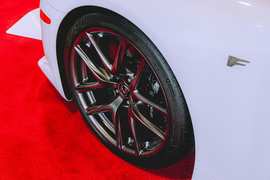
The Santa Cruz comes standard with the comprehensive Hyundai SmartSense safety suite. This includes front automatic emergency braking, rear and side cross-traffic alert, lane keep assist, blind-spot monitoring, and automatic high-beams. The Santa Cruz’s combination of crossover convenience and top-tier safety makes it an exceptional option for urban buyers seeking versatility and peace of mind. For a deeper dive into the vehicle’s capabilities, our experts’ full review offers a detailed analysis of its performance, features, and suitability for various lifestyles.
2026 Tesla Cybertruck: Unconventional Design Meets High Safety Standards
The 2026 Tesla Cybertruck remains one of the most polarizing vehicles on the market. With its sharp-edged stainless-steel exoskeleton and unconventional angular design, the Cybertruck appears to defy traditional automotive aesthetics. However, beneath its futuristic skin lies a robustly engineered structure that delivers exceptional occupant protection.
Cybertruck: Best-in-Class Protection Meets Raw Performance
Despite its divisive looks, the 2026 Cybertruck has earned the IIHS Top Safety Pick+ designation—the highest possible award from the organization. Furthermore, the Cybertruck achieves a five-star overall safety rating from NHTSA. This exceptional performance demonstrates that the Cybertruck is not just a design statement but a class leader in electric truck safety.
Advanced Tesla Safety Technology: Autopilot and Autonomy
Like all Tesla models, the Cybertruck is equipped with an array of driver-assist and active safety features. Standard technologies include front automatic emergency braking, obstacle-aware acceleration, lane departure warning, lane keep assist, and blind-spot monitoring. The vehicle also features adaptive cruise control and an innovative rain-sensing windshield wiper. For drivers seeking the pinnacle of autonomous capability, Tesla’s Full Self-Driving (Supervised) technology is available at an additional cost, offering a glimpse into the future of self-driving trucks and advanced driver assist systems. To understand the full scope of this revolutionary vehicle, our experts’ detailed review provides comprehensive insights into its performance, technology, and real-world usability.
2026 Rivian R1T: The Adventure-Ready Electric Truck
The 2026 Rivian R1T stands at the intersection of luxurious refinement, off-road capability, and electric performance. This adventure-focused pickup offers a compelling package for drivers seeking a vehicle that can handle weekend escapades as well as daily commuting. What sets the R1T apart is its ability to function effectively as a truck, offering lifestyle-ready utility, clever storage solutions, and impressive towing capability. The vehicle’s range and charging infrastructure are also robust, providing flexibility for long-distance travel regardless of the selected powertrain.
R1T: Luxury Meets Safety in the Electric Truck Landscape
The 2026 Rivian R1T has achieved Top Safety Pick status using the IIHS’ 2025 criteria, demonstrating strong performance in both crashworthiness and crash-avoidance evaluations. This makes the R1T a strong contender in the rapidly expanding electric truck market and a top choice for buyers prioritizing safest electric pickup trucks.
Comprehensive Driver Assist Suite: Standard Safety Features

The R1T comes equipped with a suite of standard active safety and driver-assist features. These include automatic emergency braking, rear cross-traffic alert, blind-spot monitoring, lane keep assist, adaptive cruise control, and automatic high-beams. As Rivian continues to develop its autonomous vehicle technology, the R1T benefits from the vehicle’s advanced camera systems, sensors, and redundant