
Mastering the Chevrolet Colorado: A Decade of Insight for Savvy Buyers
For over a decade, I’ve navigated the ever-shifting landscape of the automotive industry, with a particular focus on the robust and versatile world of pickup trucks. During this time, the Chevrolet Colorado has emerged as a compelling, often misunderstood, contender in the midsize segment. It’s a truck that’s evolved significantly since its inception, offering a compelling blend of capability, comfort, and value, especially for those who know what to look for. This in-depth guide, drawing on years of hands-on experience and market analysis, aims to equip you with the definitive knowledge to make an informed decision when searching for your ideal Chevrolet Colorado for sale.
The Colorado’s journey began in 2004, stepping in to replace the venerable S-10. Chevrolet’s objective was clear: to create a truck that bridged the gap between compact and full-size, offering increased utility and a more substantial presence. This initial generation, developed in conjunction with GM’s global partners, was designed for versatility, finding its way onto roads worldwide under various GM and Isuzu banners. While its first iteration might seem modest by today’s standards – offering up to 1,733 pounds of payload and a 4,000-pound tow rating – it was a bold step forward. It presented a more stylish and larger alternative to competitors like the Toyota Tacoma, even offering specialized Z71 off-road variants and lowered sport truck configurations from the outset.
The first generation saw a refresh in 2008, extending its run through the 2012 model year. Sales had begun to wane by then, perhaps signaling a need for a more radical redesign. Chevrolet responded, launching a completely reimagined Colorado for the 2015 model year. This second generation, also an international design at its core, underwent significant U.S.-specific tuning, bringing a more refined experience to American buyers. Crucially, this generation elevated the powertrain options dramatically. Gone was the anemic base engine; in its place, buyers could opt for a potent V6 or a remarkably efficient and torque-rich Duramax turbodiesel. This diesel, in particular, was a game-changer, boasting a remarkable towing capacity of up to 7,700 pounds – a figure that rivaled some full-size trucks of the era.
The most recent overhaul arrived for the 2023 model year, ushering in the third generation. This iteration marked a significant departure, dropping the V6 and diesel options in favor of sophisticated turbocharged four-cylinder engines. Chevrolet also placed a considerable emphasis on modernizing the interior and integrating a wealth of active safety features, directly addressing criticisms leveled at the previous generation. The current Colorado stands tall amongst its redesigned rivals, including the Toyota Tacoma, Nissan Frontier, and Ford Ranger, proving its mettle even against more niche competitors like the Honda Ridgeline and Jeep Gladiator in its formidable ZR2 Bison trim.
Despite its growth over the years, the Chevrolet Colorado for sale remains more manageable than its Silverado sibling, fitting more readily into urban environments and smaller garages. Understanding the nuances of each generation is paramount to finding a model that aligns with your needs and budget.
Decoding the Chevrolet Colorado Generations: A Deep Dive
Third Generation (2023-Present): The Modern Contender
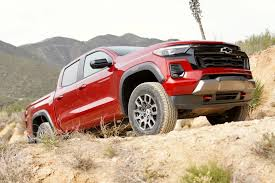
Chevrolet didn’t just refresh; they reinvented the Colorado for 2023. The truck sits on an entirely new frame, boasts a larger body, and debuts a suite of new powertrains and a decidedly more modern, tech-forward interior. This generation exclusively features a crew cab configuration paired with a short bed, a departure from the extended cab and multiple bed lengths of previous models. The beloved V6 and turbodiesel engines have been retired, replaced by a potent 2.8-liter turbocharged four-cylinder “L3B” engine, offered in three distinct states of tune.
The base models churn out a respectable 237 horsepower and 259 lb-ft of torque. However, for those seeking more grunt, the Z71 and Trail Boss trims elevate this to a robust 310 horsepower and 390 lb-ft of torque. The pinnacle of the lineup, the ZR2, matches the horsepower but escalates torque to an impressive 430 lb-ft. This engine, shared with the larger Silverado, provides ample power for the midsize Colorado. All variants are mated to a responsive eight-speed automatic transmission, with rear-wheel drive as standard and four-wheel drive as an option. For 2024, Chevrolet further streamlined the powertrain by making the high-output TurboMax engine standard across the Z71 and Trail Boss trims.
The cabin experience has been significantly upgraded. While rear-seat legroom hasn’t seen a dramatic increase, the overall aesthetic and material quality have improved, despite the continued use of some hard plastics. A prominent 11.3-inch touchscreen serves as the centerpiece of the infotainment system, complemented by an 8-inch digital instrument cluster as standard, with an optional 11.3-inch digital gauge cluster offering further customization. The infotainment interface is intuitive, user-friendly, and now features Google Built-in for seamless integration. Off-road-focused trims also benefit from specialized, functional display modes. The integration of numerous active safety features, such as adaptive cruise control, further enhances the modern appeal.
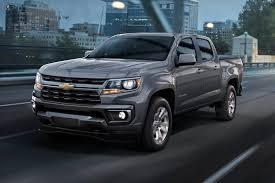
The trim levels offer a clear progression: the WT (Work Truck) and LT cater to fundamental needs, while the new Trail Boss emerges as a budget-friendly off-road specialist, rivaling popular trims from other manufacturers. The Z71 strikes a balance between everyday usability and mild off-road prowess. Leading the charge are the ZR2 and the reintroduced ZR2 Bison. These are serious off-road machines, capable of going toe-to-toe with the most aggressive competitors. The Bison, with its specialized armor and rugged aesthetics, offers unparalleled off-road capability, though the standard ZR2 often presents a better value proposition for many buyers.
For the 2025 model year, Chevrolet has introduced subtle enhancements, including striking Midnight Editions and the addition of blind-zone steering assist with extended view for trailer towing. The TurboMax engine is now the sole powertrain option, simplifying the lineup.
Second Generation (2014-2022): The Workhorse Reimagined
Chevrolet’s decision to re-enter the midsize truck market for 2015 was a strategic one. The existing landscape, dominated by aging Toyota Tacoma and Nissan Frontier models, presented a prime opportunity. The second-generation Colorado, though first revealed internationally in 2011, was significantly adapted for the U.S. market. It offered two cab configurations: the extended cab with rear-opening doors and the more spacious crew cab with conventional doors and enhanced rear passenger room.
Inside, technology evolved. Early models featured a basic 4.2-inch screen on lower trims, upgrading to an 8-inch display with Chevrolet’s infotainment system on higher trims. Apple CarPlay and Android Auto were standard on the larger screen from the outset. Later models saw further refinement, with a 7-inch screen and a Wi-Fi hotspot becoming available. Cargo box options included a long bed (74 inches) for extended cabs and both a long and short bed (61.7 inches) for crew cabs. While a standard 4×8 sheet of plywood wouldn’t lie flat, clever bed-side pockets accommodated 2×6 lumber, allowing sheets to be supported over the wheel wells.
Powertrain options were a key differentiator. Standard RWD models offered a 2.5-liter four-cylinder (205 hp, 195 lb-ft) or a 3.6-liter V6 (305 hp, 269 lb-ft). The Z71 and ZR2 were exclusively 4WD and came standard with the V6. The standout addition for 2016 was the 2.8-liter Duramax turbodiesel. Producing 181 hp and a substantial 369 lb-ft of torque, it delivered the segment’s best towing capacity (7,700 lbs) and remarkable fuel economy, often exceeding 30 mpg on the highway. Transmission choices varied: a six-speed auto for the four-cylinder, an eight-speed for the V6, and a unique six-speed for the diesel.
Trim levels evolved, with the WT becoming the entry point, offering essential features like a power driver’s seat and a 7-inch touchscreen. The LT added aesthetic upgrades and convenience features. The Z71 introduced an off-road suspension, locking rear differential, and all-terrain tires. The crown jewel was the ZR2, boasting an aggressive off-road suspension, increased ground clearance, unique styling, and a host of hardcore off-road enhancements, further amplified by the optional ZR2 Bison package in 2019.
Safety features were a mixed bag. While a rearview camera was standard, advanced systems like lane-departure and forward-collision warnings required higher trim levels. Compared to rivals like the Toyota Tacoma, the Colorado lagged in the breadth and quality of its available safety suite.
Fuel economy, while better than full-size trucks, could be modest, especially in ZR2 trim. The diesel, however, remained a strong performer. Reliability was a significant concern, particularly for models produced between 2014 and 2019, which were plagued by issues with the eight-speed automatic transmission. Complaints ranged from rough shifting and shuddering to complete failure, even leading to a class-action lawsuit. Early models also experienced HVAC problems, and some V6 engines exhibited issues. Later models generally improved, but transmission refinement remained a point of contention.
When considering a used Chevrolet Colorado for sale from this era, focus on models from 2017 onwards, and particularly those equipped with the V6, five-cylinder, diesel, or Z71/ZR2 trims. The base four-cylinder and WT variants are best avoided unless your budget is extremely constrained, as competing trucks like the Ford Ranger often offered a more refined experience in those configurations. Prices for well-maintained examples typically range from $15,000 to $40,000, depending on year, mileage, and trim.
First Generation (2004-2012): The Trailblazer
The original Chevrolet Colorado was tasked with continuing the legacy of the S-10, aiming to provide a larger, more capable midsize option. Developed internationally and sold under various guises, it shared its platform with the GMC Canyon and Isuzu i-Series. This generation offered a wider array of cab and bed configurations than its successors, including regular, extended, and crew cabs, with bed lengths of six and seven feet. A unique, rarely ordered side access door added a touch of retro flair.
Suspension options catered to diverse needs: the ZQ8 offered a lowered stance for street performance, the standard Z85 provided everyday comfort, and the Z71 delivered enhanced off-road capability with its lifted setup and fender flares. Powertrain choices included a 2.8-liter four-cylinder and a 3.5-liter inline-five-cylinder. The five-cylinder was a unique offering in the pickup segment. A refresh in 2007 introduced revised inline-five engines (2.9L and 3.7L), aiming to address earlier criticisms of valve seal issues, cylinder head problems, and overheating, particularly with the original 3.5L unit.
Trim levels ranged from the basic Base model to the more well-appointed LS and later the LT and LTZ. Features like Bluetooth, satellite radio, and OnStar became available as the generation progressed.
However, the first generation is not without its challenges. Pre-2007 models are prone to specific issues: valve seats with insufficient hardness leading to check engine lights and misfires, requiring cylinder head rebuilds. The five-cylinder engines can suffer from warped or cracked heads due to overheating. HVAC blower motors and emissions systems are also common failure points, and wiper motors can be problematic. Furthermore, rust is a persistent concern for these older trucks.
Despite these potential reliability concerns, first-generation Chevrolet Colorado for sale models offer excellent value. You can find well-maintained examples with under 100,000 miles for roughly $9,000 to $15,000, significantly less than comparable Toyotas. For those seeking a genuinely compact and versatile pickup, this generation remains a compelling option, especially if you prioritize a broader range of cab configurations.
Essential Considerations for Every Chevrolet Colorado Buyer
When searching for your Chevrolet Colorado for sale, regardless of the generation, certain factors remain paramount:
Powertrain Preference: The diesel engine in the second generation is a standout for its fuel efficiency and towing power. If you prioritize capability and don’t mind a slightly higher initial cost and potential maintenance, it’s an excellent choice. The V6 in the second generation offers a good balance of power and refinement. The turbocharged four-cylinders in the third generation are modern, efficient, and surprisingly potent, but their long-term reliability is still being established by real-world usage. The early four and five-cylinder engines of the first generation should be approached with caution due to known issues.
Transmission Health: This is a critical point, especially for the second generation. Thoroughly inspect any automatic transmission for signs of rough shifting, shuddering, or hesitation. A pre-purchase inspection by a trusted mechanic is highly recommended.
Rust and Corrosion: Older trucks, especially those from rust-belt regions, are susceptible to frame and body rust. Inspect the undercarriage, wheel wells, and rocker panels meticulously.
Maintenance Records: A well-documented maintenance history is your best indicator of how well a used truck has been cared for. Look for evidence of regular oil changes, fluid flushes, and repairs.
Intended Use: Are you planning to haul heavy loads, tow frequently, or venture off-road? This will heavily influence the generation and trim level that best suits your needs. The ZR2 trims, across generations, are built for off-road dominance, while the WT and LT models focus on utility and value.
The Chevrolet Colorado for sale has proven itself to be a versatile and capable truck, offering compelling alternatives to its more established rivals. By understanding the strengths and weaknesses of each generation, and by conducting thorough due diligence, you can confidently find a Colorado that will serve you well for years to come.
Don’t let the complexities of the used truck market deter you. Equip yourself with this knowledge, perform your due diligence, and you’ll be well on your way to discovering the perfect Chevrolet Colorado to meet your driving needs and budget. Ready to explore your options? Begin your search today and experience the value and capability that a Chevrolet Colorado offers.