
The Definitive Guide to Buying a Chevrolet Colorado: Navigating Value, Longevity, and the Smartest Purchases
For over a decade, I’ve navigated the ever-evolving landscape of the pickup truck market, witnessing firsthand the shifts in consumer demand, technological advancements, and the subtle yet significant nuances that differentiate a wise buy from a regrettable one. Today, as we look at the Chevrolet Colorado, we’re not just examining a midsize pickup; we’re delving into a lineage of utility, capability, and evolving refinement that caters to a specific segment of the American driver. Whether you’re a seasoned truck owner or making your first foray into this robust category, understanding the ins and outs of the Chevrolet Colorado is paramount to securing a vehicle that meets your needs and budget for years to come.
The Colorado emerged in 2004, stepping into the shoes of the venerable S-10, and immediately distinguished itself by offering a more substantial, midsize footprint compared to its predecessor. This strategic expansion, a collaborative effort with GM’s global design teams and Isuzu, aimed to create a versatile platform capable of serving diverse international markets. Consequently, the Colorado was not alone; its close sibling, the GMC Canyon, shared its DNA, and even Isuzu briefly offered its own iteration under the i-Series banner. This shared engineering allowed for a robust foundation, though the American consumer would ultimately judge it on its own merits.
From its inception, the first-generation Chevrolet Colorado presented a compelling package. It dwarfed the popular Toyota Tacoma in terms of sheer presence and style, offering a more substantial aesthetic. While its interior might have felt a touch utilitarian by modern standards, and its base engine lacked the robust power of some competitors, its utility was undeniable. Chevrolet quickly offered a spectrum of configurations, from lowered sport truck variants to the capable Z71 off-road model. With a payload capacity reaching upwards of 1,700 pounds and a towing capability of 4,000 pounds, it was a competent workhorse for its era, setting the stage for future iterations that would significantly expand its muscle and capacity.
A notable refresh in 2008 breathed new life into the first-generation Colorado, extending its tenure until 2012. While sales naturally waned towards the end of its cycle, Chevrolet recognized the continued demand for a capable midsize pickup. This realization spurred the development of a completely reimagined second generation, arriving for the 2015 model year. This new iteration, while initially debuting internationally, underwent significant refinement for the American market, emphasizing a blend of performance and efficiency. Crucially, this generation was built stateside, reaffirming Chevrolet’s commitment to domestic production. The second Colorado truly upped its game with significantly improved powertrain options, including a potent V6 and an impressively frugal yet torquey turbodiesel. This diesel engine, in particular, offered a remarkable towing capacity of up to 7,700 pounds, a figure that rivaled, and in some cases surpassed, that of certain full-size trucks available at the time.
The Colorado’s journey continued with a comprehensive redesign for its third generation, unveiled for the 2023 model year. This overhaul marked a significant shift, phasing out the diesel and V6 engines in favor of sophisticated turbocharged four-cylinder gasoline powerplants. Alongside these mechanical upgrades, Chevrolet infused the latest Colorado with a wealth of advanced safety technologies and a substantially refined interior – areas that had drawn criticism in the previous generation. The current iteration stands proudly at the forefront of its class, competing against formidable rivals like the recently updated Toyota Tacoma, Nissan Frontier, and Ford Ranger. It also carves out its niche against other midsize contenders such as the Honda Ridgeline and Jeep Gladiator, with the specialized ZR2 Bison model proving particularly adept in demanding off-road environments.
While the Colorado has undoubtedly grown in size over its generational leaps, it retains a more manageable footprint than Chevrolet’s full-size Silverado, making it a more practical choice for those with limited garage space or navigating tighter urban environments. This guide aims to provide a comprehensive overview of each Chevrolet Colorado generation, empowering you to make an informed decision when searching for your ideal truck. We will dissect the key characteristics of each model, offer insights on potential pitfalls, highlight desirable attributes, and provide guidance on estimating fair market value.
Frequently Asked Questions: Navigating Your Chevrolet Colorado Purchase
Which Chevrolet Colorado Model Years Offer the Best Value and Reliability?
The Chevrolet Colorado’s journey has seen its share of evolutionary bumps, particularly in its initial years. However, as Chevrolet refined its engineering and addressed early concerns, the Colorado evolved into a remarkably dependable companion. For the first generation, the 2007 through 2012 model years are widely regarded as robust performers and represent the pinnacle of that era. Moving to the second generation, the 2017 to 2022 models offer a compelling blend of enhanced reliability and more accessible pricing on the used market. The jury is still out on the long-term reliability of the third generation, but early indicators suggest a generally trustworthy platform, offering a significantly more advanced feature set and a more premium interior experience compared to its predecessors.
What Are the Chevrolet Colorado Model Years to Approach with Caution?
As is common with many automotive platforms, the earliest iterations of both the first and second generations of the Chevrolet Colorado can present a higher risk of encountering specific issues. This cautionary period typically spans from 2004 to 2006 for the first generation, and 2014 to 2019 for the second. While many issues from the first generation have likely been rectified by now, persistent concerns historically involved valve seals and cylinder head integrity, particularly with the inline five-cylinder engine. For the second generation, transmission troubles have been the most commonly cited complaint, though engine and HVAC system issues have also been reported. It’s worth noting that while these early issues were present, later models within these generations generally demonstrate improved reliability.
Is a Used Chevrolet Colorado a Sound Investment?
Indeed, a pre-owned Chevrolet Colorado can represent an excellent value proposition, provided you select the right model. Compared to the consistently popular Toyota Tacoma, the Colorado often provides greater towing and payload capacities for a more modest price. It also typically offers a more spacious interior than many Nissan Frontiers of similar vintage. However, potential buyers must be aware of the reliability concerns, particularly with the second-generation models. While the V6, five-cylinder, Z71, and diesel variants are generally considered the strongest contenders and best value propositions, the base four-cylinder engines and work-truck variants might not measure up to the standards set by rivals like the Ford Ranger during certain periods.
Chevrolet Colorado: Strengths and Weaknesses at a Glance
Pros:
Balanced Capability: Offers a pleasing combination of on-road comfort and practical utility.
Powertrain Variety: A range of engine options cater to different performance and efficiency needs.
Impressive Towing Prowess: Capable of towing up to 7,700 pounds in certain configurations.
Cons:
Second-Gen Transmission Concerns: Earlier second-generation models are known for potential transmission issues.
Underpowered Base Engines: The entry-level engines in some model years may feel sluggish.
Interior Refinement: Earlier models, particularly, featured less premium interior materials.
Diving Deep: A Generational Breakdown of the Chevrolet Colorado
Third Generation: 2023 to Present – The Modern Contender
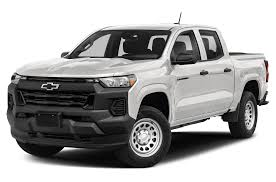
Chevrolet initiated a dramatic overhaul with the 2023 redesign of the Colorado, fundamentally reshaping its identity. A completely new, larger body sits atop a revised frame, housing an array of new engines, a remarkably attractive and technologically advanced interior, and desirable new configurations. However, this evolution came with a few subtractions. The current Colorado is exclusively offered as a crew cab with a short five-foot bed. The extended cab variant is no longer available, mirroring the discontinuation of the regular cab after the 2012 model year. Furthermore, the choice of bed lengths has been limited to this single option. The well-regarded V6 and the efficient turbodiesel engines have also been phased out. While the diesel was a niche seller, its class-leading towing capacity and impressive fuel economy are now absent.
The powertrain landscape is now dominated by a turbocharged 2.7-liter “L3B” four-cylinder engine, offered in three distinct performance levels. Base models deliver 237 horsepower and 259 pound-feet of torque. The Z71 and Trail Boss trims elevate output to 310 horsepower and 390 pound-feet of torque. The top-tier ZR2 matches the horsepower but boosts torque to a formidable 430 pound-feet. This potent engine, shared with the larger Silverado, is more than capable within the midsize Colorado’s confines, which itself has grown to near full-size dimensions. A responsive eight-speed automatic transmission is standard across all configurations, paired with rear-wheel drive as standard and four-wheel drive as an option. For 2024, Chevrolet upgraded the Z71 and Trail Boss models to feature the high-output engine, rebranded as the TurboMax.
The cabin has undergone a substantial transformation, though surprisingly, rear-seat legroom has not seen a significant increase. Nevertheless, the overall aesthetic and feel are markedly improved, despite the continued use of some hard plastics. A prominent 11.3-inch touchscreen infotainment system is standard, complemented by an 8-inch digital instrument display. An 11.3-inch digital gauge cluster is available as an option. Both displays boast crisp graphics, and Chevrolet’s infotainment system remains intuitive and user-friendly, now featuring integrated Google services. Off-road-focused models benefit from specialized displays that are both functional and informative. The integration of advanced safety features has also been dramatically expanded, with many now standard or available as options, including adaptive cruise control.
The third-generation Colorado is presented in five distinct trims, plus a particularly noteworthy option package. The WT (Work Truck) and LT grades continue their roles as utilitarian and entry-level consumer vehicles, respectively. Above these sit the new Trail Boss, a budget-friendly off-roader that offers significant fun at a compelling price point, making it a strong rival to the Tacoma TRD Off-Road or Frontier Pro-4X. The Z71 trim comes well-appointed with a focus on moderate off-road capability.
Crowning the lineup are the ZR2 and ZR2 Bison models. Both are serious off-road machines capable of competing with or exceeding the performance of the Ford Ranger Raptor and Tacoma TRD Pro. The ZR2 Bison, reintroduced for 2024, adds a host of specialized aftermarket hardware and boasts a rugged aesthetic. However, the ZR2 itself often presents a better value proposition, considering the significant cost of the Bison package.
The Colorado remains largely unchanged for the 2025 model year, with Chevrolet introducing blacked-out Midnight Editions for select trims and adding blind-zone steering assist with an extended view, a valuable feature for those intending to tow trailers. Furthermore, the TurboMax engine is now the sole powertrain option available.
A brand-new Chevrolet Colorado starts at approximately $32,400, excluding a $2,095 destination charge. Pre-owned examples from the earliest model years of this generation can be found averaging around $34,000, and these might offer a few more optional features than a base model purchased new.
Second Generation: 2014 to 2022 – The Resurgence
Chevrolet’s initial hesitation regarding a successor to the first-generation Colorado meant a global debut in 2011, with a U.S. launch delayed until early 2014 as a 2015 model year. This absence created a significant market gap, with the Toyota Tacoma and Nissan Frontier dominating the midsize segment following the discontinuation of the Ford Ranger in 2011 (before its eventual return in 2019). The arrival of the second-generation Colorado found an open playing field.
While global variants offered a regular cab, the U.S. market exclusively received extended cab models with rear-opening doors and crew cab variants featuring full-size rear doors and increased rear legroom.
In-cabin technology was fairly basic in the early years. Base models featured a rudimentary 4.2-inch screen, while higher trims offered an 8-inch Chevrolet infotainment system that, while easy to use, was straightforward. Apple CarPlay and Android Auto integration became standard with the larger screen from the outset. Later models saw lower trims receive a 7-inch screen and a built-in Wi-Fi hotspot (requiring a data plan).
Two cargo box options were available: the extended cab exclusively featured a long box (74 inches), while the crew cab offered both the long box and a short box (61.7 inches). With approximately 44 inches between the wheel wells, a standard 4×8 sheet of plywood would not lie flat. However, Chevrolet ingeniously incorporated pockets in the bed sides to accommodate 2×6 lumber, allowing a 4×8 sheet to rest above the wheel wells, further supported by a two-tier tailgate design.
Rear-wheel drive was standard, with four-wheel drive optional. The initial powertrain offerings for RWD models included a 2.5-liter four-cylinder gasoline engine (205 hp, 195 lb-ft of torque) or a 3.6-liter V6 (305 hp, 269 lb-ft) in the WT and LT trims. The Z71 and ZR2 models were exclusively 4WD, and their standard engine was the 3.6-liter V6.
A significant addition arrived in 2016 with the introduction of the optional 2.8-liter Duramax turbodiesel engine. Producing 181 horsepower and a substantial 369 lb-ft of torque, this diesel powerplant delivered a class-leading 7,700-pound towing capacity (the V6 managed 7,000 pounds) and achieved up to 31 mpg on the highway, an exceptional figure for a midsize pickup. Powertrain pairings included a six-speed automatic with the four-cylinder, an eight-speed with the V6, and a unique six-speed with the diesel.
Prior to 2020, a distinct “base” trim was offered. That year, the WT trim became the entry-level offering, featuring a four-way power driver seat, a 7-inch color touchscreen, comprehensive airbags, electronic stability and traction control, manual folding mirrors, a locking tailgate, the CornerStep rear bumper, and black moldings. The LT trim added a body-color rear bumper, mirror caps, and door handles, along with 17-inch alloy wheels, an 8-inch touchscreen, remote keyless entry, and the EZ-Lift & Lower tailgate.
The performance-oriented Chevrolet Colorado Z71 included an off-road suspension package, an automatic locking rear differential, skid plates, unique wheels with all-terrain tires, automatic climate control, driver power lumbar support, and wireless charging.
At the apex of the lineup, the Chevrolet Colorado ZR2 boasted a rugged Off-Road Appearance Package, an enhanced off-road suspension with Multimatic DSSV Dampers, increased ground clearance and track width, a spray-on bedliner, unique front styling, a black rear bumper, wheel flares, larger all-terrain tires, leather front seats, and a four-way power passenger seat. In 2019, Chevrolet introduced the ZR2 Bison package, incorporating more extreme off-road equipment from the aftermarket specialist American Expedition Vehicles (AEV). This package has since reappeared on the third-generation Colorado.
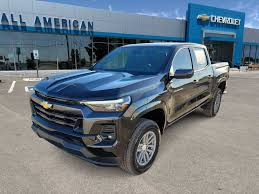
Access to advanced safety features generally required stepping up from the base trim, with the exception of the federally mandated rearview camera. A high-definition camera was standard on the Z71. LT and Z71 models offered optional lane-departure warning and forward-collision warning. Rear park assist was standard on the Z71 and available as part of a package on the LT. Despite these offerings, the Colorado lagged behind competitors like the Toyota Tacoma in the breadth and quality of its standard active safety systems during this era.
The promise of better fuel economy in a smaller truck is generally met, with most Colorado models achieving better MPG than the Silverado 1500. However, the ZR2 trim, in crew cab configuration with the V6 and 4WD, delivered a rather modest EPA estimate of 17 mpg combined. This figure improved to 23 mpg with the 2.8-liter diesel engine.
This generation of the Colorado is not without its reliability concerns, primarily stemming from early transmission issues. Models produced from 2014 to 2019, and even some later examples, have exhibited recurrent problems with their eight-speed automatic transmissions, including shuddering, jerking, clunking, failure to engage, and complete failure, leading to a class-action lawsuit. Early models also faced issues with their HVAC systems, and some owners reported problems with the V6 engine. While later models are largely free of these specific transmission woes, owners still occasionally report rough shifting.
Overall, the Colorado is a capable companion offering good value, but it’s advisable to steer clear of the base four-cylinder models and WT trims if maximum performance and refinement are desired. For a pure work truck, the 2019 and newer Ford Ranger base models might offer a more compelling package. The Colorado’s true strengths lie in its mid-range and higher trims, which strike an excellent balance between performance and utility. Earlier models in good condition can be found for approximately $15,000 to $20,000, with top-tier ZR2 models commanding a premium. Post-2018 trucks generally start around $20,000, with 2022 ZR2 and ZR2 Bison variants potentially reaching into the low $40,000 range.
First Generation: 2004 to 2012 – The Foundation
The debut of the first-generation Chevrolet Colorado in 2004 marked the end of an era for the S-10, a pickup that had been a staple since 1982. Collaboratively engineered by GM’s Brazilian division and Isuzu, the Colorado was designed for global appeal and found its way onto streets worldwide under various GM banners, including Holden in Australia and New Zealand. Domestically, it shared its platform with the GMC Canyon and briefly with the Isuzu i-Series.
This initial Colorado was offered in three cab configurations: regular, extended, and crew. The regular and extended cabs featured a six-foot bed, while the crew cab’s bed was reduced to five feet. A unique, though rarely ordered, side-access door was also a feature, a nod to GM pickups of decades past. All models were available in either rear-wheel or four-wheel drive configurations.
Chevrolet provided three distinct suspension options: the lowered ZQ8 street-truck variant (RWD only), the standard Z85 suspension, and the lifted Z71 off-road suspension. These options significantly influenced the truck’s appearance and capability. The ZQ8 models sported performance-oriented styling with color-coded bumpers and distinctive wheels, while the Z71s boasted fender flares and larger tires, clearly signaling their off-road prowess.
Early Colorado pickups were equipped with either a 2.8-liter inline four-cylinder or a 3.5-liter inline five-cylinder engine. This made the Colorado and its siblings the only pickups in the U.S. to offer a five-cylinder engine during that period. A significant update in 2007, coinciding with a facelift, introduced two new engines to replace the 3.5-liter: a 2.9-liter inline four-cylinder and a 3.7-liter inline five-cylinder. These revised engines were developed in response to earlier powertrain concerns, including issues with valve seals, cylinder heads, and overheating.
The initial trim levels were Base and LS. The Base models were decidedly spartan, featuring a basic AM/FM stereo, manual locks, and a fixed steering column, though air conditioning and power steering were standard. The LS offered an upgraded audio system, power windows and locks, a tilt steering wheel, and a host of comfort and convenience amenities. Later in the generation, the LT trim was introduced, offering a middle ground between the Base and LS, alongside a more premium LTZ trim.
By 2009, Bluetooth hands-free phone connectivity was added, and the single-disc CD player was replaced by a six-disc changer for most trims above Base. Various sizes of aluminum wheels became standard across most models, excluding the Base trim’s steel wheels. SiriusXM satellite radio and OnStar subscription services were also increasingly available.
Pre-2007 Colorados are known for a variety of common and somewhat persistent issues. The valve seats in these early models were not sufficiently hardened, leading to poor valve sealing, illuminated check engine lights, and engine misfires. The only true solution involved a costly cylinder head rebuild. On the five-cylinder engines, head warping or cracking due to overheating was also a concern. The HVAC blower motor was another frequent point of failure, alongside consistent issues with the emissions system and wiper motors. While cylinder head problems were significant, most other issues were relatively straightforward to address, and later trucks were not plagued by the head issue. However, all first-generation Colorados are susceptible to rust.
Finding a first-generation Colorado is generally not difficult, and they remain quite affordable. Well-maintained examples with under 100,000 miles can typically be found for roughly $9,000 to $15,000. While this represents a significant investment for an aging vehicle, it is considerably less than what a comparable Toyota Tacoma might command. Furthermore, the first-generation Colorado’s physically smaller dimensions and broader range of cab configurations make it the prime choice for those seeking a genuinely compact pickup truck.
Your Next Step Towards Colorado Ownership
As you weigh your options, remember that the Chevrolet Colorado offers a compelling blend of capability, evolving technology, and value across its generations. Whether your priorities lean towards rugged off-road prowess, dependable daily driving, or efficient towing, there’s a Colorado model that can meet your needs.
Ready to explore the perfect Chevrolet Colorado for your lifestyle? Visit your local Chevrolet dealership or a trusted pre-owned vehicle marketplace today to test drive the model that best suits your requirements. Don’t let this opportunity for capable and affordable truck ownership pass you by!