
The Savvy Buyer’s Blueprint: Navigating the Chevrolet Colorado’s Landscape
For over two decades, the Chevrolet Colorado has carved out a significant niche in the midsize pickup truck segment. Evolving from its S-10 roots, the Colorado has consistently aimed to deliver a compelling blend of utility, capability, and modern design. As an industry professional with a decade of experience witnessing the evolution of this segment, I’ve seen firsthand how the Colorado has adapted to changing market demands, technological advancements, and consumer expectations. This comprehensive guide aims to equip you with the knowledge to make an informed decision when considering a Chevrolet Colorado, focusing on cost-effectiveness, long-term reliability, and identifying the most advantageous model years to invest in.
The journey of the Chevrolet Colorado began in 2004, stepping into the shoes of the venerable S-10. Chevrolet’s strategy, in collaboration with GM’s Brazilian arm and Isuzu, was to create a more substantial, midsize offering that could cater to a broader spectrum of needs. This global development approach meant the platform was shared across various markets, appearing as the Holden Colorado in Australia and New Zealand, and even as an Isuzu model in other regions. Domestically, its mechanical twin, the GMC Canyon, mirrored its design, with Isuzu briefly offering its own iteration as the i-Series.
From its inception, the first-generation Chevrolet Colorado presented a distinct visual appeal, often perceived as larger and more stylistically assertive than its primary competitor, the Toyota Tacoma of the era. While its interior appointments were somewhat rudimentary and its base engine lacked the robust power of later iterations, its exterior design was a clear strong point. Chevrolet offered a versatile lineup from the outset, including lowered sport truck variants and the capable Z71 off-road package. For its time, the first Colorado boasted respectable utility, with a maximum payload capacity of 1,733 pounds and a towing capacity of 4,000 pounds. While these figures seem modest by today’s standards, they represented a solid foundation that would be progressively enhanced in subsequent generations.
A significant refresh for the first-generation Colorado arrived in 2008, refining its aesthetics and features, and this iteration remained in production until 2012. Despite its updates, sales momentum had begun to wane. Chevrolet, recognizing the enduring appeal of the midsize segment, embarked on a complete overhaul, introducing a dramatically redesigned second-generation Colorado for the 2015 model year. This new iteration, also conceived internationally and initially unveiled in Thailand in 2011, underwent substantial modifications for the North American market, ensuring it resonated with American tastes and priorities. Crucially, its manufacturing was brought back to the United States. The second-generation Colorado marked a significant leap forward in powertrain options. Chevrolet introduced a potent V6 engine and an exceptionally fuel-efficient, torque-rich turbodiesel, boasting a remarkable towing capacity of up to 7,700 pounds – a figure that rivaled some full-size trucks at the time of its debut in 2014.
The most recent transformation arrived with the third generation, redesigned for the 2023 model year. This latest iteration saw Chevrolet streamline its powertrain offerings, discontinuing the diesel and V6 engines in favor of sophisticated turbocharged four-cylinder gasoline engines. Alongside these mechanical upgrades, the 2023 Colorado received a significant infusion of active safety technologies and a substantially modernized interior, addressing key areas that drew criticism in the preceding generation. Today, the current Chevrolet Colorado stands as a formidable contender in its class, directly challenging recently redesigned rivals like the Toyota Tacoma, Nissan Frontier, and Ford Ranger. It also competes, albeit with some distinctions, against other midsize trucks such as the Honda Ridgeline and Jeep Gladiator, with the specialized Colorado ZR2 Bison proving particularly adept in off-road environments, capable of standing toe-to-toe with the most formidable adversaries.
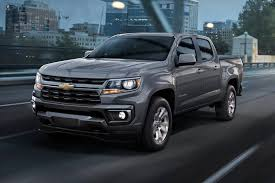
While the Colorado has progressively grown in size, it still maintains a more manageable footprint than its larger Silverado sibling, offering the distinct advantage of fitting more comfortably into smaller garages. Understanding the nuances of each generation is paramount to selecting the best Chevrolet Colorado to buy. This guide will delve into the specifics of each generation, providing insights into potential pitfalls, desirable features, and realistic cost expectations for a used Chevrolet Colorado.
Chevrolet Colorado Buying Guide: Cost, Reliability, and the Best Years to Buy
Navigating the used truck market requires a discerning eye, and when it comes to the Chevrolet Colorado value, understanding its historical performance is key. Let’s break down the generations and offer practical advice for prospective buyers.
Third Generation (2023-Present): The Modern Marvel
Chevrolet’s complete redesign for the 2023 model year represents a significant evolution for the Colorado. The new chassis and larger body shell provide a more substantial presence, complemented by an array of fresh powertrains and a decidedly upscale, tech-forward interior. However, this modernization comes with some trade-offs.
The current Colorado is exclusively offered in a Crew Cab configuration with a short bed (61.2 inches). The extended cab and regular cab options from previous generations have been discontinued, meaning there’s no longer a choice in bed length. The robust V6 and economical turbodiesel engines have also been retired, though the diesel, despite its niche appeal, did offer impressive towing and fuel efficiency.
Powering the 2023 Colorado are three variants of a turbocharged 2.7-liter four-cylinder engine, known internally as the “L3B.” The base models produce 237 horsepower and 259 lb-ft of torque. Stepping up to the Z71 and Trail Boss trims elevates performance to 310 horsepower and 390 lb-ft of torque. The top-tier ZR2 shares the horsepower rating but boasts an increased torque output of 430 lb-ft. This engine, also found in the full-size Silverado, offers ample grunt for the midsize Colorado, though the truck itself now encroaches on full-size dimensions. All powertrains are paired with a responsive and efficient eight-speed automatic transmission. Rear-wheel drive is standard, with four-wheel drive available. For 2024, Chevrolet integrated the higher-output engine as standard on Z71 and Trail Boss models, rebranding it as the “TurboMax” engine.
The interior has been thoroughly revamped, offering a more premium feel despite the continued use of some hard plastics. Rear-seat legroom remains similar to the previous generation. A large 11.3-inch touchscreen infotainment system is standard, paired with an 8-inch digital instrument display. An optional 11.3-inch digital gauge cluster offers enhanced customization. The graphics are crisp, and Chevrolet’s infotainment system is intuitive, featuring integrated Google services for seamless navigation and connectivity. Off-road trims include specialized, functional displays for enhanced trail driving. A significant increase in standard and optional active safety features, including adaptive cruise control, further enhances the Colorado’s appeal.
The third-generation Colorado is available in five distinct trims: WT (Work Truck), LT, Trail Boss, Z71, and ZR2. The WT and LT cater to value-conscious buyers, while the new Trail Boss offers a capable and stylish off-road package at a competitive price, rivaling the Tacoma TRD Off-Road and Frontier Pro-4X. The Z71 provides a balanced approach with off-road enhancements, and the ZR2, along with its more specialized ZR2 Bison variant (reintroduced for 2024), represents the pinnacle of off-road performance, capable of challenging models like the Ford Ranger Raptor. While the ZR2 Bison offers extensive factory-installed off-road accessories, the standard ZR2 often presents a better value proposition.
For the 2025 model year, Chevrolet has introduced Blackout Midnight Editions across several trims and has added blind-zone steering assist with extended view for trailer towing. The TurboMax engine is now the sole powertrain option.
When considering a new Chevrolet Colorado price, expect a starting MSRP around $32,400, plus a $2,095 destination charge. For early, pre-owned third-generation models, prices typically hover around $34,000, offering the potential to acquire a vehicle with desirable optional features at a slight discount compared to a brand-new base model.
Second Generation (2015-2022): The Resurgent Contender
Chevrolet’s initial hesitation in launching a successor to the first-generation Colorado meant that the second generation, developed internationally and revealed in 2011, didn’t reach U.S. shores until early 2014 as a 2015 model. This timing proved advantageous, as the midsize truck market was experiencing a resurgence, with the Toyota Tacoma and Nissan Frontier showing their age. The Ford Ranger had been absent from the U.S. market since 2011, creating a significant opening for the redesigned Colorado.
In the U.S., the second-generation Colorado was offered in Extended Cab and Crew Cab configurations. The Extended Cab featured reverse-opening rear doors, while the Crew Cab offered conventional doors and increased rear passenger space. The regular cab option, available globally, was not offered stateside.
Interior technology was functional but basic in the early years. Base models featured a 4.2-inch infotainment screen, while higher trims received an 8-inch system with Chevrolet’s infotainment interface. Apple CarPlay and Android Auto were integrated into the larger screen from launch. Later models saw lower trims gain a 7-inch screen and an available Wi-Fi hotspot (requiring a data plan).
Two bed lengths were available: a long box (74 inches) for the Extended Cab and both long and short (61.7 inches) boxes for the Crew Cab. While a standard 4×8 sheet of plywood wouldn’t lie flat due to the 44-inch wheel well spacing, Chevrolet incorporated ingenious bed pockets designed to accommodate 2×6 lumber, allowing sheets of plywood to rest above the wheel wells, further supported by a two-tier tailgate design.
Powertrain options were a significant strength of this generation. Standard rear-wheel drive models could be equipped with a 2.5-liter four-cylinder engine (205 hp, 195 lb-ft torque) or an optional 3.6-liter V6 (305 hp, 269 lb-ft torque). The Z71 and ZR2 trims, exclusively four-wheel drive, came standard with the V6. In 2016, a highly sought-after 2.8-liter Duramax turbodiesel engine was introduced as an option for higher trims. This diesel unit produced 181 hp and a substantial 369 lb-ft of torque, enabling a class-leading 7,700-pound towing capacity (the V6 offered 7,000 lbs). Its fuel economy was also exceptional for the segment, achieving up to 31 mpg on the highway. All Colorados featured automatic transmissions: a six-speed with the four-cylinder, an eight-speed with the V6, and a unique six-speed with the diesel.
Trim levels evolved over the years. Prior to 2020, a distinct “Base” trim existed. From 2020 onwards, the WT (Work Truck) served as the entry-level offering, equipped with essential features like a power-adjustable driver’s seat, a 7-inch touchscreen, and comprehensive safety airbags. The LT trim added cosmetic enhancements like body-color accents, 17-inch alloy wheels, and a remote keyless entry system.
The Z71 trim focused on off-road capability with an upgraded suspension, an automatic locking rear differential, skid plates, and all-terrain tires. The flagship ZR2 package was a true off-road enthusiast’s dream, featuring an aggressive appearance, enhanced suspension with Multimatic DSSV dampers, increased ground clearance and track width, a spray-on bedliner, unique front styling, and larger all-terrain tires. The highly coveted ZR2 Bison package, introduced in 2019, added even more rugged, aftermarket-grade off-road components from American Expedition Vehicles.
While the Colorado offered some advanced safety features, they were generally reserved for higher trims, with only a rearview camera being federally mandated standard. Lane departure warning and forward collision warning were available on LT and Z71 models, with rear park assist standard on Z71. Compared to rivals like the Toyota Tacoma of the same era, the Colorado’s suite of active safety systems was less comprehensive.
Fuel economy varied significantly by powertrain. While better than many full-size trucks, the V6, 4WD Crew Cab ZR2 achieved a modest EPA-estimated 17 mpg combined. The diesel, however, significantly improved this figure to 23 mpg combined.
Reliability is a critical consideration for used Chevrolet Colorado models. This generation is known for transmission issues, particularly in models manufactured between 2014 and 2019, and occasionally extending to later years. These problems manifested as vibrations, clunks, engagement failures, and even complete transmission failure, leading to a class-action lawsuit. Early models also experienced HVAC system issues, and some V6 engines encountered problems. While later models generally improved, owners still reported rough shifting.
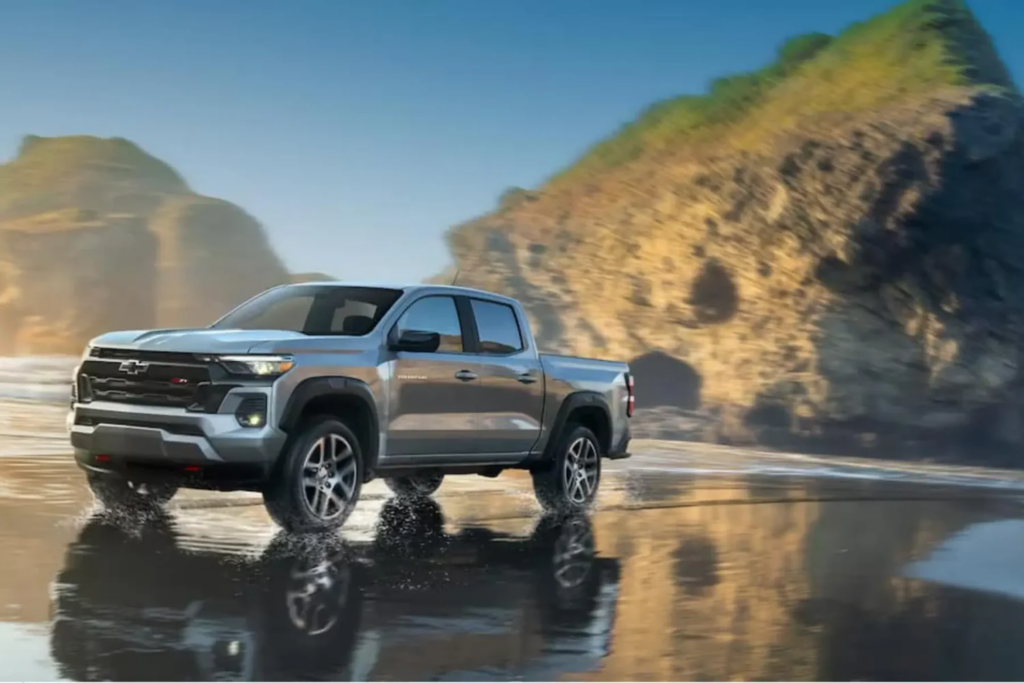
Despite these potential issues, the Chevrolet Colorado reliability can be quite good if you target the right years and powertrains. We strongly advise against the base four-cylinder engines and WT trims, which often felt underpowered and less refined compared to rivals like the Ford Ranger. The V6, five-cylinder (for the few remaining in existence), Z71, and especially the Duramax diesel models represent the best value and performance in the used market. Early models (pre-2018) can be found for roughly $15,000 to $20,000 in good condition, with ZR2 models commanding a higher price. Post-2018 trucks generally start around $20,000, with later ZR2 and ZR2 Bison models reaching into the low $40,000s for 2022 examples.
First Generation (2004-2012): The Trailblazer
The original Chevrolet Colorado emerged as a successor to the compact S-10, which had been in production since 1982. Chevrolet’s global development strategy, alongside GM Brazil and Isuzu, resulted in a truck sold worldwide under various GM brands, including Holden in Australia and New Zealand, and as the GMC Canyon and Isuzu i-Series in the U.S.
This generation offered a broader range of cab and bed configurations than its successors. Regular and Extended Cab models featured a six-foot bed, while the Crew Cab came with a slightly shorter five-foot bed. A unique, albeit rarely ordered, side access door was a notable feature. Rear-wheel drive and four-wheel drive were available across the lineup.
Suspension options provided distinct driving characteristics: the ZQ8 offered a lowered, street-tuned stance; the standard Z85 delivered a balanced ride; and the Z71 provided a lifted, off-road-oriented setup. Visually, these differences were accentuated by color-coded bumpers and distinct wheel designs for the ZQ8, and fender flares and larger tires for the Z71.
Initial powertrains included a 2.8-liter inline four-cylinder and a 3.5-liter inline five-cylinder engine. This five-cylinder option was unique in the U.S. pickup market. Following criticism regarding reliability, Chevrolet updated the engines in 2007 with a facelift, introducing a 2.9-liter four-cylinder and a 3.7-liter five-cylinder. These engines aimed to resolve issues such as valve seal problems, cylinder head warping, and overheating that plagued earlier units.
Trim levels started with the basic Base trim, which included essential amenities like air conditioning and power steering. The LS trim added convenience features such as power windows, locks, and a better audio system. Later, the LT and LTZ trims were introduced, offering a more refined experience. By 2009, Bluetooth hands-free connectivity became available, and most trims above Base received a six-disc CD changer. Various aluminum wheel sizes became standard, and options like SiriusXM satellite radio and OnStar were increasingly common.
Reliability is a significant concern for early Chevrolet Colorado models (pre-2007). Common issues included valve seat wear, leading to poor sealing and check engine lights. Cylinder head warping, cracking, and overheating were also prevalent on the five-cylinder engines. HVAC blower motor failures and recurring emissions system problems were also reported. Rust can be an issue on all first-generation Colorados. While most of these problems, apart from cylinder head issues, are relatively inexpensive to fix, they can add up. Later models (post-2007) generally addressed the cylinder head durability problems.
Despite these potential issues, first-generation Colorados can be a compelling value. You can often find well-maintained examples with under 100,000 miles for roughly $9,000 to $15,000. This represents a considerably lower cost of entry compared to a comparable Toyota Tacoma. If your priority is a genuinely compact, maneuverable pickup truck with a wide range of configurations, the first-generation Colorado remains an excellent choice.
Frequently Asked Questions About the Chevrolet Colorado
Which Chevrolet Colorado Years Are the Best?
The sweet spot for reliability and value often lies in the later years of each generation once initial kinks were ironed out. For the first generation, the 2007-2012 models are generally considered robust and dependable. In the second generation, the 2017-2022 models offer a much-improved reliability record and are more affordable than their earlier counterparts. The jury is still out on the third-generation models, but early indicators suggest good reliability, coupled with significantly more modern features and an upscale interior experience.
What Are the Worst Chevrolet Colorado Years?
The early years of both the first and second generations are best approached with caution. This includes trucks from 2002-2006 (first generation) and 2014-2019 (second generation). While many issues from the early first-gen have likely been addressed by now, the inherent engine and cylinder head problems were notable. The second generation’s primary concern was its eight-speed automatic transmission, with widespread reports of rough shifting and failure. Engine and HVAC issues were also more common in these earlier models.
Is a Used Chevrolet Colorado a Good Deal?
Yes, a used Chevrolet Colorado can be an excellent deal, but careful selection is paramount. They generally offer more towing and payload capacity than a Toyota Tacoma for less money and are more spacious than many Nissan Frontiers. However, understanding the specific reliability concerns of each generation is crucial. The V6, Duramax diesel, and Z71/ZR2 variants typically offer the best performance and value in the used market, often outperforming their base model counterparts.
Chevrolet Colorado Pros and Cons
Pros:
Balanced Utility and Comfort: Offers a commendable blend of everyday comfort and practical utility.
Diverse Powertrain Options: Historically, a range of capable engines, including potent V6s and efficient diesels.
Strong Towing Capability: Particularly in higher trims and diesel variants, offering impressive towing capacities.
Cons:
Transmission Woes (Second Gen): Early second-generation models were plagued by transmission reliability issues.
Underpowered Base Engines: Base four-cylinder engines, especially in earlier generations, often felt lacking in power.
Interior Quality (Early Generations): Early models suffered from a less premium interior feel compared to some rivals.
Making Your Purchase: The Road Ahead
The Chevrolet Colorado has proven itself to be a versatile and evolving player in the midsize truck segment. Whether you’re drawn to the rugged capability of the ZR2, the workhorse nature of the WT, or the balanced approach of the LT and Z71, understanding the generational strengths and weaknesses is your most valuable tool. By focusing on the recommended model years and powertrains, and being aware of potential reliability concerns, you can confidently navigate the used market and secure a Chevrolet Colorado for sale that perfectly aligns with your needs and budget.
If you’re ready to explore your options and discover the best deals on Chevrolet Colorado trucks near you, take the next step. Research specific listings, schedule test drives, and don’t hesitate to consult with trusted mechanics for a pre-purchase inspection. Your ideal Chevrolet Colorado awaits.