
Navigating the Landscape: Your Definitive Chevrolet Colorado Buying Guide for 2025
For over two decades, the Chevrolet Colorado has carved out a significant niche in the midsize pickup truck segment. More than just a successor to the long-standing S-10, the Colorado represents Chevrolet’s evolving strategy to deliver a versatile, capable, and increasingly refined truck that balances utility with daily drivability. As an industry professional with a decade immersed in the automotive world, I’ve witnessed firsthand the evolution of this robust machine, its triumphs, its stumbles, and its ongoing quest to meet the diverse needs of American drivers. This comprehensive guide aims to equip you with the knowledge needed to make an informed decision when considering a Chevrolet Colorado, focusing on cost-effectiveness, long-term reliability, and identifying the model years that truly shine.
The initial concept behind the Chevrolet Colorado, launched for the 2004 model year, was global collaboration. Developed with GM’s Brazilian division and Isuzu, it aimed for a platform adaptable across various markets, leading to its appearance as Chevrolet, Holden, and even Isuzu models internationally. Domestically, its stablemate, the GMC Canyon, shared the same underpinnings, underscoring the shared engineering. In its first iteration, the Colorado presented a compelling alternative to established players like the Toyota Tacoma, offering a more substantial footprint and a bolder aesthetic. While its interior was characterized by a certain utilitarian simplicity and its base engine lacked assertive power, its visual appeal and practical capabilities were undeniable. From its inception, Chevrolet offered specialized variants, including lowered sport trucks and the capable Z71 off-road package, catering to a spectrum of buyer desires. This first generation set a precedent for utility, capable of hauling over 1,700 pounds and towing up to 4,000 pounds – figures that, while modest by today’s standards, laid the groundwork for future enhancements in size and capability.
A refresh in 2008 brought incremental improvements to the first-generation Colorado, extending its lifespan until 2012, though market interest had begun to wane. Chevrolet’s decision to re-enter the midsize segment with a completely reimagined model for 2015 marked a pivotal moment. This second-generation truck, initially previewed globally in 2011, underwent significant U.S.-market adaptations, emphasizing American tastes and manufacturing. This iteration elevated the game with a more potent V6 option and, notably, introduced an exceptionally fuel-efficient and torquey Duramax turbodiesel engine, capable of a commendable 7,700 pounds of towing capacity – a figure that rivaled some full-size trucks at the time.
The latest iteration, the third-generation Chevrolet Colorado, arrived for the 2023 model year, signaling a dramatic overhaul. Chevrolet boldly pivoted, discontinuing the V6 and diesel powertrains in favor of sophisticated, turbocharged four-cylinder gasoline engines. This generation also saw a significant infusion of advanced safety technologies and a vastly improved interior, addressing common criticisms of its predecessor. The current Colorado stands at the forefront of its segment, competing robustly with redesigned rivals like the Toyota Tacoma, Nissan Frontier, and Ford Ranger, as well as more distinct competitors such as the Honda Ridgeline and Jeep Gladiator. The off-road prowess of the Colorado ZR2 Bison, in particular, positions it as a serious contender for trail enthusiasts.
While the Colorado has grown in stature over its generations, it retains a more manageable footprint than its larger Silverado sibling, facilitating easier parking and garage storage. This guide will delve into each generation, providing insights into their strengths, weaknesses, potential pitfalls, and optimal purchase points.
Decoding the Decades: Understanding Chevrolet Colorado Generations
Third Generation (2023 – Present): The Modern Evolution
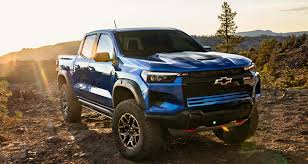
Chevrolet’s complete redesign for the 2023 Colorado represents a leap forward, introducing a larger platform, new powertrains, a strikingly modern interior, and an array of desirable configurations. While this generation prioritizes advanced technology and enhanced features, it also streamlines the lineup. The extended cab and regular cab options have been discontinued, leaving only the crew cab configuration paired with a standard short bed. This also means the elimination of the long bed option. The much-lauded V6 and turbodiesel engines have been retired.
In their place, a turbocharged 2.7-liter “L3B” four-cylinder engine serves across three distinct output levels. Base models deliver a respectable 237 horsepower and 259 lb-ft of torque. The Z71 and Trail Boss trims escalate this to 310 horsepower and 390 lb-ft of torque, while the top-tier ZR2 matches the horsepower but boosts torque to an impressive 430 lb-ft. This engine, shared with the full-size Silverado, provides ample grunt for the midsize Colorado, which now edges towards full-size dimensions. All powertrains are mated to an eight-speed automatic transmission, lauded for its responsiveness and reliability. Rear-wheel drive is standard, with four-wheel drive available as an option. For 2024, Chevrolet unified the engine offerings, making the high-output TurboMax engine (rebranded from the Z71/Trail Boss tune) the sole option across all trims, further simplifying the powertrain landscape.
The interior undergoes a dramatic transformation, boasting a more upscale feel despite the continued use of some hard plastics. A substantial 11.3-inch touchscreen serves as the centerpiece of the infotainment system, complemented by an 8-inch digital instrument cluster as standard, with an optional 11.3-inch digital gauge cluster available. The system’s interface is intuitive, user-friendly, and benefits from Google built-in integration. Off-road variants feature specialized, functional displays. The integration of advanced safety features is a significant upgrade, with many now standard or available, including adaptive cruise control.
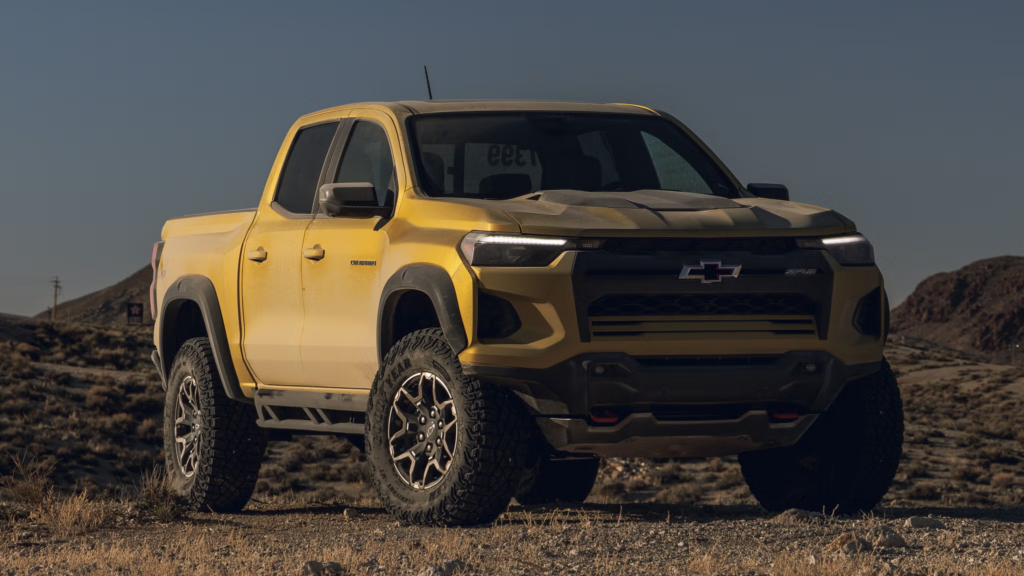
The third-generation Colorado is offered in five primary trims: WT (Work Truck), LT (an entry-level consumer model), Trail Boss (an accessible off-roader), Z71 (focused on moderate off-road capability), and the range-topping ZR2 and ZR2 Bison. The Bison, reintroduced in 2024, adds formidable off-road hardware from American Expedition Vehicles (AEV), though the ZR2 itself often presents a more compelling value proposition. For 2025, the Colorado remains largely unchanged, with minor additions like blacked-out Midnight Editions and enhanced blind-zone steering assist for towing.
New Chevrolet Colorado prices begin around $32,400, excluding destination charges. Early examples of this generation, now appearing on the used market, can be found for approximately $34,000, often featuring higher trim levels and additional options compared to a base new model.
Second Generation (2014 – 2022): The Resurgence and its Challenges
Following an initial period of hesitation after the first generation’s conclusion, Chevrolet reintroduced the Colorado to the U.S. market for the 2015 model year, with production commencing in late 2014. This re-entry coincided with a revival of interest in midsize trucks, as competitors like the Toyota Tacoma and Nissan Frontier had grown long in the tooth.
This generation predominantly offered two cab configurations: the extended cab with rear-hinged rear doors, and the more spacious crew cab with conventional doors and improved rear-seat legroom. Interior technology was functional for its time, featuring a basic 4.2-inch screen on lower trims and an 8-inch Chevrolet Infotainment System on higher models, which included standard Apple CarPlay and Android Auto. Later iterations saw the inclusion of a 7-inch screen and a Wi-Fi hotspot on lower trims.
Cargo bed options included a long box (74 inches) for extended cabs and a choice between the long box and a shorter 61.7-inch bed for crew cabs. While a standard 4×8 sheet of plywood wouldn’t lay flat due to wheel well interference, Chevrolet cleverly incorporated pockets for 2×6 lumber, allowing sheets to rest over the wells.
Powertrain offerings were diverse. Standard rear-wheel-drive models could be equipped with a 2.5-liter four-cylinder (205 hp, 195 lb-ft) or a more potent 3.6-liter V6 (305 hp, 269 lb-ft). Four-wheel-drive was standard on Z71 and ZR2 models, which also featured the V6 as their base engine. A significant addition in 2016 was the 2.8-liter Duramax turbodiesel engine, producing 181 hp and 369 lb-ft of torque. This diesel unit was a standout, enabling a segment-leading 7,700-pound towing capacity and impressive fuel economy, reaching up to 31 mpg on the highway. Transmission choices varied by engine: a six-speed automatic for the four-cylinder, an eight-speed for the V6, and a unique six-speed for the diesel.
Trims evolved, with the WT becoming the entry point, offering essential features. The LT added aesthetic and convenience upgrades, while the Z71 introduced an off-road suspension, locking rear differential, and skid plates. The ultimate expression of off-road capability was the ZR2, featuring advanced Multimatic DSSV dampers, increased ground clearance, and distinctive styling. The ZR2 Bison package, introduced in 2019, further enhanced its trail-ready credentials with robust aftermarket components.
Advanced safety features were not as comprehensively integrated as in contemporary rivals. While a rearview camera was standard, advanced systems like lane departure and forward collision warnings were optional on higher trims. This generation’s safety offerings lagged behind competitors, particularly Toyota’s. Fuel economy, while better than full-size trucks, could be surprisingly modest in ZR2 trim with the V6, around 17 mpg combined. The diesel, however, offered a more frugal proposition.
Reliability is where this generation faced its most significant challenges. The eight-speed automatic transmission was a common source of complaints, exhibiting issues ranging from rough shifting and shuddering to outright failure. These transmission woes led to a class-action lawsuit and tarnished the otherwise promising package. Early models also suffered from HVAC system issues and occasional V6 engine problems. While later models saw improvements, the transmission quirks persisted for some owners.
Despite its reliability concerns, the second-generation Colorado, particularly models from 2017 onwards, can represent a solid value. It’s advisable to bypass the base four-cylinder engines and WT trims, as rivals like the Ford Ranger often excel in those configurations. The Colorado’s strengths lie in its mid-range and higher trims, particularly those equipped with the V6, the turbodiesel, or the Z71 and ZR2 packages. These variants offer a compelling blend of performance and off-road prowess. Expect to find well-maintained examples from $15,000 to $20,000 for earlier models, with top-tier ZR2s from 2022 potentially reaching into the low $40,000s.
First Generation (2004 – 2012): The Foundation of Versatility
The inaugural Chevrolet Colorado replaced the long-serving S-10, marking a significant shift towards a larger, more midsize footprint. Its development was a collaborative effort with GM’s Brazilian arm and Isuzu, resulting in a platform shared globally under various GM brands. In the U.S., it was joined by the GMC Canyon and the Isuzu i-Series.
This generation offered a broader range of configurations, including regular, extended, and crew cabs, each with distinct bed lengths. A unique feature was the optional side access door, a nod to older pickup truck designs. Both rear-wheel and four-wheel drive were available.
Three suspension types catered to different needs: the ZQ8 offered a lowered stance for street performance, the standard Z85 provided balanced utility, and the Z71 delivered enhanced off-road capability with its lifted stance and rugged appearance.
Powertrain options included a 2.8-liter four-cylinder and a 3.5-liter inline-five-cylinder engine. The latter was unique for the segment at the time. In 2007, a refresh introduced updated five-cylinder engines: a 2.9-liter and a 3.7-liter, designed to address earlier reliability concerns related to valve seals, cylinder heads, and overheating. Trim levels ranged from the basic WT to the more equipped LS, with LT and LTZ trims added later to fill market gaps. Features like Bluetooth, satellite radio, and OnStar became available as the generation progressed.
However, this first-generation Colorado is not without its own set of potential issues. Pre-2007 models are particularly susceptible to valve seat wear, leading to persistent check engine lights and misfires. Cylinder head warping, cracking, and overheating issues were also noted on five-cylinder engines. Common points of failure included the HVAC blower motor, emissions systems, and wiper motors. Rust can also be a concern for these older trucks.
Despite these challenges, the first-generation Colorado remains an appealing option for budget-conscious buyers seeking a genuinely compact pickup. They are readily available in good condition with under 100,000 miles, typically ranging from $9,000 to $15,000. Their smaller physical dimensions make them ideal for navigating tight urban spaces and fitting into smaller garages.
Frequently Asked Questions: Your Colorado Queries Answered
Which Chevrolet Colorado Years Are the Best Buys?
The consensus among seasoned owners and automotive experts points towards the later years of each generation as the most reliable and feature-rich. For the first generation, the 2007-2012 models represent a significant improvement over earlier iterations, once the initial powertrain and head gasket issues were addressed. These trucks are generally robust and offer good value.
In the second generation, the 2017-2022 models are considerably more desirable. While the transmission issues were not entirely eradicated, they became less prevalent in later production years, making these trucks a much more dependable choice than their 2014-2016 counterparts.
The third generation, being relatively new, is still establishing its long-term reliability track record. However, early indications suggest a generally solid performance, coupled with modern technology and a refined interior. The 2024 and 2025 models, with the standardized TurboMax engine, offer a more predictable and powerful experience.
What Are the Worst Chevrolet Colorado Years to Avoid?
The early years of each generation are typically where you’ll find the most significant reliability concerns. For the first generation, 2004-2006 models are best approached with caution due to known issues with valve seals, cylinder heads, and overheating.
The initial years of the second generation, specifically 2014-2019, are most affected by the problematic eight-speed automatic transmission. While these issues may have been addressed by now through repairs or recalls, it’s a significant point of concern that warrants thorough inspection.
Is a Used Chevrolet Colorado a Good Deal?
Yes, a used Chevrolet Colorado can absolutely be a good deal, but the value proposition heavily depends on the specific model year, trim level, and condition. Compared to segment leaders like the Toyota Tacoma, the Colorado often offers more towing and payload capacity for a lower purchase price. It also tends to be larger and more spacious than many Nissan Frontier models.
However, potential buyers must be aware of the reliability concerns, particularly with the second-generation transmissions. The base engines and work-truck variants in the second generation can feel underpowered compared to rivals. The sweet spot for value typically lies with the V6-equipped models, the more robust five-cylinder engines in the first generation, the sought-after Duramax diesel, and the off-road-oriented Z71 and ZR2 trims. These configurations provide a more satisfying driving experience and often better long-term durability. Thorough pre-purchase inspections by a trusted mechanic are paramount when considering any used Colorado.
Key Considerations for Buying a Chevrolet Colorado:
Engine Choice: While the turbocharged four-cylinder in the third generation is modern and efficient, the V6 in the second generation offers a more traditional, robust feel. The first-generation five-cylinders, especially the later iterations, are also strong contenders if you can find one well-maintained. The second-gen Duramax diesel is a fuel-sipping powerhouse for those prioritizing efficiency and towing.
Transmission: For the second generation, aim for models with a history of transmission servicing or consider those from 2020 onwards, which may have benefited from factory updates. A pre-purchase inspection focusing on transmission health is non-negotiable.
Trim Levels: For practical use and off-road capability, the Z71 trim offers a commendable balance. The ZR2 variants are true off-road machines, best suited for those who regularly tackle challenging terrain. If your needs are more utilitarian, the WT and LT trims provide a solid foundation.
Condition and Maintenance: Given the nature of pickup trucks, diligent maintenance is key. Look for vehicles with complete service records, especially for any known problem areas like transmissions or cylinder heads. Inspect for signs of heavy use, rust, or damage.
Market Value: Utilize online resources to research pricing trends for the specific model year and trim you’re interested in. Factors like mileage, condition, and location will heavily influence the price.
The Chevrolet Colorado has evolved from a global collaborative effort into a refined, domestically produced midsize truck that continues to impress with its versatility and capability. By understanding its generational nuances, potential pitfalls, and inherent strengths, you can confidently navigate the market and find a Chevrolet Colorado that perfectly aligns with your automotive needs and budget.
As you embark on your search for the ideal Chevrolet Colorado, remember that thorough research and a critical eye are your most valuable tools. Don’t hesitate to ask detailed questions of sellers, conduct comprehensive pre-purchase inspections, and test drive potential candidates extensively. The right Colorado is out there, waiting to become your trusted companion on the road and beyond. Ready to explore your options? Start your search today and discover the enduring appeal of the Chevrolet Colorado.