



Navigating the Legacy: Your Expert Guide to Buying a Used Honda Accord
For decades, the Honda Accord has stood as a titan in the mid-size sedan segment, a beacon of practicality, reliability, and enjoyable driving dynamics. It’s a vehicle that consistently earns its reputation, a testament to Honda’s unwavering commitment to refinement and engineering excellence. As an industry professional with a decade of hands-on experience, I’ve witnessed firsthand the Accord’s evolution, its triumphs, and the occasional curveball. For those seeking a dependable and sophisticated used car, understanding the nuances of each generation is paramount to making a wise investment. This comprehensive guide will equip you with the knowledge to pinpoint the best used Honda Accord years, understand their cost implications, and navigate potential reliability concerns, ensuring you drive away with a vehicle that perfectly matches your needs and budget.
The Enduring Appeal of the Honda Accord
From its humble beginnings as an enlarged Honda Civic, the Accord has steadily matured. Today, it’s officially classified as a “large car” by the EPA, a designation that translates into generous interior volume and a cavernous trunk – a significant advantage for families and anyone hauling substantial cargo. Beyond its practicality, the Accord has always exuded a premium feel, especially in its higher trim levels, often featuring elegant leather upholstery that rivals more expensive luxury marques.
Honda’s dedication to user-friendly technology is another hallmark. Modern Accords boast intuitive infotainment systems, with recent iterations offering seamless wireless Apple CarPlay and Android Auto integration, projected onto vibrant, responsive touchscreens. Safety has always been a cornerstone, with the tenth generation and beyond equipping every model with the comprehensive Honda Sensing suite of advanced driver-assistance systems (ADAS). This suite includes features like adaptive cruise control, lane-keeping assist, and forward collision braking, all designed to enhance driver awareness and mitigate potential accidents. This commitment to safety is consistently recognized by organizations like the Insurance Institute for Highway Safety (IIHS) and the National Highway Traffic Safety Administration (NHTSA), with the Accord regularly earning top safety accolades.
Unpacking the Value: Understanding Honda Accord Pricing and Market Trends
The question of used Honda Accord price is multifaceted, heavily influenced by generation, mileage, condition, and trim level. Generally, the Accord commands a strong resale value, a direct reflection of its enduring appeal and reputation for reliability. When considering a Honda Accord for sale, you’ll find a broad spectrum of options. Newer models, particularly those from the tenth and eleventh generations, will naturally carry a higher price tag. However, their advanced technology, superior safety features, and often lower mileage make them compelling choices for those prioritizing cutting-edge amenities.
As you delve into older generations, the Honda Accord cost of ownership becomes significantly more approachable. For instance, well-maintained ninth-generation Accords can represent exceptional value, offering a blend of modern comforts and proven dependability at a fraction of the price of their newer counterparts. It’s crucial to remember that while the initial purchase price is important, factoring in potential maintenance and repair costs is vital. This is where understanding the reliability of specific model years becomes critical. A slightly higher initial investment in a more reliable generation can often translate into lower long-term ownership expenses, a key consideration for any savvy buyer looking for a reliable used sedan.
For those seeking a budget-friendly option, earlier generations can still be viable, provided they have been meticulously maintained. A cheap Honda Accord might seem appealing, but thorough pre-purchase inspections are non-negotiable. Issues like rust, transmission problems in certain V6 models, or aging electrical components can quickly turn a bargain into a financial burden. Therefore, when searching for Honda Accord deals, prioritize condition and maintenance history above all else.
Decoding Reliability: Identifying the Best and Worst Honda Accord Years
The Honda Accord reliability is a widely celebrated aspect of its legacy. However, like any long-running model, certain years and generations have proven more robust than others. My experience indicates that the best Honda Accord years to buy used generally fall within the ninth (2013-2017) and tenth (2018-2022) generations. These models benefit from Honda’s continued refinement of proven powertrains and extensive use of advanced safety technologies. They offer a compelling balance of modern features, comfort, and dependability, making them excellent choices for families and daily commuters alike.
The eleventh generation (2023-present) continues this tradition, though being the newest, its long-term reliability is still being established. However, given its evolutionary nature and reliance on proven hybrid and turbocharged engine technology from the tenth generation, expectations are high. The 2025 model year enhancements, such as larger infotainment screens and standard wireless smartphone integration on lower trims, further bolster its appeal.
Conversely, the seventh generation (2003-2007) is often cited as a period with notable issues. Specifically, V6 models from these years were susceptible to transmission problems, and buyers should be aware of the ongoing Takata airbag recall which affected many vehicles from this era. While these Accords can be found at very low prices, the potential for significant repair bills, particularly concerning the transmission, makes them a riskier proposition for the average buyer.
When considering a used Honda Accord with high mileage, it’s crucial to assess the maintenance records. A well-maintained vehicle from a generally reliable generation can still offer many more years of service. Conversely, a lower-mileage car with a sparse maintenance history might present more immediate challenges. For those particularly concerned about Honda Accord transmission problems, focusing on four-cylinder models or manual transmission variants in earlier generations, or opting for the hybrid models which utilize different, generally more robust, powertrains, can be a prudent strategy.
A Generation-by-Generation Deep Dive: Your Accord Buying Compass
Eleventh Generation (2023-Present): The Refined Evolution
This latest iteration of the Accord continues its legacy with a focus on refinement rather than radical change. The hybrid powertrain is now standard on most trims, signaling Honda’s commitment to electrification. While the beloved 2.0-liter turbocharged engine is no longer available, the 1.5-liter turbo from the outgoing generation continues, paired with a CVT. The interior receives a significant upgrade with stylish metal trim and a more integrated infotainment system, now standard with wireless Apple CarPlay and Android Auto. All models benefit from the comprehensive Honda Sensing suite. The 2025 model year brings further refinements, enhancing the value proposition.
Pros: Advanced safety, refined interior, standard hybrid powertrain (most trims), excellent fuel efficiency.
Cons: Limited powertrain options (no 2.0T), 1.5T engine is carried over.
What to Look For: The hybrid models offer the best blend of performance and efficiency. The SE trim is a particularly good value for 2025.
Tenth Generation (2018-2022): The Modern Resurgence
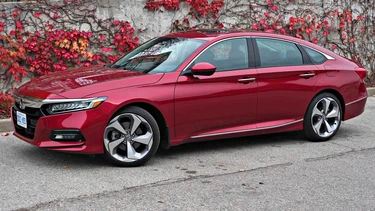
This generation marked a significant redesign, with a sleeker aesthetic and a more upscale interior. Gone were the V6 and coupe body styles, replaced by a lineup of turbocharged four-cylinder engines. The 1.5-liter turbo offered good efficiency, while the potent 2.0-liter turbo, sourced from the Civic Type R, provided exhilarating performance, especially when paired with the available six-speed manual transmission—a rare gem for enthusiasts. The Accord Hybrid also saw improvements. While early models had some minor HVAC and Bluetooth glitches, later years are remarkably solid. The 2021 facelift brought subtle styling tweaks and continued the trend of robust reliability.
Pros: Engaging driving dynamics, powerful 2.0T engine option, spacious and premium interior, excellent safety features.
Cons: Manual transmission discontinued after 2021, no V6 option.
What to Look For: The Honda Accord 2.0T Sport with the manual transmission is a highly sought-after enthusiast vehicle. For everyday use, any well-maintained 1.5T or Hybrid model is an excellent choice. The 2021-2022 facelifted models are particularly desirable.
Ninth Generation (2013-2017): The Tech-Forward Transition
The ninth generation represented a more evolutionary step, maintaining the Accord’s core strengths while incorporating new technologies. The four-cylinder engines gained direct injection and were paired with CVTs, enhancing fuel economy. The V6 engine received a power bump. Notably, this generation saw the return of Apple CarPlay and Android Auto integration after its 2016 facelift, a significant leap in infotainment capability. The Accord Hybrid also reappeared, offering impressive fuel efficiency.
Pros: Strong fuel economy, comfortable ride, introduction of modern infotainment features.
Cons: Some starter issues reported on early four-cylinder models, some V6 models may require attention.
What to Look For: The 2016 and 2017 models, post-facelift, offer the most advanced features. The V6 coupe with a manual transmission is a rare and rewarding find for driving enthusiasts.
Eighth Generation (2008-2012): The Spacious and Refined Era
This generation saw the Accord grow in size, solidifying its “large car” status. It offered a range of smooth four-cylinder and V6 engines, with the V6 models providing a near-luxury experience. Safety was a key focus, with standard electronic stability control and other advanced features. While the hybrid powertrain was absent during this period, the four-cylinder models still delivered respectable fuel economy.
Pros: Generous interior space, comfortable ride, strong V6 performance.
Cons: Some early models experienced premature brake wear, airbag issues on some 2008-2009 models.
What to Look For: The EX-L V6 trim offers a well-appointed interior. The V6 coupe with a manual transmission is a unique and desirable configuration.
Seventh Generation (2003-2007): The Powerful but Problematic Interlude
This generation sported a more aggressive, wedge-shaped design and saw upgrades to both the four-cylinder and V6 engines. The V6 was offered with a six-speed manual in the coupe, making it a surprisingly sprightly performer. The Accord Hybrid was introduced, offering enhanced power rather than pure fuel economy. However, this generation is widely recognized for its transmission issues, particularly on V6 automatic models, and the pervasive Takata airbag recall.
Pros: Potent V6 engine option, engaging handling on coupe models.
Cons: Significant transmission reliability concerns on V6 automatic models, Takata airbag recall.
What to Look For: If considering this generation, strongly favor four-cylinder models or those with a manual transmission. Thoroughly inspect any V6 automatic.
Sixth Generation (1998-2002): The American-Made Expansion
The sixth generation saw the Accord grow again, becoming one of the roomiest mid-size sedans. It introduced a new 3.0-liter V6 and was the first Accord to be predominantly manufactured in the U.S. The styling became more reserved for the sedan, while the coupe adopted a sleeker, more athletic appearance. While the four-cylinder models remained reliable, the V6 models, particularly those with the automatic transmission, were subject to significant reliability concerns and even class-action lawsuits.
Pros: Ample interior space, smooth V6 engine, improved automatic transmission shifts over previous generations.
Cons: Automatic transmission failures common on V6 models, Takata airbag recall on later years.
What to Look For: Four-cylinder models are the most reliable. Avoid V6 models with automatic transmissions if possible.
Fifth Generation (1994-1998): The North American Focus
This generation was the first specifically designed for the North American market. It offered a more refined driving experience with a double-wishbone suspension and the introduction of a V6 engine. The Accord also came in sedan, coupe, and wagon body styles, catering to a wider audience. Reliability was generally good, though speedometer sensors and wheel bearings could be wear items. A significant concern for this era was their popularity among car thieves.
Pros: Engaging handling, comfortable ride, V6 power option.
Cons: Susceptible to theft, speedometer sensor and wheel bearing issues can arise.
What to Look For: Focus on models with a good maintenance history. Consider aftermarket security systems if purchasing.
Fourth Generation (1990-1993): The Aerodynamic Evolution

This generation embraced a more aerodynamic design, eschewing pop-up headlights for fixed units. The Accord continued to grow in size, offering increased passenger space. The engine lineup consisted of a reliable 2.2-liter inline-four. While generally dependable, rust can be a concern for models in areas with harsh winters, and automatic transmission control units (TCUs) could develop issues.
Pros: Reliable engine, improved aerodynamics, spacious interior.
Cons: Rust potential in snowy climates, TCU issues on automatic models.
What to Look For: Inspect for rust, especially on the undercarriage and wheel wells.
Third Generation (1986-1989): The “Poor Man’s BMW”
With its improved aerodynamics, quiet ride, and precise handling thanks to its double-wishbone suspension, the third-generation Accord earned the nickname “the poor man’s BMW.” Engines were enlarged to 2.0 liters. This generation was incredibly popular, contributing to Honda’s manufacturing expansion. Reliability was generally strong, and these models are often sought after by collectors for their classic styling.
Pros: Excellent handling for its era, quiet and comfortable ride, iconic styling.
Cons: Parts availability can be a challenge for restoration.
What to Look For: Condition is paramount, as parts can be scarce.
Second Generation (1982-1985): The American Debut
The second generation marked the first time the Accord was produced in America. It featured sleeker styling and was available as a sedan or hatchback. While mechanically similar to the first generation, the interior received a more aesthetically pleasing update. This era saw the Accord achieve widespread popularity and critical acclaim, making it a benchmark for Japanese compact cars. However, finding well-preserved examples today can be challenging due to the age and high demand.
Pros: Critically acclaimed, reliable for its time, good fit and finish.
Cons: Difficult to find in good condition, parts scarcity, potential carburetor and vacuum line issues.
What to Look For: Thorough mechanical inspection is essential.
First Generation (1976-1981): The Genesis of an Icon
Born out of Honda’s need for a larger vehicle in the U.S. market, the first-generation Accord was based on the Civic platform but featured a slightly larger engine and impressive fuel economy, a major selling point during the 1970s oil crisis. It established Honda as a brand synonymous with value, offering a comfortable, stylish, and competent package. These early Accords are now highly collectible, and finding good examples can be difficult.
Pros: Exceptional fuel economy, handsome styling, great value proposition.
Cons: Very difficult to find in good condition, parts scarcity, collector status driving up prices.
What to Look For: Condition and originality are key for these classic vehicles.
Beyond the Purchase: Maintaining Your Used Honda Accord
Once you’ve identified the perfect used Honda Accord for your needs, consistent maintenance is the key to unlocking its full potential and longevity. Adhering to Honda’s recommended service schedule is paramount. This includes regular oil changes, filter replacements, and inspections of critical components like brakes, tires, and suspension. For those considering a Honda Accord hybrid, specialized knowledge of the hybrid system’s maintenance requirements is crucial.
When searching for Honda Accord parts, opting for OEM (Original Equipment Manufacturer) parts or high-quality aftermarket alternatives will ensure continued reliability and performance. Engaging with reputable mechanics who specialize in Honda vehicles can also make a significant difference. Their expertise can help identify potential issues before they become major problems, saving you time and money in the long run.
Your Next Step Towards Accord Ownership
The Honda Accord’s enduring appeal is a testament to its consistent delivery of quality, reliability, and driving satisfaction. Whether you’re drawn to the cutting-edge technology of the latest models or the classic charm of an earlier generation, there’s a used Honda Accord waiting to be discovered. By arming yourself with the knowledge of model-specific strengths and weaknesses, understanding market pricing, and committing to diligent pre-purchase inspections and ongoing maintenance, you are well-positioned to make an informed decision.
Ready to experience the Honda Accord difference firsthand? Start your search today by exploring local dealerships and online marketplaces for the generation that best suits your lifestyle and budget. Don’t hesitate to schedule test drives and engage with knowledgeable sales professionals to ensure your chosen Accord becomes a trusted companion for years to come.
