
The Enduring Legacy of the Honda Accord: A 2025 Buyer’s Guide to Value, Reliability, and Iconic Generations
For nearly five decades, the Honda Accord has stood as a steadfast beacon in the mid-size sedan segment, a benchmark against which countless others have been measured. It’s a vehicle that has consistently delivered on the promise of reliable, safe, and engaging transportation, earning the unwavering loyalty of American drivers. This isn’t just a car; it’s a phenomenon, a testament to Honda’s relentless pursuit of refinement, an evolutionary masterpiece that has adapted and excelled through an ever-changing automotive landscape. As an industry expert with a decade immersed in the nuances of the automotive market, I’ve witnessed firsthand the Accord’s remarkable journey, and for those considering a pre-owned Honda Accord, navigating its rich history is key to unlocking exceptional value and enduring satisfaction.
The Accord’s genesis as an upsized Honda Civic belies its current stature. It has systematically grown, not just in physical dimensions, but in its perceived quality and capability, earning the EPA’s “large car” designation. This generous footprint translates into an exceptionally spacious cabin, offering ample legroom for rear-seat occupants and a cavernous trunk that rivals many larger vehicles. Step inside, and the Accord consistently punches above its weight class, often providing a near-luxury experience, particularly in its higher trim levels adorned with supple leather. Honda’s commitment to user-friendly technology is also a hallmark. Modern Accords boast intuitive infotainment systems, featuring crisp, responsive touchscreens that seamlessly integrate with wireless Apple CarPlay and Android Auto, keeping drivers connected and entertained without distraction.
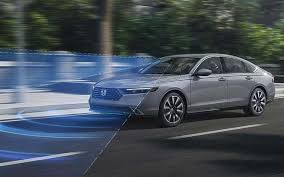
Beyond creature comforts, Honda has consistently leveraged technology to enhance safety. The tenth generation marked a significant milestone, making the comprehensive Honda Sensing suite of active safety features standard across all trims. This suite, encompassing advanced driver-assistance systems like adaptive cruise control with traffic-jam assist, forward collision braking, and road-departure mitigation, provides an invaluable layer of protection. Coupled with a robust, safety-conscious chassis, the Accord has consistently garnered top safety accolades from organizations like the Insurance Institute for Highway Safety (IIHS) and the National Highway Traffic Safety Administration (NHTSA), solidifying its reputation as a wise choice for family car buyers.
The used Honda Accord market is a vibrant ecosystem, teeming with excellent opportunities for savvy buyers. While specific model years and generations present unique considerations, the overarching narrative is one of consistent quality and value. Understanding the subtle, yet significant, differences between these generations is paramount to making an informed purchase, and that’s precisely what this comprehensive guide aims to provide.
Navigating the Accord Generations: A Deep Dive for Savvy Buyers
The automotive landscape is vast, and while many models rise and fall, the Honda Accord’s longevity is a testament to its inherent strengths. Each generation, while sharing a common DNA of quality and driver engagement, offers distinct characteristics, making a careful evaluation essential for finding the perfect fit.
The Eleventh Generation (2023-Present): The Modern Evolution
The latest iteration of the Accord, entering its eleventh generation, represents a thoughtful evolution rather than a radical departure. Honda has embraced a more hybridized future, with the hybrid powertrain becoming the default for most trims. Only the base LX and the step-up EX models retain the 1.5-liter turbocharged gasoline engine, paired with a continuously variable transmission (CVT) carried over from the previous generation. The potent 2.0-liter turbo option has been retired, a nod to shifting market demands.
Visually, the exterior adopts Honda’s latest design language with a more understated, sophisticated approach. The interior, however, receives a significant upgrade. A new metal dashboard trim and a larger touchscreen infotainment system exude refinement. The inclusion of wireless Apple CarPlay and Android Auto is now standard across the board, a welcome convenience for modern users. Pleasingly, Honda retains physical buttons for essential climate and audio controls, catering to drivers who appreciate tactile feedback.
The standard Honda Sensing suite continues to impress, offering a comprehensive suite of advanced driver-assistance systems (ADAS) designed to prevent collisions. These include adaptive cruise control with traffic-jam assist, forward collision warning, automatic emergency braking, road-departure mitigation, and lane-keeping assist technologies. For 2025, Honda introduced the SE trim, replacing the EX, and enhanced lower trims with heated front seats. Future updates for 2026 promise even larger infotainment screens for base models and standard wireless connectivity.
Pricing for new models aligns competitively with rivals like the Toyota Camry, Nissan Altima, and Hyundai Sonata, as well as popular SUVs such as the Toyota RAV4 and Honda’s own CR-V. New gas-only Accords start in the high $20,000s, while hybrids begin in the mid-$30,000s. Used eleventh-generation Accords, reflecting their recent introduction, typically range from the mid-$20,000s to the low $30,000s, representing excellent value for a vehicle with modern technology and proven Honda reliability. Early reliability reports for this generation are overwhelmingly positive, benefiting from the mature powertrains carried over.
The Tenth Generation (2018-2022): A Bold Redesign, A Lasting Impression
The 2018 model year heralded a significant redesign for the Accord, ushering in its tenth generation. This was a comprehensive overhaul, introducing a fresh design philosophy, new engine options, an updated infotainment system, and a standard suite of advanced safety features. Notably, the coupe body style was discontinued, leaving the four-door sedan as the sole offering.
The interior retained Honda’s signature user-friendly layout, with an intuitive touchscreen infotainment system supporting Apple CarPlay and Android Auto. Physical climate controls remained, a point of appreciation for many. Cabin space was further enhanced, with the rear seats offering a truly “luxury-car massive” feel. Cargo capacity was class-leading among its segment rivals.
Under the hood, the V6 engine was replaced by two turbocharged four-cylinder options. The base 1.5-liter engine produced 192 horsepower and was paired with a CVT. A more potent 2.0-liter turbo engine, derived from the Civic Type R, delivered 252 horsepower and was offered with a 10-speed automatic transmission. For the driving purists, a six-speed manual transmission was available on the Sport trim, offering a rare and highly sought-after option. The Accord Hybrid also returned, featuring a refined two-motor hybrid system producing 212 horsepower.

Safety was paramount, with all trims equipped with the Honda Sensing suite as standard. This commitment to safety earned the Accord continued recognition as an IIHS Top Safety Pick. A mid-cycle refresh in 2021 brought minor styling tweaks and updated LED lighting. Unfortunately, this refresh also coincided with the discontinuation of the manual transmission option due to declining sales.
Reliability for the tenth generation is generally strong, though early models (2018-2019) experienced some issues with the HVAC system and AC compressor, and sporadic Bluetooth glitches. A fuel pump recall affected 2018-2020 models. Later model years (2021 and beyond) exhibit very few reported problems. Used tenth-gen Accords offer exceptional value, with pre-facelift models typically found in the $20,000-$22,000 range, while the refreshed 2021-2022 models command a premium, averaging around $25,000. Accord Hybrids, in particular, hold their value exceptionally well.
The Ninth Generation (2013-2017): Refinement and the Dawn of Connectivity
Introduced in 2013, the ninth-generation Accord represented a more evolutionary step. While its overall shape was familiar, it featured updated styling and an interior designed to address criticisms of its predecessor. The cabin remained simple, user-friendly, and comfortable.
The most significant changes occurred under the hood. The 2.4-liter four-cylinder engine gained direct injection and was paired with a new CVT, enhancing fuel efficiency. A six-speed manual remained available for the four-cylinder. The 3.5-liter V6 was upgraded to 278 horsepower and mated to a traditional six-speed automatic. The coveted Accord Coupe, particularly with the V6 and manual transmission, offered a compelling blend of performance and engaging driving dynamics, though these are becoming increasingly rare finds.
The Accord Hybrid was reintroduced for 2014, utilizing a two-motor hybrid system combined with a 2.0-liter four-cylinder engine, producing 196 horsepower. This model offered impressive fuel economy, with EPA ratings of up to 50 mpg city.
A notable mid-cycle refresh in 2016 brought updated exterior styling and, crucially, the integration of Apple CarPlay and Android Auto, marking a significant leap in infotainment technology for the mainstream market.
Reliability is a strong suit for this generation. While some owners reported starter issues on 2013-2015 four-cylinder models, and a Technical Service Bulletin was issued for V6 models, the facelifted 2016-2017 years generally exhibit fewer problems. Used ninth-gen Accords are highly accessible, with pre-facelift models ranging from $12,000-$14,000, and the 2016-2017 models typically priced around $16,000. Those seeking the V6 or hybrid variants should anticipate a higher price point.
The Eighth Generation (2008-2012): More Space, More Sophistication
The 2008 model year saw a complete redesign for the Accord’s eighth generation, resulting in a larger, more efficient, and better-equipped vehicle. This generation was the first to be classified as a “large car” by the EPA, offering increased dimensions in length, height, and width.
Engine options included a 177-horsepower 2.4-liter four-cylinder and a more powerful 3.5-liter V6 producing 268 horsepower. The V6 was available in the two-door coupe, which also offered a six-speed manual transmission, catering to driving enthusiasts. The top-tier EX-L V6 sedan provided a near-luxury experience, with leather seating and an impressive audio system.
Safety continued to be a priority, with standard features like ABS, VSA, and TPMS across all trims. The IIHS recognized this generation as a Top Safety Pick. A notable addition for 2010 was the Accord Crosstour, a raised, hatchback-like variant offering increased utility. While not the most fuel-efficient Accord generation, four-cylinder models still achieved up to 34 mpg highway.
Reliability is generally good, though some early models (2008-2010) experienced excessive brake wear, which was addressed by Honda. Airbag issues were reported on some 2008-2009 models. Used eighth-gen Accords can be found starting around $8,000 for four-cylinder models, with V6 variants commanding higher prices, up to $12,000 for lower-mileage examples. The V6 coupe with a manual transmission remains a rare and desirable find.
The Seventh Generation (2003-2007): A Bold Design, A Known Pitfall
The seventh generation, introduced in 2003, featured a more aggressive, muscular design. Under the hood, the four-cylinder received i-VTEC technology, while the V6 was boosted to 240 horsepower. The V6 coupe, when paired with a six-speed manual transmission, offered a surprisingly engaging and fun driving experience.
The interior remained practical and spacious. Higher trims like the EX offered luxury features such as heated front seats and dual-zone climate control. The Accord Hybrid debuted in 2005, positioning itself as the most powerful variant, combining the V6 with Honda’s hybrid system for a total of 255 horsepower.
A mid-cycle refresh in 2006 brought minor styling updates and power increases. The six-speed manual became available on the sedan. However, this generation is infamous for a significant issue: automatic transmissions in V6 models were plagued with problems, leading to widespread recalls. Four-cylinder and manual transmission models were unaffected. This generation was also impacted by the Takata airbag recall.
Despite the transmission woes, four-cylinder and manual transmission Accords from this era can still be a good buy. Expect to pay between $5,000 and $7,000 for a good example, with the enthusiast-oriented V6 manual models fetching a premium.
The Sixth Generation (1998-2002): Growth and Growing Pains
The sixth-generation Accord continued its expansion, nearing “large car” status with a particularly spacious rear seat. This generation introduced a new body, platform, and a 3.0-liter V6 engine producing 200 horsepower. All Accords were now produced in the U.S.
Offered in sedan and coupe body styles, the sedan’s styling was more reserved, while the coupe exuded a sporty flair. The new V6 engine offered smooth power delivery, and the automatic transmission saw improvements over its predecessor. The 2.3-liter four-cylinder remained a fuel-efficient option.
The interior maximized its space, providing comfortable seating and excellent visibility. The rear seat offered generous room for passengers. However, despite its improvements, this generation is known for issues with the automatic transmission used with the V6, which was the subject of class-action lawsuits. Later model years (2001-2002) were also affected by the Takata airbag recall.
Four-cylinder variants of the sixth-gen Accord are significantly more reliable and represent a sound investment. A nice four-cylinder sedan can be found for around $5,000. Coupes, especially V6 versions, are more desirable and can fetch upwards of $10,000.
Earlier Generations: Classic Appeal and Collector Interest
While the seventh generation onwards represents the bulk of the accessible used Accord market, earlier generations hold a special place for enthusiasts and collectors.
Fifth Generation (1994-1998): This generation was designed specifically for the North American market, offering a blend of size, performance (including the first V6 option), and engaging handling thanks to its double-wishbone suspension. Common issues relate to age, such as speedometer sensor failures and premature wheel bearing wear. They were also unfortunately frequent targets for theft.
Fourth Generation (1990-1993): Characterized by a move away from pop-up headlights and increased interior space, this generation featured a reliable 2.2-liter four-cylinder engine. Rust can be a concern, especially for vehicles from snowy regions, and the Transmission Control Unit (TCU) on automatic models can be a point of failure.
Third Generation (1986-1989): Known for its aerodynamic styling, pop-up headlights, and improved handling with a double-wishbone suspension, this generation earned the nickname “the poor man’s BMW.” While many are reliable, parts can be scarce due to its unique design.
Second Generation (1982-1985): The first Accord produced in America, this generation saw a refinement of styling and interior appointments. While highly acclaimed and a bestseller, finding clean examples is challenging today due to age and parts availability issues.
First Generation (1976-1981): The car that launched a legend, this generation offered exceptional fuel economy and sharp handling for its era. These early Accords are becoming increasingly collectible, but parts scarcity is a significant consideration.
The 2025 Honda Accord Landscape: New Models, Used Value, and High-CPC Opportunities
As we look ahead to 2025, the used Honda Accord market continues to present compelling opportunities. The eleventh generation’s focus on hybrid technology and advanced safety features makes newer models an attractive proposition for those seeking cutting-edge technology. However, the tenth generation, particularly the 2021-2022 facelifted models, offers a fantastic blend of modern amenities, refined styling, and proven reliability at a more accessible price point. For budget-conscious buyers or those prioritizing long-term value, exploring the well-regarded ninth or eighth generations can yield incredibly rewarding ownership experiences.
When considering a Honda Accord purchase, remember to factor in the following:
Mileage and Condition: Regardless of generation, thoroughly inspect any vehicle for wear and tear. A comprehensive pre-purchase inspection by a trusted mechanic is highly recommended.
Maintenance Records: A documented history of regular maintenance is a strong indicator of a well-cared-for vehicle.
Transmission Type: As noted, certain generations and engine configurations have known transmission issues. Prioritize manual transmissions or investigate automatic transmissions carefully.
Trim Level: Higher trims often include desirable features like leather seats, premium audio, and advanced infotainment. Ensure the trim level aligns with your needs and budget.
Hybrid vs. Gas: For maximum fuel efficiency and lower running costs, a hybrid model is often the superior choice. However, gas models can offer a more engaging driving experience, especially with manual transmissions.
The Honda Accord’s enduring appeal lies in its remarkable ability to balance practicality with driving pleasure. Whether you’re seeking a fuel-efficient daily driver, a safe and spacious family car, or a surprisingly engaging weekend companion, there’s a Honda Accord for sale that perfectly fits your requirements.
The automotive world is constantly evolving, but the Honda Accord’s reputation for quality, reliability, and value remains an unshakeable constant. As you embark on your journey to find the perfect pre-owned Honda Accord, remember that thorough research and careful consideration will pave the way for years of confident and enjoyable driving. Don’t just buy a car; invest in a legacy of automotive excellence.
Ready to find your perfect Honda Accord? Explore our curated listings of reliable, well-maintained used Accords across all generations and discover the one that’s right for you. Your next great drive awaits.