



The Enduring Legacy and Smart Investment: Your Comprehensive Guide to Buying a Honda Accord
For over four decades, the Honda Accord has stood as an unwavering pillar in the mid-size sedan segment, a testament to Honda’s relentless pursuit of refinement and automotive excellence. For generations of discerning drivers, the Accord has been the synonym for reliable, safe, and enjoyable family transportation. While its exterior form has continuously evolved to embrace contemporary design language, the core promise of the Accord—uncompromised quality, practicality, and a genuinely engaging driving experience—has remained remarkably consistent. As a seasoned industry observer with a decade of experience navigating the complexities of the automotive market, I can attest that understanding the nuances of each Honda Accord generation is not just about nostalgia; it’s about making a shrewd investment in a vehicle that consistently delivers exceptional value.
What began as an enlarged Honda Civic has, over its eleven distinct generations, blossomed into a vehicle that now comfortably earns the EPA’s “large car” classification. This growth translates directly into a cavernous cargo hold and an exceptionally spacious rear seating area, providing a level of comfort and utility rarely found in its class. The meticulous attention to detail in the Accord’s fit and finish has long set it apart, often bestowing a near-luxury car ambiance, particularly in its higher trim levels adorned with supple leather upholstery. On the technology front, Honda’s infotainment systems have consistently been lauded for their intuitive design and user-friendliness. Modern Accords, especially those from recent generations, elevate the experience further with seamless integration of wireless Apple CarPlay and Android Auto, accessed through vibrant, expansive touchscreens.
Honda’s commitment to occupant safety is another hallmark of the Accord’s enduring appeal. Starting with the tenth generation, every Accord model arrives standard equipped with the comprehensive Honda Sensing suite of advanced driver-assistance systems (ADAS). This suite includes sophisticated features like adaptive cruise control, lane-keeping assist, forward collision braking, and road-departure mitigation, among others. This proactive approach to safety, combined with Honda’s legendary robust construction, has consistently resulted in the Accord earning prestigious Top Safety Pick awards from organizations like the Insurance Institute for Highway Safety (IIHS) and favorable ratings from the National Highway Traffic Safety Administration (NHTSA).
When considering a pre-owned vehicle, the Honda Accord reliability record is a significant draw. While no car is entirely immune to occasional issues, the Accord’s history is overwhelmingly positive, with any notable problems being well-documented and often addressable. This guide aims to demystify each generation, offering insights into what to look for, expected costs, and the absolute best years to buy a used Honda Accord. Whether you’re searching for affordable commuter car or a premium driving machine, there’s a Honda Accord for sale that perfectly fits your needs.
Navigating the Generations: A Deep Dive into the Honda Accord’s Evolution
To truly appreciate the value proposition of a used Accord, it’s essential to understand the evolution of its key attributes: Honda Accord cost, reliability, and driving dynamics across its eleven generations.
Eleventh Generation (2023-Present): The Refined Future
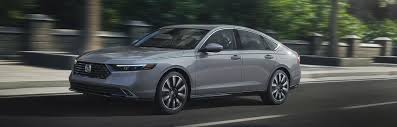
The latest iteration of the Honda Accord, introduced for the 2023 model year, represents an evolution rather than a revolution, a strategy that Honda has masterfully employed to maintain its competitive edge. While the overall design language is unmistakably modern and refined, it builds upon the strong foundation of its predecessor.
A significant shift in powertrain philosophy marks this generation: the hybrid system is now the default for most trims. The traditional 1.5-liter turbocharged gasoline engine, carried over from the tenth generation, remains the exclusive option for the entry-level LX and the step-up EX trims, paired with a Continuously Variable Transmission (CVT). The potent 2.0-liter turbocharged engine is no longer available in this generation. Visually, Honda has adopted a more subdued and elegant design, aligning with the brand’s latest aesthetic.
The most substantial upgrades are found within the cabin. A new, stylish metal dashboard trim and an integrated touchscreen infotainment system impart a premium feel. Connectivity is paramount, with all trims boasting standard Bluetooth, wireless Apple CarPlay, and Android Auto. Thoughtfully, Honda retains physical buttons for essential controls like radio and dual-zone climate, appealing to those who prefer tactile feedback.
The comprehensive Honda Sensing suite of ADAS is standard across all eleventh-gen Accords, encompassing features such as adaptive cruise control with traffic-jam assist, forward collision warning, automatic emergency braking, and lane-centering assist. For 2025, Honda introduced the SE edition, replacing the EX trim, featuring a blacked-out aesthetic and enhanced interior amenities like heated front seats. The 2026 model year sees further enhancements with larger infotainment screens on lower trims and the standardization of wireless Apple CarPlay and Android Auto.
New Accord pricing starts around $28,000 for the LX and $31,000 for the SE. Accord Hybrid models begin just under $34,000 for the Sport Hybrid and extend to $39,000 for the top-tier Touring Hybrid, with the EX-L Hybrid and Sport-L Hybrid offering compelling value around $35,000. These MSRPs position the Accord competitively against rivals like the Toyota Camry, Nissan Altima, Hyundai Sonata, and a wide array of SUVs.
Reliability for this generation is projected to be exemplary, benefiting from Honda’s proven powertrains and the evolutionary approach. While the platform is still relatively new, the familiarity of its core components bodes well for long-term dependability. The eleventh-generation Accord has shown strong residual value retention so far, with used models typically ranging from $24,000 to $27,000 for gasoline variants and $27,000 to $32,000 for hybrids, depending on trim and mileage. This makes the latest Honda Accord a strong contender for those seeking a new or nearly new vehicle.
Tenth Generation (2018-2022): The Bold Redesign
The 2018 model year ushered in a complete overhaul for the Accord, marking a significant departure with a new design language, powertrain options, and enhanced technology. The most striking change was the discontinuation of the coupe body style, leaving the four-door sedan as the sole offering. Honda also retired the V6 engine, simplifying the lineup to four-cylinder turbocharged options. Despite these shifts, the Accord remained a class leader in the family sedan segment.
The interior of the tenth-gen Accord maintained a driver-focused, uncluttered layout. The infotainment system, featuring Apple CarPlay and Android Auto, is seamlessly integrated into the central touchscreen, with physical climate controls conveniently located below. Passenger space was further expanded, earning accolades for its “luxury-car massive” rear-seat comfort, and the cargo area remained best-in-class.
Under the hood, two turbocharged four-cylinder engines were offered: a 1.5-liter producing 192 horsepower, paired with a CVT, and a more potent 2.0-liter derived from the Civic Type R, delivering 252 horsepower and mated to a 10-speed automatic. Notably, a six-speed manual transmission was available in the Sport trim, appealing to driving enthusiasts. The Accord Hybrid also returned, utilizing an updated two-motor hybrid system with a 2.0-liter Atkinson-cycle engine, producing a combined 212 horsepower.
Safety was further prioritized, with Honda Sensing standard on all trims, including advanced systems like radar cruise control and lane-keeping assist. This commitment solidified the Accord’s reputation as an IIHS Top Safety Pick. A mid-cycle refresh in 2021 brought subtle styling enhancements and updated LED lighting. Unfortunately, this refresh also saw the discontinuation of the manual transmission due to low sales.
While generally reliable, early models (2018-2019) experienced some HVAC and AC compressor issues, along with occasional Bluetooth glitches, which were largely resolved in later model years. A fuel pump recall affected 2018-2020 models. The 2021 and subsequent model years are largely free of significant reported problems.
Used Honda Accord prices for pre-facelift models (2018-2020) typically range from $20,000 to $22,000, while the refreshed 2021-2022 models command a premium, averaging around $25,000. Accord Hybrids, particularly the facelifted versions, have demonstrated strong resale value, with used prices averaging approximately $27,000. The best Honda Accord years from this generation for a blend of modern features and value are the 2021-2022 models.
Ninth Generation (2013-2017): Evolutionary Refinement
The ninth generation, introduced in 2013, continued Honda’s evolutionary approach, refining the established formula rather than radically reinventing it. The exterior styling saw subtle updates, while the interior focused on improved ergonomics and comfort, addressing feedback from the previous generation.
Powertrain updates included a new 2.4-liter four-cylinder engine with direct injection, paired with a CVT for enhanced fuel efficiency. A six-speed manual remained an option for this engine. The 3.5-liter V6 was revised to produce 278 horsepower, mated to a six-speed automatic. The enthusiast-favorite V6 coupe with a manual transmission was still available, though increasingly rare due to the sedan’s dominant sales.
The Accord Hybrid reappeared for 2014, utilizing a two-motor hybrid system with a 2.0-liter four-cylinder engine, producing 196 horsepower and achieving an impressive EPA rating of 50 mpg city/45 mpg highway/47 mpg combined. This makes the Honda Accord Hybrid a prime choice for maximum fuel economy.
A significant update arrived in 2016 with a mid-cycle refresh that included updated styling and, crucially, the integration of Apple CarPlay and Android Auto, bringing the Accord’s infotainment into the modern era.
Reliability remains a strong suit for this generation, with most owners reporting only routine maintenance needs. A notable issue on four-cylinder models from 2013-2015 involved the starter, with a Technical Service Bulletin also issued for V6 models. The 2016-2017 facelifted models generally exhibit fewer reported issues.
Used Honda Accord prices for pre-facelift models typically range from $12,000 to $14,000, with 2016-2017 models averaging around $16,000 for well-maintained examples. Those seeking the V6 or Hybrid variants should expect to pay a premium, with low-mileage examples potentially exceeding $20,000. The 2016-2017 model years are often cited as the best Honda Accord years for this generation, offering a balance of modern tech and solid reliability.
Eighth Generation (2008-2012): The Big Leap Forward
The 2008 model year introduced a completely redesigned Accord, which grew in size to become the first Accord to be classified as a “large car” by the EPA. This generation offered increased space, efficiency, features, and power across both four- and six-cylinder engine options.
The 2.4-liter four-cylinder produced 177 horsepower, with a higher-output 190-horsepower version available in EX trims. The 3.5-liter V6 was significantly more potent, rated at 268 horsepower. The V6 engine was also available in the two-door coupe, paired with a six-speed manual transmission for enthusiasts. The EX-L V6 trim provided a near-luxury experience, with premium features like leather-trimmed seats and an upgraded audio system.
Safety was paramount, with all trims featuring ABS, VSA, Brake Assist, and TPMS as standard. The IIHS recognized this generation as a Top Safety Pick. A notable addition for 2010 was the Accord Crosstour, a lifted crossover variant. The hybrid powertrain was absent from this generation due to slow sales of its predecessor.
Reliability was generally strong, though 2008-2010 models experienced excessive brake wear, which was addressed with redesigned brake pads. Some 2008-2009 models also had reported airbag issues.
Expect to pay around $8,000 for a well-maintained four-cylinder example. V6 models command a premium, with prices up to $12,000 for lower-mileage examples. The V6 coupe with a manual transmission remains a rare and desirable find.
Seventh Generation (2003-2007): The Polarizing Years
The seventh-generation Accord, launched in 2003, presented a more aggressive, wedge-shaped design. Engine upgrades included Honda’s i-VTEC system for the four-cylinder and a more powerful 240-horsepower V6, which could be paired with a six-speed manual in the coupe, making it a surprisingly engaging driver’s car.
The interior remained logical and spacious, with luxury features like heated front seats and dual-zone climate control available on EX models. The Accord Hybrid debuted in 2005, positioned as the most powerful variant, combining the V6 with Honda’s hybrid system for a total of 255 horsepower, and offering premium amenities.
A 2006 refresh brought minor styling tweaks and power increases. The six-speed manual transmission became available on the sedan, and the Hybrid received a larger battery.
This generation is best known for its potential transmission issues, particularly on V6 models equipped with the automatic transmission, which were subject to recalls. Four-cylinder and manual transmission models were largely unaffected. This generation was also impacted by the Takata airbag recall.
For buyers considering this era, a budget of $5,000 to $7,000 will secure a decent example. The V6 manual variants, both coupe and sedan, are more desirable and command a higher price. Given the transmission concerns, careful inspection and maintenance history are crucial when seeking a Honda Accord for sale from this period.
Sixth Generation (1998-2002): The Growing Pains
The sixth generation saw the Accord continue its growth, approaching large sedan dimensions with an exceptionally roomy rear seat. This generation was entirely new, featuring a revised body, platform, and the introduction of a 3.0-liter V6 engine. All Accords were now manufactured in the United States.
Available as a four-door sedan or a stylish coupe (the wagon was discontinued), the sedan adopted a more conservative styling compared to its predecessor, while the coupe featured a sleek roofline reminiscent of the Acura NSX. The new 3.0-liter V6 produced 200 horsepower and offered smoother shifts than previous automatics. The 2.3-liter four-cylinder remained a fuel-efficient option, delivering up to 31 mpg highway with the five-speed manual.
The interior maximized space, offering improved cabin volume and a comfortable, well-laid-out cabin with excellent visibility. The rear seat provided ample room for three passengers, now equipped with three-point seat belts.
Despite its advancements, this generation is known for its problematic automatic transmission, especially when paired with the V6, which led to class-action lawsuits. Later models (2001-2002) were also subject to the Takata airbag recall.
Four-cylinder variants are significantly more reliable. A budget of around $5,000 can secure a nice four-cylinder sedan. Coupes, particularly V6 models, are more sought after and can reach upwards of $10,000. The best Honda Accord years for this generation, if prioritizing reliability, would be the four-cylinder models.
Fifth Generation (1994-1998): The North American Focus
For the first time, the fifth-generation Accord was exclusively designed for the North American market. It grew in width while maintaining its length, preserving its mid-size classification. A V6 engine producing 170 horsepower was introduced, catering to those seeking enhanced performance.
This generation excelled in driving dynamics and handling, featuring a double-wishbone suspension reminiscent of the sporty Prelude. The standard 2.2-liter four-cylinder, now equipped with VTEC, produced 145 horsepower and was celebrated for its smoothness.
The increased exterior dimensions translated to a more comfortable interior, especially for taller occupants, with improved shoulder and headroom. The cabin, while perhaps dated by modern standards, was user-friendly and ergonomic, with a premium feel due to two-tone interiors and soft-touch materials. The Accord was available as a sedan, coupe, or station wagon, offering broad appeal.

Common issues tend to stem from age and deferred maintenance, such as speedometer sensor failures and premature wheel bearing wear. A significant concern for this era was security, as these Accords were frequently stolen.
These cars are fondly remembered for their simplicity and engaging handling. Prices for driver-quality models start around $5,000, with pristine, low-mileage examples reaching up to $17,000. The Honda Accord cost for this generation offers excellent value for its driving experience.
Fourth Generation (1990-1993): Aerodynamics and Refinement
The fourth-generation Accord, introduced in 1990, embraced a new era of aerodynamic styling, notably featuring fixed headlights, a departure from the pop-up designs of the 1980s. The wheelbase and overall length increased, enhancing passenger space. The three-door coupe was discontinued, leaving the four-door sedan and two-door coupe as primary offerings, with a five-door station wagon joining the lineup in 1991.
All models were powered by an all-aluminum, fuel-injected 2.2-liter inline four-cylinder engine producing 130 horsepower in the top EX trim. This generation marked the end of carburetors, simplifying maintenance. With the standard five-speed manual, fuel economy was rated at 21 mpg city and 27 mpg highway.
A 10th Anniversary Edition sedan was released in 1992 to commemorate a decade of U.S. Accord production, offered in unique color combinations.
Key issues to watch for are related to age, particularly rust on vehicles from snowy regions. Automatic transmission models may experience failures in the Transmission Control Unit (TCU).
Expect to pay around $5,000 for most examples, with nice examples reaching up to $10,000. While these Accords have an enthusiast following, they haven’t quite achieved the collector status of earlier models. The Honda Accord cost here is very accessible for a capable and comfortable car.
Third Generation (1986-1989): The “Poor Man’s BMW”
The third generation saw the Accord gain popularity and prestige, earning the moniker “the poor man’s BMW” for its precise handling and quiet ride. Redesigned with improved aerodynamics and the distinctive pop-up headlights of the era, this generation also featured a double-wishbone suspension for enhanced handling. Engine displacement increased to 2.0 liters, producing 100 horsepower.
The popularity of the Accord and Civic led Honda to expand production at its Ohio plant. The Accord solidified its reputation as a dependable, economical family car.
Finding a well-maintained third-gen Accord can be a treasure hunt. Prices vary widely, from an average of $7,200 to $18,000 for clean, low-mileage examples. Restoring these cars can be challenging as they share few parts with other generations.
Second Generation (1982-1985): American Roots and Refinement
1982 marked the beginning of the second generation, and importantly, the first time the Accord sedan was produced in America. It featured sleeker styling, available in sedan or hatchback form, with increased wheelbase and length for better rear-seat comfort.
Mechanically similar to the first generation, the interior received a significant aesthetic upgrade with shag carpeting, velour trim, and chrome accents, earning praise for its “definition of fit and finish.” Starting at approximately $7,400, it offered tremendous value as a family car. The second-gen Accord graced Car and Driver’s 10 Best List for the first time in 1983 and became the best-selling Japanese nameplate in America.
Finding nice examples today is challenging. Prices range from $5,000 to $15,000, with original examples becoming increasingly collectible. Owners may encounter difficulties finding replacement parts and experience issues with carburetors and vacuum lines.
First Generation (1976-1981): The Genesis of an Icon
The first-generation Accord was born out of Honda’s need for a larger vehicle to expand its U.S. market presence. Based on the Civic platform, it utilized a slightly larger 1.6-liter CVCC engine producing 68 hp. With its standard five-speed manual transmission, it achieved an impressive 44 mpg highway and 31 mpg city, a crucial selling point during the 1970s oil crisis.
These early Accords established Honda as a value-oriented brand, praised for their fuel economy, styling, handling, braking, and comfort. Introduced as a three-door hatchback, the four-door sedan followed shortly after. Standard features like cloth seats, a tachometer, and intermittent wipers were notable for the era.
First-generation Accords are increasingly rare. Prices range from $5,000 to $15,000 for good examples, with condition being the primary determinant. Clean, original examples are attracting collector interest. Prospective buyers should be prepared for potential difficulties in sourcing replacement parts.
The Smart Choice: Investing in a Used Honda Accord
The Honda Accord’s enduring appeal lies in its consistent delivery of core automotive values. Whether you prioritize cutting-edge technology, fuel efficiency, spirited driving dynamics, or simply a dependable mode of transportation, there’s a Honda Accord generation that perfectly aligns with your needs and budget. The widespread availability of Honda Accord parts and a robust aftermarket support network further enhance the long-term ownership experience, especially for older models.
As an industry expert, I can confidently state that purchasing a used Honda Accord is rarely a gamble, but rather a strategic investment in proven quality. The cheapest Honda Accord might not always be the best long-term value; instead, focus on specific model years and trims that have demonstrated superior reliability and desirability. Researching individual vehicle histories and conducting thorough pre-purchase inspections are paramount, particularly for models known to have specific historical issues.
The Honda Accord continues to set benchmarks in the mid-size sedan market, offering a compelling blend of practicality, performance, and prestige. By understanding the evolution of each generation and identifying the characteristics that matter most to you, you can confidently navigate the used car market and find an Accord that will serve you faithfully for years to come.
Ready to experience the Honda Accord difference? Explore current listings in your area and schedule a test drive today to discover which generation best suits your driving needs and lifestyle.
