



The Enduring Legacy of the Honda Accord: A Deep Dive for Discerning Buyers
For decades, the Honda Accord has stood as a titan in the mid-size sedan segment, a benchmark against which its competitors are measured. Its enduring appeal stems from a potent combination of practical design, unwavering reliability, engaging driving dynamics, and a consistent commitment to technological advancement and safety. For those navigating the pre-owned market or considering a new acquisition, understanding the nuances of each generation is paramount to making an informed decision. This guide, born from a decade of hands-on experience with the automotive landscape, aims to demystify the Honda Accord buying journey, illuminating the best years to purchase, potential pitfalls, and the true value each iteration offers.
From its inception, the Accord was envisioned as a slightly more refined and spacious sibling to the Honda Civic. Over its eleven generations, it has steadily evolved, shedding its compact roots to embrace a larger footprint, now often classified by the Environmental Protection Agency (EPA) as a “large car.” This growth has translated into exceptionally generous cabin space and a cavernous trunk, a testament to Honda’s meticulous packaging. Even in its more basic trims, the Accord exudes a sense of quality, with fit and finish that frequently punches above its class, hinting at near-luxury appointments, particularly in its higher trim levels featuring plush leather upholstery.
Honda’s dedication to user-centric technology is another hallmark of the Accord. Modern iterations boast intuitive infotainment systems, often featuring large touchscreens that seamlessly integrate with wireless Apple CarPlay and Android Auto. Beyond infotainment, the Accord has consistently prioritized occupant safety. Beginning with its tenth generation, the Honda Sensing® suite of advanced driver-assistance systems (ADAS) became standard across all models. This comprehensive package includes features like adaptive cruise control with traffic-jam assist, forward collision braking, lane-keeping assist, and road-departure mitigation. Coupled with Honda’s robust engineering and construction, these safety innovations have repeatedly earned the Accord top safety accolades from organizations like the Insurance Institute for Highway Safety (IIHS) and the National Highway Traffic Safety Administration (NHTSA).
Navigating the Honda Accord Marketplace: Key Considerations
When embarking on the quest for a pre-owned Honda Accord, several factors warrant careful consideration. Reliability, while a strong suit for the Accord brand, is not monolithic across all model years. Certain generations have faced specific, well-documented issues that, while manageable, require awareness. Understanding these potential weak points, alongside the strengths of each generation, is crucial for securing a dependable vehicle. The resale value of a Honda Accord is consistently strong, a testament to its desirability and perceived quality, but this also means that desirable models, particularly those with premium features or sought-after powertrains, may command higher prices in the used market. For those seeking value, identifying models that have experienced a slight depreciation dip without compromising on core strengths is a strategic approach.
The Eleventh Generation (2023-Present): A Refined Evolution
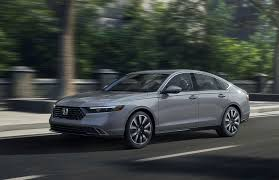
The current, eleventh-generation Honda Accord represents an evolutionary step rather than a radical departure from its predecessor. Honda’s philosophy here appears to be one of continuous improvement, refining an already successful formula. A significant shift is the standardization of the hybrid powertrain. While base LX and EX trims retain a turbocharged 1.5-liter engine paired with a continuously variable transmission (CVT), the more potent 2.0-liter turbocharged engine from the previous generation is no longer offered.
Visually, the exterior adopts Honda’s latest design language, presenting a more subdued and integrated aesthetic. However, the interior reveals the most substantial upgrades. A stylish metallic dashboard trim and an updated touchscreen infotainment system elevate the cabin’s ambiance. Standard across all trims are Bluetooth connectivity, wireless Apple CarPlay, and Android Auto. Importantly, Honda retains physical controls for critical functions like the radio and dual-zone climate control, a nod to user preference and practicality.
The comprehensive Honda Sensing® suite is standard, offering advanced collision prevention technologies. For 2025, Honda introduced the SE trim, replacing the EX, featuring a blacked-out appearance and heated front seats as standard. The 2026 model year sees an increase in infotainment screen size for lower trims and the inclusion of wireless smartphone integration as standard.
New Accord pricing begins around $28,000 for the LX gas model, with hybrid variants starting just under $34,000 for the Sport Hybrid, extending to nearly $39,000 for the top-tier Touring Hybrid. These figures are highly competitive when juxtaposed with rivals like the Toyota Camry, Nissan Altima, and Hyundai Sonata, as well as various compact and mid-size SUVs.
Reliability for this new generation is expected to be exceptional, building upon the proven powertrains carried over. While the platform is new, the underlying technology is familiar and robust. The eleventh-generation Accord has shown strong residual value retention, with used models typically ranging from $24,000 to $32,000 depending on trim and model year.
The Tenth Generation (2018-2022): A Modern Masterclass
The tenth-generation Honda Accord, launched for the 2018 model year, marked a significant redesign. It introduced a fresh design philosophy, updated powertrains, and advanced safety features. This generation also saw the discontinuation of the coupe body style, focusing exclusively on the four-door sedan. The V6 engine was also retired, replaced by potent turbocharged four-cylinder options. Despite these changes, the Accord solidified its position as a segment leader.
The interior design remains clean, functional, and user-friendly, centered around an intuitive touchscreen infotainment system with Apple CarPlay and Android Auto. Physical climate controls are conveniently located beneath the screen. Interior space was further enhanced, offering what was widely described as “luxury-car massive” rear-seat legroom, and best-in-class cargo capacity for its segment.
Engine choices were limited to four-cylinders. A 1.5-liter turbo produced 192 horsepower, mated to a CVT. The more powerful 2.0-liter turbo, derived from the Civic Type R, delivered 252 horsepower and was available with a 10-speed automatic transmission. A six-speed manual transmission was an option for the Sport trim, particularly desirable when paired with the 2.0-liter turbo for driving enthusiasts seeking an engaging experience. The Accord Hybrid also returned, featuring a refined two-motor system and a 2.0-liter Atkinson-cycle four-cylinder engine, producing a combined 212 horsepower. The battery placement beneath the rear seats preserved cargo volume.
Safety was paramount, with all trims receiving the standard Honda Sensing® suite. This generation consistently earned IIHS Top Safety Pick honors. A mid-cycle refresh in 2021 brought minor styling tweaks and updated LED lighting. Notably, the manual transmission option was discontinued after 2020 due to declining sales.
Reliability for the tenth generation is generally excellent. Early models (2018-2019) experienced some HVAC and AC compressor issues, along with occasional Bluetooth glitches, which were largely resolved in later model years. A fuel pump recall affected 2018-2020 models.
Pre-facelift (2018-2020) models typically range from $20,000 to $22,000. The refreshed 2021-2022 models command a premium, averaging around $25,000, with hybrid variants holding their value particularly well.
The Ninth Generation (2013-2017): A Balanced Approach
The ninth-generation Accord, introduced in 2013, followed a similar evolutionary path, building upon the strengths of its predecessor rather than undertaking a radical redesign. The exterior styling was familiar, while the interior saw improvements addressing previous generation critiques, maintaining its hallmark simplicity and comfortable seating.
Under the hood, significant updates were made. The 2.4-liter four-cylinder engine received direct injection and was paired with a new CVT. Fuel efficiency and driving pleasantness were noted improvements. A six-speed manual transmission remained available for the four-cylinder. The 3.5-liter V6 was revised to produce 278 horsepower, coupled with a traditional six-speed automatic. The enthusiast-favorite V6 coupe with a manual transmission was a standout offering, though increasingly rare due to the sedan’s overwhelming popularity.
The Accord Hybrid reappeared for 2014, utilizing a two-motor hybrid system with a 2.0-liter four-cylinder engine, producing a combined 196 horsepower. This hybrid was exceptionally fuel-efficient, achieving ratings upwards of 50 mpg city.
A 2016 facelift brought updated exterior styling and, crucially, the integration of Apple CarPlay and Android Auto, making it one of the first mainstream vehicles to offer this seamless connectivity.
Reliability remains a strong point for this generation. Most owners report only routine maintenance needs. A common issue for 2013-2015 four-cylinder models was the starter. The facelifted 2016 and 2017 models generally exhibit fewer reported problems.
Pre-facelift models typically fall in the $12,000 to $14,000 range, while 2016-2017 examples are usually around $16,000. V6 and hybrid models, especially well-maintained, low-mileage examples, can exceed $20,000.
The Eighth Generation (2008-2012): Growth and Refinement
The 2008 model year ushered in a comprehensive redesign for the eighth-generation Accord. This generation saw increased dimensions, enhanced efficiency, greater features, and more powerful engine options for both four- and six-cylinder variants. It was the first Accord to be officially classified as a “large car” by the EPA.
The 2.4-liter four-cylinder engine produced a smooth 177 horsepower, with a 190-horsepower version available in the EX trim. The 3.5-liter V6 offered a robust 268 horsepower. Enthusiasts appreciated the availability of the V6 in the two-door coupe, paired with a six-speed manual transmission.
In its top-tier EX-L V6 trim, the eighth-gen Accord sedan offered a near-luxury experience, with features like leather-trimmed seats and an upgraded audio system. Safety was a continuing priority, with standard ABS, VSA, Brake Assist, and TPMS across all trims, earning it IIHS Top Safety Pick status.
For 2010, Honda introduced the Accord Crosstour, a crossover-style variant, though it evolved into its own model by 2012. While not the most fuel-efficient Accord, base four-cylinder models still achieved respectable highway mileage. The hybrid powertrain was absent from this generation due to slow sales of its predecessor.
Reliability is generally strong, with few widespread issues. Models from 2008-2010 experienced some brake wear issues, which were addressed with redesigned pads. Some 2008-2009 models reported airbag concerns.
Four-cylinder models can typically be found for around $8,000, with V6 models commanding up to $12,000 for low-mileage examples. The V6 coupe with a manual transmission is a rare and desirable find.
The Seventh Generation (2003-2007): A Stylistic Leap, But Caution Advised
The seventh-generation Accord, introduced in 2003, sported a more aggressive, “muscular” design. While the two-door coupe and four-door sedan shared distinct front-end styling, the interior remained clean and logical, offering excellent passenger space.
Powertrain upgrades included Honda’s i-VTEC for the four-cylinder. The V6 was boosted to 240 horsepower and, notably, became available with a six-speed manual transmission in the coupe, creating a surprisingly spirited driving experience. Luxury features like heated seats and dual-zone climate control were available on EX models.
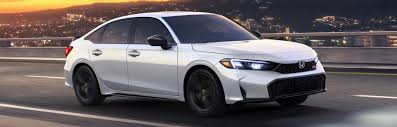
The first Accord Hybrid debuted in 2005, surprisingly positioned as the most powerful variant. It combined the V6 with the hybrid system for a total of 255 horsepower, paired with premium interior features.
A 2006 refresh brought minor styling and power enhancements, with the six-speed manual becoming an option on the sedan. However, this generation is notorious for its transmission issues, particularly on V6 models equipped with the automatic transmission, which were subject to recalls. Four-cylinder and manual transmission models were largely unaffected. This generation was also part of the Takata airbag recall.
Expect to pay between $5,000 and $7,000 for a good example, with V6 manual versions commanding a premium.
Earlier Generations: The Foundations of Reliability and Driving Pleasure
Sixth Generation (1998-2002): This generation saw the Accord grow larger, offering substantial rear-seat room. It introduced a new 3.0-liter V6 engine (200 hp) and saw all Accords produced domestically. The sedan styling was more reserved, while the coupe offered a sleeker, sportier look. While the four-cylinder models provided reliable, fuel-efficient transportation (up to 31 mpg highway with a manual), the automatic transmission paired with the V6 was a known weak point, leading to class-action lawsuits. Early models were also affected by the Takata airbag recall. Four-cylinder models are generally reliable, with prices around $5,000, while V6 coupes can fetch upwards of $10,000.
Fifth Generation (1994-1998): North American Focus and Handling Prowess. Designed specifically for the North American market, this generation grew wider while maintaining its mid-size classification. It was the first Accord to offer a V6 engine (170 hp). Its standout feature was its engaging handling, attributed to its double-wishbone suspension. The 2.2-liter VTEC four-cylinder (145 hp) was remarkably smooth. Interior space was enhanced, and materials offered a premium feel for the era. Wagons were also available. Common issues relate to age, such as speedometer sensor failures and premature wheel bearing wear. Security was also a concern, as these were frequently stolen vehicles. Enthusiasts appreciate the driving dynamics. Prices typically range from $5,000 for driver-quality examples up to $17,000 for pristine low-mileage units.
Fourth Generation (1990-1993): Aerodynamics and Refinement. This generation embraced a more aerodynamic design with fixed headlights, moving away from pop-up units. Passenger space increased with a longer wheelbase. A five-door station wagon joined the sedan and coupe. The all-aluminum 2.2-liter inline four-cylinder produced 130 horsepower. The main concerns are age-related, such as rust, particularly in colder climates. Automatic transmission models could experience issues with the Transmission Control Unit (TCU). Prices generally hover around $5,000 to $10,000.
Third Generation (1986-1989): “The Poor Man’s BMW.” With increased aerodynamics, a quieter ride, and the introduction of pop-up headlights, this generation earned its nickname for its precise handling, aided by a double-wishbone suspension. Engine displacement increased to 2.0 liters, producing 100 horsepower. The Accord’s growing popularity led Honda to expand production. These models are becoming collectible, with prices ranging from $7,200 to $18,000 for pristine examples. Restoration can be challenging due to unique parts.
Second Generation (1982-1985): American Production and Critically Acclaimed. The second generation marked the first Accord sedan produced in America. It featured sleeker styling and a slightly larger interior. While mechanicals were similar to the first generation, the interior saw aesthetic improvements, earning critical acclaim and its first appearance on Car and Driver’s 10 Best list. It became the best-selling Japanese nameplate in America. Finding nice examples today is challenging, with prices from $5,000 to $15,000. Carburetor and vacuum line issues are common.
First Generation (1976-1981): The Icon is Born. Recognizing the need for a larger vehicle, Honda introduced the Accord, based on the Civic platform. Its 1.6-liter CVCC engine offered exceptional fuel economy (up to 44 mpg highway). It established Honda as a value-oriented brand, praised for its styling, handling, and braking. Available initially as a hatchback, a sedan followed. Standard features were impressive for its time. Finding original examples is difficult, with prices ranging from $5,000 to $15,000, and parts can be scarce.
Finding Your Ideal Honda Accord
The Honda Accord’s storied history is a testament to its consistent quality and evolution. Whether you prioritize the cutting-edge technology and hybrid efficiency of the latest models, the balanced performance and connectivity of the tenth or ninth generations, or the pure driving engagement found in earlier V6 manual variants, there’s a Honda Accord to suit almost every need and budget. As you explore the market, remember that thorough pre-purchase inspections and a detailed history review are your most valuable tools. Consider your daily commute, passenger needs, and desired driving experience to pinpoint the generation that best aligns with your expectations.
Ready to experience the legendary Honda Accord for yourself? Explore local dealerships or reputable online marketplaces to find the model year and trim that perfectly fits your lifestyle. Don’t just buy a car; invest in a legacy of reliability and driving enjoyment.
