
The Ultimate Guide to Buying a Used Honda Accord Hybrid: Navigating Value, Longevity, and Key Model Years
For over a decade, the automotive landscape has witnessed a quiet revolution, with hybrid powertrains transitioning from niche curiosities to mainstream necessities. Among the frontrunners in this evolution, the Honda Accord Hybrid stands as a testament to Japanese engineering excellence, blending robust performance with commendable fuel economy. As an industry insider with ten years dedicated to dissecting the nuances of vehicle acquisition, I’ve seen the Accord Hybrid mature significantly. No longer is it a mere experiment; it’s a sophisticated, highly competitive player in the midsize sedan segment, often eclipsing rivals with its refined approach to electrified driving.
This comprehensive guide will equip you with the knowledge to confidently navigate the used Honda Accord Hybrid market. We’ll delve into critical aspects of cost, long-term reliability, and crucially, identify the specific model years that represent the pinnacle of value and engineering. Whether you’re a seasoned hybrid enthusiast or a first-time buyer exploring eco-conscious options, understanding the historical trajectory of the Honda Accord Hybrid is paramount to making an informed decision.
The Evolution of the Honda Accord Hybrid: A Journey Through Innovation
Honda’s commitment to hybrid technology within the Accord lineage hasn’t always been a straight line, but rather a progressive journey of refinement.
The Dawn of the Hybrid Accord (2005-2007): A Bold Beginning
The first iteration of the Honda Accord Hybrid graced showrooms for the 2005 model year, nestled within the seventh generation of the venerable Accord. This early adopter utilized Honda’s Integrated Motor Assist (IMA) system, a pioneering approach that integrated an electric motor with a robust 3.0-liter V6 engine. The result was a compelling package that, for its time, delivered impressive performance. Outputting a substantial 255 horsepower and 232 lb-ft of torque, it comfortably outpaced its V6 gasoline counterpart. While its 28 mpg combined fuel economy might seem modest by today’s standards, it was a significant leap for a powerful sedan in the mid-2000s. Minor styling tweaks were applied in 2006, but substantial mechanical changes were minimal through 2007.
While these early models offer a unique historical perspective, their rarity and the complexities of the IMA system can translate to potentially higher repair costs. For buyers prioritizing modern efficiency and advanced hybrid technology, these first-generation Honda Accord Hybrid vehicles are generally best appreciated from an academic standpoint rather than as primary acquisition targets.
A Glimpse of the Future: The 2014 Accord Hybrid and the Two-Motor Revolution
After a significant hiatus, Honda reintroduced the Honda Accord Hybrid for the 2014 model year, marking a pivotal shift with its introduction of a new, more sophisticated two-motor hybrid system. This system was based around an efficient four-cylinder engine, a departure from the previous V6. While this generation didn’t quite match the raw power of its predecessor, it delivered a dramatic improvement in fuel efficiency, achieving an impressive 47 mpg in combined driving.
Concurrently, Honda offered a limited-production Accord Plug-in Hybrid variant. This model provided a tantalizing taste of electric-only driving with a range of up to 15 miles, but its short, one-year lifespan suggests it was more of a technology demonstrator than a mainstream offering. For those seeking the absolute latest in fuel savings, the 2014 Honda Accord Hybrid represented a significant step forward, though its sibling, the Plug-in, is largely a collector’s item rather than a practical used car choice.
The Return and Refinement: 2017 and the Second-Generation Two-Motor Hybrid
Following a brief pause in production for the 2016 model year, the Honda Accord Hybrid made a strong comeback in 2017. This iteration featured a thoroughly revised second-generation two-motor hybrid drivetrain. This updated system not only boosted power output to 212 horsepower and 232 lb-ft of torque but also saw a more compact battery pack, which crucially restored trunk space – a common drawback in earlier hybrid designs. Fuel economy saw another healthy increase, reaching an exceptional 48 mpg combined.
This 2017 Honda Accord Hybrid also arrived with a suite of enhancements, including refreshed styling, the standard Honda Sensing suite of advanced driver-assistance systems (ADAS), and an updated infotainment system. However, it’s important to note that some owners reported issues with real-world fuel economy falling short of EPA estimates. Additionally, early reports indicated potential cost concerns related to the ADAS technology in these initial models. Despite these caveats, the 2017 model represents a significant leap in refinement and efficiency over the 2014 iteration.
The Tenth Generation’s Hybrid Powerhouse (2018-2022): Refined, Spacious, and Popular
The complete redesign of the Accord for the 2018 model year ushered in the third generation of Honda’s two-motor hybrid system. This generation of Honda Accord Hybrid proved to be a resounding success, available across multiple trim levels throughout its production run. The powertrain remained potent, delivering 212 horsepower and 232 lb-ft of torque, providing a responsive and engaging driving experience.
One of the most significant improvements for this generation was the ingenious packaging of the hybrid components. By relocating the battery pack beneath the rear seats, Honda preserved the Accord’s renowned spaciousness and, crucially, retained the practicality of a 60/40 split-folding rear seat. This addressed a major limitation of previous hybrids and made the Honda Accord Hybrid a genuinely versatile option.
Fuel economy figures for this generation consistently hovered between 43 and 47 mpg combined, with specific trims featuring larger wheels and tires achieving the lower end of this spectrum. While generally lauded for reliability, a common owner complaint centered on a noticeable, albeit not entirely unpleasant, droning sound during hard acceleration. This is a characteristic of many hybrid systems as they work to maximize efficiency under load.
Honda implemented several updates throughout this generation. The 2021 model year saw refreshed styling, improved lighting, updated infotainment systems with standard wired Apple CarPlay and Android Auto, and the availability of wireless connectivity on higher trims. Advanced safety features, such as a rear seat reminder and low-speed automatic braking, were also integrated. The final year, 2022, saw the Sport trim added to the hybrid lineup, offering a sportier aesthetic with larger wheels, albeit with a slight trade-off in fuel economy.
The 2018-2022 Honda Accord Hybrid models are widely considered excellent used car values. Their strong reliability ratings, combined with the practicality and efficiency they offer, make them highly sought-after. Owners have reported relatively few significant issues, with the vast majority of complaints being minor or related to common hybrid powertrain characteristics.

The Eleventh Generation’s Pinnacle (2023-Present): Standard Hybrid, Enhanced Refinement
The most recent redesign of the Accord for the 2023 model year introduced the fourth generation of Honda’s highly effective two-motor hybrid system. This generation represents a significant milestone, as Honda has made the hybrid powertrain standard equipment on most trim levels. Only the base LX and mid-grade EX models continue with a traditional gasoline engine. For those seeking the ultimate in fuel efficiency and advanced technology, the 2023 Honda Accord Hybrid and subsequent models are the current benchmarks.
The new system features a refined 2.0-liter Atkinson-cycle four-cylinder engine paired with an upgraded propulsion motor. This results in a combined output of 204 horsepower and 247 lb-ft of torque. Crucially, Honda has further honed the e-CVT transmission, effectively minimizing the steady-state droning under acceleration that characterized previous generations. The driving experience is notably smoother and more refined.
These latest models are exceptionally well-equipped, even in their entry-level hybrid trims (like the Sport Hybrid). Features such as dual-zone automatic climate control, a large 12.3-inch touchscreen, adaptive cruise control, and a power moonroof are standard. Higher trims, like the Touring Hybrid, elevate the experience further with a head-up display and a premium Bose audio system.
Fuel economy remains exceptional, with the EX-L Hybrid achieving an EPA-estimated 48 mpg combined. Other hybrid trims, due to their larger wheel and tire configurations, are rated at 44 mpg combined. Anecdotal evidence, including my own experience with a 2024 Accord Sport Hybrid, confirms real-world mileage consistently in the 40-42 mpg range under typical driving conditions.
Minor updates have been introduced for the 2025 and 2026 model years, including rear air conditioning vents, USB-C ports, and updated infotainment features. For buyers prioritizing the latest technology, safety advancements, and the most polished hybrid driving experience, the current generation Honda Accord Hybrid is the clear choice, though naturally, these newer models command a higher price point on the used market.
Reliability: A Deep Dive into the Honda Accord Hybrid’s Track Record
When considering any used vehicle, reliability is paramount. Honda, as a brand, has built a formidable reputation for dependability, and the Accord Hybrid generally upholds this standard.
RepairPal provides an “Excellent” reliability rating for the Accord lineup overall, a testament to its robust engineering. However, it’s crucial to understand that this rating encompasses all Accord models, not exclusively hybrids.
Digging deeper into hybrid-specific data from sources like CarComplaints reveals a more nuanced picture. The second-generation Honda Accord Hybrid (2014-2015, 2017) has been identified as the most problematic. Many complaints at the time stemmed from owners experiencing fuel economy that fell short of EPA estimates – a common occurrence with many hybrids. More concerning were reports of expensive repairs related to the advanced driver-assistance systems in 2017 models.
Fortunately, for the third-generation (2018-2022) and fourth-generation (2023-present) Honda Accord Hybrid models, the reliability narrative is significantly more positive. Owners have reported very few widespread issues. The few gripes that have surfaced are generally minor or easily explained. For instance, complaints about lane-keeping assist “bouncing” often refer to the natural operation of lane-centering functions.
When evaluating a used Honda Accord Hybrid, always prioritize obtaining a comprehensive vehicle history report. This report can flag any past accidents, title issues, or extensive repair records that might indicate underlying problems. If a vehicle is sold as a certified pre-owned Honda, it has undergone rigorous inspection and comes with a manufacturer-backed warranty, offering an additional layer of confidence.
Cost of Ownership and Value Proposition: Finding Your Sweet Spot
The financial aspect of owning a Honda Accord Hybrid is a significant draw for many buyers, particularly in the used market.
New Accord Hybrid Pricing (2025 Model Year Estimates):
For the latest models, expect new Honda Accord Hybrid pricing to range from approximately $35,000 to $40,000, inclusive of destination charges. This positions it competitively within the premium midsize sedan segment, especially when factoring in its standard hybrid powertrain and advanced features.
Used Accord Hybrid Market:
The real value emerges in the used market. Here’s a general breakdown of what you can expect:
Fourth Generation (2023-Present): You’ll typically find these models averaging between $27,000 and $32,000. While these are the newest and most advanced, they will command the highest prices.
Third Generation (2018-2022): These popular models, with less than 80,000 miles, can range from $18,000 to $35,000, depending heavily on the year, trim level, and specific mileage. This generation offers an excellent balance of modern features, practicality, and value.
Second Generation (2014-2015, 2017): Examples with under 100,000 miles can be found in the $14,000 to $24,000 bracket. While these offer significant savings, it’s crucial to be aware of the potential for higher repair costs, particularly with the 2017 models and their ADAS systems.
First Generation (2005-2007): These are extremely rare finds. With under 140,000 miles, you might see prices between $8,000 and $10,000. However, as previously mentioned, the potential repair expenses associated with the IMA system make them less appealing for most buyers seeking a reliable daily driver.
When assessing value, consider the total cost of ownership, which includes fuel savings, insurance, and anticipated maintenance. The Honda Accord Hybrid consistently performs well in these areas, making it an economically sound choice over the long term. The significant fuel economy advantage over gasoline-powered counterparts can translate into substantial savings at the pump, especially for drivers with longer commutes.
Identifying the “Best” Honda Accord Hybrid Years to Buy: Expert Recommendations
Based on a decade of experience and thorough analysis, here are my expert recommendations for the best Honda Accord Hybrid years to consider when purchasing used:
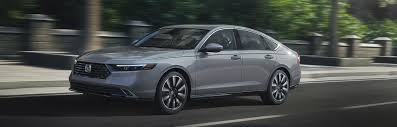
The Undisputed Champion: 2023 and Newer (Fourth Generation)
Why: These represent the absolute pinnacle of Honda Accord Hybrid technology, efficiency, and refinement. The fourth-generation two-motor hybrid system is smooth, powerful, and remarkably quiet under acceleration. They boast the latest infotainment, safety features, and a sophisticated driving experience.
Consider If: Your budget allows for a newer vehicle, and you prioritize cutting-edge technology and the most refined hybrid driving experience.
The Goldilocks Zone: 2018-2022 (Third Generation)
Why: This generation hits a sweet spot for many buyers. It offers a fantastic blend of performance, excellent fuel economy, impressive practicality (thanks to the spacious interior and trunk), and a strong reputation for reliability. The hybrid powertrain is responsive, and the styling is contemporary. While there’s a noticeable sound under hard acceleration, it’s a minor compromise for the overall value.
Consider If: You’re seeking a near-new hybrid experience at a more accessible price point, prioritizing a spacious and practical sedan with proven reliability.
The Savvy Bargain Hunter: 2017 (Second Generation Refinement)
Why: While the second generation has its quirks, the 2017 model stands out as the most polished. It features a significant upgrade in hybrid technology compared to the 2014 model, increased power, and a return to reasonable trunk space. It also benefits from the inclusion of standard Honda Sensing safety features.
Consider If: You’re comfortable with the potential for higher repair costs associated with the ADAS systems and are keen to find a capable hybrid at a lower entry price than the third-generation models. Thorough inspection and a history report are crucial here.
Years to Approach with Caution:
2014-2015 (Second Generation – Early): While efficient, these models were the first iteration of the two-motor system and lacked the refinement and practicality of later generations. The Plug-in Hybrid variant is a unique but impractical niche vehicle.
2005-2007 (First Generation): These are historically significant but technologically dated and potentially expensive to maintain due to the complexity of the IMA system. Their rarity makes them more of a collector’s item.
Frequently Asked Questions About the Honda Accord Hybrid
Q: Which Honda Accord Hybrid years are generally considered the best for used car buyers?
A: The 2023 and newer models (fourth generation) offer the latest technology and refinement. However, the 2018-2022 models (third generation) provide an excellent balance of value, practicality, and reliability, making them a top recommendation for many buyers. The 2017 model is a capable, more affordable option from the second generation, with some caveats.
Q: What are the least desirable Honda Accord Hybrid years?
A: The second-generation models, particularly the 2014 Plug-in Hybrid due to its limited range and one-year lifespan, and generally the 2014-2015 models due to being early adopters of the two-motor system, are less desirable. While the 2017 model is a solid contender, the potential for costly ADAS repairs warrants caution.
Q: Is a used Honda Accord Hybrid a good purchase?
A: Absolutely, with the right model year and proper due diligence. The Accord Hybrid offers a compelling combination of fuel efficiency, comfortable ride, and Honda’s reputation for reliability. By focusing on the recommended generations and ensuring a thorough inspection and vehicle history report, a used Accord Hybrid can be an exceptionally smart and economical choice.
Q: What are the common issues with the Honda Accord Hybrid?
A: The most frequently cited issue across generations is real-world fuel economy not always meeting EPA estimates, which is common for many hybrids. Earlier models (2014-2017) sometimes experienced complaints related to the driver-assistance systems and a droning noise under hard acceleration. Later generations have significantly reduced these concerns.
Navigating the Used Market: Your Next Steps
The journey to owning a Honda Accord Hybrid is a rewarding one, especially when armed with the insights from this guide. You’re not just buying a car; you’re investing in years of efficient, reliable, and enjoyable driving.
The key is to be strategic. Focus your search on the recommended model years, understand the nuances of each generation, and always prioritize a pre-purchase inspection and a comprehensive vehicle history report. The market for used Honda Accord Hybrid vehicles is robust, offering a wide range of options to suit different budgets and needs.
Ready to experience the sophisticated blend of power and efficiency that the Honda Accord Hybrid offers? It’s time to move beyond research and into action. Start exploring dealerships or online marketplaces for the model years that best align with your priorities. Don’t hesitate to schedule test drives and ask detailed questions. Your perfect, fuel-efficient sedan awaits.