



Decoding the All-American Icon: Your Definitive Guide to Buying a Chevrolet Corvette
For enthusiasts and collectors alike, the Chevrolet Corvette represents more than just a car; it’s a legend forged in American automotive history. With a lineage stretching back to 1953, this iconic sports car has consistently delivered exhilarating performance, captivating style, and an undeniable sense of occasion, all while maintaining a price point that often leaves more exotic European counterparts in its dust. As an industry expert with a decade immersed in the automotive landscape, I’ve witnessed firsthand the evolution of the Corvette, from its humble beginnings to its current supercar-slaying prowess. This comprehensive guide delves into what you need to know to make an informed decision when pursuing your own piece of American motoring heritage, focusing on cost, reliability, and identifying the truly exceptional Chevrolet Corvette years to buy.
The allure of the Chevrolet Corvette isn’t just about its speed or its striking looks; it’s about the unique blend of accessible performance and enduring appeal. It’s the quintessential American sports car, a testament to American ingenuity and a persistent challenger to the established order of the automotive world. Understanding the nuances across its many generations is key to unlocking the best value and the most rewarding ownership experience. We’ll navigate the complexities of each era, providing insights into the characteristics that define them, the common pitfalls to avoid, and the specific model years that stand out.
The Evolving Legend: A Generation-by-Generation Deep Dive
The Chevrolet Corvette story is one of continuous refinement and bold leaps forward. Chevrolet’s engineers have consistently pushed the boundaries of what an American sports car can be, often defying convention to deliver groundbreaking performance.
Eighth Generation (C8): The Mid-Engine Revolution (2020-Present)
The arrival of the C8 in 2020 marked an epochal shift for the Chevrolet Corvette. For the first time in its storied history, the Corvette embraced a mid-engine configuration, a move that immediately drew comparisons to European exotics like Ferrari. This wasn’t just a styling exercise; it was a fundamental redesign that catapulted the Corvette into true supercar territory.
The standard 6.2-liter LT2 V8 engine, nestled behind the driver, produces an impressive 490 horsepower (495 with the Z51 package) and 465 lb-ft of torque. This allows for blistering 0-60 mph sprints in under three seconds, with top speeds approaching 200 mph. The C8 is exclusively offered with an eight-speed dual-clutch transmission, a masterpiece of engineering that provides lightning-fast shifts and seamless power delivery.
The interior of the C8 represents a significant upgrade over its predecessors. The driver-centric cockpit features a fully digital instrument cluster and an intuitive 8-inch infotainment touchscreen. Material quality has been notably enhanced, with premium finishes and sophisticated design elements. However, a distinctive architectural feature – a prominent console-mounted divider – can feel slightly imposing to the passenger.
Beyond the base Stingray, Chevrolet expanded the C8’s performance envelope with the return of the Z06 and the introduction of the groundbreaking E-Ray. The 2023 Z06 boasts a sensational 5.5-liter naturally aspirated flat-plane crank V8, unleashing 670 horsepower and achieving 0-60 mph in a breathtaking 2.6 seconds. The 2024 E-Ray, the first-ever hybrid Corvette, pairs the 6.2-liter V8 with an electric motor, delivering a combined 655 horsepower and achieving an astonishing 2.5-second 0-60 mph time, all while offering a surprising 19 mpg combined.
For 2026, Chevrolet has introduced a substantial interior refresh for the C8. The centerpiece is a new three-screen setup, including a larger 12.7-inch central infotainment display, a 14-inch driver information center, and a 6.6-inch auxiliary touchscreen. The center console has been redesigned for improved ergonomics, incorporating a wireless charging pad and relocating the drive mode selector. HVAC controls have been moved below the center display, freeing up cabin space. The integration of Google Built-in, offering voice control and streaming apps, further enhances the C8’s technological prowess.
On the performance front, the new PTM Pro mode offers advanced driver control, while the ZTK package for ZR1 models equips the car with colossal carbon-ceramic brakes. Exterior options include an electrochromic roof and new paint colors, allowing for further personalization.
Key Considerations for C8 Buyers:
Pricing: Base C8 Stingray models start in the high $60,000s, but options can quickly push the price into the six figures. The Z06 and E-Ray command significantly higher figures, with top-tier ZR1 models exceeding $200,000.
Used Market: 2020 models typically range from $63,000 to $70,000, with later models and lower mileage examples fetching closer to $100,000. High-performance variants and special editions will always command a premium.
Reliability: The C8 is generally considered very reliable, benefiting from advanced engineering and modern manufacturing. However, its complexity means more potential for intricate issues compared to earlier generations.
Seventh Generation (C7): The Refined Front-Engine Swan Song (2014-2019)
The C7 Corvette, a recipient of significant praise, represents the pinnacle of the front-engine era. It arrived with a dramatically sculpted exterior and a vastly improved interior, signaling a clear step up in refinement and sophistication. The use of aluminum alloy in the frame and carbon fiber in the floor contributed to a lighter and more rigid chassis, enhancing its dynamic capabilities.
The standard 6.2-liter LT1 V8 produced a formidable 455 horsepower and 460 lb-ft of torque, enabling 0-60 mph times in the low four-second range. A new seven-speed manual transmission was offered, alongside a six-speed automatic that was later upgraded to an eight-speed. Fuel efficiency was surprisingly good for its performance class, reaching up to 29 mpg on the highway.
The C7’s performance pedigree was further cemented by the introduction of the Z51 performance package, a redesigned Z06 in 2015 packing a supercharged 650 horsepower punch, and the legendary ZR1 in 2019. The ZR1, with its supercharged 6.2-liter LT5 V8, delivered an astonishing 755 horsepower, making it the most powerful production Corvette at the time and a fitting farewell to the front-engine layout.
Key Considerations for C7 Buyers:
Best Years: While the entire C7 generation is commendable, later models (2016-2019) often benefit from early production kinks being worked out. However, the 2015 Z06 remains a highly sought-after performance variant.
Reliability: Early C7 models, particularly the 2014 and 2015 model years, received some criticism for reliability concerns. Later years generally improved.
Pricing: Used C7 Corvettes can be found in the $40,000 to $70,000 range, depending on trim, mileage, and condition. ZR1 models will command significantly higher prices.
Sixth Generation (C6): The Modern Classic (2005-2013)
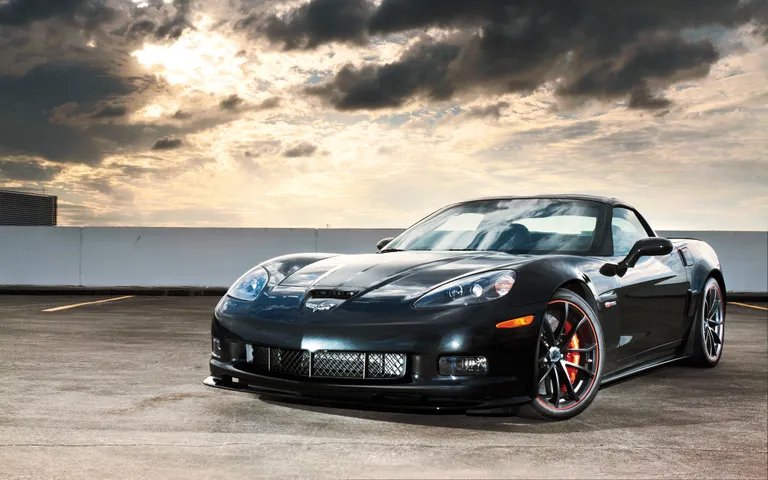
The C6 Corvette marked a significant evolution, embracing a more muscular and aggressive aesthetic with exposed headlights, a departure from the pop-up units of previous generations. This era also saw the introduction of advanced technologies, including Magnetic Ride Control, navigation screens, and head-up displays, bringing the Corvette firmly into the 21st century.
The initial LS2 6.0-liter V8 produced 400 horsepower, allowing for 0-60 mph sprints in just over 4 seconds. By 2008, a new 6.2-liter V8 offered 430 horsepower. The C6 also witnessed the return of the legendary Z06, boasting a potent 505-horsepower 7.0-liter LS7 V8, and the remarkable ZR1, with its supercharged 638-horsepower 6.2-liter V8, capable of exceeding 200 mph.
The C6 generation is celebrated for its blend of performance, comfort, and reliability, making it an excellent choice for those seeking a capable and engaging sports car that remains practical for daily use.
Key Considerations for C6 Buyers:
Best Years: The 2008-2013 models, benefiting from the larger displacement engines and minor refinements, are often favored. The Z06 and ZR1 variants are particularly desirable for performance enthusiasts.
Reliability: The C6 generation is widely regarded as one of the most reliable Corvettes, built on robust mechanicals.
Pricing: Well-maintained C6 Corvettes with under 100,000 miles typically range from $18,000 to $35,000, with special editions like the Z06 and ZR1 reaching up to $50,000 – representing exceptional value for their performance capabilities.
Fifth Generation (C5): The Performance Breakthrough (1997-2004)
The C5 Corvette was a paradigm shift, widely considered the most advanced and fastest version of the car up to its debut. It introduced a new platform for improved rigidity and handling, with the transmission repositioned transaxle for optimal weight distribution. The all-new 5.7-liter LS1 V8 delivered 345 horsepower, enabling 0-60 mph times under 5 seconds.
The C5 also saw the introduction of the fixed-roof coupe (FRC) body style, which was significantly stiffer and served as the foundation for the legendary Z06. The C5 Z06, arriving in 2001, offered enhanced performance with a stronger engine, improved brakes, and a lighter chassis, culminating in impressive acceleration figures.
The C5 generation represents a sweet spot for many buyers, offering a compelling mix of performance, modern features, and relative affordability.
Key Considerations for C5 Buyers:
Best Years: The later C5 models (2002-2004), particularly the Z06 variants, are highly regarded for their performance and refinement. The 2003 50th Anniversary edition is also a notable collectible.
Reliability: C5 Corvettes are known for their exceptional reliability, with the LS1 engine proving to be a durable powerplant.
Pricing: Expect to pay between $17,000 and $26,000 for good condition, standard C5 models with under 100,000 miles. Z06 and low-mileage examples will command higher prices.
Fourth Generation (C4): The Modernization Project (1984-1996)
The C4 Corvette marked a significant departure from its predecessors, featuring a completely revamped design with lighter composite plastics and a more aerodynamic profile. It was the first Corvette to adopt a targa top and reintroduced the convertible body style. The interior received a modern update with a digital instrument panel and improved ergonomics.
While the early C4 models, particularly those from the mid-1980s, were criticized for their lower horsepower outputs and somewhat plasticky interiors, the C4 evolved significantly throughout its production run. The introduction of the LT1 engine in 1992 brought a substantial power increase, and the legendary ZR1, introduced in 1990 with its Lotus-designed LT5 V8, offered supercar-level performance. The C4 Grand Sport, a limited-edition swansong, further highlighted the generation’s performance capabilities.
Key Considerations for C4 Buyers:
Best Years: The 1992-1996 models, equipped with the LT1 or LT4 engines, represent the strongest performance and most desirable C4 variants. The ZR1 is a highly collectible option.
Reliability: While generally reliable, some early C4s can suffer from electrical gremlins and wear on interior components. Later models are typically more robust.
Pricing: Early 1980s C4 models are very affordable, often found for $8,000 to $16,000. 1990s versions, especially the LT1 and Grand Sport, will be more expensive, with ZR1 models commanding premium prices.
Third Generation (C3): The Iconic Era of Style (1968-1982)
The C3 Corvette, often referred to as the “Stingray,” is arguably one of the most visually striking Corvettes ever produced. Inspired by the Mako Shark II concept, its flowing, curvaceous lines defined an era. This generation, the longest-running, experienced significant changes over its lifespan, influenced by evolving emissions regulations and market demands.
Early C3s, particularly those equipped with big-block engines like the 427, offered immense power and performance. However, as the 1970s progressed, horsepower ratings declined due to stricter emissions controls. The introduction of impact-absorbing bumpers altered the aesthetics, and by the mid-1970s, big-block engines were phased out, leaving the 350 small-block V8 as the sole powerplant. Despite declining performance, the C3’s iconic styling ensured strong sales, especially in the late 1970s.
Key Considerations for C3 Buyers:
Best Years: Early models (1968-1972) with big-block engines are the most powerful and desirable, but also the most expensive. Later models, particularly the 1976-1982 variants, offer a more accessible entry point into classic Corvette ownership.
Reliability: Reliability can vary significantly depending on the specific engine and maintenance history. Early big-block engines are potent but can be complex and costly to maintain.
Pricing: C3 Corvettes span a wide price range. Lightweight 1969 models can reach astronomical figures, while late 1970s examples in good condition can be found for as little as $10,000. “Disco-era” models offer a great value proposition as starter classics.
Second Generation (C2): The Sting Ray Masterpiece (1963-1967)
The C2 Corvette, universally known as the “Sting Ray,” is widely regarded as one of the most beautiful and significant Corvettes ever created. Its design, a collaborative effort by Tony Lapine and Larry Shinoda, drew inspiration from racing and aquatic life, resulting in a sleek, muscular, and unforgettable silhouette.

This generation introduced a new chassis engineered by Zora Arkus-Duntov, featuring four-wheel disc brakes and independent rear suspension. Power options ranged from potent small-block V8s to the legendary 427 big-block, capable of delivering race-car-like performance. The iconic split-window coupe, unique to 1963, is particularly sought after by collectors.
Key Considerations for C2 Buyers:
Best Years: All C2 models are highly desirable. The 1963 split-window coupe is the most iconic and valuable. Big-block equipped cars, especially the L88 from 1967, are also premium collector items.
Reliability: As classics, reliability depends heavily on maintenance and restoration. However, the underlying engineering is robust.
Pricing: C2 Corvettes are serious collector cars, with prices ranging from $50,000 for functional small-block examples to well over $250,000 for pristine big-block or split-window models.
First Generation (C1): The Genesis of an Icon (1953-1962)
The very first Chevrolet Corvette was a bold statement, America’s answer to the burgeoning popularity of European sports cars. Initially powered by a straight-six engine, it lacked the performance expected of a sports car. The true transformation came in 1955 with the introduction of Chevrolet’s small-block V8, injecting the Corvette with much-needed power and establishing the V8-powered, rear-wheel-drive formula that would define its future.
The C1 generation underwent significant styling evolutions, culminating in the iconic designs of the late 1950s and early 1960s. Features like fuel injection and four-speed manual transmissions became available, further enhancing its performance credentials. The C1 laid the foundation for the Corvette’s enduring legacy.
Key Considerations for C1 Buyers:
Best Years: The 1956-1962 models, particularly those with the optional fuel-injected V8s and four-speed manual transmissions, are the most sought after and performant.
Reliability: These are vintage automobiles. Reliability is entirely dependent on the quality of maintenance and restoration.
Pricing: Early Corvettes are highly valuable collector cars. Expect prices to range from $60,000 to $120,000 for well-maintained examples, with highly original or fuel-injected models commanding considerably more.
The Pulse of Performance: Cost, Reliability, and Value
When considering a Chevrolet Corvette, the question of cost is multifaceted. While new models can stretch into six figures, the used market offers remarkable opportunities to acquire iconic performance at a fraction of the original price. The Chevrolet Corvette cost is intrinsically linked to its generation, model year, condition, and performance specifications. For instance, a pristine C2 Sting Ray will command a vastly different price than a well-used C4.
Reliability is another crucial aspect of the Chevrolet Corvette buying guide. Generally, Corvettes are built with robust mechanicals, especially those powered by the venerable Small Block V8. However, complexity increases with newer generations. The C5 and C6 generations are often lauded for their impressive reliability, making them strong contenders for those prioritizing dependable performance. As you move to more complex models like the C8, while cutting-edge technology offers astounding performance, the potential for more intricate and costly repairs should be factored into ownership costs. Researching specific model year reliability ratings from reputable sources like Consumer Reports and J.D. Power is highly recommended.
The concept of “value” is where the Chevrolet Corvette truly shines. Even in its most basic forms, it offers performance that rivals and often surpasses vehicles costing significantly more. Whether you’re looking at a vintage C3 as a stylish cruiser or a modern C8 for track-day thrills, a used Corvette often provides an unparalleled performance-per-dollar ratio. The Chevrolet Corvette reliability combined with its enduring appeal means that, even as a used purchase, these cars tend to hold their value remarkably well, especially the more desirable models and limited editions.
Navigating the Used Corvette Market: Expert Tips
Define Your Budget and Priorities: Are you seeking a classic cruiser, a weekend track weapon, or a daily-drivable sports car? Your priorities will dictate which generation and model year are best suited for you.
Research Extensively: Beyond this guide, delve into owner forums, watch video reviews, and consult specialized Corvette publications for in-depth information on specific model years.
Inspect Thoroughly: Look for signs of accident damage, rust (though less common on Corvettes due to their composite bodies), and general wear and tear. A pre-purchase inspection by a Corvette specialist is invaluable.
Service History is Key: A car with a well-documented maintenance history is a significant indicator of good care and potential reliability.
Consider Specific Trim Levels: Performance packages (Z51, Z06, ZR1) and rare editions often offer enhanced performance and collectibility, justifying a higher price.
Don’t Overlook the “Average” Corvette: While rare examples grab headlines, many well-maintained, standard Corvettes offer tremendous value and performance for everyday enthusiasts.
The Chevrolet Corvette remains a compelling proposition for anyone who loves driving. Its rich history, continuous innovation, and the sheer thrill it delivers make it a truly special automobile. By understanding its diverse generations and key considerations, you can confidently embark on the rewarding journey of owning an American sports car icon.
Ready to Experience the Legend?
The open road beckons, and the roar of a Corvette engine awaits. Whether you’re drawn to the timeless elegance of a C2 Sting Ray or the cutting-edge performance of a C8 Z06, your perfect Chevrolet Corvette is out there. Take the knowledge gained from this guide, conduct your due diligence, and prepare to experience the unparalleled thrill of driving America’s Sports Car. Your journey into Corvette ownership begins now – explore listings, connect with specialists, and schedule that all-important test drive. The legend is waiting.
