



Unveiling America’s Sports Car Icon: A Deep Dive into Chevrolet Corvette Value, Reliability, and the Best Years to Acquire
For nearly seven decades, the Chevrolet Corvette has stood as a beacon of American automotive performance and style. More than just a car, it’s a cultural icon, a rolling testament to ingenuity, and a surprisingly accessible entry into the world of high-performance driving. As an automotive industry expert with a decade immersed in this vibrant landscape, I’ve witnessed firsthand the enduring appeal of the Corvette and the evolving market surrounding its acquisition. This comprehensive guide aims to equip prospective buyers with the knowledge to navigate the diverse generations of this legendary machine, focusing on cost, long-term reliability, and identifying the most rewarding model years to bring into your garage. We’ll cut through the noise and provide a clear, expert perspective on what truly makes a Chevrolet Corvette a wise investment.
The story of the Chevrolet Corvette begins in 1953, a bold response to the burgeoning popularity of sleek, European sports cars. While the initial offering, with its revolutionary fiberglass body, possessed an exotic allure, it wasn’t an immediate commercial triumph. The transformation from a stylish roadster to a performance powerhouse truly ignited with the introduction of Chevrolet’s potent Small Block V8 in 1955 and a radical chassis redesign in 1963. This marked the genesis of the classic Corvette formula: robust V8 power, rear-wheel drive, a lightweight chassis, and a reputation for durable, straightforward mechanicals.
Throughout the latter half of the 20th century, the Chevrolet Corvette solidified its status as a working-class hero. It delivered the speed and visual drama of much more expensive exotics at a price point that made sports car ownership attainable for a broader audience. Even as regulatory changes necessitated the phasing out of big-block V8s and convertible body styles, the Corvette’s performance trajectory continued upward. By the late 1990s, models like the ZR1 and Z06 were no longer just competing with, but actively challenging, the established titans from Porsche, Ferrari, and Aston Martin – a competitive spirit that persists to this day.
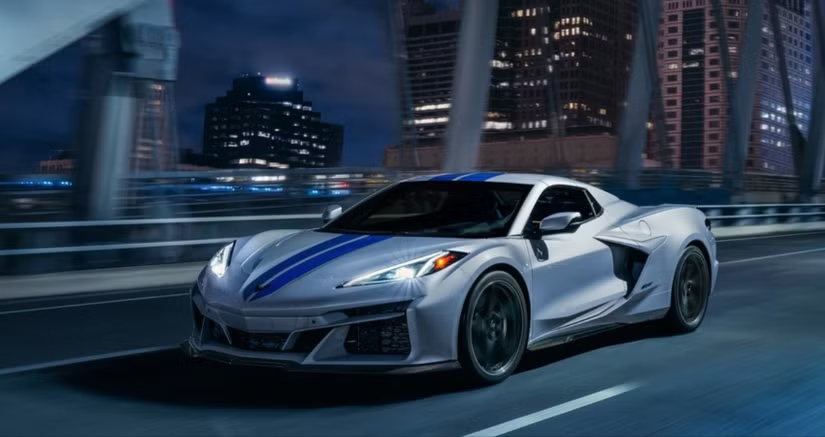
The automotive landscape continued its relentless evolution, and in 2020, Chevrolet made a seismic shift with the C8 generation. After decades of contemplating a mid-engine configuration, they finally committed, delivering a Chevrolet Corvette that, in its contemporary form, is remarkably mistaken for European supercars. This C8 represents the pinnacle of Corvette performance to date, further bolstered by the recent introduction of the formidable Z06 variant and the electrified E-Ray hybrid.
The Corvette’s passionate following spans generations, with even the earliest 1950s models holding significant classic appeal. This guide delves into each generation, offering pragmatic advice on valuation and potential pitfalls to avoid. Across all iterations, a few core truths about the Chevrolet Corvette remain constant: its inherent reliability, the tendency for owners to either meticulously maintain them or push them to their limits (making pre-purchase inspection crucial), and while no longer a budget buy, it consistently offers a superior performance-per-dollar proposition compared to its exotic counterparts. While interiors might not exude the same level of opulence as a Ferrari or Aston Martin, the raw thrill and unique character of a Chevrolet Corvette are undeniable. Many are capable of speeds exceeding 200 mph, offering a genuine supercar experience without the stratospheric ownership costs.
Decoding Chevrolet Corvette Value: A Generation-by-Generation Analysis
Eighth Generation (C8: 2020-Present): The Mid-Engine Revolution
The 2020 debut of the C8 Corvette marked a pivotal moment, transforming America’s sports car into a bona fide mid-engine supercar. This generation redefines performance benchmarks, with the standard 6.2-liter V8 propelling it from 0-60 mph in a breathtaking 2.9 seconds, topping out at 194 mph. Initial pricing ranged from the high $60,000s to the mid-$80,000s, with extensive options pushing many examples into six figures – still a significant value proposition against direct mid-engine competitors and even the Porsche 911.
Opting for the Z51 Performance Package enhances output to 495 horsepower and 470 lb-ft of torque, while adding an electronic limited-slip differential, performance suspension tuning, and upgraded brakes. The C8 exclusively employs a lightning-fast eight-speed dual-clutch transmission, available in both coupe and retractable hardtop convertible configurations.
Technologically, the C8 represents a significant leap. Fully digital instrument clusters and an 8-inch infotainment touchscreen with intuitive software and responsive voice commands are standard. Apple CarPlay and Android Auto gained wireless functionality in 2021. A configurable digital gauge cluster and an optional Performance Data Recorder offer valuable insights for track enthusiasts. The cabin materials and design represent a substantial upgrade over the C7, though the prominent center console bridge, separating driver and passenger, remains a point of stylistic debate. Practicality is a known compromise in mid-engine designs; the C8 offers front and rear storage compartments, but they are modest, necessitating judicious packing.
The C8 lineup has expanded significantly since its inception. The 2023 Z06 arrived with a naturally aspirated 5.5-liter flat-plane crank V8, churning out an astounding 670 horsepower and 460 lb-ft of torque, achieving 0-60 mph in 2.6 seconds. At over $100,000 to start, it offers hypercar-level performance for a fraction of the cost of many European rivals. The 2024 E-Ray introduced the first hybrid Chevrolet Corvette, pairing the 6.2-liter V8 with a front electric motor for a combined 655 horsepower. Its 0-60 mph time dips to a blistering 2.5 seconds, with a respectable 19 mpg combined rating. The E-Ray commands a slight premium over the Z06.
For 2026, Chevrolet introduced a substantial interior refresh. A prominent three-screen setup dominates the cabin: a 12.7-inch central infotainment display, a 14-inch driver information center, and a 6.6-inch auxiliary touchscreen for secondary functions. The center console is redesigned, relocating the drive mode selector and incorporating a covered wireless charging pad. HVAC controls are now situated beneath the main display, creating a more open feel between occupants. The passenger side features an integrated grab handle and a USB-C port. High-performance variants like the ZR1 receive a carbon fiber hood over the driver display.
The infotainment system now runs Google Built-in, offering voice control and integrated streaming apps. The Performance App, originally debuting on the E-Ray, is now standard across the lineup, consolidating performance metrics and data. The Performance Data Recorder receives a significant overhaul with enhanced analysis capabilities. New interior color schemes and the introduction of PTM Pro mode for advanced traction control further refine the C8 experience. For 2026, the base Stingray starts at just over $72,000, with high-performance and limited editions extending well beyond $200,000. Used C8 models from 2020 typically range from $63,000, with newer examples averaging around $100,000.
Seventh Generation (C7: 2014-2019): A Refined Front-Engine Farewell
Initially slated for a 2011 debut, the C7 Corvette’s arrival was delayed by the economic downturn, finally hitting showrooms in late 2013 for the 2014 model year. Its production run, concluding in November 2019, was the shortest since the 1960s, yet it left an indelible mark with its sculpted lines and significantly enhanced interior quality. Materials were upgraded, the console featured a new infotainment screen and improved controls, and a vibrant digital instrument cluster offered extensive customization. Wi-Fi hotspots became standard in 2015, with Apple CarPlay following in 2016.
The C7 utilized an aluminum-alloy frame, contributing to increased rigidity and reduced weight, with carbon fiber integrated into the floor panels. Its aerodynamic design, boasting a drag coefficient of just 0.29, incorporated functional air intakes for cooling and induction. A new seven-speed manual transmission was offered, alongside a six-speed automatic (upgraded to an eight-speed in 2015). The standard 6.2-liter LT1 V8 produced 455 horsepower and 460 lb-ft of torque, enabling 4-second 0-60 mph times and impressive highway fuel economy, a far cry from its predecessors.
Chevrolet didn’t rest on its laurels, introducing the Z51 performance package and a redesigned Z06 for 2015. The supercharged Z06 packed 650 horsepower, making it the most potent Corvette to date. The Grand Sport arrived in 2015 with a 460-horsepower dry-sump LT1, and the ultimate front-engine send-off came in 2019 with the revived ZR1. This track-focused machine boasted extensive aerodynamic enhancements, massive carbon-ceramic brakes, and a supercharged 6.2-liter LT5 V8 producing a staggering 755 horsepower and 715 lb-ft of torque.
The C7’s transition to the mid-engine C8 meant the discontinuation of the manual transmission, making well-maintained, manual-equipped C7 models, particularly special editions like the Grand Sport, highly desirable among enthusiasts.
Sixth Generation (C6: 2005-2013): A Modern Performer
The C6 Corvette, launched in 2005, ushered the marque into the 21st century with sharper, more muscular styling and the return of exposed headlights. Its all-new suspension featured optional Magnetic Ride Control, and the Z51 package offered a performance-tuned setup. The initial LS2 V8 produced 400 horsepower, enabling 0-60 mph in 4.2 seconds, while maintaining respectable fuel economy of 16 mpg city/26 mpg highway.
Technological advancements included an optional navigation screen on the console, a head-up display, selectable driving modes, push-button start, and keyless entry. Heated seats and a power tilt/telescope steering wheel were also available. The 2006 Z06 boasted a 505-horsepower 7.0-liter LS7 V8. A minor update in 2008 saw the base V8 revised to 430 horsepower, reducing 0-60 mph times to 4.0 seconds with the manual transmission. The C6 offered a six-speed manual or a six-speed automatic transmission.
The 2008 ZR1, with its supercharged 6.2-liter V8 producing 638 hp, pushed the envelope with a top speed of 205 mph, establishing itself as GM’s most powerful sports car at the time. The C6 refined the Corvette’s reliability and interior appointments, offering better plastics and a more pleasing design than its predecessors. Well-maintained C6 models with under 100,000 miles can typically be found between $18,000 and $35,000, with performance variants like the Z06 and ZR1 commanding higher prices, often not exceeding $50,000 – a remarkable value for a car capable of such speeds.
Fifth Generation (C5: 1997-2004): The Modern Foundation
Following a 12-year run of the C4, the C5 generation, introduced in 1997, was a revelation. It was the first Corvette to be officially designated by its generation number, setting a precedent for future models. The C5’s styling was an evolutionary refinement, featuring a lower, rounder profile with the signature long hood, hidden headlights, and fastback rear. Its composite body panels were lighter and more sophisticated than those of the C4.
Underneath, the C5 was truly revolutionary. It utilized a new platform for enhanced chassis stiffness and incorporated a rear-mounted transaxle for improved weight distribution. Powering the C5 was a new, all-aluminum Gen III LS-1 5.7-liter V8, producing 345 horsepower and achieving 0-60 mph in 4.8 seconds, with an impressive 28 mpg highway rating.
Initially offered only as a coupe, Chevrolet introduced a convertible in 1998 and a lightweight, fixed-roof coupe in 1999, which paved the way for the iconic C5 Z06. The Z06 featured a stiffer body and suspension, enhanced brakes, lightweight wheels, and a 385-hp LS6 V8, upgraded to 405 horsepower in 2002. Further weight reduction efforts in 2004 included a carbon-fiber hood and titanium exhaust. The C5 Z06 could achieve 0-60 mph in 3.9 seconds, a remarkable feat that still impresses today. Numerous special editions, including Indy 500 pace cars and a 50th-anniversary model, add to the C5’s desirability. C5 Corvettes offer a potent blend of speed and reliability, with good examples typically priced between $17,000 and $26,000, while Z06 and special editions command higher figures.
Fourth Generation (C4: 1984-1996): Aerodynamics and Advancements
The C4 Corvette, a complete departure from its predecessor, debuted in 1984 with a revolutionary approach to manufacturing. It utilized lighter, more durable composite plastics bonded to a high-strength steel frame. The T-bar roof was replaced by a lighter targa top, though this compromise affected chassis rigidity. The convertible returned for the first time in a decade.
Designed by Jerry Palmer, the C4’s sleek, futuristic shape integrated a glass hatch and showcased advancements in aerodynamics. Its slightly shorter wheelbase and new suspension, coupled with rack-and-pinion steering, were significant upgrades. The interior featured a groundbreaking digital instrument panel and improved ergonomics.
Powering the C4 was a 5.7-liter Small Block V8, with variations including the L83 (205 hp), the L98 (230-250 hp), and the LT1 (300 hp). The performance variant, the ZR1, introduced in 1990, featured a Lotus-designed LT5 V8 producing 375 horsepower (later 405 hp), making it the fastest Corvette since the big-block era. The 1996 Grand Sport, a tribute to its 1960s namesake, was fitted with a 330-horsepower LT4 V8. Transmission options included a unique 4-speed manual with overdrive and a ZF 6-speed manual. While the C4 faced criticism for its interior plastics and less refined automatic transmissions, its performance in the 1980s and 90s was compelling and reliable. Early 1980s C4s are the least desirable due to lower outputs, making them bargains. Most C4s range from $8,000 to $16,000, with rare ZR1, Callaway, or Grand Sport models fetching higher prices.
Third Generation (C3: 1968-1982): The Mako Shark Era
The C3 Corvette, boasting the longest production run, debuted in 1968 with a striking design inspired by the Mako Shark II concept. It was offered as a coupe with removable T-tops or a convertible. Early models featured potent big-block V8s, including the legendary 427 and the even more extreme ZL-1 with 585 horsepower. The 1970 model year introduced the LT-1 350 cubic-inch V8.
However, the era of muscle cars began to wane under increasing emissions regulations and insurance costs. Horsepower figures declined, and by 1975, the big-block engines were discontinued entirely, leaving only the 350 Small Block. The convertible was also axed in 1975. Despite a dip in performance, the C3’s iconic styling ensured strong sales throughout the 1970s. The latter half of the generation saw styling updates, including a larger glass rear window and a hatchback.
C3 Corvettes offer a wide spectrum of values. While early, high-performance models like the 1969 Stingray can command hundreds of thousands of dollars, later models in good condition can be found for as little as $10,000. They are generally easy to maintain, making them a rewarding classic purchase, especially the later examples which represent a solid entry point into collectible Corvettes.
Second Generation (C2: 1963-1967): The Legendary Sting Ray
The C2 Sting Ray is widely considered one of the most aesthetically pleasing Corvettes ever produced. Its design, a collaboration between Tony Lapine and Larry Shinoda, drew inspiration from racing prototypes. Chief Engineer Zora Arkus-Duntov oversaw a complete platform redesign, introducing a new ladder-style chassis, four-wheel disc brakes, and independent rear suspension.

The C2 offered a range of Small Block V8s, culminating in the potent 396 and the limited-production 427 big-block engines, capable of impressive performance figures for the era. The iconic split rear window, a hallmark of the 1963 model, was removed in 1964 due to visibility concerns. While originally designed primarily as a coupe, a roadster version was also available.
Sting Rays are highly sought-after classics. Usable examples typically range from $50,000 to $250,000 or more. The lower end of this spectrum accommodates well-maintained Small Block cars, while the higher end is reserved for rare Big Block variants, highly original, low-mileage examples, and the coveted split-window coupes.
First Generation (C1: 1953-1962): The Genesis
The original Corvette was born out of General Motors’ Motorama show in 1953 as a response to the growing appeal of European sports cars. Housed in a revolutionary fiberglass body, the early C1 was mechanically conventional, utilizing components from existing Chevrolet sedans. Its initial straight-six engine produced a modest 150 horsepower and was paired with a two-speed automatic transmission.
Sales were initially sluggish, and performance limitations were apparent. The true turning point came in 1955 with the introduction of Chevrolet’s Small Block V8. The 1956 redesign, featuring concave sides and a sculpted hood, significantly enhanced its sporty appearance. Horsepower increased steadily through the late 1950s, with the introduction of a four-speed manual transmission in 1957 and optional mechanical fuel injection in 1958. The 1961 model year saw a distinctive “duck tail” rear end with four round taillights.
First-generation Corvettes are valuable classics, with prices generally ranging from $60,000 to $120,000 for well-preserved examples. Fuel-injected models and those with extremely low mileage can command significantly higher figures.
Navigating the Used Market: Key Considerations for Every Corvette Buyer
When embarking on the quest for a used Chevrolet Corvette, several universal principles apply. Firstly, thorough pre-purchase inspection by a qualified mechanic specializing in Corvettes is non-negotiable. This is particularly crucial for older models where potential age-related issues can be masked. Secondly, research the specific generation and model year you are interested in. Understanding common issues, performance characteristics, and historical reliability data for that particular iteration will empower you to make an informed decision.
For the C8 generation, focus on options that align with your driving style. For C7 models, prioritize well-maintained examples, especially those with manual transmissions if that is your preference. The C6 generation represents an excellent value proposition for a modern performance car; seek examples with documented maintenance history. C5 models are lauded for their reliability and performance, making them a strong contender for enthusiasts on a budget. C4s offer a vast range of performance and condition, from bargain-basement drivers to rarer performance variants. C3 and C2 models require a keen eye for originality and condition, as their classic status commands higher prices. C1 models are purely for the dedicated collector with significant financial resources.
When considering cost, remember that while a Chevrolet Corvette offers exceptional value compared to its exotic counterparts, maintenance and repair costs can still be substantial, especially for older or high-performance variants. Factor in potential expenses for tires, brakes, fluids, and any unexpected repairs into your overall budget. Furthermore, the enthusiast community surrounding the Chevrolet Corvette is vast and knowledgeable. Engaging with Corvette clubs and online forums can provide invaluable insights, advice, and even leads on potential vehicles.
The Enduring Allure of the Chevrolet Corvette
The Chevrolet Corvette is more than just a car; it’s an embodiment of American automotive ambition, a symphony of performance, style, and accessible exhilaration. Whether you’re drawn to the raw power of a vintage big-block, the refined handling of a modern C8, or the timeless elegance of a Sting Ray, there’s a Chevrolet Corvette waiting to fulfill your driving dreams. By understanding the nuances of each generation, diligently inspecting potential purchases, and budgeting wisely, you can confidently secure an iconic piece of automotive history that promises years of thrilling ownership.
Ready to experience the legend firsthand? Explore our curated listings for Chevrolet Corvettes and discover the perfect example to ignite your passion for performance driving.
