
The Enduring Allure of the Chevrolet Corvette: A Comprehensive Buyer’s Guide to America’s Premier Sports Car
For nearly three-quarters of a century, the Chevrolet Corvette has stood as a beacon of American automotive performance and aspirational desire. More than just a car, it’s an icon, a rolling testament to engineering prowess and design evolution that has consistently challenged, and often surpassed, its global counterparts. As an industry professional with a decade immersed in the automotive landscape, I’ve witnessed firsthand the Corvette’s remarkable journey, from its humble beginnings as a response to European roadsters to its current status as a bona fide mid-engine supercar. This guide aims to equip you, the discerning enthusiast and prospective owner, with the in-depth knowledge needed to navigate the diverse and fascinating world of used Chevrolet Corvettes, focusing on cost, reliability, and the definitive “best years” to consider.
The quest for the ultimate sports car has long captivated enthusiasts worldwide. For decades, performance aspirations often led buyers towards European stalwarts like Porsche and Ferrari, cars synonymous with exotic allure and exhilarating dynamics. However, Chevrolet’s enduring answer, the Corvette, has consistently offered a compelling alternative, blending raw power, sophisticated handling, and undeniable American spirit, often at a significantly more accessible price point. This enduring value proposition remains a cornerstone of the Corvette’s appeal, making it a perennially attractive option for those seeking thrilling performance without the stratospheric costs associated with many of its exotic rivals. Understanding the nuances of each generation is key to making a wise investment in this storied American automotive legend.
Unpacking the Chevrolet Corvette Value Proposition: Cost, Reliability, and Investment Potential
The core appeal of the Chevrolet Corvette has always been its exceptional performance-to-price ratio. Even today, a used Corvette offers a level of speed, handling, and driving excitement that can genuinely rival cars costing two, three, or even four times as much. This affordability, however, doesn’t equate to cheapness. The Corvette is a serious performance machine, built with robust engineering and often cherished by its owners. As such, while you might find “bargains” on poorly maintained examples, well-cared-for Corvettes, particularly from specific generations and trims, represent sound automotive investments.
Reliability is another hallmark of the Corvette, a testament to Chevrolet’s commitment to proven engineering, especially in its V8 powertrains. While some model years and specific components might present minor concerns, the overall longevity and durability of the Corvette platform are impressive. For those considering a pre-owned Chevrolet Corvette, a thorough pre-purchase inspection by a trusted mechanic specializing in Corvettes is an essential step. This due diligence can uncover potential issues and provide peace of mind, ensuring your chosen vehicle offers years of exhilarating driving without unexpected mechanical headaches.
When evaluating the “best years” to buy a Chevrolet Corvette, it’s crucial to consider your priorities. Are you seeking the raw, analog experience of an early V8? The refined, yet still potent, performance of a late-model front-engine car? Or the cutting-edge technology and supercar dynamics of the mid-engine C8? Each generation offers a unique flavor of the Corvette experience, and understanding these differences is paramount. We’ll delve into each generation, highlighting their strengths, weaknesses, and the particular models that stand out.
The Mid-Engine Revolution: The Eighth-Generation (C8) Corvette (2020-Present)
The arrival of the C8 Corvette in 2020 marked a paradigm shift in the model’s history. Chevrolet finally embraced the mid-engine layout that had been debated for decades, fundamentally altering the car’s proportions, dynamics, and perceived exoticism. This generation instantly elevated the Corvette’s standing, with many models easily mistaken for European supercars. The naturally aspirated 6.2-liter LT2 V8, producing 490 horsepower (495 with Z51 package), propels the base Stingray to 60 mph in a blistering 2.9 seconds.
The C8’s design is aggressively sculpted, featuring sharp lines and functional aero elements. Inside, the technological leap is substantial. A fully digital instrument cluster, an intuitive 8-inch infotainment touchscreen supporting wireless Apple CarPlay and Android Auto, and an available Performance Data Recorder cater to the modern enthusiast. However, the driver-centric cockpit is dominated by a prominent console divider, a design choice that some find divisive. Luggage space, a perennial Corvette challenge, is further compromised by the mid-engine layout, with small front and rear compartments.
The C8 lineup has expanded significantly since its debut. The 2023 Z06 variant is a track-honed monster, boasting a 5.5-liter flat-plane crank V8 that unleashes 670 horsepower. This performance-oriented machine achieves 0-60 mph in just 2.6 seconds and is a genuine supercar contender. For 2024, Chevrolet introduced the E-Ray, the first-ever hybrid Corvette. It pairs the 6.2-liter V8 with an electric motor, delivering a combined 655 horsepower and achieving 0-60 mph in an astonishing 2.5 seconds, all while offering a respectable 19 mpg combined.
For the 2026 model year, Chevrolet rolled out significant interior and technology upgrades. A redesigned three-screen setup includes larger displays for the infotainment and driver information center, augmented by a new auxiliary touchscreen. The center console is reconfigured for better ergonomics, featuring a wireless charging pad and relocated drive mode selectors. Google Built-in infotainment, offering streaming apps and advanced voice control, becomes standard. The Performance App receives an overhaul, and the Performance Data Recorder gains real-time analysis capabilities. New interior color schemes and material options, alongside the introduction of PTM Pro (Performance Traction Management), further enhance the C8’s appeal.
When considering a C8, newer models offer the latest technology and performance enhancements. However, early C8 Stingrays from 2020-2021 can represent a significant value on the used market, typically ranging from $63,000 to $80,000, while still delivering supercar performance. The Z06 and E-Ray command premium pricing, often exceeding $100,000 even on the used market due to their extreme performance and novelty.
The Apex of Front-Engine Performance: The Seventh-Generation (C7) Corvette (2014-2019)
The C7 Corvette, produced from late 2013 to November 2019, stands as the final chapter in the front-engine Corvette saga. It represented a substantial leap forward in design, technology, and performance compared to its predecessor. The exterior styling became more chiseled and sophisticated, with functional aero elements and hidden headlights. The interior received a significant upgrade, featuring higher-quality materials, a premium infotainment system, and a much-improved digital instrument cluster.
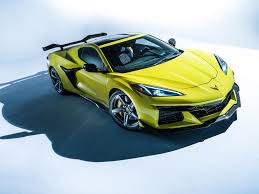
Underneath, the C7 utilized an aluminum frame for increased rigidity and reduced weight. The standard 6.2-liter LT1 V8 produced 455 horsepower, enabling 0-60 mph times in the low four-second range, while surprisingly achieving up to 29 mpg on the highway. The C7 offered both a seven-speed manual transmission and an optional six-speed automatic (later an eight-speed).
The C7’s performance capabilities were further amplified with the introduction of the Z51 Performance Package and the formidable Z06. The 2015 Z06 featured a supercharged 6.2-liter LT4 V8 generating a staggering 650 horsepower. In 2019, Chevrolet unleashed the ultimate front-engine Corvette, the ZR1. This track-focused beast housed a supercharged 6.2-liter LT5 V8 delivering an earth-shattering 755 horsepower, making it the most powerful production Corvette to date and a fitting send-off to the front-engine era.
For enthusiasts seeking a pure, unfiltered driving experience, the C7 remains a highly desirable option. The manual transmission variants, particularly the Z51 and Grand Sport models, are increasingly sought after. Reliability is generally good, though early C7 models (2014-2015) faced some criticism for electronic gremlins. Well-maintained C7s can be found in the $45,000 to $70,000 range, with the more potent Z06 and ZR1 models commanding significantly higher prices, often upwards of $80,000 to $120,000.
The 21st-Century Sophisticate: The Sixth-Generation (C6) Corvette (2005-2013)
The C6 Corvette marked a significant modernization of the Corvette formula. Introduced in 2005, it featured a sharper, more muscular exterior design and, notably, exposed headlights for the first time since 1962. The interior saw a considerable improvement in material quality and design, with features like navigation screens and head-up displays becoming available.
The standard LS2 6.0-liter V8 produced 400 horsepower, offering a 0-60 mph time of around 4.2 seconds. Chevrolet continued to refine the C6 throughout its production. A new 430-horsepower 6.2-liter V8 was introduced in 2008. The C6 also saw the return of the legendary Z06 in 2006, powered by a 505-horsepower 7.0-liter LS7 V8. The ultimate C6, the ZR1, arrived in 2008, boasting a supercharged 6.2-liter V8 producing 638 horsepower and a top speed exceeding 200 mph.
The C6 is often considered one of the most reliable generations of the Corvette, built on proven components and benefiting from continuous refinement. It offers a fantastic blend of performance, comfort, and modern amenities at an attractive price point on the used market. Well-maintained C6 Corvettes can typically be found in the $18,000 to $35,000 range, with Z06 and ZR1 models representing excellent value for their performance, often available for under $50,000. This generation is a sweet spot for many enthusiasts seeking a potent and reliable sports car without breaking the bank.
The Leap Forward: The Fifth-Generation (C5) Corvette (1997-2004)
The C5 Corvette, introduced in 1997, was a revolutionary leap for the nameplate. It was the first generation to be officially designated by its chassis code, C5, and it set a new benchmark for performance and sophistication. The styling was an evolutionary refinement of the C4, with a lower, rounder profile and more pronounced curves. The real revolution, however, was under the skin.
The C5 featured a new, hydroformed steel frame for enhanced rigidity and a transaxle design, placing the transmission over the rear axle for optimal weight distribution. The heart of the C5 was the all-new all-aluminum Gen III LS1 5.7-liter V8, producing 345 horsepower. This powerplant, coupled with a new six-speed manual transmission, delivered a 0-60 mph time of 4.8 seconds and impressive highway fuel economy.
The C5 lineup expanded to include a convertible and a fixed-roof coupe. In 2001, Chevrolet resurrected the Z06 moniker for the C5. This track-focused variant featured a stiffer body, enhanced suspension, larger brakes, and a more powerful version of the LS6 V8, producing 405 horsepower. The C5 Z06 was a remarkably fast car for its era, achieving 0-60 mph in under four seconds and a quarter-mile time in the low 12s.
The C5 Corvette is widely regarded as one of the most reliable generations, benefiting from its modern engineering and robust LS V8 engines. It offers a thrilling driving experience with a comfortable ride and a well-appointed interior for its time. Used C5 Corvettes, especially the standard coupe and convertible models, are incredibly affordable, often found in the $15,000 to $25,000 range. The highly desirable Z06 models command higher prices, typically between $25,000 and $40,000, representing exceptional value for their performance capabilities.
The Era of Refinement and Speed: The Fourth-Generation (C4) Corvette (1984-1996)
The C4 Corvette represented a significant departure from its predecessor, debuting in 1984 with a completely re-engineered chassis and a sleek, futuristic design penned by Jerry Palmer. Gone were the curves of the C3, replaced by sharper lines and a more aerodynamic profile. The interior featured a pioneering digital instrument panel and improved ergonomics, despite the car’s substantial door sills.
Powering the C4 was a version of the venerable 5.7-liter small-block V8. Early models produced around 205 horsepower, but Chevrolet consistently improved the engine throughout the C4’s production. The L98 engine, introduced in 1985, offered 230-250 horsepower. The C4’s performance trajectory truly accelerated with the introduction of the ZR1 in 1990. Featuring a Lotus-designed LT5 V8, the ZR1 produced 375 horsepower (later 405 hp) and was the fastest Corvette since the big-block era of the 1960s. The LT1 engine, introduced in 1992, provided a strong 300 horsepower for standard models.
The C4’s reliability is generally good, though some early models had minor issues. The later C4s, particularly those with the LT1 engine and the ZF six-speed manual transmission, are considered the most desirable. The early C4s from the mid-1980s, with their lower horsepower ratings and dated interiors, represent the most budget-friendly entry into Corvette ownership, often available for $8,000 to $15,000. Later models, especially the ZR1 and the 1996 Grand Sport, can fetch higher prices, but still offer remarkable performance for the money. This generation is an excellent choice for enthusiasts on a tighter budget seeking a classic American sports car experience.
The Iconic Stinger: The Third-Generation (C3) Corvette (1968-1982)
The C3 Corvette, often referred to as the “Stingray,” is the longest-running generation, produced from 1968 to 1982. Its design, inspired by the Mako Shark II concept, is iconic, characterized by its sweeping curves, long hood, and aggressive stance. This generation embodies the spirit of the late 1960s and 1970s, a period of both burgeoning performance and evolving automotive regulations.
Early C3s, particularly those from 1968-1972, offered potent big-block V8 engines like the 427, producing impressive horsepower figures. The introduction of the LT-1 350 V8 in 1970 provided a powerful small-block alternative. However, as emissions regulations tightened and fuel crises emerged, horsepower figures gradually declined throughout the 1970s. By the mid-1970s, the big-block engines were discontinued, and the C3 primarily relied on the 350 small-block.
The C3’s appeal lies in its unforgettable styling and its connection to a bygone era of automotive excess. While performance diminished in later years, the visual impact remained. Reliability can vary significantly depending on the specific year and maintenance history. Early big-block cars and desirable configurations like the 1969 L88 are highly sought after and command premium prices, often exceeding $100,000. However, later models from the mid-to-late 1970s, in good condition, can be acquired for as little as $10,000 to $20,000, offering a stylish entry into classic Corvette ownership.
The Pinnacle of Mid-Century Design: The Second-Generation (C2) Corvette (1963-1967)
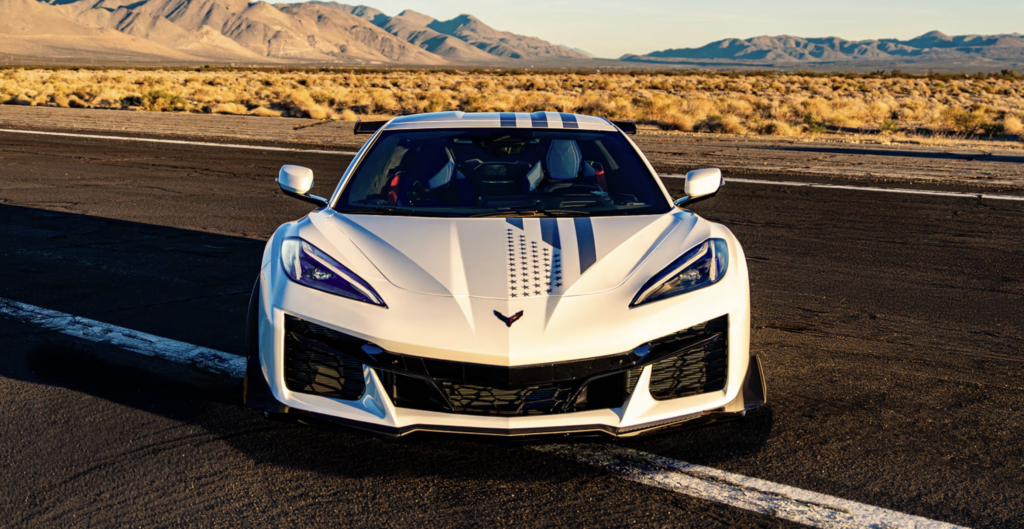
The C2 Corvette, affectionately known as the “Sting Ray,” is widely considered one of the most beautiful Corvettes ever produced. Debuting in 1963, its aggressive, shark-like styling, conceived by Larry Shinoda and Tony Lapine, perfectly captured the spirit of performance. Chief engineer Zora Arkus-Duntov spearheaded a new chassis design, incorporating independent rear suspension and four-wheel disc brakes, transforming the Corvette into a true sports car.
The C2 offered a range of potent V8 engines, from the 327 small-block, available with up to 375 horsepower (with fuel injection), to the formidable 427 big-block, including the legendary L88 variant, rumored to produce around 500 horsepower. The iconic split-window coupe of 1963 is particularly rare and valuable.
The Sting Ray represents the zenith of early Corvette performance and design. These are highly collectible classics, with prices reflecting their rarity and desirability. Expect to pay anywhere from $50,000 for a solid, running small-block example to well over $250,000 for pristine, low-mileage big-block cars or the rare 1963 split-window coupe. While expensive, a C2 Sting Ray offers an unparalleled driving experience and an enduring piece of automotive history.
The Genesis of an Icon: The First-Generation (C1) Corvette (1953-1962)
The story of the Chevrolet Corvette begins with the C1. Introduced in 1953 as a response to the burgeoning popularity of imported sports cars, the C1 was America’s answer to the allure of European motoring. Its fiberglass body, a revolutionary material for the time, allowed for the creation of its distinctive, curvaceous shape.
Early C1s were powered by a Chevrolet inline-six engine, a compromise necessitated by the rushed production schedule. These early models lacked the performance expected of a sports car and were only available with a two-speed automatic transmission. The true transformation occurred in 1955 with the introduction of Chevrolet’s potent “Small Block” V8 and a three-speed manual transmission. This crucial update breathed life into the Corvette, setting the stage for its future dominance.
The 1956 restyle, with its concave sides and sculpted hood, further enhanced the Corvette’s sporty appearance. Horsepower steadily increased through the late 1950s, and by 1957, a four-speed manual transmission was available. Notable features like optional fuel injection (introduced in 1958) and the distinctive quad headlights of the 1958 redesign cemented the C1’s evolving identity.
Today, the first-generation Corvettes are highly prized classics. Even the earliest, less powerful models are valuable, typically ranging from $60,000 to $120,000. Highly original, low-mileage examples and fuel-injected “Fuelies” can command significantly higher prices. While modified C1s exist, they generally do not appreciate as well as original, well-preserved examples. Buying a C1 requires a deep appreciation for automotive history and the willingness to invest in a true piece of American heritage.
Navigating the Used Market: Essential Considerations for Chevrolet Corvette Buyers
When embarking on the journey to purchase a used Chevrolet Corvette, regardless of the generation, several key factors come into play. Beyond the specific model year and trim, always prioritize:
Pre-Purchase Inspection (PPI): This cannot be stressed enough. A thorough inspection by a Corvette specialist or a mechanic with extensive experience in performance vehicles is non-negotiable. They can identify potential issues with the engine, transmission, suspension, and bodywork that might not be obvious to the untrained eye.
Maintenance Records: A car with a documented history of regular maintenance is a significant indicator of care and potential longevity. Look for invoices for oil changes, fluid flushes, and any significant repairs.
Corrosion and Frame Integrity: While Corvettes are not typically prone to extensive rust due to their construction, it’s still crucial to inspect the frame, especially on older models, for any signs of damage or corrosion.
Test Drive: Pay close attention to how the car drives. Listen for unusual noises, feel for proper shifting, and ensure the brakes and steering are responsive. Test all the car’s features, from the climate control to the infotainment system.
Mileage vs. Condition: While lower mileage is generally desirable, a well-maintained higher-mileage Corvette can often be a better purchase than a low-mileage car that has been neglected.
Specific Model Knowledge: Researching the particular generation and trim you’re interested in is vital. Understand common issues, desirable options, and performance variations to make an informed decision.
The Chevrolet Corvette: An Investment in Driving Pleasure
The Chevrolet Corvette, in its myriad forms, offers an unparalleled blend of performance, style, and value. Whether you’re drawn to the visceral thrill of an early big-block, the refined engineering of a C6, or the cutting-edge technology of a C8, there’s a Corvette for every enthusiast. By understanding the history, the nuances of each generation, and the critical factors in buying used, you can confidently find the Chevrolet Corvette that will deliver years of exhilarating driving and automotive satisfaction.
Your journey to owning a piece of American automotive legend begins now. Explore the available models, do your homework, and prepare to experience the enduring allure of the Chevrolet Corvette.