
The Enduring All-Terrain: A Decade of Expertise in Buying Your Next Subaru Outback
For over a quarter-century, the Subaru Outback has carved a unique niche in the automotive landscape, evolving from a rugged variant of the Legacy sedan into a bona fide crossover icon. As an industry professional with a decade immersed in the automotive market, I’ve witnessed firsthand the Subaru Outback’s remarkable journey and its enduring appeal. This isn’t just another vehicle; it’s a testament to Subaru’s commitment to capability, safety, and a distinct sense of adventure. If you’re considering adding a Subaru Outback to your driveway, this comprehensive guide, updated with 2025 insights, will equip you with the knowledge to make a savvy investment, focusing on cost, reliability, and identifying the best years to buy a Subaru Outback.
The Subaru Outback’s lineage traces back to 1995, initially appearing as an enhanced package on the mid-size Subaru Legacy. Recognizing the growing consumer interest in vehicles with a more adventurous persona, Subaru ingeniously leveraged its long-standing expertise in all-wheel drive (AWD) systems, a technology it had pioneered two decades prior. This foresight proved prescient. As the automotive industry grappled with shifting consumer preferences in the late 1980s and early 1990s, the Outback emerged as a distinctive solution. It was one of the first vehicles to successfully blend the practicality of a wagon with the rugged aesthetics and increased ground clearance that consumers increasingly craved, a precursor to the modern SUV and crossover boom.
What began as a more aesthetically rugged Legacy wagon quickly evolved. Within a year, Subaru introduced a lift kit, increasing ground clearance and further solidifying its go-anywhere image. The core recipe remained remarkably consistent: take Subaru’s proven and exceptionally capable AWD system, elevate it with enhanced suspension and greater ground clearance, and package it in a design that appealed to an adventurous spirit. This timing coincided perfectly with an explosion in the American consumer’s appetite for SUVs. While fundamentally retaining its wagon roots, the Outback rapidly shed any notions of being a mere family hauler, instead championing an image of boundless road trip potential and exploration.
The immediate popularity of the Outback led to the swift introduction of smaller variants, such as the Outback Sport, based on the compact Impreza. During its inaugural decade, Subaru even offered a sedan version, the Legacy SUS (Sport Utility Sedan), frequently badged as an Outback. The overwhelming success of these models, coupled with AWD becoming a significant differentiator in the market, prompted Subaru to make its entire lineup AWD by 1999, heavily leaning into the triumphant formula established by the Outback. Over the years, the Outback has increasingly diverged from the Legacy, its larger wagon form factor evolving into a profile much closer to what we now recognize as a crossover. By the late 2010s, this evolution meant the design decisions for the Legacy sedan were, in part, influenced by the space and rugged demands dictated by its hyper-popular Outback sibling.
As Subaru’s flagship vehicle for many years, the Outback has often served as the showcase for the automaker’s latest technological advancements. The sophisticated EyeSight driver-assist suite, for instance, debuted on the Outback long before many competitors from brands like Nissan and Honda offered comparable safety features. Similarly, Subaru’s legendary AWD system has undergone continuous refinement throughout the Outback’s lifespan. A significant milestone arrived in 2021 with the introduction of the even more rugged Outback Wilderness edition, a trim that subsequently inspired Wilderness variants for other Subaru models like the Forester and Crosstrek. Outbacks are renowned for their practicality, spaciousness, and genuine light off-road prowess, bolstered by generous ground clearance and advanced terrain management systems.
However, no vehicle is without its quirks. The continuously variable automatic transmissions (CVTs) that Subaru has favored for the past decade, while generally efficient, can present complexities in repair for some owners. Subaru’s signature horizontally opposed “Boxer” engines, while offering a low center of gravity and smooth operation, can require more diligent maintenance than some conventional engine designs. Historically, certain Subaru engines have been known to develop head gasket issues over time, a repair that can be costly. Furthermore, these engines may consume more fuel than comparable inline-four or V6 engines from competitors, and Subaru has yet to introduce a hybrid Outback option. It’s also worth noting that vehicles equipped with AWD and frequently utilized for off-road excursions will naturally have more components susceptible to wear and tear than their sedan or conventional wagon counterparts.
Despite these considerations, the Subaru Outback remains a remarkably safe, capable, and utterly compelling choice, fostering immense loyalty among its owners, who often view it as an exceptional vehicle. This guide aims to dissect each generation, offering actionable advice for prospective buyers.
Navigating the Generations: Finding Your Ideal Subaru Outback
Frequently Asked Questions About Buying a Subaru Outback
Which Subaru Outback years are considered the best?
Generally, most Subaru Outback models earn “average” reliability ratings from automotive authorities. This often stems from their requirement for slightly more specialized maintenance compared to some competitors, and the potential for eventual, albeit sometimes costly, repairs like head gasket or timing belt replacements. Nevertheless, the Outback is built for longevity. Based on data from reputable sources like Consumer Reports, the model years frequently cited for fewer issues and superior reliability include 2014, 2016, 2017, and the 2021 model year onward.
What are considered the worst Subaru Outback years to buy?
Disagreements exist among reliability tracking services. Crowdsourced platforms like CarComplaints.com have identified 2013, 2015, and 2018 models as having the highest number of reported issues, primarily concerning electrical systems and engines. However, major outlets like J.D. Power and Consumer Reports often rate these years more favorably. Consumer Reports has expressed more significant concerns regarding 2005-2007 models, and more recently, 2019 and 2020 Outbacks. J.D. Power tends to award nearly all Outback models an “average” or slightly above-average reliability rating. For those venturing into older models, pre-2002 Outbacks with 2.5-liter powertrains are particularly known for head gasket failures and coolant leaks.
Is a used Subaru Outback a good deal?
Absolutely. As a pre-owned vehicle, the Subaru Outback represents an excellent value proposition for buyers prioritizing space, modern features, and robust all-weather capability. While its long-term maintenance costs might be slightly higher than some other mid-size family vehicles (sedans and crossovers), the Outback has consistently offered advanced safety equipment and engaging driving dynamics. In an automotive market where traditional wagons have become increasingly niche and expensive, the Subaru Outback stands out as one of the few affordable vehicles that still embraces this versatile body style, even as it has matured into a crossover form. Its inherent practicality delivers significant value.
Subaru Outback: Pros and Cons
Pros:
Exceptional All-Wheel Drive System: Standard on all models, providing unparalleled traction and stability in various conditions.
Comfortable and Spacious Interior: Offers ample room for passengers and cargo, making it ideal for families and adventurers alike.
Abundant Safety Features: Subaru consistently equips the Outback with advanced safety technologies, particularly on newer models.
Cons:
Higher Long-Term Maintenance Costs: Can require more specialized and potentially costly maintenance compared to some rivals.
Sub-par Fuel Economy: May not achieve the same fuel efficiency as some direct competitors, especially in older generations.
Mediocre On-Road Performance (in some later years): While capable, some later models might not offer the most dynamic driving experience on pavement compared to more road-focused crossovers.
Generation Breakdown and Buying Advice
Seventh Generation (2026-Present): The Future of Rugged Capability
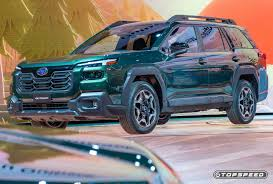
The latest iteration, debuting for the 2026 model year, presents a more rectilinear design compared to its predecessor, while maintaining familiar proportions. Subaru has amplified its rugged aesthetic with updated lighting signatures and more durable textured cladding. The roof rack system sees a significant upgrade, now capable of supporting 220 pounds of lateral load, perfect for accessories like awnings or roof-top tents.
Inside, the cabin receives notable enhancements. Door bottle holders are now sized for 32-ounce containers, and a 2-inch increase in roofline height translates to improved headroom. Cargo volume grows by 2 cubic feet and gains 2 inches in vertical space. The technological leap is substantial, featuring an all-new 12.1-inch infotainment display and a 12.3-inch digital instrument cluster running updated software.
Safety technology reaches new heights with Emergency Stop Assist and Safe Lane Selection, designed to steer the vehicle to the shoulder and alert emergency services if the driver becomes unresponsive. On designated highways, hands-free driving is now possible with driver supervision at speeds up to 85 mph. The EyeSight camera’s field of view is widened for enhanced pedestrian and cyclist detection, complemented by haptic feedback alerts.
Powertrain options include a revised 2.5-liter Boxer engine producing 180 horsepower and 178 pound-feet of torque, and the turbocharged 2.4-liter engine (260 horsepower, 277 pound-feet of torque) carried over from the previous generation.
The 2026 Subaru Outback starts at a manufacturer’s suggested retail price (MSRP) of $34,995, excluding destination fees, marking a notable increase. However, Subaru has streamlined the lineup by eliminating the base trim, meaning the entry point is now the Premium level, which includes more standard equipment than before.
Sixth Generation (2020-2025): The Modern All-Rounder
This generation, launched for the 2020 model year, presented a subtle exterior evolution but significant under-the-hood advancements. The optional six-cylinder engine was retired, replaced by a potent new 2.4-liter turbocharged four-cylinder. This “XT” engine, revived from a prior generation, offers a compelling blend of increased power (260 horsepower and 277 pound-feet of torque) and improved fuel efficiency (up to 26 mpg combined) over the outgoing six-cylinder. Standard models continue with a refined 2.5-liter four-cylinder producing 182 horsepower and 176 pound-feet of torque. Both engines are mated to a new continuously variable transmission (CVT) with an eight-speed manual mode, and AWD remains standard.
Initial trims included 2.5i, Premium, Limited, Touring, Onyx Edition XT, Limited XT, and Touring XT, with the XT variants featuring the turbo engine and enhanced equipment.
The infotainment system received a substantial upgrade, with an available 11.6-inch portrait-style touchscreen supporting Apple CarPlay and Android Auto. Subaru’s comprehensive EyeSight suite of safety features, a driver-distraction warning system, high-beam assist, and a front-view camera were also introduced. Base models feature a dual-eight-inch screen setup. A Wi-Fi hotspot was also offered for the first time.
The 2022 model year marked the introduction of the highly capable Outback Wilderness. This trim stands out with 9.5 inches of ground clearance, Yokohama Geolander all-terrain tires, and specialized suspension tuning. Its aggressive styling, featuring bold cladding and gold accents, along with improved approach and departure angles, further emphasizes its off-road readiness. The Wilderness trim comes standard with the turbocharged engine and a robust roof rail system rated for 700 pounds.
A cosmetic refresh arrived for the 2023 model year, with updated black cladding and a revised front fascia inspired by the Wilderness trim. In-car cameras for EyeSight were enhanced, and the availability of the turbocharged engine expanded. The 2023 Outback also became the first Subaru to integrate what3words, a unique location-finding technology.
Further refinements for 2024 included updates to the Outback Wilderness fascia and the expanded availability of a heated steering wheel across more trims. For 2025, the Limited trim received a moonroof, heated steering wheel, driver-attention monitoring, and built-in navigation.
The starting MSRP for the 2020 model was $26,645, excluding destination fees, a testament to Subaru’s value proposition, with the 2025 base price holding steady at $29,995. This makes the sixth-generation Outback one of the most affordable ways to acquire a vehicle of its size and capability, often including advanced safety systems that are costly options on more expensive competitors.
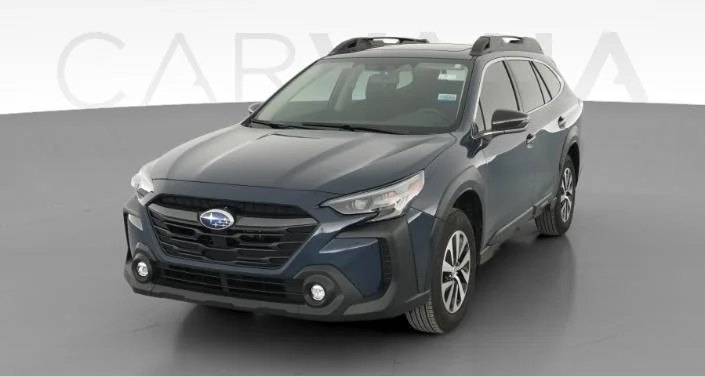
Buying Advice for the Sixth Generation: These models are still relatively new and hold their value well, making them a sound investment. You can expect to find them priced between approximately $21,086 for a 2020 model and $33,810 for a 2025 model. Their strong resale value and comprehensive feature sets make them an attractive option on the used market.
Fifth Generation (2015-2019): The Refined Crossover Evolution
Debuting for the 2015 model year, the fifth-generation Outback represented a significant evolution, officially transitioning from wagon to crossover in Subaru’s nomenclature. Styling became sportier and more aerodynamic, though the overall shape remained familiar. Manual transmissions were discontinued, and more safety features previously optional became standard on higher trims.
The standard engine was a 2.5-liter four-cylinder (175 hp, 174 lb-ft of torque), found in the majority of used models. For those seeking more power, the 3.6R Limited trim offered a 3.6-liter six-cylinder (256 hp, 247 lb-ft of torque). While faster, its lower fuel economy (22 mpg combined) and higher price limited its popularity.
AWD remained standard, paired with a CVT featuring a six-speed manual mode. Subaru’s X-Mode terrain system, hill-descent control, and hill-start assist became standard, enhancing off-road capability. Limited trims featured exclusive Stablex suspension dampers for a firmer ride, while all models received a new double-wishbone rear suspension for improved ride quality and noise reduction.
The interior saw a stylistic update, with infotainment screens evolving from a 6.2-inch base unit to a 7-inch screen on higher trims. By 2017, screen sizes increased to 6.5 inches standard and 8 inches optional, with improved software and graphics, and the introduction of Apple CarPlay and Android Auto for the first time. The EyeSight suite, initially exclusive to upper trims, became standard across the entire Outback lineup by the 2019 model year, a significant advantage for buyers.
Common criticisms of this generation revolve around the CVT’s tendency to drone on the highway and less-than-stellar fuel economy. However, it offers a quieter and more refined experience than earlier generations.
Buying Advice for the Fifth Generation: Higher trims, especially those equipped with the EyeSight suite, are generally the best value. The 2019 model year is particularly attractive as the full EyeSight suite became standard. Many fifth-generation Outbacks can be found for under $25,000, with well-maintained examples under 80,000 miles often available for under $20,000. The 3.6R models, while rarer and less fuel-efficient, offer a more engaging driving experience.
Fourth Generation (2010-2014): The Crossover Transformation
This generation marked a significant departure, abandoning the sedan body style and transitioning four-cylinder models exclusively to CVTs. The styling adopted a more pronounced crossover profile, setting the template for subsequent generations and contributing to a contemporary appearance even today. Despite a longer wheelbase and increased width for enhanced interior space, the overall length was slightly reduced compared to the 2009 model, and increased weight impacted handling.
The core mechanical formula of standard AWD and horizontally opposed engines persisted. Four- and six-cylinder options were available. The 2.5-liter naturally aspirated four-cylinder produced 170 horsepower and 170 pound-feet of torque, while the 3.6-liter flat-six delivered 256 horsepower and 247 pound-feet of torque. Six-speed manuals were available, but the majority of four-cylinder models featured the new Lineartronic CVT. Six-cylinder models retained a conventional five-speed automatic.
Infotainment was basic, though navigation and a backup camera were available on an 8-inch touchscreen. Traction and stability control were standard.
A significant update occurred in 2013, with a restyled front fascia, a slightly more powerful 2.5-liter engine (173 hp, 174 lb-ft of torque), and tailored AWD systems for each transmission type. Crucially, the Subaru EyeSight driver-assist system, featuring adaptive cruise control, automatic braking, and lane-departure warning, debuted in 2013 and became standard on Premium models by 2014.
Buying Advice for the Fourth Generation: Reliability ratings for this generation can be mixed, with some sources noting more electrical issues than later models. However, they remain relatively inexpensive. Clean fourth-generation Outbacks with under 120,000 miles can be found for as little as $8,000. Look for 2013 and 2014 models to benefit from the EyeSight system and the updated engine. Six-cylinder models are harder to find but offer a more enjoyable driving experience.
Third Generation (2005-2009): The Stylish Departure
Introduced for the 2005 model year, this generation sported a more distinct and stylish exterior design, a departure from its predecessors. A sedan version was also available but was discontinued in 2007 due to low sales. Reviewers praised its refined ride quality and robust standard features but noted a cramped rear seat.
Engine options included a 2.5-liter four-cylinder (168 hp, 166 lb-ft), an optional 2.5-liter turbocharged four-cylinder (“XT,” 250 hp, 250 lb-ft), and a 3.0-liter six-cylinder (250 hp, 219 lb-ft). Both five-speed manual and automatic transmissions were offered.
By 2009, stability control was standard on all trims. L.L. Bean and Limited models tend to offer more premium features like wood-and-leather steering wheels, enhanced interiors, and navigation.
Buying Advice for the Third Generation: Consumer Reports flagged early years of this generation for below-average reliability, so thorough inspection is crucial. However, engines are generally more durable than the first two generations. Maintenance records are vital, especially concerning timing belt and head gasket service. These models are comparatively rare due to age and lower sales during the economic downturn. Expect prices to range from $5,000 to $10,000, with rare sedan or manual transmission versions commanding a slight premium.
Second Generation (2000-2004): Refinement and Expansion
Officially spun off from the Legacy, the second-generation Outback was a completely redesigned model. The styling became more contemporary, and Subaru introduced attractive two-tone color schemes. The standard engine was a 2.5-liter “EJ25” (165 hp, 166 lb-ft). In 2001, the L.L. Bean edition debuted, offering luxury features and, importantly, Subaru’s all-new 3.0-liter “EZ30” flat-six engine (212 hp, 210 lb-ft), which would form the basis for Subaru’s six-cylinder powertrains for nearly two decades.
AWD remained standard, with ground clearance increasing to 7.3 inches. Four-cylinder models offered a four-speed automatic or five-speed manual, while six-cylinder models were automatic only. Styling was refreshed for 2003. L.L. Bean models were well-equipped with features like dual-zone climate control, leather seats, a McIntosh stereo, and an optional Vehicle Dynamics Control (VDC) system.
Buying Advice for the Second Generation: Given their age, prioritizing vehicles with comprehensive maintenance records is paramount. While Consumer Reports noted below-average reliability for 2000 and 2001 models, these Outbacks are simpler than later generations and can be quite durable with proper care. Rust and head gasket issues are potential concerns. Prices are generally between $4,500 and $8,000, with the 3.0-liter models and sedans commanding slightly higher values.
First Generation (1995-1999): The Genesis of an Icon
The Subaru Outback began its journey as a trim package on the 1995 Legacy. By 1996, its distinct formula had solidified: a lifted Legacy wagon with rugged styling cues, including beefy bumpers and larger lights. Initially powered by a 2.2-liter four-cylinder (135 hp, 140 lb-ft), it was updated in 1996 with a more powerful 2.5-liter engine (155 hp, 155 lb-ft), increased ground clearance to 7.8 inches, and a distinctive two-tone paint scheme. This innovative package, supported by a memorable marketing campaign, revitalized Subaru’s U.S. sales. The “Legacy SUS” sedan, introduced in 1998, applied a similar concept to the sedan body style.
Buying Advice for the First Generation: These early Outbacks are known for potential head gasket and timing belt issues, particularly on 2.5-liter versions. Thorough inspection and maintenance records are essential. Enthusiasts often perform engine swaps. You can find these models for under $5,000, though collector interest is slowly growing.
The Road Ahead: Making Your Subaru Outback Choice
The Subaru Outback’s enduring legacy is built on its unique blend of capability, safety, and a spirit of adventure. Whether you’re drawn to the cutting-edge technology of the latest generation or the proven value of a well-maintained earlier model, a Subaru Outback offers a compelling proposition for those who demand more from their vehicle.
As you embark on your search, remember that a test drive is invaluable. Pay close attention to the transmission’s behavior, listen for any unusual engine noises, and inspect the vehicle’s condition thoroughly, especially if considering an older model. Don’t hesitate to seek a pre-purchase inspection from a trusted mechanic familiar with Subaru vehicles.
Ready to explore the great outdoors or simply conquer your daily commute with confidence? Take the next step and find the Subaru Outback that perfectly aligns with your lifestyle and budget. Your next adventure awaits.