Your Comprehensive Guide to Buying a Used Subaru Outback: Navigating Cost, Reliability, and the Best Model Years
For over a quarter-century, the Subaru Outback has carved a unique niche in the automotive landscape. Initially a ruggedized iteration of the mid-size Legacy, it has evolved into a veritable icon of capability and adventure, now often categorized as a crossover SUV. Its genesis in 1995, as an option package on the Legacy sedan, signaled Subaru’s pioneering spirit in offering all-wheel drive (AWD) vehicles two decades prior. When sales wavered in the late 80s and early 90s, Subaru masterfully leveraged its AWD heritage to revitalize its lineup, with the Outback emerging as a flagship innovation.
The first Outback was essentially a more robustly styled Legacy wagon. Within a year, it received a crucial lift for enhanced ground clearance, solidifying its go-anywhere persona. The formula was elegantly simple: Subaru’s proven AWD system, elevated ground clearance, refined suspension, and an adventurous aesthetic. This coincided perfectly with the burgeoning American appetite for SUVs, and while fundamentally a wagon, the Outback transcended traditional family haulers, cultivating an image synonymous with road trips and outdoor exploration.
This groundbreaking model was an immediate success, soon spawning the smaller Outback Sport, based on the compact Impreza. The first decade even saw a sedan variant, the Legacy SUS (Sport Utility Sedan), frequently badged as an Outback. The Outback’s popularity, coupled with AWD as a compelling differentiator, propelled Subaru to make its entire lineup standard AWD by 1999, heavily capitalizing on the Outback’s success.
Over time, the Outback has diverged significantly from the Legacy, its larger wagon body morphing into a vehicle closely resembling a modern crossover. By the late 2010s, the design language of the Legacy sedan was increasingly dictated by the sheer popularity and space demands of the Outback.
As Subaru’s flagship vehicle for many years, the Outback has often been the showcase for the automaker’s latest technological advancements. The sophisticated EyeSight driver-assist system debuted on the Outback in 2008, predating similar offerings from many competitors. The AWD system has seen continuous refinement, and in 2021, Subaru introduced the even more rugged Outback Wilderness, a trim that has since expanded to other models like the Forester and Crosstrek. Outbacks are lauded for their practicality, spaciousness, and impressive light off-road prowess, boasting generous ground clearance and intelligent terrain management systems.
However, no vehicle is without its nuances. Subaru’s prevalent use of continuously variable automatic transmissions (CVTs) over the past decade has drawn mixed reactions; while efficient, they can be complex to repair. Furthermore, Subaru’s signature horizontally opposed (Boxer) engines, while offering a low center of gravity, demand more diligent maintenance than conventional inline engines, with a historical propensity for head gasket issues and a thirstier fuel consumption compared to some competitors. The absence of a hybrid Outback option also means buyers seeking maximum fuel economy in a traditional SUV-like package might look elsewhere. Naturally, an AWD vehicle frequently used for its intended off-road capabilities will generally have more components subject to wear and tear than a conventional sedan.
Despite these considerations, the Subaru Outback remains a secure, highly capable, and deeply loved vehicle, fostering immense loyalty among its owners. This comprehensive guide delves into each generation, offering insights and practical advice for prospective used Subaru Outback buyers looking for the best used Subaru Outback for sale.
Navigating the Used Subaru Outback Market: Key Considerations
When embarking on the journey to purchase a used Subaru Outback, understanding the nuances of each generation is paramount. Reliability ratings, while fluctuating between different automotive research outlets, generally place the Outback in the “average” to “above average” category, often requiring slightly more specialized maintenance than mainstream sedans or crossovers. However, their robust construction and capability mean many Outbacks endure well when properly cared for. For those seeking the most reliable Subaru Outback years, data from sources like Consumer Reports often points to models from 2014, 2016, 2017, and 2021 and newer as exhibiting fewer significant issues.
Conversely, certain model years have been flagged for more frequent concerns. Sites like CarComplaints.com, which rely on owner-reported data, have highlighted 2013, 2015, and 2018 models as having a higher incidence of complaints, primarily related to electrical systems and engines. It’s worth noting that other reputable sources like J.D. Power and Consumer Reports often rate these same years more favorably. Consumer Reports has also expressed concerns regarding 2005-2007 models and, more recently, 2019 and 2020 Outbacks. J.D. Power typically assigns an “average” or slightly above-average reliability rating across most Outback models. Older vehicles, particularly those predating 2002, are known to have potential head gasket and coolant leak issues with their 2.5-liter powertrains, a crucial point for pre-purchase inspections.
Is a used Subaru Outback a good buy? Absolutely, especially for buyers prioritizing space, versatility, and all-weather capability. While long-term maintenance costs might exceed those of some competitors, the Outback consistently delivers advanced safety features and engaging driving dynamics. In an era where traditional wagons have become niche and expensive, the Outback, even in its more crossover-like iterations, offers a compelling blend of practicality and value. It remains an exceptionally useful vehicle, offering significant bang for your buck.
Subaru Outback Generations: A Deep Dive for Savvy Buyers
Seventh Generation (2026-Present): The Future of Outback
The latest iteration of the Subaru Outback, debuting for the 2026 model year, presents a bolder, more rugged aesthetic with a distinctly boxier silhouette. Subaru has infused it with enhanced off-road styling, including new light signatures and more durable body cladding. Practicality sees an upgrade with roof rack crossbars now rated for a substantial 220 pounds of lateral load, perfect for mounting a hammock or clothesline.
Inside, the cabin offers increased headroom thanks to a 2-inch taller roofline, and enlarged door bottle holders can now accommodate 32-ounce containers. Cargo space has grown by 2 cubic feet and is 2 inches taller. Technological advancements are prominent, featuring a new 12.1-inch infotainment display and a 12.3-inch digital instrument cluster running updated software.
Safety reaches new heights with the introduction of Emergency Stop Assist with Safe Lane Selection, capable of moving the vehicle to the shoulder and alerting emergency services if the driver becomes unresponsive. On compatible highways, hands-free driving with driver supervision is now available up to 85 mph. The EyeSight camera system boasts a wider angle for improved pedestrian and cyclist detection, complemented by haptic feedback alerts.
Powertrain options include a revised 2.5-liter Boxer engine producing 180 horsepower and 178 pound-feet of torque, and the XT models retain the potent 2.4-liter turbocharged engine delivering 260 horsepower and 277 pound-feet of torque. The 2026 Subaru Outback starts at an MSRP of $34,995 (excluding destination), reflecting a price adjustment that also includes more standard equipment as the base trim has been discontinued.
Sixth Generation (2020-2025): Modern Capability and Refinement
The sixth-generation Subaru Outback, launched for the 2020 model year, might appear outwardly similar to its predecessor, but it introduced significant under-the-hood and technological enhancements. The former V6 engine was retired in favor of a more efficient and powerful 2.4-liter turbocharged four-cylinder engine (260 hp, 277 lb-ft of torque) available on XT models. Standard models feature a refined 2.5-liter four-cylinder engine (182 hp, 176 lb-ft of torque). Both engines are paired with a continuously variable transmission (CVT) featuring an eight-speed manual mode, and AWD remains standard.
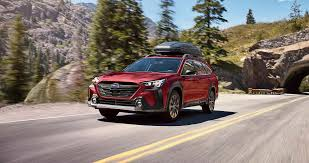
Initially offered in seven trims, including the turbocharged XT variants and the rugged Outback Wilderness introduced in 2022, this generation saw a significant tech upgrade. Higher trims feature an impressive 11.6-inch portrait-style touchscreen with Apple CarPlay and Android Auto, along with Subaru’s comprehensive EyeSight suite, driver distraction warning, and a front-view camera. Base models utilize a dual 8-inch screen setup. A Wi-Fi hotspot was also a new addition.
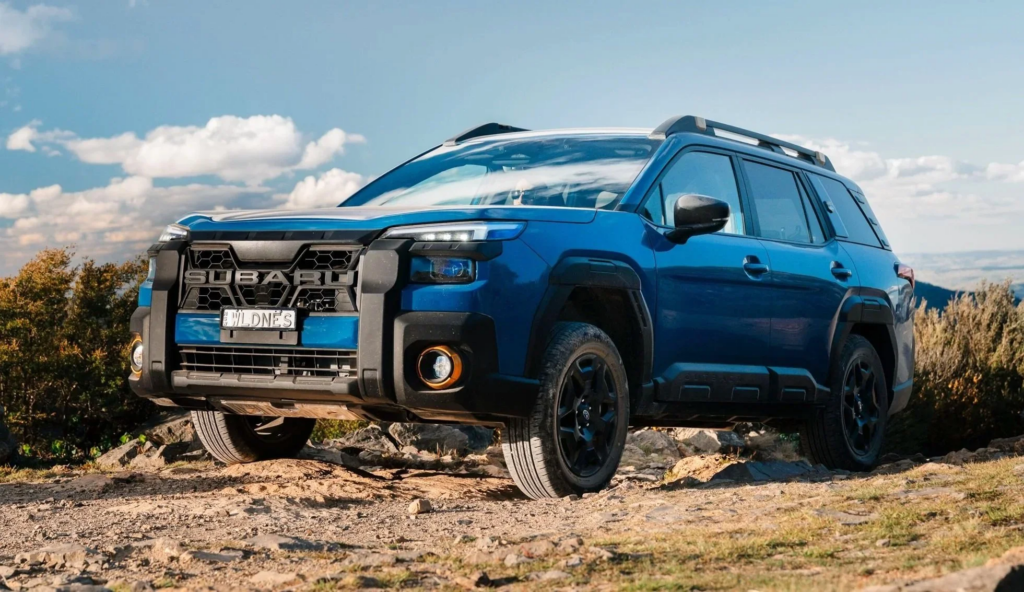
The Outback Wilderness stands out as the most off-road oriented factory model, with 9.5 inches of ground clearance, all-terrain tires, and specially tuned suspension. Its distinctive styling, enhanced approach/departure angles, and robust roof rail system further underscore its adventurous spirit.
A significant facelift arrived for the 2023 model year, incorporating styling cues from the Wilderness, updated EyeSight cameras, and expanded availability of the turbocharged engine. The integration of what3words navigation technology was a unique addition. For 2024, the Wilderness received front fascia updates, and a heated steering wheel became available on more trims. The 2025 model year brought further refinements, including a moonroof and heated steering wheel for the Limited trim, along with driver-attention monitoring and built-in navigation.
The starting price for this generation has remained remarkably competitive, making the Outback one of the most affordable vehicles in its size and capability class. Even base models offer substantial value with standard safety systems often optional on more expensive vehicles. Used sixth-generation Outbacks retain their value well, with prices typically ranging from around $21,000 for early models to over $33,000 for the latest.
Fifth Generation (2015-2019): A Smoother, More Refined Outback
The fifth-generation Subaru Outback, launched for the 2015 model year, marked an evolutionary step in styling, appearing sportier and more aerodynamic. Subaru officially classified it as a crossover. The manual transmission was discontinued, and previously optional safety features like automatic emergency braking and blind-spot assist became standard on more trims.
The standard engine was a 2.5-liter four-cylinder (175 hp, 174 lb-ft of torque), found in the majority of used models. A more potent 3.6-liter six-cylinder (256 hp, 247 lb-ft of torque) was available on the 3.6R Limited trim, offering stronger performance but at the cost of fuel economy and a higher price point. AWD remained standard, paired with a CVT featuring a six-speed manual mode. Subaru’s X-Mode terrain management system, hill descent control, and hill-start assist were also standard.
Ride quality received a significant upgrade thanks to a new double-wishbone rear suspension and front suspension cradle, resulting in a considerably smoother and quieter experience. Infotainment saw modest updates, with screen sizes ranging from 6.2 to 8 inches, and later models (2017 onwards) introduced Apple CarPlay and Android Auto. Subaru’s EyeSight driver-assist suite, including adaptive cruise control and automatic emergency braking, was available on upper trims and became standard across the lineup by 2019, making 2019 Subaru Outback models particularly desirable for their comprehensive safety features.
Common criticisms include the sometimes “droney” CVT and less than stellar fuel mileage. However, this generation is generally quieter and more refined than earlier versions, offering ample passenger and cargo space. When shopping for a used fifth-generation Subaru Outback, prioritizing trims equipped with the EyeSight suite is recommended. Prices for well-maintained fifth-gen Outbacks typically fall between $16,000 and $24,000, with lower-mileage examples potentially found for under $20,000.
Fourth Generation (2010-2014): Crossover Styling Takes Hold
The fourth-generation Subaru Outback represented a significant departure, shedding the sedan option and exclusively offering CVTs on four-cylinder models. Its styling adopted a more pronounced crossover appearance, establishing a design template that subsequent generations have closely followed. This increased height and width contributed to a more spacious interior, though overall length decreased slightly.
The core mechanical formula remained consistent: standard AWD, a choice of four- or six-cylinder horizontally opposed engines, and advanced traction capabilities. The 2.5-liter four-cylinder produced 170 hp and 170 lb-ft of torque, while the 3.6-liter six-cylinder offered 256 hp and 247 lb-ft of torque. Manual transmissions were available, but the CVT was the predominant choice for four-cylinder models.
While technology was basic by today’s standards, navigation and a backup camera were available on an 8-inch touchscreen. A major update arrived in 2013 with a refreshed front fascia, a more powerful 2.5-liter engine (173 hp, 174 lb-ft of torque), and a tailored AWD system for each transmission type. The introduction of the Subaru EyeSight driver-assist system with adaptive cruise control and automatic braking in 2013, made standard on Premium models in 2014, significantly enhanced safety.
While some reliability trackers have noted electrical issues with this generation, they remain relatively affordable. Clean examples with under 120,000 miles can be found for as little as $8,000. The six-cylinder models are rarer and less fuel-efficient but offer a more engaging driving experience. Higher trim 2013 and 2014 models are worth seeking out for their enhanced features.
Third Generation (2005-2009): Style Meets Substance
The third-generation Outback, introduced for the 2005 model year, boasted a more stylish and distinctive design compared to its predecessors. It also continued with a rare sedan variant until 2007. Reviewers praised its refined ride quality and robust standard features, though the rear seat was noted as the most cramped in Outback history.
Engine options included a 2.5-liter four-cylinder (168 hp, 166 lb-ft), a turbocharged 2.5-liter four-cylinder XT (250 hp, 250 lb-ft), and a 3.0-liter six-cylinder (250 hp, 219 lb-ft). Five-speed manual or automatic transmissions were available. The 2.5-liter engine received a power bump to 175 hp in 2006.
While equipment differences are less pronounced in older models, the L.L. Bean and Limited trims tend to offer more amenities like wood-and-leather steering wheels, upgraded interiors, and navigation. Consumer Reports has expressed reservations about the reliability of early models in this generation, emphasizing the importance of thorough inspection, particularly for timing belt and head gasket maintenance. These Outbacks are less common due to age and historical sales figures during economic downturns. Prices generally range from $5,000 to $10,000, with rare sedan or manual versions commanding slight premiums.
Second Generation (2000-2004): Refined and Popular
The second-generation Outback, launched for the 2000 model year, was a significant redesign, officially spinning off from the Legacy. The styling became more contemporary, and the sedan version was renamed the Outback sedan. The standard 2.5-liter “EJ25” engine produced 165 hp and 166 lb-ft of torque. The introduction of the L.L. Bean edition in 2001 brought luxury features and, more importantly, the all-new 3.0-liter “EZ30” flat-six engine (212 hp, 210 lb-ft), which formed the basis for Subaru’s six-cylinder engines for nearly two decades.
AWD was standard, with ground clearance increasing to 7.3 inches. Four-cylinder models offered a four-speed automatic or five-speed manual, while six-cylinder models were automatic only. While styling was freshened in 2003, the core mechanicals remained largely unchanged.
L.L. Bean models stood out with features like dual-zone climate control, leather seats, dual moonroofs, and a premium McIntosh stereo, along with an optional Vehicle Dynamics Control (VDC) system. Other trims offered a comfortable interior but fewer modern amenities. Given the age of these vehicles, maintenance records are crucial. While early models received below-average reliability ratings from Consumer Reports, they are mechanically simpler than later Outbacks. Inspect carefully for rust and potential head gasket issues. Prices typically range from $4,500 to $8,000, with the 3.0-liter models and sedans being slightly more desirable.
First Generation (1995-1999): The Genesis of the Outback
The original Subaru Outback began as a trim package on the 1995 Legacy. By 1996, its iconic formula was solidified: rugged bumpers with integrated fog lights, unique wheels, and two-tone paint schemes. Initially powered by an adequate but not potent 2.2-liter four-cylinder engine (135 hp, 140 lb-ft), it soon received a 2.5-liter engine (155 hp, 155 lb-ft) along with rally-style lights and a significant lift, providing 7.8 inches of ground clearance – an impressive figure for the time.
The Outback’s image, bolstered by advertising featuring Australian actor Paul Hogan, revitalized Subaru’s flagging U.S. sales. The formula was successfully applied to the smaller Impreza, leading to the ancestor of today’s Crosstrek. A Limited trim was introduced in 1997, offering nicer interior materials. The “Legacy SUS” (Sport Utility Sedan) debuted in 1998, applying the Outback recipe to a sedan body.
These early Outbacks are good vehicles, but they are known for head gasket and timing belt issues, particularly the 2.5-liter versions. Enthusiasts often perform engine swaps. Maintenance records and a thorough inspection are paramount. These models are the most affordable, with prices typically under $5,000, though collector interest is slowly emerging.
Making the Smart Purchase: Your Next Steps
As you weigh the options for your next vehicle, the Subaru Outback, whether new or used, consistently presents a compelling case for those seeking adventure, capability, and unwavering practicality. From its innovative beginnings to its current status as a segment-defining crossover, the Outback has proven its mettle.
If you’re drawn to the Outback’s blend of ruggedness and refinement, we encourage you to explore current listings for Subaru Outback deals near me. Schedule test drives across different generations to feel firsthand the evolution of its ride and technology. For those leaning towards a used Subaru Outback for sale in specific regions like Denver, CO, or Seattle, WA, remember to factor in local driving conditions and prioritize pre-purchase inspections from trusted mechanics familiar with Subaru vehicles. Take your time, do your due diligence, and find the Subaru Outback that best aligns with your adventuring spirit and daily driving needs.