
The Enduring All-Wheel Drive Legacy: Your Definitive Guide to Buying a Subaru Outback
For nearly three decades, the Subaru Outback has carved a unique niche in the automotive landscape, evolving from a rugged trim package on a midsize sedan to a bona fide crossover that consistently ranks among the most sought-after vehicles for adventure-seekers and practical families alike. My decade of experience in the automotive industry has shown me firsthand the enduring appeal of this capable machine, and this comprehensive guide will equip you with the knowledge to navigate the used Subaru Outback market, understand its evolution, and pinpoint the best years to invest in. We’ll delve into cost, reliability, and the distinctive characteristics of each generation, offering insights crucial for any prospective used Subaru Outback buyer.
The journey of the Subaru Outback began in 1995, not as a standalone model, but as an enhancement to the Subaru Legacy. This “outback package” transformed the midsize Legacy wagon into a more adventurous proposition. It’s important to remember Subaru’s pioneering spirit; they were offering all-wheel drive (AWD) passenger vehicles two decades prior. When the automotive market shifted in the late 1980s and early 1990s, Subaru cleverly leveraged this history, and the Outback was a significant outcome of that strategic pivot. Initially, it was essentially a lifted Legacy wagon, gaining crucial ground clearance and suspension refinements that set it apart. This coincided perfectly with a burgeoning American fascination with SUVs, and the Outback, while retaining its wagon roots, successfully cultivated an image of go-anywhere capability, resonating deeply with consumers yearning for road trip freedom.
The immediate popularity of the original Outback paved the way for its smaller sibling, the Outback Sport, based on the compact Impreza. For a period, a sedan version, the Legacy SUS (Sport Utility Sedan), was also offered, often badged as an Outback. The success was so profound that by 1999, Subaru made AWD standard across its entire lineup, a testament to the Outback’s influence and the inherent appeal of all-wheel drive. Over the years, the Outback has progressively distanced itself from the Legacy, its wagon-like body evolving into what we now recognize as a crossover. This evolution saw the Outback’s practical demands eventually influence the design of the Legacy sedan itself.
As Subaru’s largest offering for many years, the Outback has consistently served as a showcase for the automaker’s technological advancements. The sophisticated EyeSight driver-assist system debuted in the Outback in 2008, a significant lead over many competitors. The AWD system has seen continuous refinement, and the introduction of the even more rugged Outback Wilderness in 2021 signaled a new level of off-road prowess, a trend that later extended to the Forester and Crosstrek. These vehicles are celebrated for their practicality, spacious interiors, and genuine capability, particularly in light off-road scenarios, thanks to their generous ground clearance and advanced terrain management systems.
However, no vehicle is without its quirks. The continuously variable automatic transmissions (CVTs) that have become prevalent in Outbacks over the last decade can be polarizing for some drivers and present unique maintenance considerations. Subaru’s signature horizontally opposed “Boxer” engines, while offering a low center of gravity, can be more demanding in terms of maintenance compared to more conventional engine designs, with historical concerns around head gasket longevity and a propensity for slightly higher fuel consumption than some inline-four or V6 competitors. Furthermore, Subaru has yet to introduce a hybrid powertrain for the Outback. As with any AWD vehicle, especially one frequently used for outdoor pursuits, there are simply more components that can experience wear and tear over time.
Despite these considerations, the Subaru Outback remains a supremely safe, exceptionally capable, and highly desirable vehicle that fosters remarkable owner loyalty. This guide aims to dissect each generation, offering practical advice for buyers seeking a reliable Subaru Outback in the used market. We will explore the nuances of Subaru Outback resale value, the typical Subaru Outback maintenance costs, and what to look for when considering specific model years.
Navigating the Generations: Your Subaru Outback Buying Compass
Understanding the historical trajectory of the Subaru Outback is paramount to making an informed purchase. Each generation brought distinct improvements and potential considerations.
Seventh Generation (2026-Present): The Latest Evolution
The 2026 model year introduced the seventh-generation Subaru Outback, characterized by a more pronounced, boxy silhouette and enhanced ruggedness. Subaru has embraced bolder styling cues, featuring redesigned lighting signatures and durable textured cladding. The roof rack system sees an upgrade in load capacity, now supporting up to 220 pounds laterally, ideal for outdoor enthusiasts.
Inside, the cabin benefits from a taller roofline, providing increased headroom, and larger door bottle holders. Cargo space has also seen a modest increase. The technological leap is significant, with an all-new 12.1-inch infotainment display and a 12.3-inch digital instrument cluster powered by updated software.
Safety receives a substantial boost with features like Emergency Stop Assist with Safe Lane Selection, designed to safely steer an unresponsive driver to the shoulder and alert emergency services. On compatible highways, hands-free driving with driver supervision is now possible at speeds up to 85 mph. The EyeSight camera system boasts a wider field of view for improved pedestrian and cyclist detection, complemented by haptic feedback alerts.
The standard 2.5-liter Boxer engine receives revisions, delivering 180 horsepower and 178 pound-feet of torque. The turbocharged 2.4-liter engine, producing 260 horsepower and 277 pound-feet of torque, carries over for XT models.
The starting MSRP for the 2026 Subaru Outback is $34,995 (excluding destination charges). Subaru has streamlined the lineup, removing the base trim and starting with the Premium level, which includes more standard equipment than previous entry-level offerings. While these are the newest models, their Subaru Outback price reflects their advanced features and recent redesign.
Sixth Generation (2020-2025): The Modern All-Wheel Drive Workhorse
The sixth generation, launched for the 2020 model year, presented a more subtle exterior evolution but significant mechanical advancements. The optional six-cylinder engine was replaced by a potent 2.4-liter turbocharged four-cylinder (XT models), offering improved power (260 hp, 277 lb-ft) and better fuel efficiency than its predecessor. Standard models continued with a revised 2.5-liter four-cylinder (182 hp, 176 lb-ft). Both engines are paired with a new CVT featuring an eight-speed manual mode.
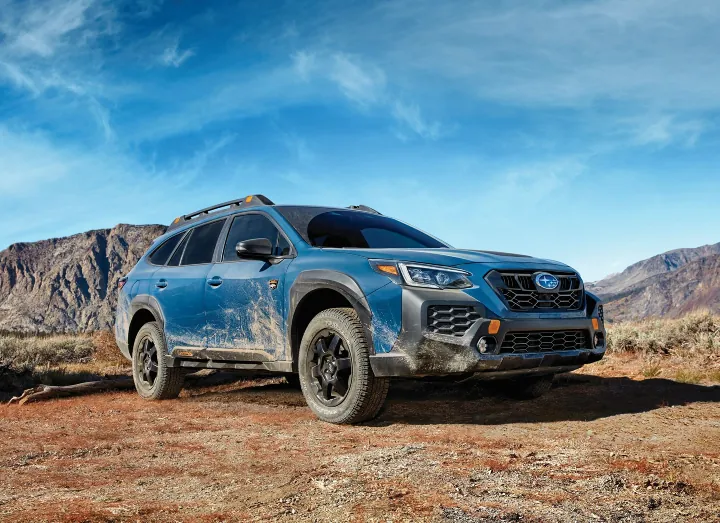
This generation saw a significant overhaul in interior technology. An available 11.6-inch portrait-style touchscreen with Apple CarPlay and Android Auto became a centerpiece, alongside the comprehensive EyeSight suite, a driver-distraction warning system, and high-beam assist. Base models featured a dual eight-inch screen setup. A Wi-Fi hotspot was also introduced.
The 2022 model year marked the debut of the Outback Wilderness, a factory-built, ultra-capable off-road variant with increased ground clearance (9.5 inches), all-terrain tires, and a specially tuned suspension. Its aggressive styling and enhanced utility set a new benchmark for factory-prepared Outbacks.
Cosmetic updates in 2023, inspired by the Wilderness trim, brought revised front fascia and black cladding. The integration of what3words navigation technology was another notable addition. Subsequent model years (2024-2025) saw incremental feature expansions, including heated steering wheels and driver-attention monitoring.
The starting price for the 2020 model was $26,645, and remarkably, Subaru has managed to keep the 2025 base price to $29,995, making it an exceptionally affordable Subaru Outback for its size and capability. These models are still relatively new, holding their value well, and represent a strong choice for a newer used Subaru Outback. The average entry price for this generation ranges from around $21,000 for a 2020 model to over $33,000 for a 2025 model.
Fifth Generation (2015-2019): Refinement and Safety First
Debuting for the 2015 model year, the fifth generation officially embraced the “crossover” designation. Styling became sportier and more aerodynamic, though still evolutionary. The manual transmission was discontinued, with CVTs becoming the sole automatic option. This generation saw a significant push towards standard safety features, with elements like automatic emergency braking and blind-spot assist becoming more widely available across trims.
The standard engine was a 2.5-liter four-cylinder (175 hp, 174 lb-ft), with a 3.6-liter six-cylinder (256 hp, 247 lb-ft) available in the 3.6R Limited trim. AWD remained standard, as did the CVT with a six-speed manual mode. Subaru’s X-Mode terrain management system became standard, enhancing off-road confidence.
Cabin upgrades included improved infotainment systems, with screens growing from 6.2 inches to 8 inches in higher trims, and Apple CarPlay and Android Auto support arriving in 2017. The EyeSight suite of driver-assist technologies became increasingly prevalent, and by the 2019 model year, it was standard across the entire Outback lineup.
Common complaints often center on the CVT’s droning characteristics and less-than-stellar fuel economy. However, this generation is generally considered quieter and more refined than its predecessors. For buyers seeking advanced safety features, focusing on 2019 models, where EyeSight became standard, is a smart move. You can find well-equipped fifth-generation Outbacks for under $25,000, with many selling in the $16,000 to $24,000 range, even for the more powerful 3.6R models.
Fourth Generation (2010-2014): The Crossover Blueprint
The fourth generation represented a significant departure, shedding the sedan option and adopting CVTs for four-cylinder models. Styling became distinctly more crossover-like, establishing a template that subsequent generations would follow. Despite a slightly shorter overall length than the outgoing model, increased wheelbase and width contributed to a more spacious interior.
Mechanically, the AWD system remained, and the horizontally opposed four- and six-cylinder engines were updated. The 2.5-liter four-cylinder produced 170 hp and 170 lb-ft, while the 3.6-liter six-cylinder offered 256 hp and 247 lb-ft. While manual transmissions were available, the CVT became the dominant choice for four-cylinder models.
Infotainment was still basic, though navigation and a backup camera on an 8-inch screen were available. The 2013 model year brought a substantial refresh, including a revised front fascia, an updated 2.5-liter engine (173 hp, 174 lb-ft), and transmission-specific AWD tuning.
Crucially, the 2013 model year also saw the introduction of the Subaru EyeSight driver-assist system, making adaptive cruise control, automatic braking, and lane-departure warning available. By 2014, EyeSight became standard on Premium models.
While some reliability trackers note more electrical issues in this generation, they remain relatively affordable Subaru Outback options. Clean examples with under 120,000 miles can be found for as little as $8,000. The six-cylinder models, while rarer and less fuel-efficient, offer a more engaging driving experience. Prioritizing 2013 and 2014 models with higher trims will yield more features without a significant price jump.
Third Generation (2005-2009): Style and Substance
The third generation, arriving for the 2005 model year, brought a notably more stylish and aggressive exterior design, a departure from earlier iterations. While a sedan version was offered initially, its slow sales led to its discontinuation in 2007, making them quite rare.
Reviewers praised this generation for its refined ride quality and robust standard features, though the rear-seat legroom was the most constrained of any Outback generation. Engine options included a 2.5-liter four-cylinder (168 hp, 166 lb-ft), a turbocharged 2.5-liter XT (250 hp, 250 lb-ft), and a 3.0-liter six-cylinder (250 hp, 219 lb-ft). Transmission options were a five-speed manual or automatic.
In 2006, the naturally aspirated 2.5-liter engine saw a slight power increase to 175 hp. Trim levels were revised in subsequent years, with stability control becoming standard by 2009.
When seeking a used Subaru Outback from this era, focus on L.L. Bean and Limited models, which tend to offer more premium features like leather interiors and navigation. Consumer Reports indicated below-average reliability for the early years of this generation, so thorough inspection and maintenance records are crucial. Despite potential head gasket or timing belt needs, these models generally have more durable engines than the first two generations. Expect prices to range from $5,000 to $10,000.
Second Generation (2000-2004): The Legacy Offshoot Matures
Officially spun off from the Legacy, the second generation debuted for the 2000 model year. The styling became more contemporary, and the Legacy SUS sedan was renamed the Outback sedan, sharing mechanical components. The standard engine was a 2.5-liter “EJ25” (165 hp, 166 lb-ft).
The 2001 model year introduced the L.L. Bean edition, featuring enhanced luxury and, importantly, Subaru’s all-new 3.0-liter “EZ30” flat-six engine (212 hp, 210 lb-ft), which would form the basis for Subaru’s six-cylinder offerings for nearly two decades. AWD remained standard, with ground clearance increasing to 7.3 inches. Four-cylinder models offered a four-speed automatic or five-speed manual, while six-cylinder models were automatic-only.
L.L. Bean models stood out with features like dual-zone climate control, leather seats, dual moonroofs, and an upgraded audio system. While comfortable, other trims were less amenity-rich.
For buyers considering these older models, meticulous examination of maintenance records is highly recommended, particularly concerning the head gasket. Consumer Reports flagged 2000 and 2001 models for below-average reliability. Despite this, they are simpler vehicles and can be quite durable if well-maintained. Expect prices between $4,500 and $8,000, with the 3.0-liter models and sedans commanding slightly higher figures.
First Generation (1995-1999): The Genesis of an Icon
The origin story of the Subaru Outback begins as a trim package on the 1995 Legacy. By 1996, its distinctive formula began to crystallize. Building on the Legacy’s reputation for rally prowess and AWD capability, the Outback was designed to project a more rugged image. This included bolder bumpers, integrated fog lights, unique wheels, and two-tone paint schemes.
Initially, it featured the Legacy’s 2.2-liter four-cylinder engine (135 hp, 140 lb-ft). However, Subaru quickly addressed criticisms regarding engine power and ground clearance. By 1996, a 2.5-liter engine (155 hp, 155 lb-ft) was introduced, along with larger headlights and a lift, providing 7.8 inches of ground clearance – a significant figure for its time.
The marketing, aided by Australian actor Paul Hogan, helped revitalize Subaru’s flagging U.S. sales. The formula was also applied to the smaller Impreza, creating the Outback Sport (ancestor of the Crosstrek). The 1997 model year saw the introduction of a Limited trim with nicer interior materials. The “Legacy SUS” (Sport Utility Sedan) also debuted in 1998, essentially an Outback with a sedan body.
These early Outbacks are now collector’s items. However, their primary concern is the Subaru Outback reliability related to weak head gaskets and aging timing belts, particularly on the 2.5-liter models. Enthusiast communities often perform engine swaps. Despite these potential issues, they are exceptionally cheap Subaru Outback options, typically found for under $5,000. Thorough inspections are paramount.
Frequently Asked Questions About Buying a Used Subaru Outback
Which Subaru Outback years offer the best reliability?
Generally, models from 2014 Subaru Outback, 2016 Subaru Outback, 2017 Subaru Outback, and 2021 Subaru Outback onward tend to receive favorable reliability ratings. However, it’s crucial to remember that even highly rated years require diligent maintenance, especially regarding potential head gasket and timing belt replacements on older models. Always review specific vehicle history reports and service records.
What are considered the worst Subaru Outback years to buy?
Reliability ratings can vary between sources. Some consumer platforms flag 2013 Subaru Outback, 2015 Subaru Outback, and 2018 Subaru Outback models for having more reported issues, often related to electrical systems and engines. Other reputable sources express more concern for 2005-2007 Subaru Outback models and, more recently, 2019 Outback and 2020 Outback models. It’s advisable to consult multiple sources and focus on individual vehicle condition.
Is a used Subaru Outback a good value proposition?
Yes, a used Subaru Outback can be an excellent value, especially if you prioritize space, all-weather capability, and a comfortable ride. While maintenance costs might be slightly higher than some competitors, the value proposition is amplified by their robust standard AWD, advanced safety features (especially on later models), and enduring practical utility. With wagons becoming a niche market, the Outback remains one of the most accessible ways to acquire a vehicle with its unique blend of attributes, even if its form factor has shifted towards a crossover.
What are the primary pros and cons of a Subaru Outback?
Pros:
Exceptional all-wheel-drive system providing confidence in all conditions.
Spacious, comfortable, and practical interior.
Abundant safety features, particularly in later model years.
Excellent ground clearance for light off-road excursions.
Cons:
Potentially higher long-term maintenance costs compared to some rivals.
Fuel economy can be less competitive than some front-wheel-drive alternatives.
CVT transmissions, while efficient, can be a point of contention for some drivers.
Historic concerns regarding head gasket longevity on older models.
The Road Ahead: Finding Your Perfect Subaru Outback
The Subaru Outback’s enduring legacy is built on a foundation of capability, practicality, and a distinct sense of adventure. Whether you’re drawn to the rugged appeal of the Wilderness trim, the technological sophistication of newer models, or the value offered by earlier generations, there is a Subaru Outback to suit nearly every need and budget.
When searching for your ideal used Subaru Outback for sale, remember that the best investment often lies in a well-maintained vehicle with a comprehensive service history. Don’t shy away from models with slightly higher mileage if they’ve been diligently cared for. Consider your specific needs: if advanced safety is paramount, focus on models from 2019 onwards. If budget is the primary concern, earlier generations can offer immense value, provided you account for potential maintenance.
As you explore dealerships or private listings, pay close attention to the Subaru Outback reviews specific to the generation you’re considering. Test drive thoroughly, listen for any unusual noises, and inspect for signs of wear and tear, especially in the drivetrain and suspension.
Ready to embark on your own Outback adventure? Start your search for a Subaru Outback today and discover why this icon of all-wheel drive capability continues to win hearts and conquer trails year after year.