
Navigating the Terrain: Your Expert Guide to Buying a Subaru Outback
For over two decades, the Subaru Outback has carved out a unique niche in the automotive landscape, evolving from a distinctive trim package on the Legacy sedan to a bona fide crossover icon. As an industry veteran with a decade of experience navigating the complexities of vehicle acquisition and ownership, I’ve witnessed firsthand the Subaru Outback’s journey, its enduring appeal, and the considerations buyers must weigh. This comprehensive guide delves deep into the cost, reliability, and the most advantageous model years to secure for your next adventure, ensuring you make an informed decision in today’s dynamic market.
The Subaru Outback’s genesis is rooted in Subaru’s pioneering spirit. Long before the current SUV craze, Subaru was embracing all-wheel drive (AWD) technology, a commitment that began twenty years before the Outback’s inception. In the late 1980s and early 1990s, as sales figures plateaued, Subaru ingeniously leveraged its AWD heritage to reimagine its lineup. The Outback emerged as a brilliant testament to this strategy. Initially, it was a more ruggedly styled, AWD-equipped Legacy wagon. Within a year, it received a crucial lift kit, enhancing its ground clearance and further differentiating it from its sedan sibling. The recipe was straightforward yet remarkably effective: imbue the already competent AWD system of the Legacy with increased ride height, suspension enhancements, and an aesthetic that resonated with a growing appetite for adventure.
This strategy coincided perfectly with the burgeoning consumer demand for SUVs. While fundamentally a wagon at heart, the Subaru Outback masterfully shed the image of a conventional family hauler, instead cultivating an aspirational identity synonymous with go-anywhere road trips and outdoor pursuits. This blend of practicality and rugged capability proved irresistible. The early success of the Outback even led to the introduction of the smaller Outback Sport, based on the compact Impreza, broadening its appeal. For a period, a sedan variant, the Legacy SUS (Sport Utility Sedan), was also available, often bearing the Outback badge. The enduring popularity of the Outback and the undeniable advantage of standard AWD cemented Subaru’s brand identity. By 1999, Subaru had made AWD a standard feature across its entire model range, a bold move directly fueled by the Outback’s phenomenal success.
Over the years, the Subaru Outback has progressively distanced itself from the Legacy. Its larger, more substantial wagon body has steadily evolved into a form factor that closely resembles a modern crossover. By the late 2010s, the design direction of the Legacy sedan itself was demonstrably influenced by the space and off-road-oriented demands driven by the hyper-popular Outback. As Subaru’s flagship vehicle for many years, the Outback has frequently served as the proving ground for the automaker’s latest technological innovations. The advanced EyeSight® driver-assist system, for instance, debuted on the Outback in 2008, significantly predating similar offerings from many competitors. The AWD system, a cornerstone of the Outback’s identity, has been continuously refined, offering exceptional traction and confidence in diverse conditions. The introduction of the even more rugged Outback Wilderness trim in 2021 further underscored Subaru’s commitment to its off-road lineage, a philosophy that subsequently influenced the development of Wilderness variants for the Forester and Crosstrek. The Subaru Outback, in essence, embodies practicality, spaciousness, and formidable capability for light off-road excursions, boasting generous ground clearance and sophisticated terrain management systems.
However, like any vehicle, the Subaru Outback is not without its nuances and potential considerations. The continuously variable transmissions (CVTs) employed by Subaru over the past decade, while contributing to fuel efficiency, can be perceived as less engaging by some drivers and may present complexities in repair. Subaru’s signature horizontally opposed (Boxer) engines, both flat-four and flat-six configurations, can demand more diligent maintenance compared to some conventional inline engine designs. Historically, head gasket issues have been a known concern, particularly on earlier iterations, though advancements in materials and design have mitigated this in newer models. Furthermore, AWD systems, while immensely beneficial, inherently introduce more components that can wear over time, especially when subjected to regular off-road use. Fuel economy, while competitive for an AWD vehicle, may not always match the efficiency of some front-wheel-drive alternatives. Despite these points, the Subaru Outback remains a supremely safe, exceptionally capable, and a vehicle that inspires profound loyalty among its owners, many of whom consider it an indispensable part of their active lifestyles. This guide aims to equip you with the knowledge to navigate the various Subaru Outback generations and make the most advantageous purchase.
Understanding Subaru Outback Generations: A Deep Dive
Navigating the used car market for a Subaru Outback requires an understanding of its evolutionary journey. Each generation presents a unique blend of features, performance, and potential ownership considerations.
Seventh Generation (2026-Present): The Latest Evolution
The most recent iteration of the Subaru Outback, debuting for the 2026 model year, embraces a bolder, more utilitarian aesthetic. Its silhouette is notably boxier, yet it retains the characteristic proportions that define the Outback. Subaru has integrated more pronounced rugged styling cues, including distinctive light signatures and durable textured cladding across the lower body panels. A significant enhancement is the redesigned roof rack system, now capable of supporting up to 220 pounds of lateral load, ideal for mounting accessories like awnings or even a hammock for those roadside respites.
Inside, the cabin has been reconfigured for enhanced utility and comfort. Door bottle holders now accommodate larger 32-ounce containers, and a taller roofline, increased by two inches, translates to improved headroom. Cargo capacity also sees an expansion, gaining two cubic feet and an additional two inches in height. The technological suite receives a substantial upgrade, featuring a brand-new 12.1-inch infotainment display and a 12.3-inch digital instrument cluster powered by updated software, promising a more intuitive and visually engaging user experience.
Safety technology takes center stage in the seventh-gen Outback. The introduction of Emergency Stop Assist with Safe Lane Selection is a groundbreaking feature, capable of safely maneuvering the vehicle to the shoulder and alerting emergency services if the driver becomes incapacitated while using adaptive cruise control. On designated highways, equipped models offer hands-free driving capabilities with driver supervision at speeds up to 85 mph. The EyeSight® camera system now utilizes a wider field of view, enhancing its detection of pedestrians and cyclists, and incorporates haptic feedback for more immediate alerts.
Powertrain options remain largely familiar, with a revised 2.5-liter Boxer engine producing 180 horsepower and 178 pound-feet of torque as standard. XT models continue to feature the potent turbocharged 2.4-liter engine, delivering 260 horsepower and 277 pound-feet of torque.
The 2026 Subaru Outback starts at an MSRP of $34,995, excluding destination charges. It’s important to note that Subaru has streamlined the lineup, dropping the base trim and commencing with the Premium level, which now includes a more extensive array of standard equipment. While the initial cost is higher than previous entry points, the enhanced standard features offer substantial value for those seeking the latest in Subaru innovation and capability.
Sixth Generation (2020-2025): The Modern Crossover Era
The sixth-generation Subaru Outback, introduced for the 2020 model year, represented a significant technological leap, even if its exterior styling remained a subtle evolution of its predecessor. Beneath the surface, substantial upgrades were implemented. The formerly optional six-cylinder engine was phased out, replaced by a more potent and efficient 2.4-liter turbocharged four-cylinder engine, revived under the “XT” designation. This powertrain offers 260 horsepower and 277 pound-feet of torque, surpassing the outgoing six-cylinder in both performance and fuel efficiency. Standard models continue with a refined 2.5-liter four-cylinder engine delivering 182 horsepower and 176 pound-feet of torque. Both engines are paired with a new continuously variable transmission (CVT) featuring an eight-speed manual shift mode, and AWD remains standard.
This generation was initially offered in a broad spectrum of seven trim levels, including the 2.5i, Premium, Limited, Touring, Onyx Edition XT, Limited XT, and Touring XT. The XT variants, equipped with the turbocharged engine, naturally boasted more comprehensive features.
The in-car technology received a significant overhaul, highlighted by an available 11.6-inch portrait-style touchscreen infotainment system with seamless Apple CarPlay and Android Auto integration. Subaru’s comprehensive EyeSight® suite of safety features, a driver distraction warning system, high-beam assist, and a front-view camera were also incorporated. Base models featured a dual-eight-inch screen setup with a more fundamental interface. For the first time, an Outback also offered a Wi-Fi hotspot.
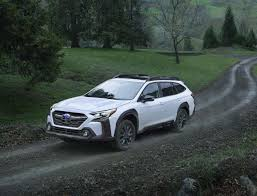
A standout addition for the 2022 model year was the Outback Wilderness. This trim represents the pinnacle of factory-built off-road capability for the Outback, boasting 9.5 inches of ground clearance, rugged Yokohama Geolander all-terrain tires, and specially tuned suspension and terrain management systems. Its aggressive styling, complete with prominent plastic cladding, gold accents, and optimized bumpers for improved approach and departure angles, mirrored its enhanced off-road prowess. The roof rail system was bolstered to support 700 pounds, and the interior featured water-repellent upholstery. While it foregoes some of the luxury appointments of the Limited XT and Touring XT models, it comes standard with the turbocharged engine.
The 2023 model year saw a significant cosmetic refresh for the Outback, with new black cladding and a revised front fascia heavily inspired by the popular Wilderness trim. The EyeSight® system’s in-car cameras were upgraded, and the availability of the turbocharged engine was broadened. Notably, the Outback became the first Subaru to integrate what3words, a revolutionary mapping technology that uses three words to pinpoint locations, offering a novel alternative to traditional addresses.
Further refinements arrived for the 2024 model year, with updates to the Outback Wilderness’s front fascia and the expansion of heated steering wheel availability to the Onyx Edition, Onyx Edition XT, and Wilderness trims. The Onyx Edition also gained a standard moonroof and reverse automatic emergency braking. For 2025, the Limited trim received similar enhancements, including a moonroof, heated steering wheel, driver-attention monitoring, and built-in navigation.
The initial MSRP for the 2020 model was $26,645 (excluding destination). Impressively, Subaru maintained the base price at just $29,995 for the 2025 model year. This pricing strategy makes the Outback one of the most accessible vehicles offering its size and capability. The inclusion of numerous active safety systems, often costly options on more premium vehicles, further solidifies its value proposition. Even the base models, equipped with the dual-screen infotainment system, represent a strong purchase.
These sixth-generation Outbacks remain relatively new and hold their value exceptionally well. As a used vehicle, the average entry price for this generation typically ranges from approximately $21,086 for a 2020 model to $33,810 for a 2025 model. CarGurus reviews have consistently rated this generation highly, reflecting its blend of utility, comfort, and safety.
Fifth Generation (2015-2019): Refinement and Enhanced Safety
The fifth-generation Subaru Outback, launched for the 2015 model year, continued the evolutionary path, officially transitioning to a crossover designation rather than a wagon. Styling was subtly sportier and more aerodynamic, yet remained familiar. Manual transmissions, once a staple but rarely ordered, were discontinued. A significant development was the increased standardization of safety systems; features like automatic emergency braking and blind-spot assist became standard on a greater number of trims.
The standard powertrain was a 2.5-liter four-cylinder engine producing 175 horsepower and 174 pound-feet of torque, found in the majority of used models. For those seeking more power, the 3.6R Limited trim offered a 3.6-liter six-cylinder engine with 256 horsepower and 247 pound-feet of torque. While quicker, its combined fuel economy of 22 mpg and higher price point limited its popularity.
AWD remained standard, and like its predecessor’s later years, the Outback featured a continuously variable transmission (CVT) with a six-speed manual mode. Subaru’s X-Mode® terrain management system, designed to enhance traction in slippery conditions, was now standard, alongside hill-descent control and hill-start assist. Limited trims received exclusive Stablex suspension dampers for a firmer, more controlled ride. A notable mechanical upgrade across all models was the adoption of a new double-wishbone rear suspension and a front suspension cradle, contributing to a significantly smoother and quieter ride.
Inside, the cabin received a stylistic refresh, though infotainment system changes were modest. Base models featured a 6.2-inch touchscreen, while higher trims had a 7-inch unit, both running a user-friendly but basic interface. In 2016, Subaru enhanced connectivity with the addition of Starlink connected services on upper trims and integrated lane-keep assist into the EyeSight® suite. By 2017, infotainment screens were upgraded to a standard 6.5-inch and an optional 8-inch unit, running improved software with enhanced graphics. The larger screen also introduced Apple CarPlay and Android Auto functionality for the first time.
The EyeSight® driver-assist suite, initially exclusive to upper trims, included adaptive cruise control, automatic emergency braking, and lane-departure warning. Blind-spot monitoring, lane-change assist, and rear cross-traffic alert were also limited to higher trims until 2019, when the entire EyeSight® suite became standard across the Outback lineup.
Common criticisms of this generation often revolve around the CVT’s perceived droning on the highway and its less-than-stellar fuel economy. However, it’s generally a quieter and more refined vehicle than its predecessors, typically proving trouble-free aside from issues common to all Outbacks. It offers a comfortable and spacious interior with improved rear-seat room.
When seeking a used fifth-generation Outback, higher trims are generally more desirable due to the inclusion of the EyeSight® gear. The 2019 model year is particularly noteworthy as the complete EyeSight® suite, including adaptive cruise control, became standard. Most fifth-generation Outbacks can be acquired for under $25,000, though they retain their value well. Expect to find models ranging from $16,000 to $24,000, including the more powerful 3.6R variants. Finding a well-maintained example with under 80,000 miles for well under $20,000 should be achievable.
Fourth Generation (2010-2014): Crossover Styling and CVT Dominance
The fourth-generation Subaru Outback marked a significant departure from previous iterations. The sedan body style was discontinued, and conventional automatic transmissions were replaced by continuously variable automatic transmissions (CVTs) on four-cylinder models. The styling adopted a more pronounced crossover appearance, establishing a design template that the fifth and sixth generations would closely follow. Consequently, these models, now over a decade old, still possess a remarkably contemporary aesthetic when parked alongside newer Outbacks. This generation was taller and slightly heavier than its predecessor, which impacted handling, but a longer wheelbase and increased width contributed to greater interior space, despite an overall reduction in length compared to the 2009 model.
The fundamental mechanical formula remained consistent: standard AWD with advanced traction modes and a choice of updated four- and six-cylinder Boxer engines. For 2010, the Outback was offered in six trim levels: 2.5i, 2.5i Premium, 2.5i Limited, 3.6R, 3.6R Premium, and 3.6R Limited.
The standard engine was a 2.5-liter naturally aspirated four-cylinder producing 170 horsepower and an equal amount of torque. The 3.6-liter flat-six offered 256 horsepower and 247 pound-feet of torque. While both engines could be paired with a six-speed manual transmission, the four-cylinder variants (which constituted the vast majority of sales) predominantly utilized the new Lineartronic CVT. Six-cylinder Outbacks retained a conventional five-speed automatic option.
In-car technology was relatively basic for the era, but Subaru did offer optional navigation and a backup camera integrated into an 8-inch touchscreen—a generous size for its time. Traction and stability control were also available, though not standard across all trims.
Minor updates occurred in 2011 and 2012. However, 2013 brought substantial changes. A restyled front fascia modernized the car’s appearance, and the 2.5-liter four-cylinder engine received an output increase to 173 horsepower and 174 pound-feet of torque. Subaru also optimized the AWD system for each transmission type: a continuous AWD system for the manual gearbox, an active torque split AWD for the CVT, and a variable torque distribution AWD for the five-speed automatic. All models maintained an impressive 8.7 inches of ground clearance, underscoring their trail capability.
The 2013 model year also saw the introduction of the Subaru EyeSight® driver-assist system on the Outback Limited, featuring adaptive cruise control, automatic braking, and lane-departure warning. In 2014, Subaru made EyeSight® standard on Outback Premium models.
While some reliability trackers have not awarded this generation the highest marks, citing more electrical issues compared to later models, they remain relatively inexpensive. Reasonably clean fourth-generation Outbacks with under 120,000 miles can be found for as little as $8,000. Searches for low-mileage 3.6R models with desirable options can yield results for under $17,000. The six-cylinder models are rarer and less fuel-efficient but offer a more engaging driving experience on the highway. Higher trim 2013 and 2014 models provide more features without a significant price premium, making them excellent targets. Manual transmission models, preferred by some enthusiasts, command a modest price premium over their automatic counterparts.
Third Generation (2005-2009): Style and Refinement
The third-generation Outback, launched for the 2005 model year, presented a more stylish and refined package compared to its predecessors. While the core formula remained unchanged, Subaru experimented with more aggressive styling, resulting in a distinct appearance that sets it apart from other Outback generations. A sedan version was also offered, complete with the lifted suspension, but slow sales led to its discontinuation in 2007, making these sedans quite rare today.
Reviewers praised this generation for its comfortable ride quality and comprehensive standard features. However, a notable drawback was the compact rear seat, offering only 33.9 inches of legroom, the most restrictive of any Outback generation.
For 2005, three engine options were available: a 2.5-liter four-cylinder with 168 horsepower and 166 pound-feet of torque; an optional 2.5-liter turbocharged four-cylinder (“XT”) producing 250 horsepower and 250 pound-feet of torque; and a 3.0-liter six-cylinder engine delivering 250 horsepower and 219 pound-feet of torque. Transmission choices included a five-speed manual or automatic.
In 2006, the 2.5-liter naturally aspirated engine received a power boost to 175 horsepower, and a navigation system became available. The following year saw a revision of trim levels without altering the core components. By 2009, Subaru integrated stability control across all trims and discontinued the long-standing L.L. Bean model, replacing it with Limited trims.
While equipment variations are less pronounced in older models compared to newer generations with advanced infotainment and safety features, the L.L. Bean and Limited trims typically offered more amenities, including wood-and-leather steering wheels, upscale interiors, navigation systems, and even USB ports. These are worth seeking out if you’re considering a model from this era.
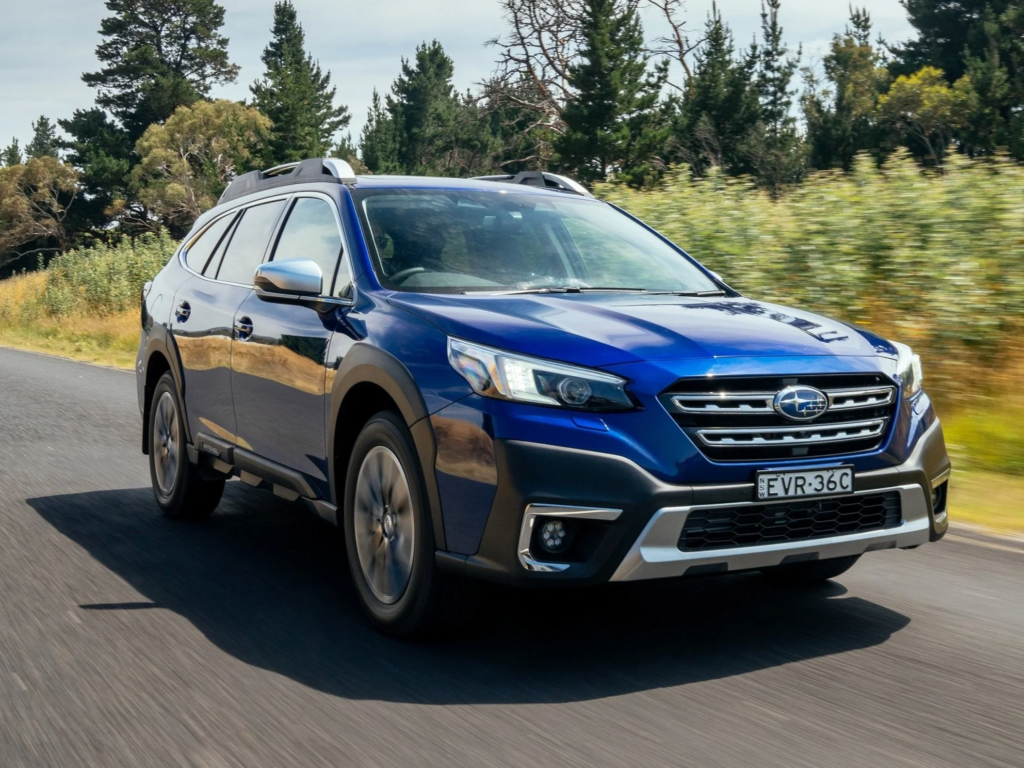
Consumer Reports expressed concerns regarding the reliability of the early years in this generation. Thorough inspection is advised, although these models generally feature more durable engines than the first two generations. Maintaining detailed service records is crucial, as timing belt and head gasket replacements are significant maintenance items. Compared to later versions, these Outbacks are relatively scarce due to age and reduced sales during the financial crisis.
On the positive side, they typically sell in the $5,000 to $10,000 range, with even the most pristine examples rarely exceeding this. Manual transmission or rare sedan versions may command a slight premium, but not substantially.
Second Generation (2000-2004): The Iconic Spin-Off
Officially spun off from the Legacy lineup, the second-generation Outback was a completely redesigned model for the 2000 model year and maintained its predecessor’s popularity. The concurrent “Legacy SUS” sedan was rebranded as the Outback sedan and shared the same mechanical underpinnings. The styling became more contemporary, complemented by attractive two-tone color schemes, while retaining the core Outback formula.
The standard engine was a 2.5-liter version of Subaru’s well-regarded “EJ25” engine, closely related to the unit in the first generation, now producing 165 horsepower and 166 pound-feet of torque. In 2001, Subaru introduced the L.L. Bean edition, featuring enhanced luxury appointments and, notably, a new 3.0-liter six-cylinder engine delivering 212 horsepower and 210 pound-feet of torque. This “EZ30” Boxer six, while not Subaru’s first six-cylinder, formed the foundation for the Outback’s six-cylinder variants for the next 18 years.
AWD remained standard, and ground clearance increased to 7.3 inches. Four-cylinder models offered a choice between a four-speed automatic or a five-speed manual transmission, while six-cylinder models were exclusively automatic. Subaru refreshed the styling in 2003, but significant mechanical changes were minimal throughout the model’s lifespan.
L.L. Bean editions were outfitted with numerous extras, including dual-zone climate control, CD changers, leather seating, dual moonroofs, a premium McIntosh stereo system, and an optional Vehicle Dynamics Control (VDC) system. Other Outback trims, while comfortable, offered relatively fewer modern amenities.
Given the age of these vehicles, a meticulous review of maintenance records is essential for a confident purchase. Consumer Reports assigned below-average reliability ratings to the 2000 and 2001 models. However, these vehicles are simpler than their modern counterparts and generally robust. Due to age, potential rust (requiring careful inspection), and the persistent head gasket issue, finding well-maintained examples can be challenging, but they are typically very affordable. Most second-generation Outbacks, excluding the higher-spec 3.0-liter models and sedans, can be found in the $4,500 to $8,000 range.
First Generation (1995-1999): The Originator
The Subaru Outback’s story begins as a specialized trim package on the 1995 Subaru Legacy. It wasn’t until a year later, in 1996, that its now-familiar formula truly crystallized. The Legacy, introduced in 1988 and in its second generation by then, had already cultivated a strong reputation for its rally-car prowess and all-terrain capability as a wagon. The Outback was conceived to imbue this model with an image as rugged as its components.
Initially, this involved visually enhanced bumpers with integrated fog lights, distinctive wheels, and a standard two-tone color scheme, featuring dark gray paint on the lower half of the wagon. Mechanically, it retained many standard Legacy components, including an initially modest 2.2-liter four-cylinder engine producing 135 horsepower and 140 pound-feet of torque. A four-speed automatic or a five-speed manual transmission sent power to all four wheels.
The stylistic enhancements resonated with consumers, but Subaru responded to early criticisms regarding engine power and ground clearance. For 1996, the Outback received a larger 2.5-liter engine with 155 horsepower and 155 pound-feet of torque, larger rally-style front lights, and a suspension lift, providing 7.8 inches of ground clearance. While less than today’s Outbacks, this was an unusual height for a vehicle at the time. Only American Motors Corporation (AMC) had ventured into similar territory with the 1980s Eagle four-wheel-drive, a marque long defunct by 1996.
This unique offering struck a chord with the public. With the assistance of Australian actor Paul Hogan in its advertising campaigns, the Outback played a pivotal role in revitalizing Subaru’s then-struggling U.S. sales. Subaru soon applied this successful formula to the smaller Impreza, creating the Outback Sport (the ancestor of today’s Crosstrek), achieving similar success. In 1997, the Outback introduced a Limited trim, enhancing interior materials. The core design remained unchanged for the 1998 and 1999 model years.
In 1998, Subaru also unveiled the “Legacy SUS,” an acronym for “Sport Utility Sedan.” This variant essentially applied the Outback’s rugged recipe to a Legacy sedan donor vehicle. It would later be integrated into the dedicated Outback lineup during the model’s second generation.
These early Outbacks were commendable vehicles for their era. However, they are known for potential engine issues, primarily attributed to weaker head gaskets and aging timing belts, particularly on the 2.5-liter variants. Many enthusiasts have undertaken engine swaps, opting for later, more powerful engines, or even the older 2.2-liter, despite its reduced output. Meticulous maintenance records and a thorough pre-purchase inspection are paramount for these first-generation models. The good news is that they can be found for under $5,000, although collector interest is only just beginning to emerge for these pioneering Outbacks.
Buying Considerations: Cost, Reliability, and Value
When embarking on the quest for a Subaru Outback, understanding its cost-benefit analysis and long-term reliability is paramount.
Cost of Ownership: The Subaru Outback, particularly in the used market, offers a compelling value proposition. While its initial purchase price might be slightly higher than some mainstream sedans or crossovers, its robust standard AWD, superior ground clearance, and versatile nature justify the investment for many. However, potential buyers must factor in slightly higher maintenance costs compared to some direct competitors. This is primarily due to the Boxer engine architecture, the AWD system’s complexity, and the potential for head gasket or timing belt services on older models. Fuel economy, while respectable for its class, is often a point of comparison; newer generations have made strides, but earlier models may consume more fuel than some front-wheel-drive alternatives.
Reliability Insights: Reliability ratings for the Subaru Outback have historically been a mixed bag, often falling into the “average” category according to various automotive tracking outlets. This perception is frequently linked to the aforementioned maintenance requirements. However, it’s crucial to differentiate between occasional, albeit potentially costly, maintenance needs and systemic design flaws. Many Outback owners report exceptionally high mileage vehicles that have served them faithfully for years, with proactive maintenance being the key differentiator.
The Best Years to Buy: Identifying the “best” years often depends on balancing features, reliability trends, and price.
Generally Recommended:
2014 and 2016-2017: These years often receive strong reliability marks from sources like Consumer Reports. They represent a solid balance of features and refined performance before the complete redesign of the fifth generation.
2021 and newer: With the sixth generation’s technological advancements and refined powertrains, these models offer the most modern features and safety systems. The Outback Wilderness trims (starting in 2022) are particularly desirable for their enhanced off-road capabilities.
Years to Approach with Caution (but still viable with diligent inspection):
2005-2007: While stylistically distinct, these earlier models can be more prone to head gasket issues. Thorough inspection and maintenance history are vital.
2013, 2015, 2018: These years are sometimes cited by crowdsourced sites like CarComplaints.com for having a higher incidence of specific issues, often electrical or engine-related. However, other reputable sources rate them more favorably. A comprehensive pre-purchase inspection is highly recommended for these specific model years.
2019-2020: While part of the transition to the sixth generation, some early models might exhibit minor teething issues as the new platform was introduced.
High-CPC Keywords & LSI Integration: When searching for your ideal Subaru Outback for sale, consider terms like used Subaru Outback price, Subaru Outback reliability ratings, best year Subaru Outback to buy, Subaru Outback resale value, and Subaru Outback maintenance costs. For those seeking specific performance or features, keywords such as Subaru Outback turbo engine, Subaru Outback XT models, Subaru Outback Wilderness review, and Subaru Outback EyeSight safety features are highly relevant. If you’re exploring regional options, incorporating Subaru Outback Denver or Subaru Outback used car prices California can refine your search. Exploring Subaru Outback financing options and extended warranty for Subaru Outback can also be beneficial for long-term ownership planning.
The Value Proposition: A used Subaru Outback remains an exceptional value for those prioritizing all-weather capability, ample cargo space, and a comfortable, confidence-inspiring driving experience. While its maintenance requirements may exceed those of some rivals, the peace of mind offered by its standard AWD and Subaru’s reputation for building durable vehicles is substantial. The Outback’s unique wagon-meets-crossover design continues to hold its appeal in a market increasingly dominated by SUVs. It’s a practical, versatile, and enduring choice that offers a unique blend of on-road comfort and off-road readiness.
Making Your Move
The Subaru Outback has consistently proven itself to be more than just a vehicle; it’s a gateway to adventure, a reliable companion for daily life, and a testament to Subaru’s commitment to innovation and capability. Whether you’re drawn to the rugged charm of the Wilderness edition, the refined comfort of a Limited model, or the practical efficiency of an earlier generation, understanding these nuances will empower you to find the Subaru Outback that perfectly aligns with your needs and budget.
Are you ready to explore the open road or chart your own course off the beaten path? Take the next step by visiting your local Subaru dealership for a test drive, or begin your online search for a pre-owned Subaru Outback today. Your next great adventure awaits.