
Lotus Elise 2005: A Microcosm of automotive evolution and a study in “raw” driving
The Lotus Elise of 2005 represents more than just a car; it is an artifact of a philosophical shift in the automotive world. It is a living testament to the legacy of Colin Chapman, the founder of Lotus Cars, whose defining philosophy was to “Simplify, then add lightness.” When it launched in the United States, the Elise was not just a competitor to established sports cars like the Mazda Miata or the Toyota MR2; it was a declaration of intent. Lotus, once a dominant force in racing with a history of innovation in aerodynamics and vehicle dynamics, had become a niche manufacturer. The introduction of the 2005 Lotus Elise was, therefore, an attempt to not just sell a car, but to relaunch a brand in one of the world’s largest and most demanding markets.

Philosophical Foundations: Colin Chapman’s Legacy and the “Kit Car” Ethos
To understand the Elise, one must first understand Colin Chapman. His philosophy transcended simple engineering; it was an aesthetic and a religion. Chapman believed that true automotive performance did not come from brute force, but from lightness, efficiency, and purity of design. This ideology gave birth to some of the most beautiful and celebrated race cars of the 20th century. However, this purity often came at the cost of durability and refinement, earning Lotus a reputation for building delicate machines that required “a certain kit-car attitude toward fit and finish.”
The challenge for Lotus in the early 2000s was to bridge this gap. The market had evolved; consumers were no longer willing to tolerate the fragility or the imperfect build quality that once defined Lotus. The modern automotive consumer expects reliability, comfort, and convenience. To succeed, Lotus needed to deliver a car that possessed the heart-stopping performance of a track-ready racer but the usability of a daily driver. The 2005 Lotus Elise was the result of this ambitious balancing act.
The Mechanical Architecture: Toyota Power Meets Lotus Engineering
At the heart of the 2005 Elise is a symphony of engineering collaboration between Toyota and Lotus. The engine is the 1.8-liter 2ZZ-GE, a four-cylinder unit that was also used in the Toyota Celica GT-S and the Matrix XRS. But Lotus did not simply use this engine off the shelf. They reworked the engine-control computer to tune its power delivery to suit the lightweight chassis, resulting in a car that felt remarkably responsive and smooth.
The Elise’s chassis is a masterpiece of lightweight engineering. A bonded aluminum extrusions and sheets structure weighing only 150 pounds forms the foundation. This structure provides the rigidity necessary for the finely tuned suspension to perform as intended. The suspension system itself uses control arms with gas-charged Bilstein dampers, disc brakes with enthusiast-calibrated ABS, and lightweight alloy wheels with custom-spec Yokohama tires.
This combination of lightness and precision handling results in a driving experience that is arguably one of the purest available. The fast-ratio steering, the communicative chassis, and the lack of weight all conspire to make the Elise feel like an extension of the driver’s body. The power-to-weight ratio is extraordinary, allowing for thrilling acceleration and the ability to change direction with minimal effort.
The Driving Experience: Raw Feedback and Pure Precision
For an enthusiast, the driving experience of the 2005 Lotus Elise is unparalleled. The car weighs a mere 1,975 pounds, and with 190 horsepower from the Toyota engine, it feels far more powerful than the numbers suggest. The 0-to-60 mph time of 4.9 seconds is impressive, but it fails to capture the true essence of the Elise’s performance. The car is designed to be driven, not just admired.
The handling is precise and predictable. In an autocross course, the Elise proved to be an eager dance partner, cornering with a balance that makes the driver feel in control even at the limit. The throttle can be used to adjust cornering attitude, providing the driver with lively options to manage both ends of the car.
This level of performance, however, comes at the cost of comfort. The Elise is a small, raw machine. The cockpit is sparse, and practicality is sacrificed for performance. But for those seeking the purest driving experience possible, these sacrifices are not only acceptable but also essential to the car’s character.

Marketing and Market Strategy: Rebuilding the Brand
The 2005 Lotus Elise was a risky gamble for Lotus. The brand had faded from the public eye after years of dwindling sales of the dated Esprit. The Elise was the flagship of a new marketing strategy. The company aimed to recapture the excitement and passion that once defined Lotus.
The car was launched at a starting price of around $40,780, a significant sum for a car that was essentially minimalist transportation. However, Lotus believed that the Elise would appeal to a niche market of driving purists who were willing to pay for the privilege of driving a car that was more than just a mode of transport; it was a statement.
The initial demand was strong, with deposits from around 2,000 buyers. This indicated that there was still a market for a car that embodied Colin Chapman’s philosophy. However, the Lotus dealers in the U.S. had to work hard to overcome the lingering perception that Lotus cars were unreliable and prone to breaking down.
Potential Challenges and Long-Term Prospects
Despite the enthusiasm for the 2005 Lotus Elise, there were potential challenges that could affect its long-term success. The 2ZZ-GE engine, while powerful, was still a Toyota engine that Lotus had adapted to its own needs. There were concerns about how it would hold up under the rigors of track use.
The build quality of the Elise was also a subject of debate. While Lotus had improved its fit and finish, the car was still essentially lightweight transportation. The use of aluminum extrusions and sheets meant that repairs would be complex and expensive.
Furthermore, the Elise was a niche product. It was not a mass-market car, and it would never sell in the same numbers as cars like the Toyota Miata or the Mazda Miata. However, for Lotus, success was not measured in volume but in passion. The company believed that by building a car that resonated with driving enthusiasts, they would be able to rebuild their brand and lay the foundation for future models.
Conclusion: A Defining Moment in Automotive History
The 2005 Lotus Elise was a defining moment in automotive history. It was a car that embodied the spirit of Colin Chapman’s philosophy and represented a new direction for Lotus Cars. While it was not a perfect car, it was a car that pushed the boundaries of what was possible.
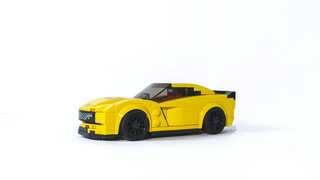
For driving enthusiasts, the Elise offered an experience that was pure, raw, and exhilarating. It was a car that demanded to be driven, and it rewarded its drivers with a level of performance and feedback that was unmatched. As a study in lightweight engineering and pure driving dynamics, the Lotus Elise of 2005 will remain a benchmark for years to come.