Volkswagen ID.4 Battery Recall: Understanding the Risks and Ensuring Your Safety
As an industry professional with a decade navigating the intricacies of automotive technology and consumer safety, I’ve witnessed firsthand the rapid evolution of electric vehicles (EVs). The Volkswagen ID.4, a key player in this burgeoning market, has recently been at the center of a significant recall affecting a substantial number of its 2023-2025 model-year SUVs. This situation, involving a potential overheating issue with the high-voltage battery that carries a risk of fire, underscores the critical importance of robust safety protocols and transparent communication in the EV sector. My focus today is to provide a comprehensive, expert-driven overview of this Volkswagen ID.4 battery recall, its implications, and the proactive steps owners should take to ensure their safety and the longevity of their investment.
The core of this recall, identified by Volkswagen’s internal code 93EA, centers on a specific concern within the ID.4’s sophisticated high-voltage battery system. While the precise root cause remains under investigation, the potential for the battery to overheat is a serious matter that warrants immediate attention from all affected owners. This isn’t a minor software glitch; it’s an issue that, in rare but significant instances, could escalate to a fire hazard. Understanding the potential warning signs, even subtle ones, is paramount. Drivers might observe a noticeable degradation in the vehicle’s range or a perceptible loss of acceleration and overall performance. These anomalies should not be dismissed; rather, they should be treated as indicators that a deeper inspection of the battery system is necessary.
The automotive industry, especially the EV segment, operates under stringent safety regulations. Manufacturers are held to a high standard when it comes to ensuring the integrity and safety of their products. Recalls, while sometimes concerning, are a testament to this commitment, demonstrating that manufacturers are actively identifying and addressing potential safety vulnerabilities. In the case of the Volkswagen ID.4 recall, the company has outlined a clear remediation plan. Authorized Volkswagen dealerships will be undertaking the necessary corrective actions. This typically involves a comprehensive diagnostic of the high-voltage battery. Depending on the findings, a software update to optimize battery management will be applied. In more critical situations, a complete replacement of the high-voltage battery unit may be necessary, all at no cost to the owner.
This extensive recall, encompassing over 43,800 units of the popular Volkswagen ID.4 electric SUV, highlights the complexities inherent in battery technology. As battery chemistries become more advanced and energy densities increase to meet the growing demand for longer range and faster charging, the thermal management of these systems becomes even more crucial. Engineers are constantly working on improving battery management systems (BMS) to prevent thermal runaway, a critical phenomenon where an uncontrolled increase in temperature can lead to fire. For the Volkswagen ID.4 battery recall, the focus is on ensuring that the BMS is functioning optimally to prevent any potential overheating scenarios, particularly under various charging and driving conditions.
For consumers considering the purchase of an electric vehicle, or those who already own one, understanding EV battery safety is an essential aspect of ownership. The Volkswagen ID.4 overheating issue serves as a timely reminder that no technology is entirely immune to potential challenges. However, the industry’s response, as exemplified by this recall, is a vital part of the safety net. The National Highway Traffic Safety Administration (NHTSA) plays a pivotal role in overseeing vehicle safety in the United States, and their involvement in disseminating information and ensuring manufacturers comply with recall procedures is fundamental.
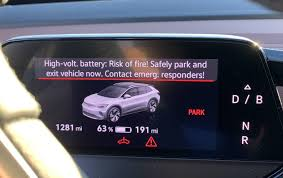
The timeline for owner notification is projected to begin around March 20th, with letters being dispatched to affected individuals. However, for those who are experiencing any of the aforementioned warning signs, or simply wish to get ahead of the process, direct communication with Volkswagen is advisable. The provided customer service number for this specific recall (800-893-5298) is the primary point of contact. Additionally, the NHTSA’s vehicle-safety hotline (888-327-4236) offers an independent avenue for information and reporting. For those who prefer online resources, NHTSA’s website allows owners to check their vehicle’s identification number (VIN) against active recalls, providing a direct and immediate assessment of their vehicle’s status. This proactive approach to checking your VW ID.4 recall status is always recommended.
Looking beyond the immediate concern of the Volkswagen ID.4 recall, this event prompts a broader conversation about the future of electric vehicle battery technology and the ongoing commitment to safety and innovation. The development of safer EV batteries is a continuous pursuit for all major automakers. Research and development are intensely focused on advancements in battery chemistry, such as solid-state batteries, which promise higher energy density, improved safety, and faster charging capabilities compared to current lithium-ion technologies. The challenges faced by manufacturers in large-scale battery production and thermal management are well-documented, and recalls like this one, while disruptive, are often valuable learning experiences that drive future improvements in electric vehicle battery technology.
The economic implications of such a recall are not insignificant. The cost of replacing potentially thousands of high-voltage batteries, even with a proactive software fix, represents a substantial financial undertaking for Volkswagen. However, the long-term benefits of maintaining consumer trust and ensuring the safety of their product far outweigh these immediate costs. For owners, the most critical aspect is to engage with the recall process promptly. Ignoring a safety recall can not only put the vehicle owner and passengers at risk but can also have implications for insurance coverage and the resale value of the vehicle. Understanding your Volkswagen warranty coverage and how it interacts with recall procedures is also a prudent step for any vehicle owner.
When discussing the ID.4 battery issue, it’s important to contextualize it within the broader landscape of automotive manufacturing. Every vehicle, regardless of powertrain, can be subject to recalls. The complexity of modern automobiles, with their intricate electronic systems and advanced materials, means that unforeseen issues can arise. The electric vehicle sector, being at the forefront of technological innovation, is perhaps more susceptible to novel challenges. However, the established processes for identifying, reporting, and rectifying these issues are robust. The Volkswagen ID.4 fire risk is being addressed through these established channels, providing a degree of reassurance.
For those residing in areas where EV adoption is particularly high, such as California, New York, or Texas, staying informed about recalls affecting popular models like the Volkswagen ID.4 in California or VW ID.4 service concerns Texas is even more crucial. Local dealerships often have dedicated service advisors who are well-versed in the specifics of recalls and can guide owners through the process efficiently. The availability of charging infrastructure and specialized EV technicians in these regions also contributes to a smoother ownership experience. If you’re in Denver and own an ID.4, contacting your local Volkswagen dealership Denver for recall information is the most direct route to service. Similarly, if you’re in Chicago, seeking out Volkswagen ID.4 repair Chicago options will connect you with the necessary resources.
The ID.4 recall 2024 model years are the primary focus, indicating that newer vehicles are being meticulously scrutinized. This is common practice, as manufacturers often have more data on newer models and can identify trends or potential vulnerabilities more rapidly. The proactive nature of this recall, before widespread incidents occur, is a positive indicator of Volkswagen’s commitment to preemptive safety measures. The Volkswagen EV recall strategy is designed to minimize risk and ensure a high level of safety for all drivers.
The future of electric mobility hinges on building and maintaining consumer confidence. Incidents like the Volkswagen ID.4 overheating recall can cause apprehension, but they also present an opportunity for greater transparency and education. The industry is continually striving for advancements in battery thermal management systems, aiming to eliminate such risks entirely. Innovations in battery cooling technologies, improved battery cell design, and more sophisticated battery management software are all contributing to a safer and more reliable EV ecosystem. The development of advanced battery diagnostics is also playing a crucial role in identifying potential issues before they manifest as serious problems.
For owners of the affected Volkswagen ID.4 models, the message is clear: do not delay in addressing this recall. The free service offered by dealerships is designed to rectify the issue and restore your vehicle to its optimal and safest operating condition. Understanding the potential ramifications of ignoring a safety recall is essential. It’s not just about potential vehicle damage; it’s about the safety of yourself, your passengers, and others on the road. The Volkswagen battery safety recall is a critical event, and your proactive participation is paramount.
In conclusion, the Volkswagen ID.4 battery recall is a significant event in the EV landscape, emphasizing the ongoing journey of technological refinement and safety assurance. While the potential for battery overheating and fire risk is a serious concern, the proactive response from Volkswagen, supported by regulatory bodies like NHTSA, provides a clear path forward for affected owners. My decade of experience in this field has taught me that while challenges are inevitable in any rapidly evolving technology, the true measure of a manufacturer lies in its commitment to addressing these challenges transparently and effectively.
If you are an owner of a 2023-2025 Volkswagen ID.4, please prioritize scheduling an appointment with your authorized Volkswagen dealership. You can confirm your vehicle’s eligibility and the status of the recall by visiting the NHTSA website and entering your VIN, or by contacting Volkswagen directly at 800-893-5298. Taking these steps ensures that your vehicle is safe, reliable, and continues to provide you with an exceptional electric driving experience. Don’t wait for warning signs; take proactive control of your vehicle’s safety today.